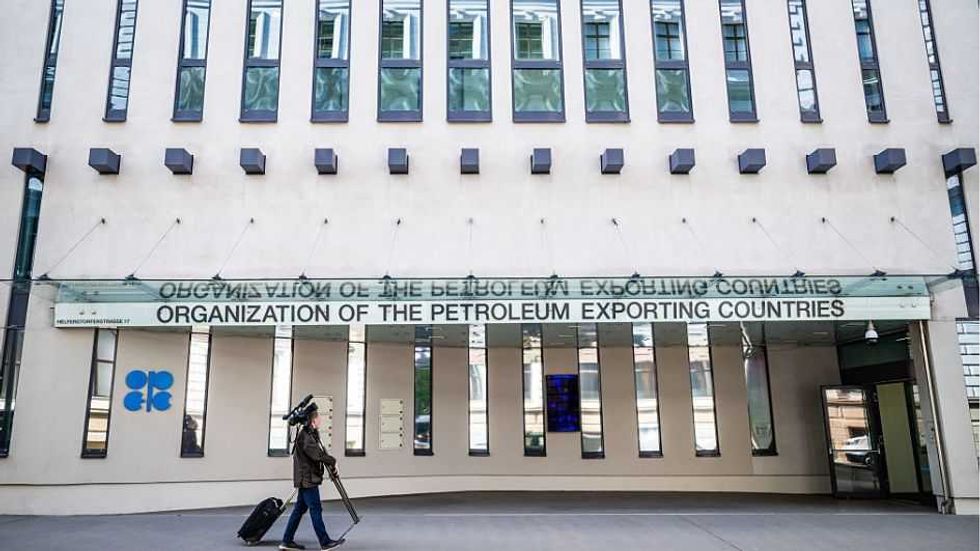
Are gas prices about to drop? What the UAE leaving OPEC means.
Source: Blaze Media · Bias: Right
Summary
If you think this is just another oil headline, think again. This one hits your wallet directly, every time you start your car.The United Arab Emirates, one of the most powerful players inside OPEC, is walking away from the cartel. That’s a huge change to the system that has controlled oil prices and, by extension, what Americans pay at the pump for more than half a century.The UAE’s departure exposes long-standing tensions inside the group. Some countries have followed production limits; others have ignored them.And for drivers already dealing with high gas prices, this matters more than anything coming out of Washington right now.Market moverFor decades, OPEC has operated as a coordinated force, adjusting production to influence global oil prices. Less supply meant higher prices. More supply meant relief, but only when it suited the producers. It was never a true free market; it was controlled output designed to protect revenue.Now one of the few countries that actually had the power to move markets is stepping away.The UAE isn’t just another member. It is one of the rare producers with real spare capacity, the ability to quickly increase output and stabilize supply during disruptions. Alongside Saudi Arabia, it helped anchor OPEC’s influence. Take that away, and the cartel doesn’t just weaken; it loses control of the narrative.So why should the average driver care?Because this could be one of the first real signs that global oil pricing is shifting away from centralized control and back toward competition. And when competition increases, prices tend to come down.Dire Strait?But don’t expect that relief overnight.Here’s the reality drivers are dealing with right now. Gas prices in the U.S. are already elevated, sitting above $4 per gallon in many areas. That’s not just about oil supply; it’s about geopolitics. Tensions tied to Iran and disruptions around the Strait of Hormuz, one of the most critical oil shipping routes in the world, are driving volatility and keeping prices high.That’s the immediate pressure on your fuel bill, not the UAE’s decision — at least not yet.The UAE exit is a medium-term shift. It means the country is no longer bound by OPEC production quotas. It can pump more oil if it chooses, and it has made it clear it wants to expand output significantly. More oil supply should push prices lower, but only if that supply actually reaches the market. Mehmet Yaren Bozgun/Anadolu/Getty ImageAnd that’s the catch drivers need to understand.Volatile for a whileOil prices don’t drop just because more production is possible. They drop when that oil is flowing freely, refined, and distributed. If geopolitical tensions continue to disrupt shipping lanes or production, the added supply won’t fully offset the pressure.That’s why, in the short term, volatility is still the story.So let’s answer the question every driver is asking: Will this lower gas prices? And when?In the next one to two weeks, probably not. Prices will continue to react to global tensions more than anything else. But within two to six weeks, that’s when things could start to change. That’s typically how long it takes for shifts in crude oil prices to filter down to what you pay at the pump. If the UAE ramps up production and tensions ease even slightly, drivers could start seeing prices move down by late May into June.We’re not talking about a sudden return to cheap gas, but a drop of 20 to 50 cents per gallon is realistic if conditions line up. For families commuting daily, running businesses, or planning summer travel, that kind of relief will help. And yes, this ties directly into the broader automotive landscape.High fuel prices don’t just affect what you pay at the pump. They influence what people buy. When gas spikes, consumers start rethinking vehicle choices, holding off on larger SUVs, reconsidering trucks, or delaying purchases altogether. Automakers feel that shift immediately, especially as they try to balance EV investments with ongoing demand for gas-powered vehicles.When prices ease, even slightly, it stabilizes that decision-making. It gives consumers more flexibility and helps normalize the market. That’s why this OPEC fracture isn’t just an energy story; it’s an automotive story.RELATED: GM slams brakes on electric trucks as reality crashes the EV party Bill Pugliano/Getty ImagesPriming the pumpLooking farther out, the bigger implication is what happens to OPEC itself.The UAE’s departure exposes long-standing tensions inside the group. Some countries have followed production limits; others have ignored them. That imbalance has been building for years, and now it’s starting to break apart. When a cartel loses discipline, it loses its ability to control prices.That’s good for drivers, but it comes with a trade-off.Less coordination means more volatility. Prices could swing more sharply in response to global events.
Related Coverage
- Trump’s ‘ramped up’ rhetoric leaves unifying tone of July Fourth speech in question (Center Left — NBC News Politics)
- Big Oil heads for biggest profits in years as Trump pushes for lower gas prices (Right — New York Post)
- This Republican Has a Wild Idea for Fixing Housing Prices: Let the Market Actually Work (Far Right — Townhall)
- Americans hit the road in record numbers for 4th of July — in spite of high gas prices (Right — New York Post)
- Bessent on Trump accounts, gas prices and wage growth (Center — Politics - CBSNews.com)
- What Does “Hither, Swarms of Officers” in the Declaration of Independence Mean? (Far Right — The Gateway Pundit)
- Senator John Fetterman Reveals the One Thing That Would Make Him Leave the Democrat Party (VIDEO) (Far Right — The Gateway Pundit)
- Lakers’ trade for Walker Kessler worth steep price — and needed to happen (Right — New York Post)
Daily Analysis
Read the full Parallax Pulse for May 13, 2026 — an AI-powered analysis of how Left and Right media covered the biggest stories this day.
More Headlines From May 13, 2026
- Live updates: Middle East fighting continues as Trump heads to China (Center)
- How much sway will new Fed Chair Kevin Warsh have over interest rates? (Center)
- Feds uncover ‘rampant’ fraud involving foreign student workers: ‘just the tip of the iceberg’ (Far Right)
- Senators vote to withhold their own pay during government shutdowns (Center Left)
- Senate Confirms Warsh to Lead Fed as Trump Tests Its Autonomy (Center)