Your state may have your money. Good luck getting it back
Center Right
When my June 6 Fox News column ran about finding nearly $30,000 in unclaimed money for my cousin, I expected readers to be surprised. I did not expect the flood. Within days, thousands of emails and comments poured in. Some readers had found money. Some wanted to know how to search. Some were trying to […]
The left is absolutely outraged about the UFC Freedom 250 fight that is happening at the White House next week.
The post Marco Rubio Cracks Up Crowd at the State Department Talking About the UFC Freedom 250 Fight at the White House (VIDEO) appeared first on The Gateway Pundit.
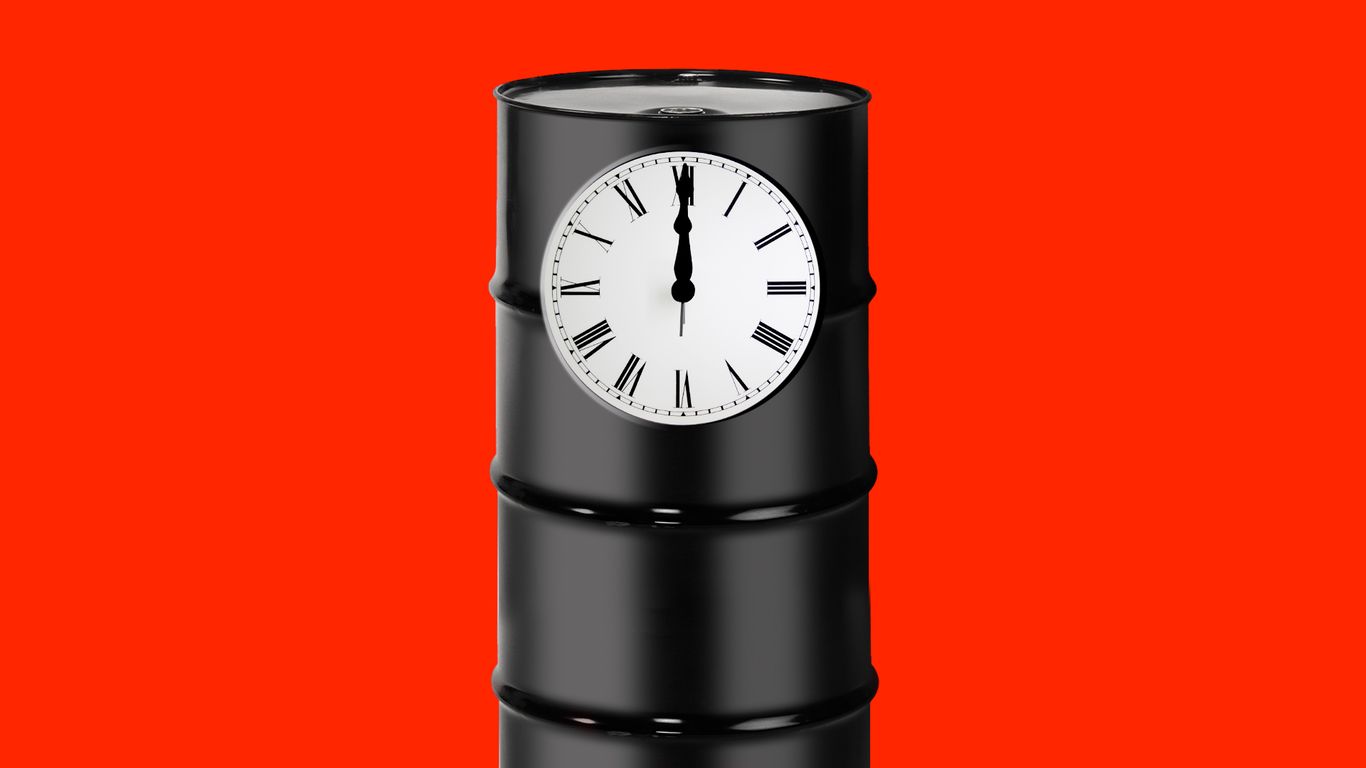
Oil prices have defied predictions of even bigger increases than we've seen — but the markets' shock absorbers could easily wear out later this summer unless the Strait of Hormuz opens soon, analysts warn.Why it matters: If the stockpiles run too low and oil prices surge, prices at the pump — which have been falling lately — could spike again as the midterm elections approach.And buffers against economically devastating shortages in major importing countries are also at risk.The latest: President Trump said Thursday that a deal with Iran is imminent, but the outlook changed so many times in the course of one day that it could easily change again.The oil markets seem to think it might happen, though, as oil is trading around its lowest levels in three months.The global benchmark Brent crude is trading at $87.94 this morning.Threat level: At some point, stockpiles will fall too low to keep easing the market, and other measures won't be able to offset the loss of barrels flowing through the strait.That point could be coming soon. A recent note from investment firm Macquarie estimates that if the strait is still closed on Labor Day, Brent crude prices could be $130-$150."If the war continues into 2027, prices of ~$200 may be needed to balance supply and demand," it projects.Oil and gas executives told the Washington Post that some inventories could be depleted within weeks.How it works: Storage can't go to zero. Sludgy oil at tank bottoms is not usable, pipelines need certain amounts to maintain function, and refineries need minimum stocks.State of play: U.S. stockpiles, both private and the Strategic Petroleum Reserve, are dwindling fast. They're falling in a number of other nations, too."The world has been relying on inventories to kind of manage the supply disruption, but ... that can't last forever," Aaron Brady, a top analyst with the research and consulting firm S&P Global Energy, said in an interview.What they're saying: "If the strait is not reopened in, call it the next month or so, those inventories are going to get, we think, towards those minimum operating levels in the U.S., perhaps other places as well," Brady said."When that happens, you don't have that supply buffer, and that's a recipe for upward pressure on oil prices, including gasoline prices," he said.Veteran analyst Daniel Pickering of the investment firm Pickering Energy Partners, in the firm's latest video explainer, said U.S. storage could start to scrape operational minimums "toward the end" of summer.The big picture: Before the war, global oil inventories were rising as production grew faster than demand.It's one of the biggest reasons that while oil prices have soared, they have stopped well short of dire predictions of $150 per barrel or even much higher.Other buffers include China's import decline, Saudi Arabia and some other producers moving more through pipelines, some tankers getting through, and governments' use of strategic reserves.Zoom in: U.S. commercial crude storage levels fell by over 7 million barrels to 426.5 million the week ending June 5, per federal data.These commercial supplies are draining fast even as the Trump administration has provided the market with oil from the Strategic Petroleum Reserve.The intrigue: One reason for the U.S. inventory decline is rising U.S. oil exports.They're going into a global market that needs barrels to help offset the Strait of Hormuz bottleneck.But Trump administration officials have said they're not considering restrictions on U.S. shipments abroad.Reality check: The global oil system has proven surprisingly flexible in the face of an unprecedented disruption, so it's hard for experts to know what's next with any precision.The bottom line: S&P Global Energy points out that inventories in the critical Midwest and Gulf Coast refining markets are currently at 351 million barrels.A "danger zone" starts when they get down to around 325 million, the firm estimates."As inventories drop below this threshold, the market becomes increasingly vulnerable to logistical bottlenecks and price spikes," the firm said in a note Thursday.Sign up here for Axios' Future of Energy newsletter.
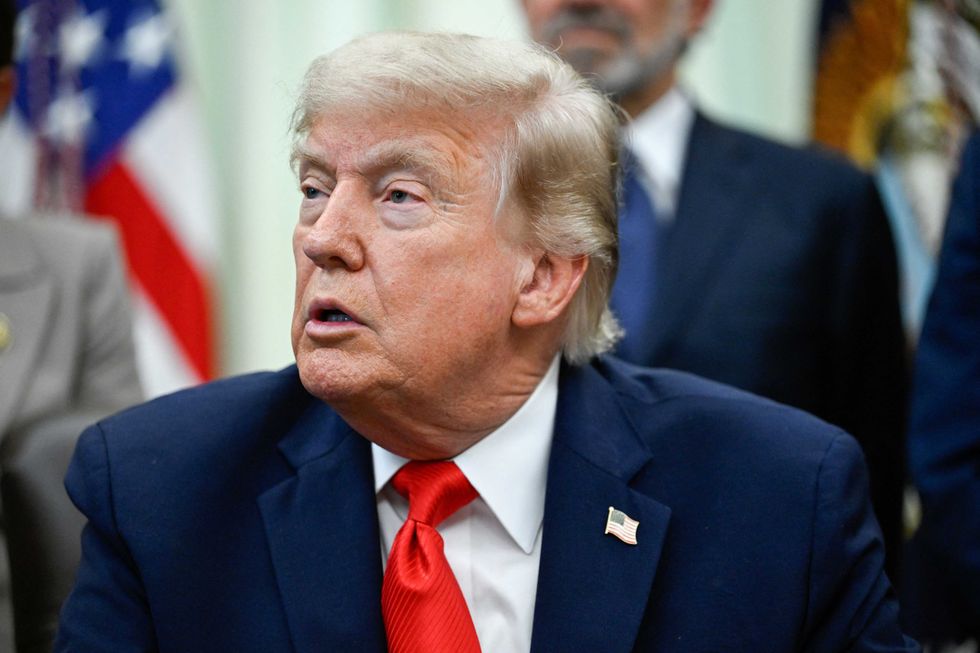
A prominent clinical psychologist revealed that President Donald Trump's rambling tangents could indicate something disturbing ahead, according to a report on Thursday.Dr. John Gartner, former assistant professor at Johns Hopkins University Medical School, told The Daily Beast that Trump's "lengthy monologues about his construction projects" show that he has "growing signs of dementia and malignant narcissism—and it’s about to get worse."The evidence of his cognitive decline has been evident in the way Trump talks about his vanity projects, including the White House Ballroom or the Lincoln Memorial Reflecting Pool."Tangential speech is one of the diagnostic criteria for dementia," Gartner told the Beast.Trump will often move from one topic to another, circling back to the projects that involve his own name, Gartner explained."What he’s obsessed with is a function of malignant narcissism. He’s obsessed with things that reflect glory on him," Gartner said. "He’s changing Washington D.C. to Trump D.C."And although the White House might argue that Trump's health is not in decline, the reality shows otherwise, the doctor argued."It’s only going to go downhill from here," he said.
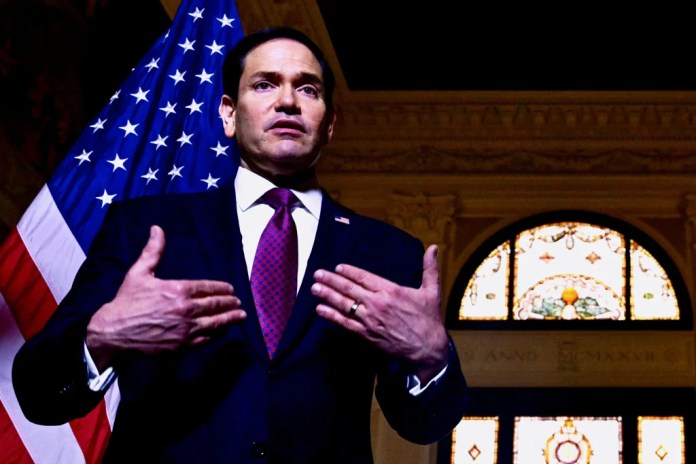
The State Department on Thursday announced that it will sanction Cuba’s state-owned oil and gas company Unión Cuba-Petróleo (CUPET) amid escalating tensions between the U.S. and the island country. Secretary of State Marco Rubio said the latest sanctions are pursuant of President Trump’s May 1 executive order expanding sanctions on government officials, agents “or material…
One of President Donald Trump's top administration allies has been "thrown in front of the bus," according to his longtime biographer, with a bombshell new report making them look like a "dope" acting counter to the president's interests.The New York Times this week released a major new report, culled from an upcoming book two of its reporters wrote about the second Trump administration, revealing the panicked reactions that top figures in the Trump administration had to the Jeffrey Epstein scandal, once it was clear to them that the president appeared in the files related to his crimes numerous times, and in damaging ways.Among those figures was Vice President JD Vance, who is depicted in the report as wanting to go the route of full transparency, believing that Trump would be fine with certain salacious allegations coming to light, despite how testy he had been with staffers about the subject. He also offered to do interviews about the situation, as part of an effort to be open about the files. These suggestions from Vance were largely dismissed by the rest of the administration, who strained for ways to protect Trump at all costs while feeding the MAGA base's demand for Epstein disclosure.Michael Wolff, a longtime reporter and author who had extensive access to Trump and his inner circle throughout his political career, said during the latest episode of his Daily Beast podcast, "Inside Trump's Head," that Vance was obviously being set up as some sort of scapegoat, given how poorly he came off in the report.“More interesting, probably than what it says about Epstein, is JD Vance, who is really dumped... thrown in front of the bus here,” Wolff told co-host Joanna Coles. “I mean, he looks like a dope. He’s described as panicking. Every adjective connected to him makes him seem like... he is, A,... not on the president’s side, and B, that he has no idea what he’s doing.”Coles countered that the report seemed to make Vance look better, like he "understood the enormity of the Epstein files,” and that he was “trying to get the Epstein files out there to pretend that the government was transparent.” Wolff further argued that the insiders who talked with reporters Maggie Haberman and Jonathan Swan were more so attempting to make the vice president look out of step with Trump's plans.“JD Vance was not on Donald Trump’s side here,” Wolff said, adding that “this is all an audience-of-one thing.” He continued: “And remember, Donald Trump’s side is very clearly, ‘There is nothing her ... Why is anyone talking about Epstein? I don’t want to hear it. If you’re talking about it, you’re my enemy, not my friend. So the White House is throwing JD Vance over the side, that’s what’s going on here.”
Secretary of State Marco Rubio announced sanctions against Cuba’s state-owned Union Cuba-Petroleo gas and oil company on Thursday as the Trump administration continues its pressure on the communist island nation. The sanctions block all property and interests in property between the United States and Union Cuba-Petroleo, and all dealings must be reported to the Treasury […]