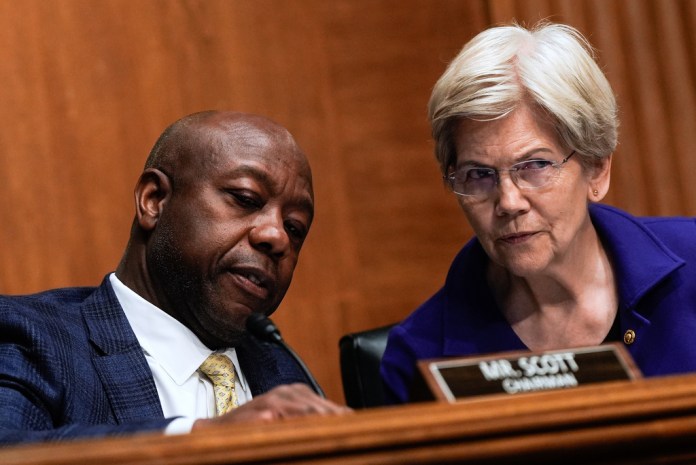
The House and the Senate have reached an agreement to pass bipartisan legislation designed to boost housing supply and help with affordability. The various sides reached a final deal on Tuesday after months of negotiations between Republicans and Democrats and the upper and lower chambers. INSTITUTIONAL INVESTOR PURCHASES OF HOMES IN FOCUS AMID HOUSING BILL […]
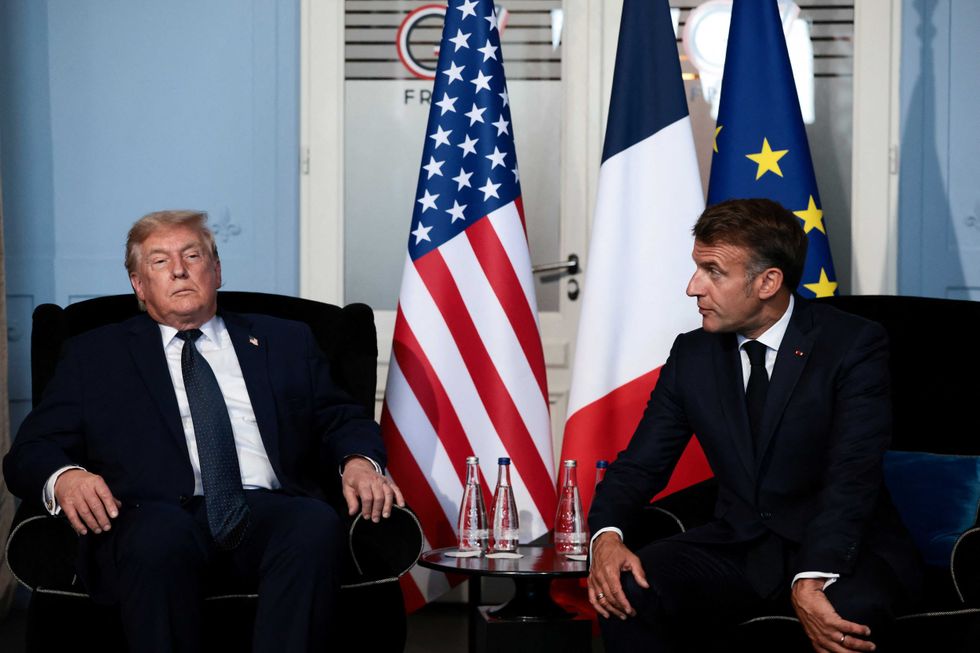
Shortly after arriving in France Monday for the Group of Seven summit, President Donald Trump revealed that he may not show up to Friday’s signing ceremony cementing the tentative agreement reached between the United States and Iran to end the war.His reason, he explained, was a pre-planned dinner event.“Hey sir, are you gonna try to attend the signing ceremony on Friday?” a reporter asked Trump as he sat beside French President Emmanuel Macron."Well, it depends. [Vice President] JD [Vance] is coming in for it, he was originally going to do it – I'll probably be gone by then, we're having dinner... in a day and a half, right?” Trump said, looking to Macron for confirmation. “We're gonna be staying quite late. So I may be involved, I may not."Trump broadly boasted Sunday that his administration had reached a tentative deal with Iranian officials to bring about an end to the war he initiated back in late February. While Trump bragged of his ability to “make peace with Iran” where all presidents “failed before” him, Iranian officials instead credited their own negotiators for having recruited psychologists to help navigate what they considered to be Trump’s “mental illness."Trump on if he'll attend the Iran deal signing ceremony on Friday:"It depends... I'll probably be gone by then, we're having dinner... in a day and a half, right? We're gonna be staying quite late. So I may be involved, I may not." pic.twitter.com/Tg7H8FXZEX— Alexander Willis (@ReporterWillis) June 15, 2026
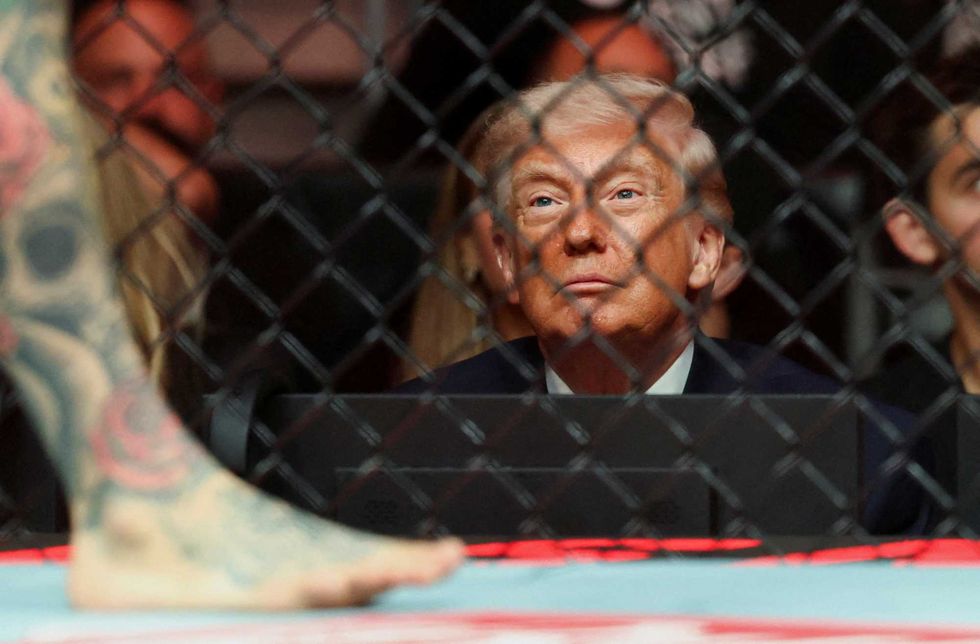
President Donald Trump’s 80th birthday dinner is notable because, despite the octogenarian’s ongoing health concerns, he chose foods that are not exactly known for being healthy.In a social media post by Bettina Trump, his daughter-in-law and the wife of his eldest son Donald Trump Jr., it was revealed that Trump’s guests were treated to a bacon-covered salad covered in buttermilk ranch and blue cheese; a herb-roasted turkey with bread stuffing, mashed potatoes and gravy; and a dessert of chiffon birthday cake with vanilla ice cream and créme chantilly.The food choices are especially notable because Trump’s own Secretary of Health and Human Services, Robert F. Kennedy Jr., has reportedly encouraged the president to try to eat a healthier diet as part of his agenda to “Make America Healthy Again.” By Kennedy’s own admission, he was not successful at doing this.Trump is well-known for his proclivity for fast food. He has a Diet Coke button on the Oval Office’s Resolute Desk and Republican National Committee Chairman Joe Gruters once admitted that the president ate a Quarter Pounder, a Big Mac, a Filet-O-Fish and French fries in a single sitting while the two of them were together.“I had two of the sandwiches, and I was as sick as a dog for 24 hours,” Gruters recalled on the Chambers, Changes, and Conversations podcast in October. “How does a guy who’s as senior as him get away with eating all this McDonald’s on a consistent basis?”In addition to the efforts to get Trump to improve his health, there have been ongoing concerns about Trump’s seeming obesity, a rash on his neck, his diagnosed Chronic Venous Insufficiency (CVI), his recent habit of slurring his words, the numerous occasions when he has fallen asleep at public events and indications that he is experiencing cognitive decline. The menu at his birthday bash indicates that, despite the growing public alarm on this subject, Trump is not altering his personal habits.Even at his birthday bash itself, there were signs that Trump’s health could be an issue. Specifically onlookers noticed “heavy makeup slathered across his hand,” according to The Independent. Throughout his second term, people have drawn attention to the bruises that repeatedly appear on Trump’s hands.“Trump’s hand appeared to be discolored and coated in a thick layer of concealer, despite having thrown no punches himself,” The Independent added. Similarly political analyst Brian Krassenstein posted that “Trump’s hand this evening at the UFC fight. Totally normal…if you are one of the fighters who just completed 3 rounds.”A commenter on social media wrote, “What happens when you shake his hand?Do you get finger tips full of makeup?”Another joked, “Maybe the ‘fight’ will be over soon.”Yet another pointed out that the makeup clearly had not been effectively applied, writing that “they should have picked a better shade of orange. He has billions of dollars. Why can’t he get a concealer that matches?”
AI is already making health care more expensive, and it's probably only going to get worse.Why it matters: For all of the ways AI could meaningfully improve patients' lives, making care more affordable isn't one of them.Driving the news: PwC on Thursday estimated that medical costs will go up by 9% in the employer market next year, and by 8.5% in the individual market. One of the largest drivers is providers' use of AI-enabled software and scribes that more thoroughly document the care that's delivered.Such tools are being used "to capture greater billing complexity, and plans are absorbing the cost," per the report.PwC said the financial impact isn't so much due to people using more medical services as "changes in coded severity, case mix and paid amount per claim."The big picture: Within the health care system, the current incentives are "to do more and get paid for more," Paul Markovich, CEO of Blue Shield of California parent company Ascendiun, told Axios this week.Companies "will take AI and say, 'How can I use this to further my self-interest?'" he said.However, he added that AI "ultimately will bring a lot of the administrative costs out of the system."Between the lines: It's not only that AI is helping providers make more money per unit of service. It's also poised to flood the system with more products and services."AI makes any system more efficient — and since our health system is already super efficient at driving fee-for-service units of care and coding, I think it is going to drive up both and make health care spending grow even faster," said Venrock partner Bob Kocher.Most of the investment and adoption is for managing revenue cycles and for drug development that will bring promising but pricey new drugs to market, he added.Yes, but: The current hype around using AI for administrative tasks — including billing — will burn off, shifting the focus to AI uses that improve patient outcomes, Harvard Medical School associate professor Hossein Estiri said."I think health care systems are beginning to realize that the market narrative isn't where the real value is. I think the real value is to improve patient lives," he told Axios.AI will "enable more proactive health and make care more precise," he added. The result is fewer sick people and a lower cost of care.A timely new UBS report analyzes the impact of AI tools on both insurers and hospitals through financial and competitive lenses.AI will likely make the entire insurance industry more efficient, but the financial gains from lower administrative costs will be "competed away over time" and reinvested in other ways.That's because administrative AI use isn't likely to give any one insurer an advantage, with the entire industry is pursuing the same efficiencies.Among hospitals, big for-profit operators like HCA, Tenet and UHS have the financial and operational ability to invest aggressively in AI faster than nonprofit hospitals. That market advantage may last for awhile.What we're watching: Whether AI's arrival changes incentives along with payment systems."Efforts to drive more non-fee-for-service payment models that reward lower total costs will drive adoption of AI to achieve these goals," Kocher said.Value-based care — essentially paying for outcomes instead of per unit of care — is an idea that's been thrown around forever. AI could be the thing that truly makes it a necessity.