BBC News
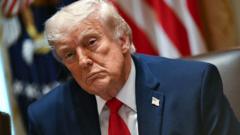
No deal announced after Trump meeting to make 'final determination' on Iran
The US president met his advisers, after officials confirmed the US and Iran had agreed a framework of a deal.
Center
With skirmishes breaking out around the Persian Gulf and a memorandum of understanding allegedly making its way to the president's desk, the Middle East is teetering between a new round of fighting and an uneasy peace. As of this writing, the terms of this MOU are not fully known, but reportedly for 60 days Iran will reopen the Strait of Hormuz in exchange for the United States lifting its blockade and allowing some oil sales. The post What’s the Deal With Iran? appeared first on .
The US president met his advisers, after officials confirmed the US and Iran had agreed a framework of a deal.

Defense Secretary Pete Hegseth on Saturday said the U.S. naval blockade in the Strait of Hormuz is “very much still in place,” as President Trump weighs a ceasefire extension with Iran that would unlock the critical energy corridor. Hegseth told NewsNation’s Kellie Meyer that the prolonged closure of the strait “came up relatively often” in…

“Patience, the President is patient. He's only going to get a great deal," Hegseth said.
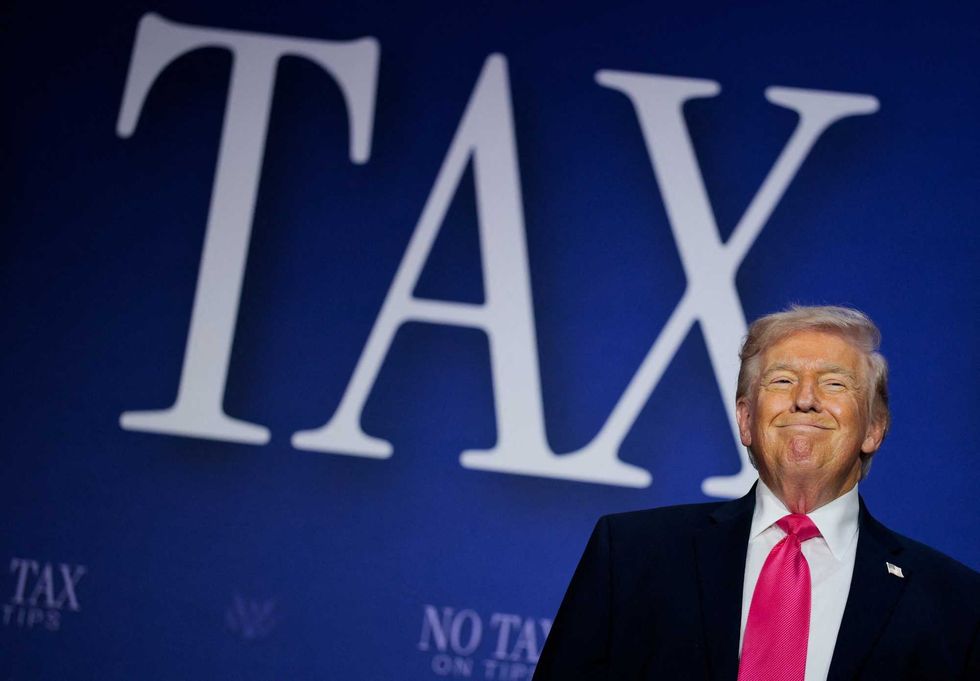
President Donald Trump reached an unprecedented agreement with his own Justice Department last week in which he, his family and his businesses would be granted broad tax immunity, but some experts say the agreement would be effectively worthless the moment Trump loses power, The Wall Street Journal reported Saturday, kicking off a potential tax reckoning.“[Acting Attorney General Todd] Blanche signed an agreement that is not worth the paper it’s written on – except that government personnel at present will not challenge it,” said Stuart Bassin, a former Justice Department tax litigator, speaking with the Journal.Trump reached the agreement after agreeing to drop his $10 billion lawsuit against the Internal Revenue Service (IRS) he filed over his tax returns leaking in 2019. In exchange, Trump received a nearly $1.8 billion taxpayer-funded settlement for his newly created “anti-weaponization fund,” designed to compensate those who’ve alleged to have been unfairly targeted by the Biden administration’s DOJ, including violent Jan. 6 Capitol rioters.In addition to the $1.8 billion settlement, the agreement also ended all pending audits of tax returns of Trump, his family and his businesses, despite the federal government having several "plausible defenses that it never asserted,” the Journal reported.Even so, several experts pointed out several flaws in the agreement. One, the agreement left open the opportunity for states to pursue their own audits of some of the president’s tax filings.“Trump and Blanche can give away federal stuff. They can’t give away the state stuff,” Bassin told the Journal.Secondly, the IRS has no deadline for unfiled gift tax returns, noted Duke University tax law professor Larence Zelenak, speaking with the Journal.“A future IRS could contend that Trump effectively received the $1.8 billion in the settlement agreement and directed it as gifts to fund recipients,” the Journal wrote, paraphrasing Zelenak’s comments. “Under that argument, which the settlement attempts to prevent, Trump could have taxable income and taxable gifts.”And thirdly, once Trump leaves the White House, the IRS under a different administration could simply perform an audit on Trump’s tax returns, the Journal’s report reads.“Typically, the IRS gets three years to audit a return, which would likely keep returns from tax years 2025 and beyond open to examination,” the report reads. “But there are exceptions that let the IRS reach further back. The IRS has six years if there are substantial omissions of income, and an unlimited amount of time to pursue tax fraud.”

Defense Secretary Pete Hegseth on Saturday pushed back against a statement from a U.S. military official that the Iran war has delayed a $14 billion arms sale to Taiwan. Acting Navy Secretary Hung Cao told senators last week that the U.S. was holding off on the deal in order to preserve America’s dwindling munitions stockpiles. …

President Trump met his national security team in the Situation Room where he said he would make a ‘final determination’ on a deal with Iran. NBC News’ Garrett Haake reports.
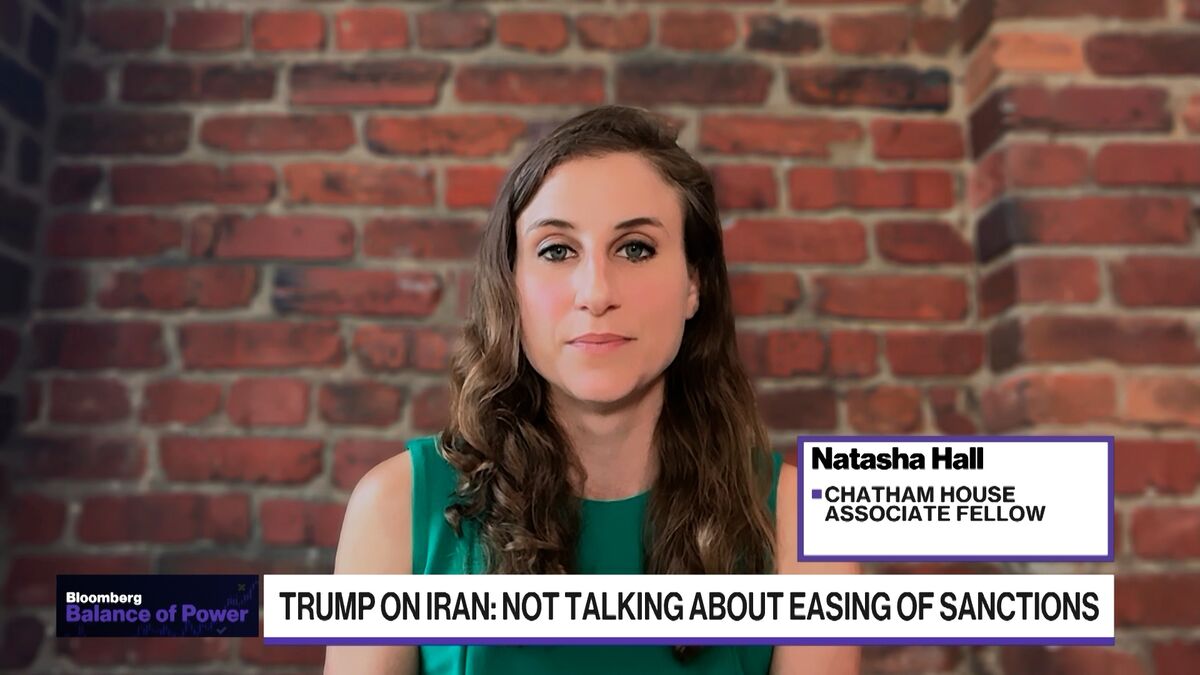
Natasha Hall, Associate Fellow at Chatham House, says the White House’s silence after President Trump was expected to decide on a new Iran cease-fire plan reflects “massive indecisiveness” over the conflict’s end goal. Hall adds that Iran’s regime has proven its resilience and that more US strikes are unlikely to force capitulation. She speaks with Kailey Leinz and Joe Mathieu on the late edition of Bloomberg’s "Balance of Power." (Source: Bloomberg)

"Balance of Power: Late Edition" focuses on the intersection of politics and global business. On today's show, Natasha Hall, Associate Fellow at Chatham House, says the White House’s silence after President Trump was expected to decide on a new Iran cease-fire plan reflects “massive indecisiveness” over the conflict’s end goal. Rep. Yvette Clarke (D-NY) says Louisiana’s new congressional map eliminating a majority-Black district is part of a broader redistricting push that is “devastating” for Black political representation. Moody’s Analytics Chief Economist Mark Zandi says the war with Iran needs to end immediately or recession will become more likely than not. Chris Hadfield, former International Space Station Commander, suggests Blue Origin’s rocket explosion is a setback for both Blue Origin and the entire space program. (Source: Bloomberg)