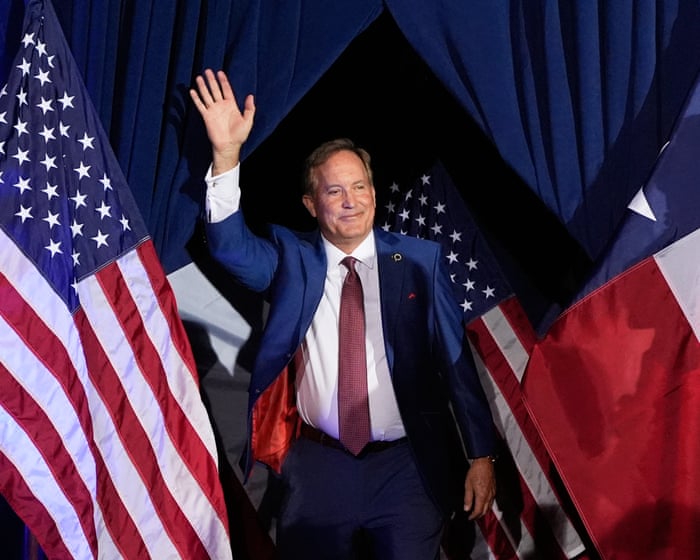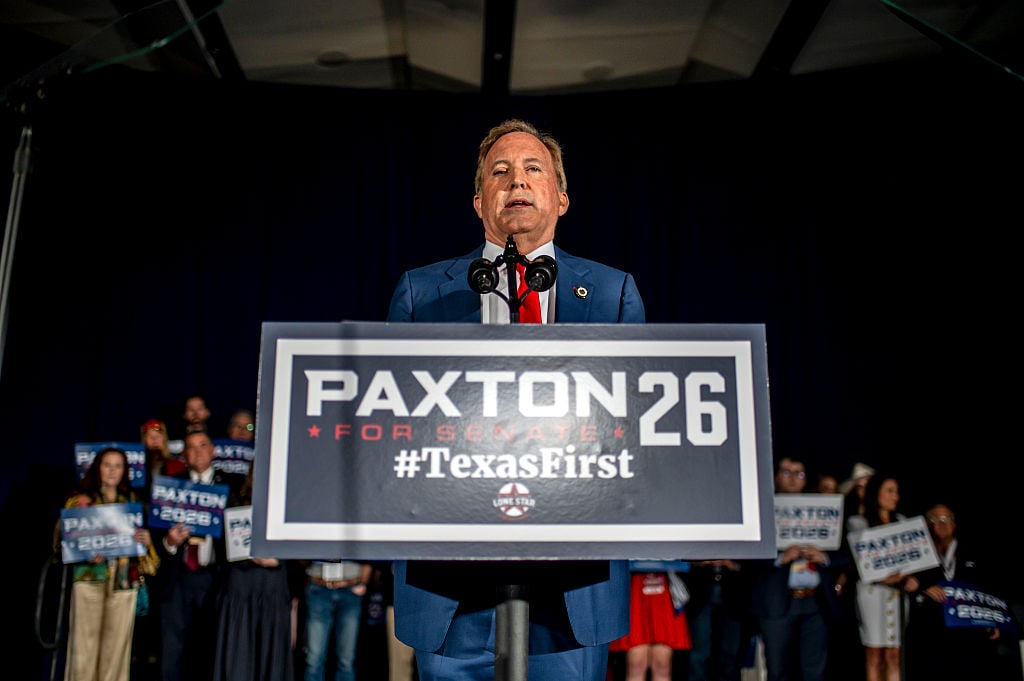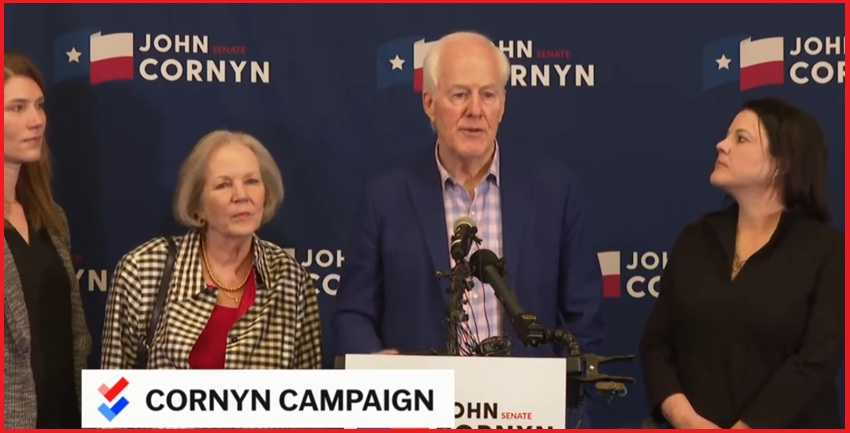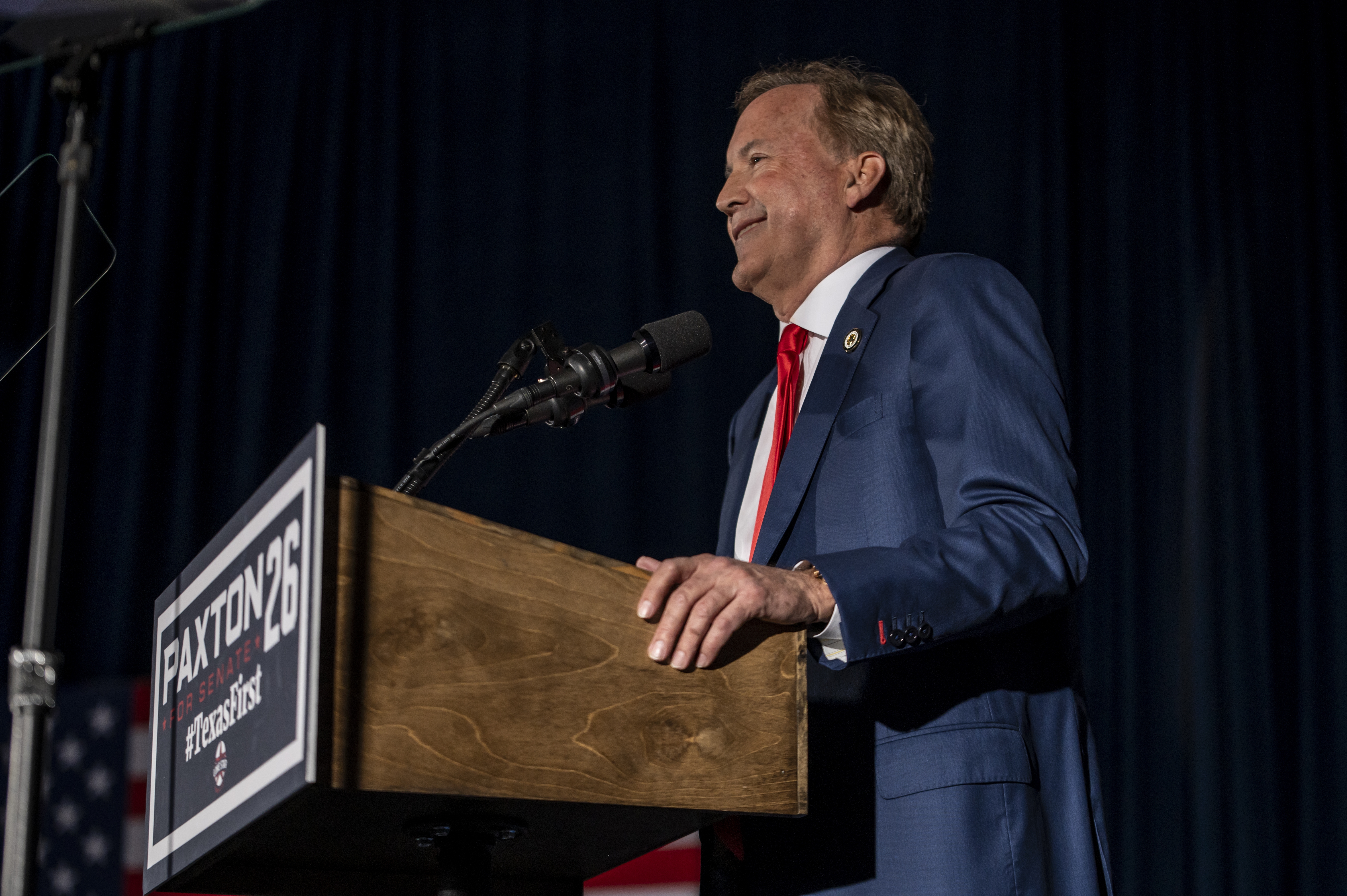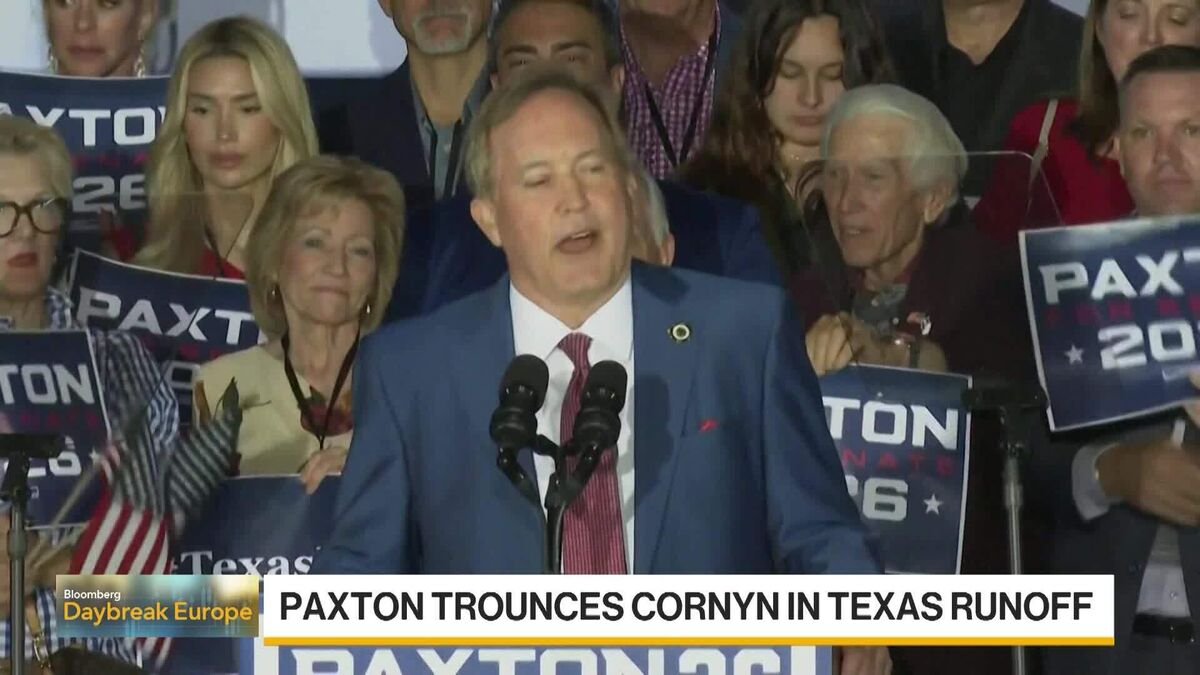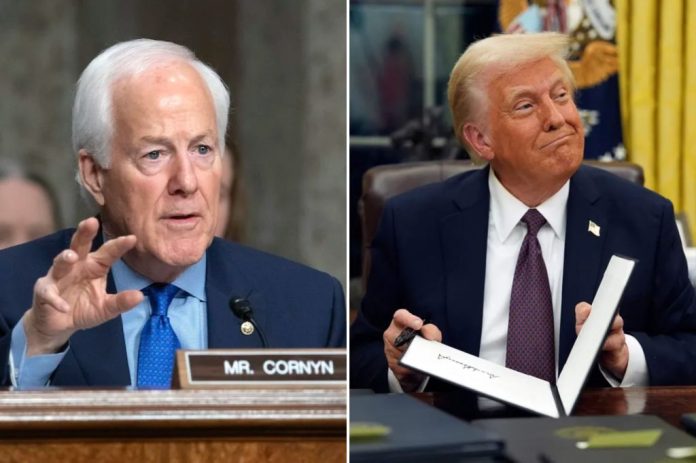
Trump celebrates Ken Paxton’s victory and congratulates ‘friend’ John Cornyn on ‘truly great career’
Center Right
President Donald Trump congratulated Sen. John Cornyn (R-TX) on his career in the Senate as he took to Truth Social to celebrate Ken Paxton‘s win in the Texas Senate GOP runoff. “Congratulations to Ken Paxton on such a tremendous win, and to John Cornyn for having run a strong and powerful race but, more importantly, […]
Homeland Security Secretary Markwayne Mullin took a swing at his former Senate colleagues over two notable incidents involving his department and Democratic lawmakers in the last year. Mullin was responding to a Tuesday post on the social platform X from Senate Minority Leader Chuck Schumer (D-N.Y.), who wrote, “When even U.S. Senators are targeted, every…
During the GOP's 2026 U.S. Senate primary in Texas, incumbent Sen. John Cornyn went out of his way to win President Donald Trump's support — from wanting to rename a highway after Trump to posting a photo of him reading "The Art of the Deal." But Trump endorsed Cornyn's challenger: far-right Texas Attorney General Ken Paxton, who defeated him by roughly 27 percent in a Tuesday runoff. According to Salon's Amanda Marcotte, Trump's treatment of Cornyn is a prime example of his willingness to throw a "loyal MAGA foot solider" under the bus — and do so at his own peril."Trump is already paying for his choice to endorse Paxton over Cornyn," Marcotte observes in Salon. "Senate Majority Leader John Thune has barely hidden his exasperation, complaining to reporters, 'None of us control what the president does.' Multiple Republican senators have refused to answer questions or expressed displeasure at the prospect of losing Cornyn, a fundraising powerhouse for the party…. Now, they have one more reason to resist Trump: He has proved he will not return any loyalty shown to him by legislators. Cornyn has been a loyal MAGA foot soldier, voting with Trump 99 percent of the time. His only real resistance has been in refusing to agree to the Big Lie that Joe Biden stole the 2020 presidential election, but even then, he still refused to vote for Trump;s impeachment over the January 6 riot."Marcotte continues, "Trump keeps the Republican caucus in line with fear he will endorse their primary opponents, and his endorsement of Paxton over Cornyn is that anxiety made manifest. But showing that even fierce loyalty to Trump won't guarantee Republicans safety also removes much of the incentive to stick by him."In Salon, Marcotte has written extensively about Republicans going to great lengths to please Trump only to get thrown under the bus in the end — for example, the firings of former U.S. Attorney General Pam Bondi and ex-Homeland Security Secretary Kristi Noem, both MAGA loyalists. Now, Marcotte argues, Trump has made Cornyn part of the "YOLO (You Only Live Once) caucus," meaning GOP lawmakers who won't be in Congress after January 2027 and will be more likely to speak their minds about the president. Senate Republicans often described as "YOLO" include North Carolina's Thom Tillis and Kentucky's Mitch McConnell, neither of whom is seeking reelection."Trump's inadvertent creation of a YOLO (You Only Live Once) caucus is looking to be a poor decision on his part," the Salon journalist observes. "Free from having to placate the infamous bully in chief, these Republicans are causing far more problems for him than they ever did when they were trying to stay in his good graces. They are trying to derail his slush fund, attacking and helping push out members of his Cabinet — and it looks like they may even kill the ballroom funding."Marcotte adds, "With only 53 senators in the caucus, adding one more Republican to the list of people who are angry at Trump could make it very hard for the president to will a majority on anything he wants to do, especially if it's already unpopular."
Former Attorney General Pam Bondi was diagnosed with thyroid cancer shortly after President Donald Trump removed her from the Justice Department last month, according to Axios.Bondi, 60, underwent treatment and is recovering, a source told the outlet. The diagnosis came weeks after Trump ousted her as AG in early April — a departure he framed warmly in a Truth Social post calling her "a Great American Patriot and a loyal friend."Katie Miller, a former White House communications staffer and wife of Deputy Chief of Staff Stephen Miller, effectively confirmed the news Tuesday evening when she posted on X: "Pam has been quietly kicking cancer's ass the last few weeks."Miller added that Bondi "has a heart of gold."Despite the health battle, Bondi is now returning to the fold. Trump has appointed her to the Presidential Council of Advisors on Science and Technology, a high-profile AI policy panel co-chaired by White House AI and crypto czar David Sacks and science adviser Michael Kratsios. The panel also includes tech heavyweights like Nvidia co-founder Jensen Huang, Meta CEO Mark Zuckerberg, and Oracle co-founder Larry Ellison.Bondi will be tasked with facilitating coordination between the federal government and the tech executives on the panel. She will also serve in a newly established advisory role focused on national infrastructure."Pam has been an enormously valuable asset to the president's team, and I'm thrilled for her and for all of us that she's going to remain involved," Vice President JD Vance said in a statement to Axios.Deputy Attorney General Todd Blanche has served as acting attorney general since Bondi's departure in early April.
The former President's latest legal action lodged on Tuesday in federal court comes just weeks before the DOJ's planned release of the explosive tapes and transcripts.
Budget constraints are forcing liberal-leaning states that spend their own money on healthcare for noncitizens to scale back that aid, as they grapple with federal Medicaid cuts and the expiration of federal subsidies that helped people buy Obamacare plans.Under federal law, immigrants who are in the country illegally are not eligible for federally funded health coverage.But as of last month, six states — California, Colorado, Illinois, New York, Oregon and Washington — plus the District of Columbia were spending state dollars to cover some income-eligible noncitizen adults regardless of their immigration status. A total of 14 states plus the district provide state-funded coverage to noncitizen children whether they are here legally or not. And three states — Colorado, New Jersey and Vermont — cover pregnant women regardless of their immigration status.In addition, 40 states have taken up options in Medicaid and the Children’s Health Insurance Program, known as CHIP, to provide coverage to lawfully present children and/or pregnant women who are not citizens.But the sweeping tax and spending bill President Donald Trump signed into law last summer cuts federal spending on Medicaid, the joint federal-state health insurance program for low-income people. It also places new eligibility restrictions on lawfully present immigrants, including refugees and asylees, who are enrolled in a variety of government-subsidized health programs, including Medicaid, CHIP, Medicare and plans available on the insurance marketplaces created under the Affordable Care Act, better known as Obamacare.And Congress at the end of last year failed to renew federal subsidies that helped people buy Obamacare plans.With less federal money to provide health benefits, at least five states (California, Colorado, Illinois, Minnesota and Washington) plus the District of Columbia have already scaled back or announced plans to scale back state-funded health benefits for immigrants. Other states also may have to pull back as budget pressures continue.“The federal government shifted much more of the financial burden of providing those services to states. And so states are taking a holistic view at their healthcare budgets and trying to figure out where they can cut,” said Medha Makhlouf, a law professor and the founding director of the Medical-Legal Partnership Clinic at Penn State Dickinson Law, who studies immigrants’ access to healthcare.“Historically and currently, as we’re seeing, immigrants are going to be the first to be cut, for a variety of reasons. They don’t have political power in the same way citizens do.”Drishti Pillai, director of immigrant health policy at KFF, a health policy research group, warned that the state cuts, combined with the federal changes, “will likely increase uninsured rates and reduce access to care among immigrants and their children, most of whom are U.S. citizens.“Over the long-term, these changes could lead to worse health outcomes that could be more complex and expensive to treat,” Pillai said.But Cooper Smith, director of homeland security and immigration at the America First Policy Institute, a conservative think tank that has worked on policy development with the current Trump administration, said that when budgets tighten, policymakers should prioritize U.S. citizens.“Taxpayers pay into a system,” Smith said. “I think it’s reasonable to expect that those who have paid into the system should be the primary beneficiaries of public benefit.”California has traditionally provided some of the most generous benefits. But last June, Democratic Gov. Gavin Newsom signed a state budget that barred immigrants who are here illegally from newly enrolling in the state’s Medicaid program, known as Medi-Cal. In addition, current enrollees between the ages of 19 and 59 will have to pay a new $30 monthly premium beginning in July 2027. And this July, the state will eliminate dental care for noncitizens.Newsom’s budget plan for next year proposes scaling back Medi-Cal coverage for some immigrants living in the country lawfully, including an estimated 200,000 asylees, refugees, and others with certain immigration statuses.California Democratic state Sen. María Elena Durazo is pushing legislation this session that would undo the enrollment freeze and restore access to full-scope Medi-Cal coverage for adults living in the U.S. illegally.“California immigrants are not going to go away,” Durazo said. “We need them. They’re agricultural workers, they’re food workers, they’re construction workers.“Are we going to not provide the minimal basic healthcare coverage and think that somehow it’s not going to come back to haunt us through emergency rooms and other counties and public hospitals?”Hannah Orbach-Mandel, a policy analyst at the nonprofit California Budget and Policy Center, said the state should find alternatives to the cuts, such as raising corporate taxes.