While delivering remarks at the opening ceremony of the Theodore Roosevelt Presidential Library in North Dakota, President Trump discussed the Supreme Court decisions on presidential power and birthright citizenship.
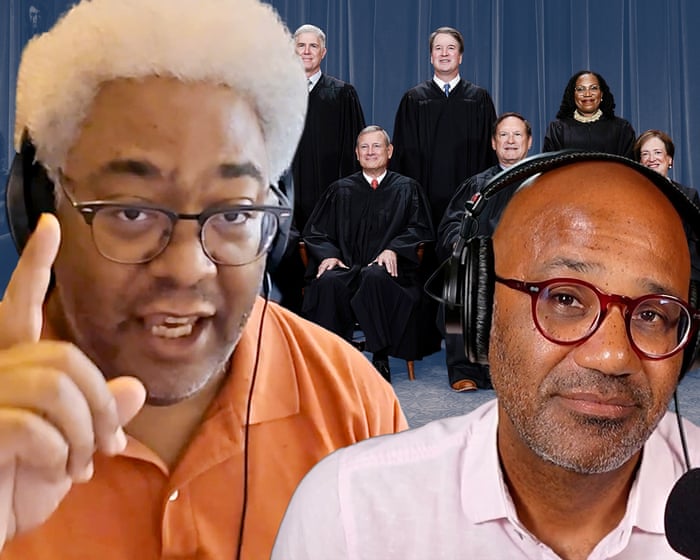
This term, the US supreme court handed down decisions on issues ranging from voting rights to immigration and birthright citizenship, reshaping life for millions of people. Kai Wright speaks with Elie Mystal, justice correspondent for the Nation, about how the court got all its power in the first place, and why Mystal thinks court reforms to reign in that power aren’t just constitutional – they’re necessary. Continue reading...
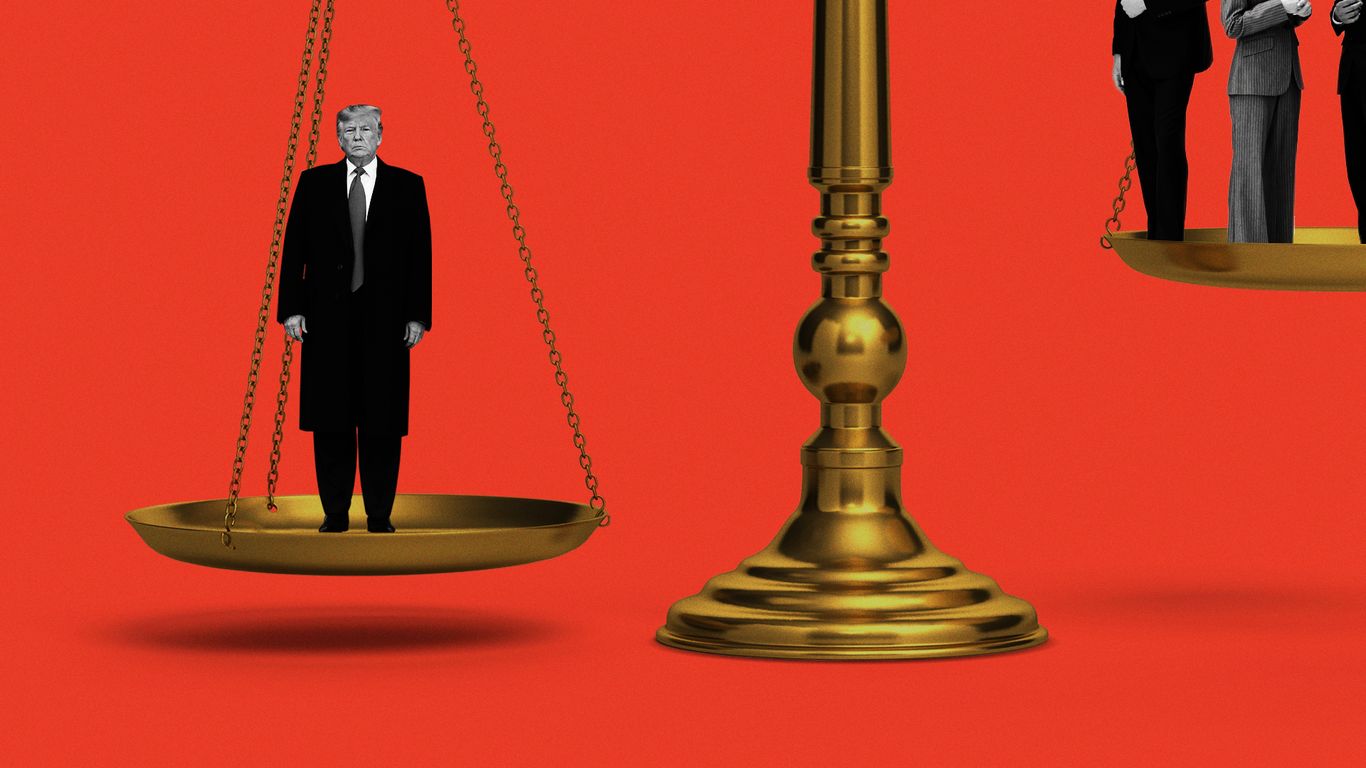
The Supreme Court spent its just-completed term sidelining Congress and amassing power for the ascendant branches of government: the presidency and the court itself.Why it matters: As the court strips Congress of its power, decisions over people's money, jobs, votes and health shift toward the president and nine justices appointed for life.After this term, Congress can't insulate regulators from the president, limit political parties' spending or require race-conscious voting districts.The big picture: For decades, conservative lawyers have argued the Constitution grants all executive power to one person: the president.The theory, called the unitary executive, holds that no one who enforces federal law is independent of the president. This term, it won out again and again.Between the lines: The justices overturned precedents, second-guessed Congress, brushed aside facts found by lower courts and applied textualism in ways even some adherents questioned.The result is a court increasingly willing to cast off constraints.Take the Federal Trade Commission case. In Trump v. Slaughter, they chose which parts of the FTC to keep (the powers Congress gave it) and which to shed (the independence Congress designed)."The Roberts Court has adopted for itself a line-item veto," Boston University legal historian Jed Shugerman, a well-known critic of unitary executive theory, tells Axios. It keeps the parts of a law it likes and tosses the rest.Zoom in: The court made it nearly impossible to use the Voting Rights Act to challenge maps that dilute Black and Latino voting power.It struck down limits on coordinated political party spending that the court had upheld in 2001.It curbed Congress' power to make state officials pay damages when they violate federal funding laws, in a case brought by a Rastafarian inmate whose head prison guards forcibly shaved.The court also allowed the president to keep withholding $4 billion in congressionally-appropriated foreign aid, at least for now — a move critics said encroached on Congress' most fundamental power, the purse."The real headline of the current term is 'Supreme Court rules for itself, 6–3,'" Georgetown Law professor Steve Vladeck tells Axios, even if it comes at the expense of Congress, lower courts, and, "every once in a while," President Trump.More and more of the court's power now flows through its so-called shadow docket, in which cases skip full briefing and argument, and orders arrive fast, unsigned and often unexplained.There, the justices have refereed Trump's most contested moves: immigration crackdowns, frozen foreign aid, mass firings of federal workers, changes to voting maps, transgender passport restrictions and more.Reality check: The president didn't win everything. Chief Justice John Roberts wrote all three major rulings against Trump: blocking emergency tariffs, sparing Federal Reserve governor Lisa Cook for now, and rejecting his order to end birthright citizenship.The court reached for whatever legal philosophy delivered the result it wanted, Shugerman says.To end the FTC's independence, the court invoked a rigid rule: the president controls the executive branch. To spare the Fed's autonomy the same day, it carved out an exception that Justices Clarence Thomas and Amy Coney Barrett rejected as an unprincipled "contradiction."Race was a constitutional problem when Louisiana relied on it to protect Black voting power. But allegations that racial animus motivated the Trump administration's decision to end protections for Haitian immigrants didn't stop the court from green-lighting the policy."Some days the court is originalist, and other days it's not," Vladeck says. The justices, he says, use history and text "the way a drunk uses a lamppost: for support, not for illumination."Yes, but: Trump's biggest defeat doubled as the term's loudest warning.On birthright citizenship, four justices were willing to say Trump's order didn't violate the 14th Amendment.The fact that a position deemed "outlandish as recently as a decade ago got four votes," Vladeck says, will "embolden" the next wave of once-fringe constitutional arguments.The bottom line: Congress grows weaker every year, the executive branch gets stronger, and everyone waits to hear from the strongest branch of all: the Supreme Court.
Minnesota Governor Tim Walz has a rather creative take on the Supreme Court’s ruling on transgender athletes. The hotly contested issue of biological boys competing against girls […]
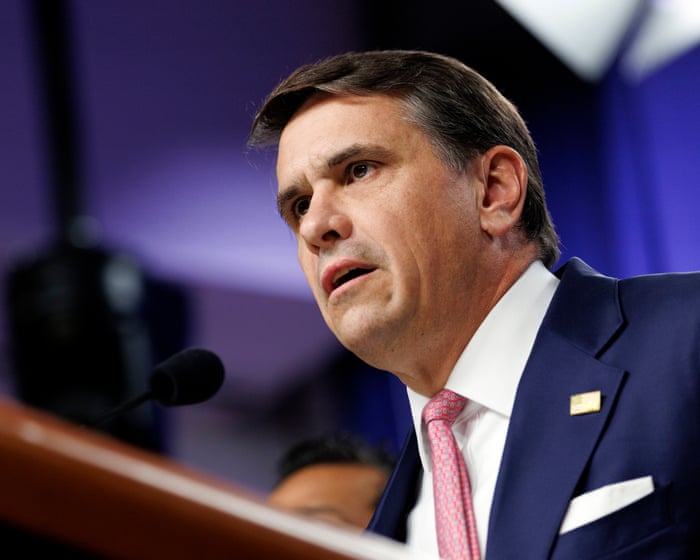
Todd Blanche to target tourists and migrants despite such births accounting for less than 1% of US babies born yearlyA day after the US supreme court upheld the constitutional guarantee of birthright citizenship, the acting attorney general, Todd Blanche, has said federal prosecutors and law enforcement officers will focus on combating so-called “birth tourism” – the process of tourists, temporary visitors and undocumented immigrants traveling to the US and giving birth.“There’s other things that [the Department if Homeland Security] can do, and the federal government can do in the visa process, and the application process, to try to minimize or limit the opportunity of folks coming here not to visit, and not to do what they’re saying they’re doing on the tourist visa, but just to have a baby that can then be a US citizen,” Blanche told reporters. Continue reading...
Acting Attorney General Todd Blanche announces on Wednesday DOJ will prioritize prosecutions of birth tourism schemes involving visa fraud as foreign nationals continue exploiting U.S.
The post DOJ Launches New Crackdown on Birth Tourism After Supreme Court Blocks Trump’s Birthright Citizenship Order appeared first on The Gateway Pundit.