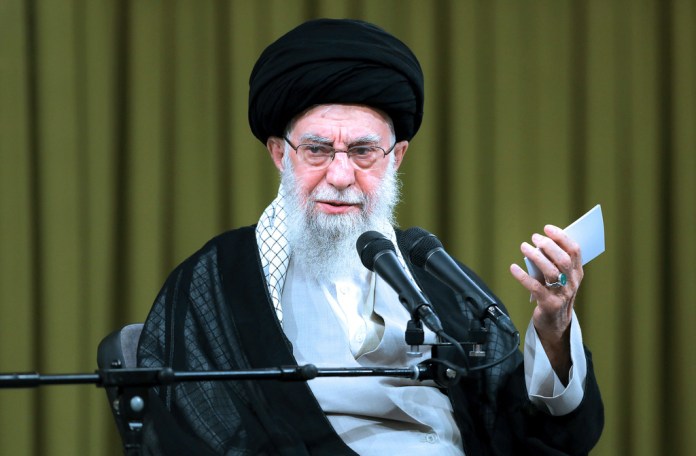
The U.S. military and its ally Israel have struck the Islamic Republic of Iran. The Trump administration’s decision to attack followed weeks of waiting and speculation amid the largest military buildup in the Middle East in twenty years. But the strikes themselves were decades in the making. The Iranian regime had its chance, and now […]
The U.S. military and its ally Israel have struck the Islamic Republic of Iran. The Trump administration’s decision to attack followed weeks of waiting and speculation amid the largest military buildup in the Middle East in twenty years. But the strikes themselves were decades in the making. The Iranian regime had its chance, and now […]
As America celebrates 250 years of independence, Rose Unplugged takes a thoughtful look at the ideas that made this nation unlike any other in history—and asks whether we still have the courage to preserve them.
The post Rose Unplugged Fourth of July Special: 250 Years Later: A Republic to Keep (VIDEO) appeared first on The Gateway Pundit.
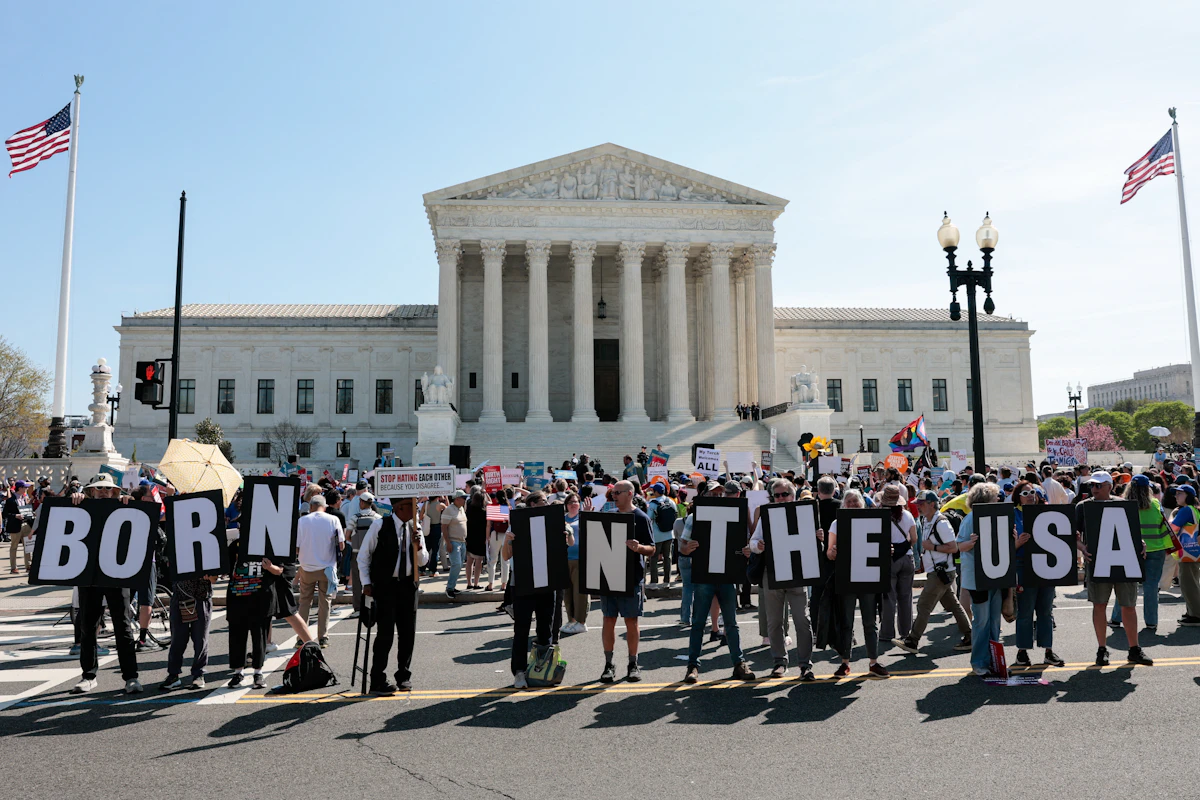
The Supreme Court struck down President Donald Trump’s executive order that sought to curb birthright citizenship on Monday, dealing a crushing blow to the administration’s efforts to redefine a central tenet of the American constitutional order.“Citizenship, then and now, was the right to have rights—to freely participate in our political community,” Roberts wrote for the court in Trump v. Barbara. “The Framers of the Fourteenth Amendment extended that promise to ‘every free-born person in this land.’ We keep that promise today.”Roberts was joined by Justice Amy Coney Barrett, a fellow conservative, as well as the court’s three liberal members: Justices Sonia Sotomayor, Elena Kagan, and Ketanji Brown Jackson. Standing athwart the majority were Justices Clarence Thomas, Samuel Alito, Neil Gorsuch, and Brett Kavanaugh, who all wrote separate dissenting opinions.Thomas, who led the charge, argued that the Citizenship Clause meant to affirm citizenship only for formerly enslaved Black Americans after the Civil War. He leaned heavily on the idea that one’s parents must be “domiciled” in the United States to acquire U.S. citizenship at birth, as well as a burst of right-wing legal “scholarship” that emerged last year to sloppily backfill a legal rationale for Trump’s executive order.“I am not sure that today’s opinion will stand the test of time,” Thomas wrote in his dissent. “The Citizenship Clause ‘added greatly to the dignity and glory of American citizenship.’ Today’s opinion devalues that citizenship.” Alito, who wrote separately, also lamented that the court had “made a serious mistake” in his view in “one of the most important decisions in the history of the court.”Alito is right, if nothing else, about the decision’s significance. By affirming the longstanding rule of birthright citizenship, the Supreme Court prevented the Trump administration from robbing millions of Americans of their constitutional right to live in the only country that they have ever known. In short, as our nation’s 250th anniversary nears, it is a victory worth celebrating.Congress and the states ratified the Fourteenth Amendment in 1868 to resolve a variety of post-Civil War legal disputes, mainly involving the rights of formerly enslaved Black Americans in the South. Among the amendment’s provisions is the Citizenship Clause, which states that “all persons born or naturalized in the United States, and subject to the jurisdiction thereof, are citizens of the United States.”The Civil Rights Act of 1866 had already affirmed the citizenship of formerly enslaved Americans by statute, but Republicans in Congress sought to entrench it even further and place questions of citizenship beyond future political dispute. The Fourteenth Amendment’s ratification also permanently nullified the Supreme Court’s disastrous 1857 decision in Dred Scott v. Sandford that held, among other things, that people of African descent could never become citizens of the United States.The Citizenship Clause’s sole exception was for people who were not “subject to the jurisdiction” of the United States at birth. This language applied, according to contemporaries, to children born to foreign diplomats who possess diplomatic immunity, as well as to Native Americans living under tribal governments beyond U.S. jurisdiction. The former exception is still operative; the latter was superseded by the Indian Citizenship Act of 1924, in which Congress extended U.S. citizenship to all Native Americans by statute.In 1898, the Supreme Court affirmed the clause’s protection of birthright citizenship in United States v. Wong Kim Ark. The plaintiff was born in San Francisco to Chinese parents who had emigrated to California prior to the enactment of the Chinese Exclusion Acts. They returned to China with Wong in the 1870s, where he lived until adulthood before returning to California multiple times. On the second trip, in 1895, customs officials detained Wong and denied him permission to enter the country because, in their view, he was not a U.S. citizen.The Supreme Court reached the opposite conclusion when it ruled on the case three years later. Justice Horace Gray, writing for the high court, held that Wong had acquired U.S. citizenship by virtue of his birth on U.S. soil, even though his parents were not U.S. citizens themselves and later returned to China. As a result, the court affirmed the principle of birthright citizenship for anyone within U.S. jurisdiction. The Nationality Act of 1940 later repeated the clause’s language into statutory law.At odds with this longstanding view of American citizenship is the Trump administration. President Donald Trump has long viewed himself as the arbiter of who is and isn’t an American. His initial entry into the American political scene came in the early 2010s when he falsely claimed that President Barack Obama was born in Kenya and thus not a natural-born citizen.
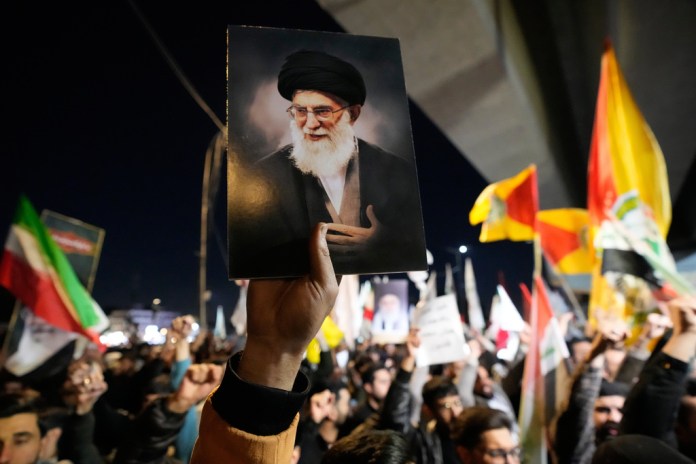
Iraq is a sovereign country. It should not be used as a stage for the political theater of the Islamic Republic of Iran. Reports that funeral ceremonies for Iran’s late supreme leader Ali Khamenei are expected to pass through Iraq, including Najaf and Karbala, should alarm anyone who still believes Iraq’s state institutions must answer […]
The Supreme Court’s decision Monday affirming Trump’s right to fire Federal Trade Commission members opens the door for him to finally dismantle the Deep State once and for all.
President Donald Trump and the Republican Party are in "a race against time," according to The Hill, as they face "bleak" odds of addressing one of voters' biggest concerns ahead of the midterm races.The cost of living and general economic affordability remain the most pressing issues for voters this year, and numerous polls have indicated that a significant number of them blame Trump directly for the current state of affairs, particularly the problem of runaway inflation. In the face of his mounting unpopularity, the GOP has been staring down increasingly worse midterm odds and seems poised to lose one or both of its congressional majorities to Democrats in November.According to a Monday morning report from The Hill, Trump and his party are desperately "hoping that inflation can be bent downward in time to revive their chances in November’s midterm elections," but their outlook is not strong."New data released late last week on personal consumption expenditures (PCE) showed inflation above 4 percent," the outlet explained. "Even excluding food and gas costs, so-called core inflation was at 3.4 percent for the year ending in May. This, in turn, makes an imminent reduction in interest rates by the Federal Reserve much less likely — despite Trump’s clamoring for it."The report continued: "Gas prices also remain elevated, with the national average cost per gallon at $3.90 on Friday, according to AAA. Although down from its apex, this price is still almost $1 above the level that was seen just before Trump and Israeli Prime Minister Benjamin Netanyahu attacked Iran in late February."The Hill also noted some signs of hope for the party, specifically the plummeting cost of oil in the wake of Trump's shaky ceasefire deal with Iran. This, however, does not guarantee that the prices consumers see at the pump will be down enough before November.“We have time, but we don’t have that much time,” GOP strategist Matt Mackowiak told The Hill. “There are several reasons for Republicans to believe things are going to get better. The questions are: How much better are they going to get, and how much are voters going to feel it?”"The polling numbers demonstrate just how steep a climb the president and his party are facing," the outlet added. "Inflation is consistently the issue on which Trump performs worst when voters are asked about his performance in office. In the polling averages maintained by RealClearPolitics, Trump’s net rating is almost 40 points underwater on the topic. A Reuters/Ipsos poll released last week found that just 22 percent of adults approved of how Trump was handling their cost of living, while 69 percent disapproved."It continued later: "Most pertinently of all, inflation has remained stubborn. In November 2024, the month of Trump’s reelection, the annualized rate of inflation was 2.7 percent. The reading one year later was exactly the same. The rate ebbed slightly at the start of this year, only to ramp up again as a consequence of the war with Iran."
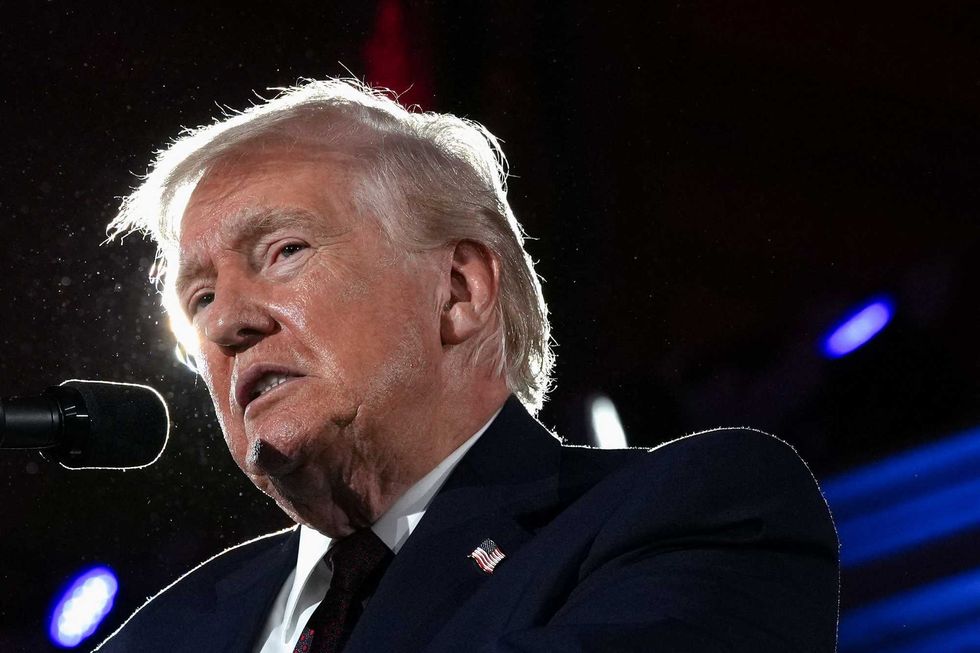
President Trump on Saturday threatened to wipe Iran off the face of the Earth after US forces launched strikes against the country for its violations of the 60-day memorandum of understanding and ceasefire. "It is very possible that they will never learn!" Trump said, noting that Iranian missile, drone storage locations, and coastal radar sites were hit by US aircraft.
The post NEW: Trump Threatens “the Islamic Republic of Iran Will No Longer Exist” Following Collapse of Ceasefire appeared first on The Gateway Pundit.