


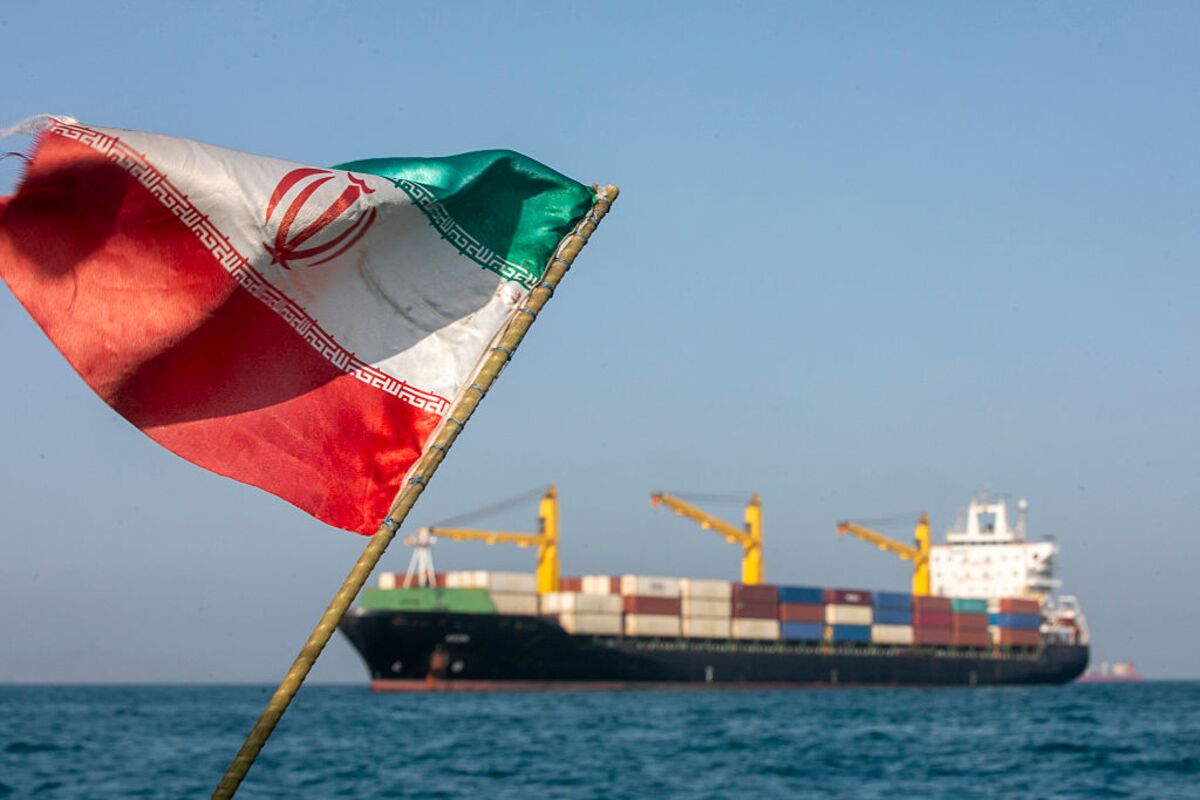
The Iran Talks: How the Administration Sees Things Now
Center Right
In the last couple of days the Iran war has been going through another one of the up-and-down news cycles - in which some sort of resolution seems imminent and then not so imminent - that have become a familiar story.
President Trump announced on Monday that he wants every country involved in US-Iran negotiations to sign on to the Abraham Accords as a mandatory term of a peace agreement. Trump famously brokered the agreement to normalize diplomatic, economic, and security relations between Israel and Arab nations in his first term.
The post NEW: Trump Calls for All Arab Mediators and Iran to Sign Abraham Accords as Mandate for Peace Deal After Pressure From Lindsey Graham appeared first on The Gateway Pundit.
President Donald Trump said he is “mandatorily requesting” that several Gulf States join the Abraham Accords, a landmark agreement between Israel and multiple Arab nations to establish relations, as a part of a broader deal with Iran to end the conflict. The Trump administration is negotiating an end to the war in Iran, but there […]
Oil prices decreased early Monday amid negotiations between the Trump administration and Iran on reopening the Strait of Hormuz and ending the Middle East conflict. West Texas Intermediate crude futures, the benchmark for North American markets, dipped by more than 6.1 percent to $90.68 as of early Monday. Brent crude futures, the global benchmark, dropped…
We know the Trump Department of Justice has threatened individuals it considers political opponents. Echoing authoritarian regimes worldwide, they’ve now indicted the Southern Poverty Law Center (SPLC). In response, major Donor-Advised Funds (DAFs), including Vanguard, Fidelity, and Schwab, have prevented clients from donating to SPLC, cutting the organization off from funding without even a shred of due process. If the DAFs follow this precedent, it could eliminate a key source of funding for any nonprofits this—or any future—administration chooses to attack.The funds claim their action is necessary because, according to the administration, it constituted fraud for SPLC to have paid hate group informants. But federal and state law enforcement agencies have known about the infiltrations for years, using information they provided to help secure indictments and convictions. So the charges are spurious.Fidelity justified its actions by citing a policy of pausing DAF giving if an organization “is being investigated for alleged illegal activities…such as terrorism, money laundering, hate crimes or fraud,” or if “state and federal agencies” are investigating a charitable organization. Schwab’s fund quietly removed SPLC from its list of eligible nonprofits, and a representative read me similar boilerplate, saying the fund was deciding on next steps. The danger is far larger than the SPLC case. The listed criteria would let federal or state authorities cripple any nonprofit they choose, simply by launching an investigation. The organization doesn’t have to be convicted, or even indicted. They just have to be investigated, which makes this a perfect way to target political opponents. The administration has already issued a memorandum promising investigations of groups that promote “anti-fascism,” “anti-Christianity,” or “hostility” toward “traditional American views on family, religion, and morality.” It’s threatened Wikipedia, the Vera Institute for Justice and the governmental watchdog Citizens for Responsibility in Ethics in Washington, not to mention major universities. All the federal government, or even a state government, would need to do to launch a DAF freeze is to open an official public investigation. And these major DAFs would then block the targeted organization from receiving funding. The implications aren’t confined to the Trump administration. Under this precedent, Democrats holding power could do the same to disfavored nonprofits. Just launching an investigation would cut off a significant part of a targeted organization’s money flow. The defunding or banning of targeted NGOs is exactly what Vladimir Putin did in Russia, Viktor Orbán in Hungary, Recep Tayyip Erdoğan in Turkey, and Nicolás Maduro in Venezuela. It’s a classic way to eliminate opposition and consolidate power. And the anticipatory compliance of Vanguard, Fidelity, and Schwab is the exact kind of response that empowers would-be dictatorships, whatever their politics.If a nonprofit is convicted of fraud or money laundering, it’s of course legitimate to remove or suspend their 501(c)(3) nonprofit status. But SPLC has neither been tried nor convicted, so the DAFs are letting a hostile administration’s mere accusation of wrongdoing become an excuse to block funding. The $326 billion of money that DAFs hold is part of the lifeblood of nonprofits. The actions of these DAFs directly undermine democracy by excluding a group the administration has targeted and potentially denying funding to other targeted groups. That’s true whatever you think of SPLC.If there’s a nonprofit that could weather this, it’s SPLC, with its $786 million endowment. I don’t give to them because I think other groups are more impactful for the money they spend. But if the Trump administration and its enablers can do this to SPLC, they can do it to far smaller and more vulnerable nonprofits. For instance, they could target nonpartisan voter engagement groups, drying up funding (including pledged contributions) at the point when these groups need it the most to engage citizens in democracy. Damaging attacks on nonprofit funding also don’t have to come from the federal Department of Justice. Under Fidelity’s criteria, attacks could come from state governments as well, with potential targets including either conservative or liberal groups depending on which party runs a particular state. But ordinary citizens have the power to change this. The campaigns that got ABC to reinstate Jimmy Kimmel offer a model. This issue has less visibility, but for the nonprofits it could affect is equally critical. If we have money in a DAF, our calls or emails could well make the difference. Schwab told me that they’d been getting lots of critical responses. But even if we don’t have a DAF, nearly 60% of us have retirement or other investment accounts, with most housed at the major affiliated brokerages.
President Trump and other administration officials are tempering expectations raised of an imminent agreement to end the war in Iran while Iranian officials have signaled there are still disagreements on key issues.
The Trump administration and Iran both say progress is being made to end the war but there’s no deal yet. President Donald Trump says he’s told his representatives “not to rush into a deal,” while an Iran spokesman said, “No one can claim an agreement is about to be signed imminently.” The key terms at issue are Iran’s nuclear program and the fate of nearly 1,000lbs of highly enriched uranium, and control over the Strait of Hormuz. NBC’s Richard Engel reports for TODAY.