The fight that scrubbed the world's most powerful AI models from the internet featured personality clashes, industry confusion, and international backlash.Why it matters: Anthropic's models are back online, but the impact of its 20-day showdown with the Trump administration will be long lasting.Behind the scenes: It began when Amazon, Anthropic's partner and investor, sounded an alarm that was later disputed by cybersecurity experts.It warned about a "jailbreaking" issue it found with the AI lab's latest models, Mythos and Fable — meaning a technical flaw that could have caused a failure of their guardrails.Amazon flagged its concerns to the administration, triggering sweeping export controls. A U.S. official said the government conducted its own tests once it became apparent that the issue needed to be addressed.Cybersecurity experts, however, later wrote in an open letter to the administration that other leading AI models have the same issue Amazon warned about with Anthropic.On June 12, Commerce Secretary Howard Lutnick, at the direction of President Trump, called Anthropic CEO Dario Amodei. Lutnick made clear to Amodei the issue needed to be resolved fast and alerted the CEO that the company would be receiving a letter imposing sweeping export controls, the U.S. official said.Amodei called Lutnick back that night after receiving the letter, realizing it effectively meant the models would have to be taken offline — to which Lutnick responded that was indeed the goal.That decision led to a three-week, multi-agency crash course in AI safety.Anthropic deployed engineers to Washington D.C. According to a U.S. official, the company wanted to prove everything was already resolved and further changes were being fine tuned.But the federal Center for AI Standards and Innovation and the National Security Agency said those changes weren't good enough, prompting further fixes, according to the U.S. official.Gradually, various agency heads approved of the changes, and on July 1 the models were released, the official said.Out of all of the administration officials Amazon's Andy Jassy could have called, it was Treasury Secretary Scott Bessent who first heard about the jailbreaking issue found in the company report, according to a separate source familiar.Bessent was early to sound the alarm on Mythos, work with White House Chief of Staff Susie Wiles to re-engage the embattled company, and help get a cybersecurity executive order across the finish line.While technical discussions to address the jailbreaking issue took place in D.C., it was Bessent who stood next to President Trump during the G7 where allies called for global cooperation on safety standards.At the center of the showdown was Commerce Secretary Howard Lutnick, who also flanked Trump at the G7 meeting while his department's teams led technical discussions.National cyber director Sean Cairncross, the White House Office of Science and Technology Policy, Treasury Department chief information officer Sam Corcos, and the NSA also all participated in technical discussions, according to various sources.Washington mobilized faster to hold scores of meetings and pulled in far more agencies than one would expect for a single technical issue, one source said.The tension spiraled amid personality clashes and poor communication.Anthropic eventually understood that in order to be successful they needed to be on the same side as the government, the U.S. official said.As discussions turned more technical, Anthropic policy chief Sarah Heck and Anthropic co-founder Tom Brown got more involved. Brown also had multiple conversations with Lutnick and Cairncross the weekend of June 12.There was never a moment where Dario stepped offstage and someone else replaced him, one source said, adding that Brown's technical expertise allowed him to sit in a room with government specialists and go line‑by‑line through how models behave under stress.Between the lines: It remains uncertain when and how Anthropic's models will be released to ally countries around the world — which proponents say is key to beating China — or how other labs from OpenAI to Google will release their latest models.OpenAI, whose latest model GPT-5.6 is on hold, did not have visibility into discussions between Anthropic and the White House and is engaged in daily technical discussions on the release of its own model, a source said.The bottom line: There's a lot of work left to be done on a framework for approving future models with a clear inclusive process that has transparency standards and timelines, sources familiar said.
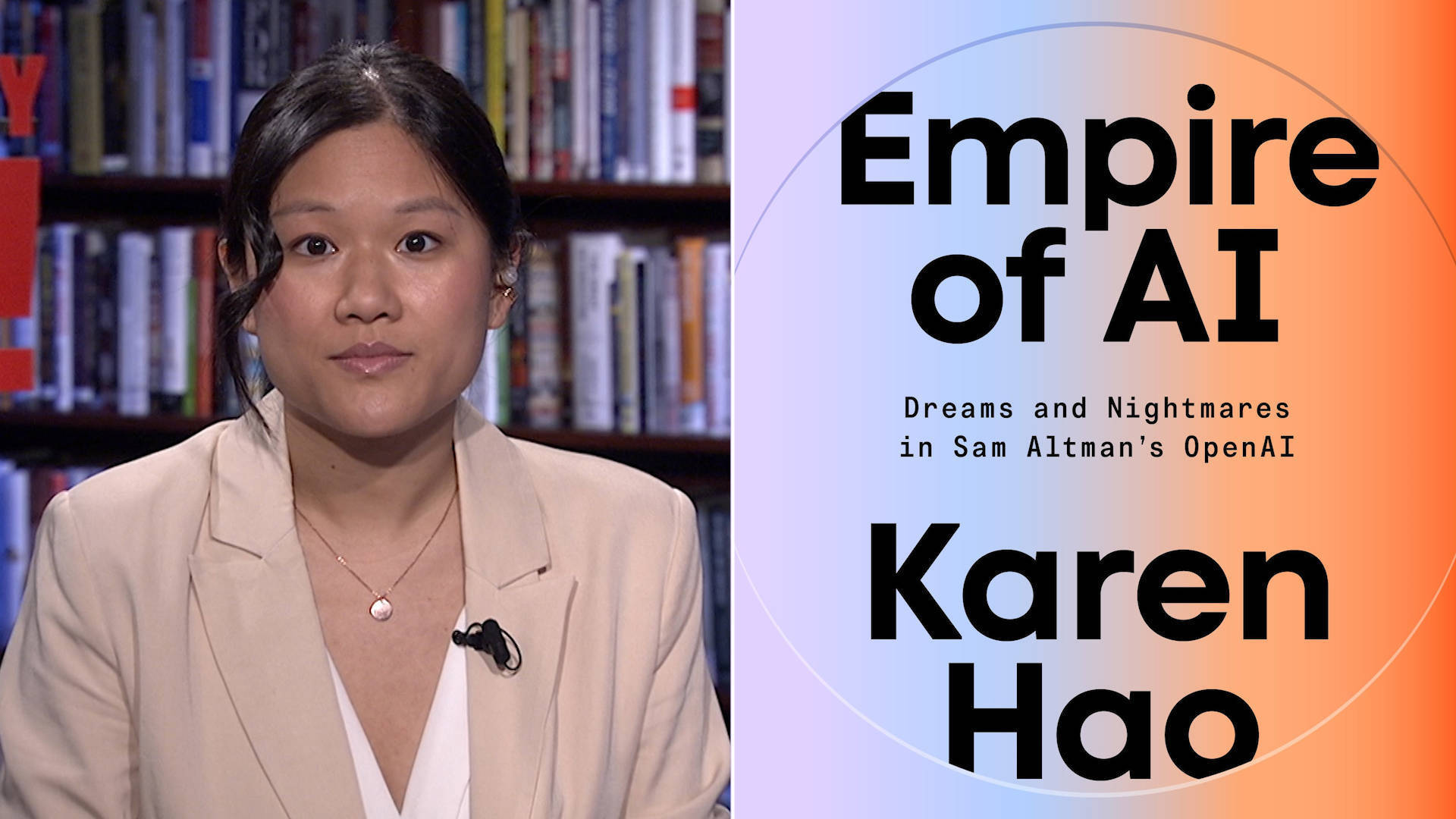
In our July Fourth special broadcast, we revisit our interview with longtime technology reporter Karen Hao, author of Empire of AI, which unveils the accruing political and economic power of artificial intelligence companies — especially Sam Altman’s OpenAI. Her reporting uncovered the exploitation of workers in Kenya, attempts to take massive amounts of freshwater from communities in Chile, along with numerous accounts of the technology’s detrimental impact on the environment. “This is an extraordinary type of AI development that is causing a lot of social, labor and environmental harms,” says Hao in an extended interview.
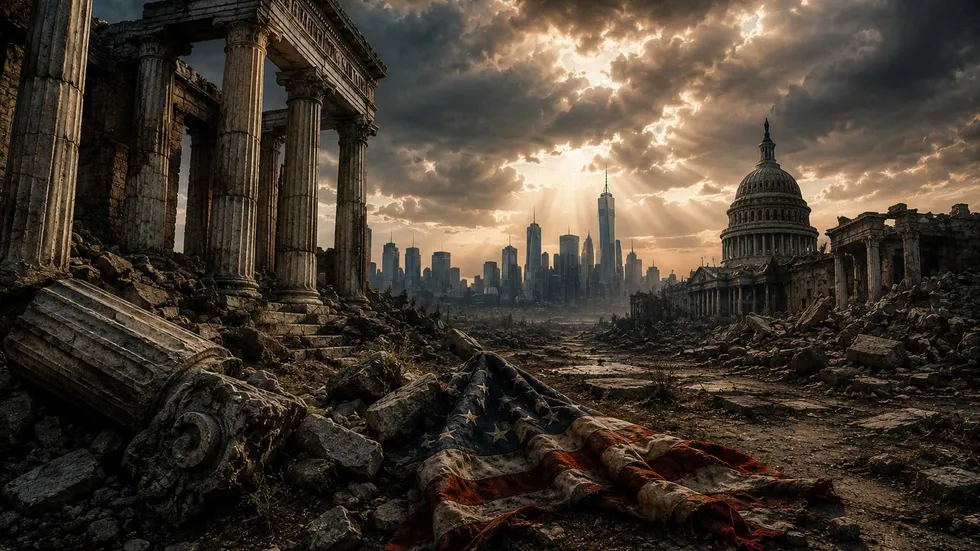
Modern people tend to see knowledge as something humanity achieves collectively and then keeps forever. Once a scientific advance or moral truth is discovered, we assume it becomes part of the species’ permanent inheritance.That is false.Tradition is not a museum display. It is not a costume we wear on patriotic holidays. It is a discipline.Truth may be eternal, but our knowledge of it is not. Knowledge can be lost when a civilization stops practicing it. As America celebrates its 250th anniversary, we must understand that remembering our traditions and values is not enough. To keep them alive, we must embody them in what we do.Ancient Rome is remembered as one of the most powerful civilizations in history and also one of the most technologically advanced. The Romans developed special concrete and engineering techniques that allowed them to build extraordinary structures and civic infrastructure.When Rome fell, those techniques still existed in one sense. They had been discovered. But they were lost to time because the people who possessed the knowledge could no longer practice it or pass it on. The scientific truth remained objectively real, but without the civilization that had maintained it, the knowledge faded as if it had never existed.People lived in the ruins of ancient wonders, taking shelter in buildings they could not build or maintain. Without the continuity of tradition, science had no practical meaning.Moral truth faces the same danger.The Old Testament shows a repeated cycle of Israel receiving divine revelation and then forgetting what had been handed down by God Himself. Again and again, the nation falls away from the commandments of the Lord until a prophet pulls an old scroll from its rack and reminds the people of what they once knew.The Israelites cry out and rend their garments in repentance. They practice the truth for a time. Then, the practice fades, and knowledge fades with it.RELATED: A real nation knows who is in and who is out Blaze Media IllustrationDespite receiving direct divine revelation, Israel — and humanity itself — could not maintain the practice of God’s truth. That is why the Lord sent his Son as a perfect example and living sacrifice, an eternal embodiment for all nations to see what the righteous life looks like in practice.This weekend, America will celebrate its 250th anniversary. But saying that we honor our traditions and culture is not enough.Most Americans have spent little to no time reading what the founders actually wrote. Their understanding of our national traditions comes from a heavily curated version of history they learned in school. There will be plenty of talk about celebrating the country’s past. What we need is a revival focused on living that tradition in the present.Sentimentality is nice. It will not save the country.Today, most Americans, including many conservatives, say the religious liberty guaranteed by the First Amendment means Muslims cannot be prevented from moving here and building entire cities dedicated to their way of life. The average American believes Hindus have a First Amendment right to immigrate and build giant statues of their demonic gods in Texas.This is absurd.States often required public officials to be professing Protestant Christians well into the 1840s, decades after the Bill of Rights was adopted. Even Catholics were often considered too foreign to hold office. None of this was viewed at the time as a violation of religious liberty. The idea that religious liberty was intended to allow Muslims or Hindus to control the public square is a lie.The entire “tradition” of religious liberty many people think they are honoring is false.The Supreme Court recently provided another example by ruling that the 14th Amendment guarantees birthright citizenship for the children of illegal aliens. The 14th Amendment was one of three amendments added to the Constitution after the Civil War to address the legal framework for freed slaves.Its purpose was to clarify that people born into slavery became citizens once they were free. That intent was made clear by the people who authored the amendment. It did not create citizenship for American Indians, for example, or other groups added later through law and policy.The idea that birthright citizenship for illegal aliens is some grand American tradition is entirely false. Yet a conservative Supreme Court just enshrined it in the Constitution.This is what happens when a people inherit words without preserving the practices and assumptions that gave those words meaning. They recite “religious liberty” and forget the civilization it was meant to protect. They invoke “equal citizenship” and forget the specific injustice the 14th Amendment was written to remedy. They honor the shell while abandoning the substance.A nation does not preserve itself by remembering slogans once a year.
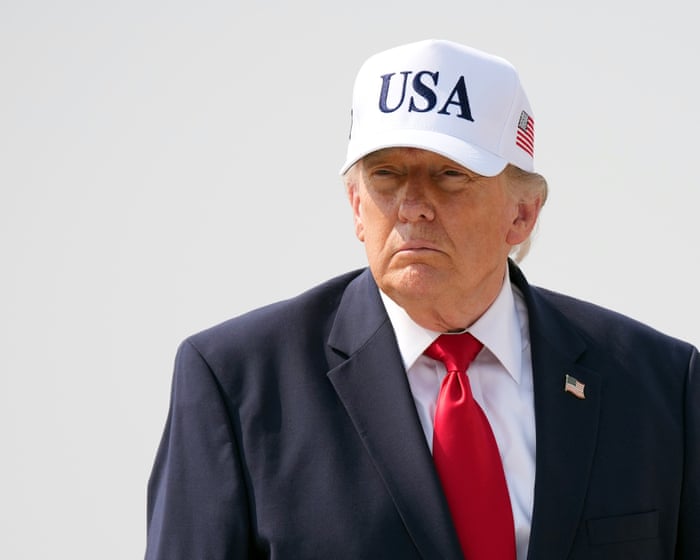
President, in latest AI-generated social media post, targets prominent celebrities who have spoken out against himDonald Trump on Thursday posted an AI-generated social media video portraying himself as a doctor who claims to have cured some of his most prominent celebrity critics – including Rosie O’Donnell – of the fictional condition “Trump derangement syndrome”.Outside the AI fantasy, O’Donnell said her assessment of the president remained unchanged. In a statement, she offered her own diagnosis: “He’s quite ill-and getting worse daily. The 25th amendment exists for exactly this reason. Remove. Impeach. Convict.” Continue reading...
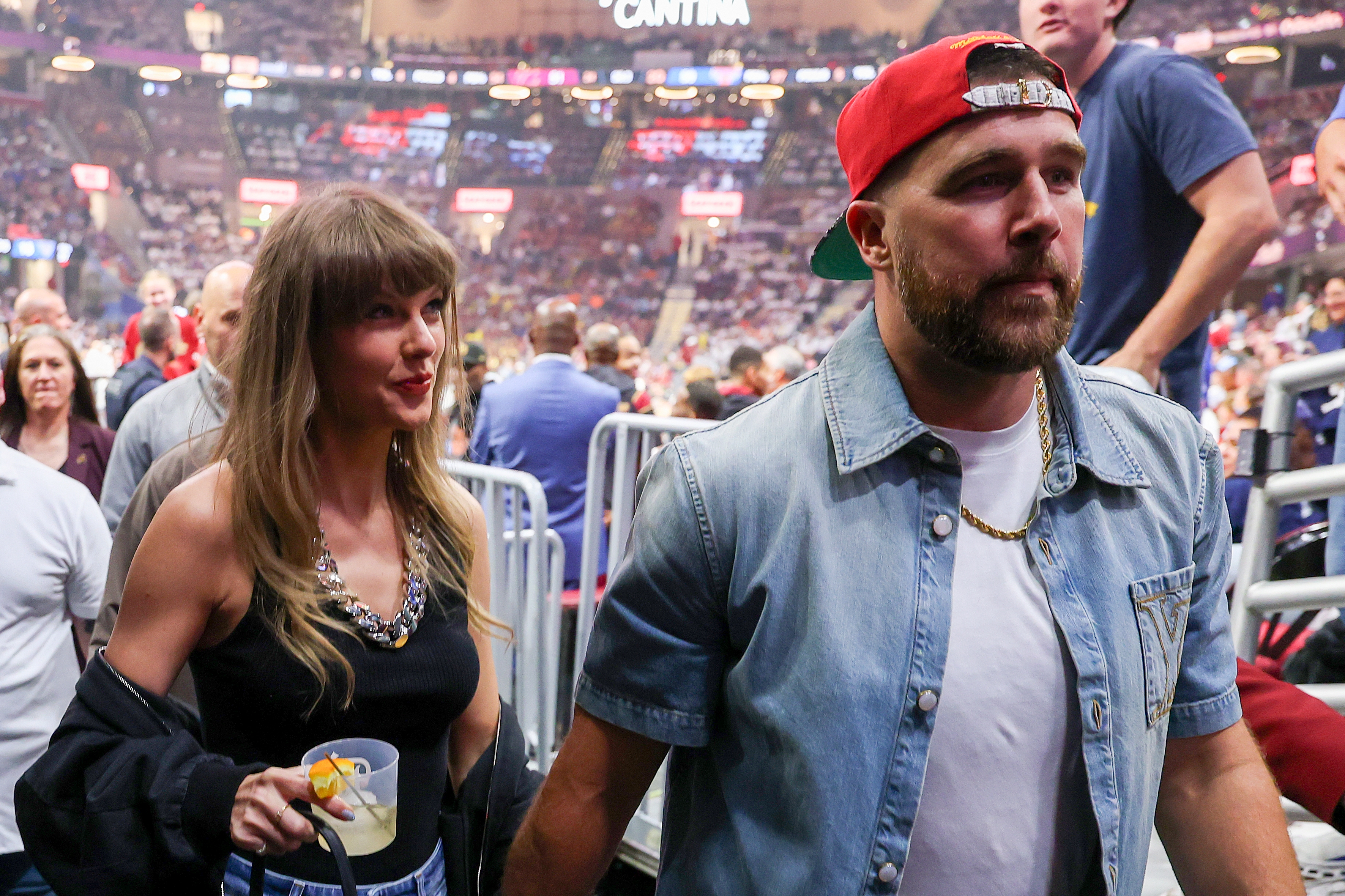
Superfans and sleuths appear to have their hunches confirmed on Friday, as dozens of black cars dropped off elegantly dressed guests outside of Madison Square Garden in New York City. The wedding bash is expected to last into Saturday morning.
President Donald Trump said he sees the need for some standards on artificial intelligence technology, but wants to avoid burdensome restrictions that may hamper American companies competing with China.