At 250, it's worth celebrating the fact that the American Revolution got it right—while other countries' revolutions devolved into chaos and bloodshed.
EXCLUSIVE — Texas Attorney General and Republican Senate nominee Ken Paxton declined to take a position on recent comments that his opponent James Talarico is destined for eternal damnation, insisting instead that what happens to Talarico is “up to God.” Texas Lt. Gov. Dan Patrick insisted that he has “never seen so much blasphemy from […]
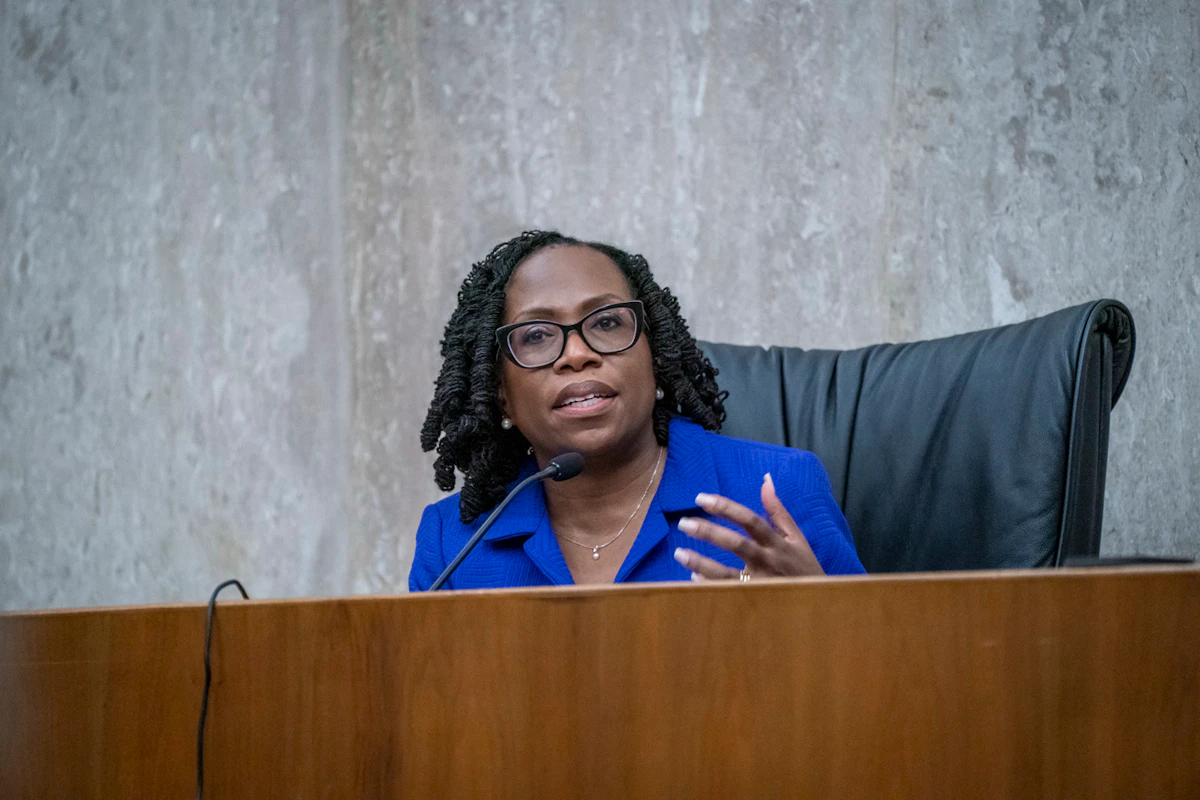
Supreme Court Justice Ketanji Brown Jackson just accused the Supreme Court of caring more about guns than the actual law. The court issued a 6–3 decision Thursday along ideological lines to scrap Hawaii’s law prohibiting gun owners from taking their weapons onto private property without obtaining express permission. In a dissent written by Jackson and joined by Justice Sonia Sotomayor, Jackson argued that the court had failed to faithfully apply its own jurisprudence. “Today’s decision makes one thing clear: The Court’s objective is protecting guns, not consistently preserving any principle of law,” she wrote. Jackson argued that the court had incorrectly applied, and obscured the purpose of, a two-step legal test to prove if the Second Amendment had been violated, established in New York State Rifle & Pistol Assn., Inc. v. Bruen.In step one of Bruen, the court must determine whether the “plain text” of the Second Amendment covers the challenged action. Jackson claimed that it didn’t. The law being challenged, Act 52, required gun owners to receive affirmative consent from a property owner before bringing their firearm onto private property. “This case is about property rights, not gun rights,” Jackson wrote. “There is no constitutional right to enter private property without the owner’s permission, let alone with a firearm,” she added. “So the question this case presents is merely how a property owner must communicate his decision to exclude or to invite armed carry, including whether a State may alter the background property-law rules that set the default as one or the other. The Second Amendment has nothing to say about that.”Additionally, Jackson argued that the challenge also failed at step two of Bruen, which requires the government to justify the regulation by showing it is consistent with the nation’s historical tradition of regulating firearms. But Hawaii’s history must also be taken into account, Jackson argued, as there is no tradition of concealed carry on the islands. “In this way, Hawaii’s use of its prerogative to protect the interests of its residents is consistent with its own traditions,” she wrote. In obscuring Bruen, Jackson argued the court had opened the door to more chaos. “From this day forward, it will be difficult to view Bruen as anything more than a fig leaf,” she wrote. “The Court’s effort to rein in judicial discretion has resulted in an arbitrary rule that unleashes judges to thwart gun regulation at every turn.”
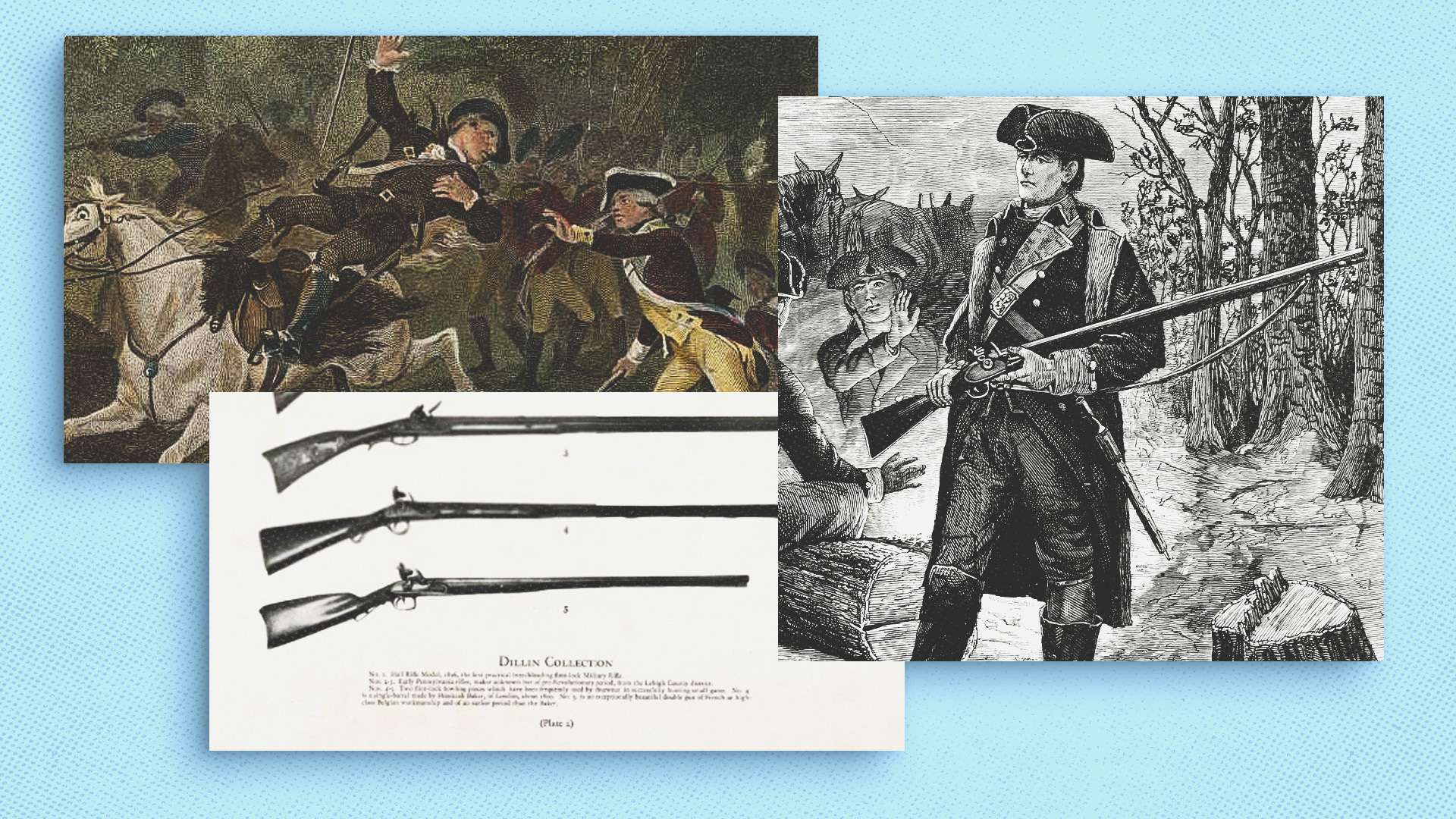
After the Supreme Court struck down Hawai'i's gun law Thursday, lawmakers and gun-control advocates are reassessing which firearm restrictions they can enact that this court will let stand.Why it matters: The ruling shows how hard it has become to design modern gun laws under the court's exacting standard, which asks whether any new restrictions fit within the nation's historical tradition of firearm regulation.Hawaiʻi crafted its law specifically to survive that test — and still lost, 6-3.Driving the news: The court's ruling in Wolford v. Lopez determined that the state can't force private businesses open to the public to be gun-free zones.The justices effectively shifted the burden of keeping guns out of private businesses from state legislatures to business owners themselves.Yes, but: States can still set a default ban on private property that is not open to the public — such as office buildings and private homes, Jacob Charles, a law professor at Pepperdine University, tells Axios."Under the terms of the Wolford decision, it does not invalidate that part of Hawaiʻi's law," Charles says.He suggested states could adopt "forced choice" laws requiring businesses to explicitly state whether guns are allowed inside and post corresponding signs at their entrances.Zoom in: Hawaiʻi's case relied on a law enacted during the post-Civil War era, and the court rejected that. However, the court's 2022 decision in New York State Rifle & Pistol Association v. Bruen left the door open for objective safety requirements, helping lead to the workarounds some states are now implementing. Some are pivoting to stricter licensing rules and targeted hardware bans.Californians seeking concealed carry permits must complete a 16-hour training course from an authorized instructor. A separate bill would require prospective gun buyers to complete a four-hour training course, adding at least $400 in fees.And a federal appeals court upheld Illinois' ban on assault-style weapons and high-capacity magazines in 2023, recognizing that these have historically been used by the military and, therefore, are not protected by the Second Amendment for civilian self-defense. Zoom out: Courts have regularly upheld gun restrictions on "sensitive" places where firearms are generally not expected, including schools, government buildings and public parks, Hayley Lawrence of the Duke Center for Firearms Law tells Axios.Some states are even expanding what counts as a sensitive place. In Maryland, a judge ruled in January that a law classifying state parks, casinos, museums, health care facilities, stadiums, racetracks, and amusement parks as sensitive places could stand.Courts have also generally upheld laws banning firearms in bars and restaurants that serve alcohol. Although the Bruen decision was struck down, the state was still allowed to prohibit guns in those establishments, in part because there's a heightened worry of violence when alcohol is involved.Individuals who've been deemed dangerous, such as someone previously committed to a mental institution or a convicted felon, may be prohibited from acquiring firearms, a principle SCOTUS itself upheld in 2024.The bottom line: "We didn't have like big population centers in the way that we think of them today, we didn't have people living in very crowded spaces, gun carrying and gun culture to a large extent looked very different, as did the technology," Lawrence says. "That's one of the big problems with history and tradition as a constitutional methodology ... it really inhibits legislative experimentation or creative thinking or problem solving for today's legislatures dealing with today's problems."Go deeper: Trump admin's 2A "tsunami" rolls back gun regulations