On the surface, Monday's Supreme Court ruling that keeps Lisa Cook in place as a Federal Reserve governor for now was a win for believers that the central bank works best when insulated from the day-to-day control of the president. The details aren't so clear.The big picture: The court punted on several key questions that will determine how much ability President Trump and his successors have to fire Fed governors.Moreover, the decision was closer than many court watchers anticipated, with four of six conservative justices dissenting.Another key ruling Monday grants the president broad latitude to fire heads of independent agencies that aren't the Fed, contrary to a 91-year-old precedent. It shows deep skepticism among the conservative majority about the constitutionality of Congress insulating agencies from presidential control.Fed independence is hanging by a narrow legal asterisk citing America's long, tenuous history with central banking.State of play: Cook will remain on the Board of Governors following the ruling. But the Supreme Court gave little guidance on how high the bar is for a president to fire a Fed governor for cause, nor did it indicate what procedures a president must follow to overcome that bar.In Monday's Trump v. Cook decision, Chief Justice John Roberts, writing for the 5-4 majority, rejected both the Trump administration's arguments that a Fed governor can be fired over mere concerns about their integrity and the argument made by Cook's attorneys that she can be fired only for "inefficiency, neglect of duty, or malfeasance.""Having rejected both parties' positions, we need not fully demarcate the contours of 'cause' today." Of note: The court similarly suggested that Cook was entitled to some due process to establish cause, rather than to be fired on presidential whim. But it declined to lay out exactly what that should be."At minimum, Cook was entitled to some explanation of the evidence at issue, some avenue for a response, and a deadline by which a response would be due." But Roberts then wrote that the court can only assess the "validity and sufficiency of such charges" after the president sets up this legal process and Cook has responded.What they're saying: "The court is now in the position of procrastinators everywhere: let's let future SCOTUS handle that one," quipped Peter Conti-Brown, the University of Pennsylvania legal scholar.Between the lines: Cook's role as a governor has been in legal limbo for 10 months now, and we still don't know exactly what the standard is for the president to fire her or how he can legally do so.If anything, the majority opinion seemed to bend over backward not to prejudge those issues. That raises the possibility that a president has wide latitude to fire Fed governors for pretext so long as they dot a few more i's and cross more t's than Trump did in the Cook case.If Trump or a future president wants to fire Fed governors over policy differences, it raises the possibility they can find any ticky-tack rationale, convene a legal process run by sycophants and achieve the same goal.Reality check: The original sin here is that Congress, in establishing the Fed, left things vague as to what would constitute "cause" for a president to fire a Fed governor and how that cause should be properly adjudicated.The Federal Reserve Act says only that governors' terms are 14 years "unless sooner removed for cause by the President" without giving more detail.The bottom line: If Congress wants to create clearer guardrails around the firing of Fed governors, it will need to pass legislation. In the meantime, the protections offered by the courts are limited, and still unresolved.
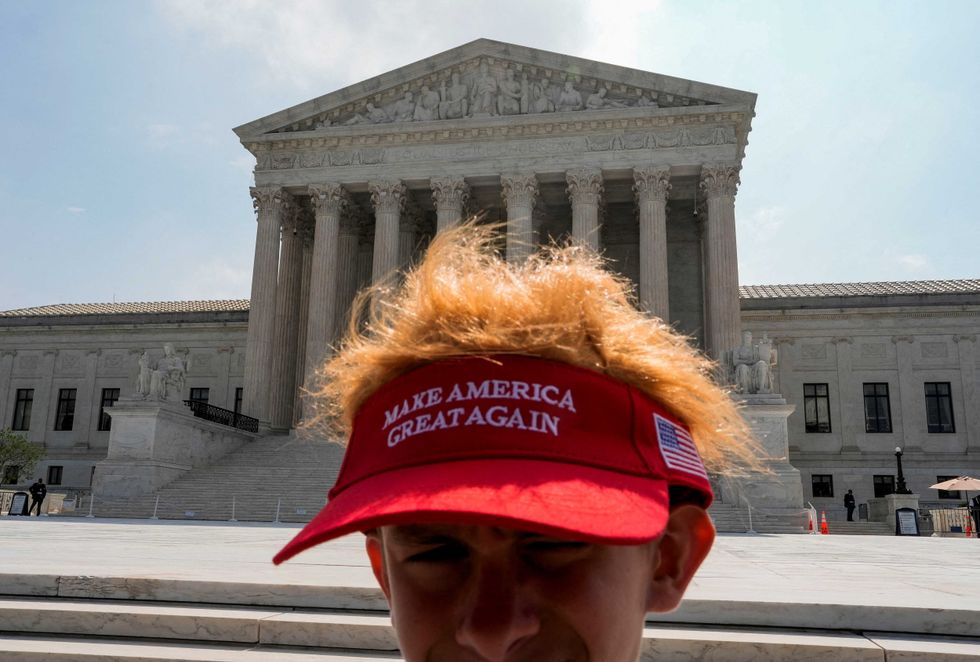
MAGA loyalists were furious on Tuesday after the Supreme Court reaffirmed birthright citizenship, signaling a major loss for President Donald Trump's agenda.Trump lost in his attempt to deny automatic citizenship to those born to undocumented migrants, and justices ruled to maintain a 150-year-old court precedent."Children born in the United States to parents unlawfully or temporarily present are 'subject to the jurisdiction' of the United States and are citizens at birth under the Fourteenth Amendment’s Citizenship Clause."Right-wing followers raged against the decision."BREAKING: US Supreme Court UPHOLDS BIRTHRIGHT CITIZENSHIP FOR ILLEGAL ALIENS by striking down President Trump’s executive order. Congress must act! THIS IS A BLOW TO THE FUTURE OF OUR REPUBLIC. The Supreme Court’s decision will harm America for DECADES to come," Eric Daugherty, chief content officer of Right Line News, wrote on X."BREAKING: SUPREME COURT STRIKES DOWN PRESIDENT TRUMP'S EXECUTIVE ORDER ON BIRTHRIGHT CITIZENSHIP. ADIOS AMERICA!" Far-right activist Laura Loomer wrote on X."I am a 14th generation Heritage American. My family showed up in 1635 and built this nation out of nothing but blood, sweat, and sacrifice. Still, I’ve been taught my entire life that I’m on 'stolen land' — that I’ve got no right to be here. However, the children of illegal alien gang members from Venezuela, or of Chinese communist birth tourists? This nation is their 'birth right.' Americans — you should be enraged," Matt Morse, MAGA YouTuber and political commentator, wrote on X."SCOTUS just ruled against the ban on birthright citizenship. A now permanent invitation for foreign nationals across the world to continue utilizing the U.S. for birth tourism, take advantage of our system, further dilute our culture and continue to destroy our sovereignty," Turning Point USA contributor Savanah Hernandez wrote on X.
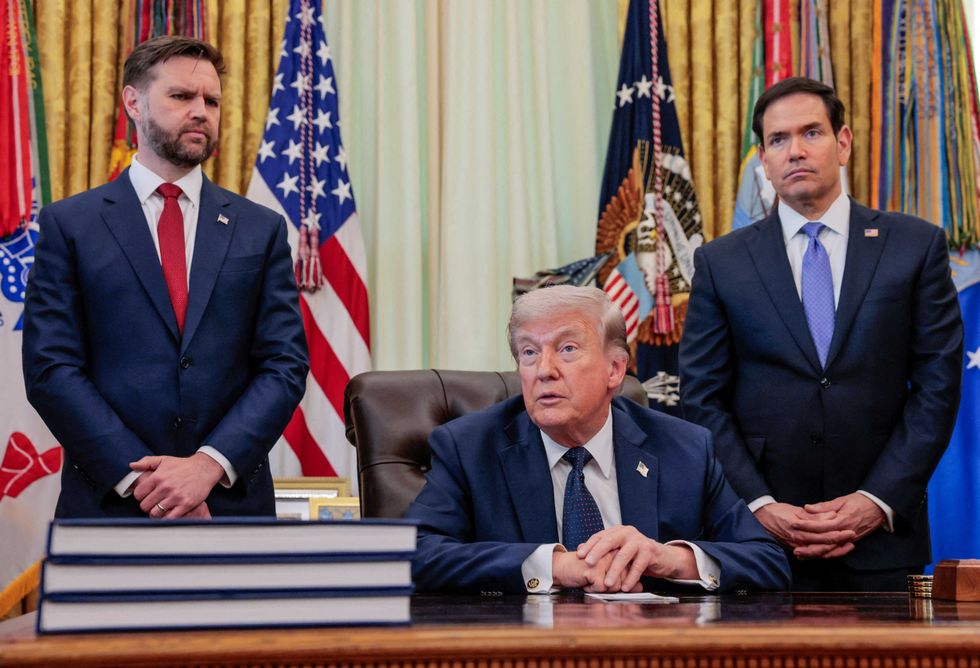
Vice President JD Vance revealed the new scheme he has cooked up to salvage what's left of his political career during a recent talk at the Nixon Presidential Library, according to one political analyst. David A. Graham, a staff writer at The Atlantic, argued in a new edition of "The Atlantic Daily" newsletter that Vance's comments about Watergate being a 12-hour news story today were revealing for all of the wrong reasons. Vance may have been trying to make a point about the state of the American media, but instead exposed that he is cozying up to President Donald Trump's corrupt side as he seeks a way to take the MAGA reins once Trump leaves office. "If it’s true that Watergate wouldn’t make a dent today, that is a reason to lament the fallen state of politics, not to conclude that Watergate was just fine," Graham wrote. "This would be a powerful argument coming from the vice president, who has worried about what he sees as insufficient morality in American society and has said that his role is 'to try to apply moral principles in ways that get the best outcomes,'" he added. "Instead, Vance has concluded that his best chance at political advancement is to hitch himself to the corrupt and unethical Trump. Such cynicism would do Nixon proud."Vance's comments were made at a time when analysts have called out multiple deals the Trump administration struck that appear to financially benefit the president and his family. For instance, the New York Times reported on a mining deal in Kazakhstan involving Trump's sons, Don Jr. and Eric, that could also net Commerce Secretary Howard Lutnick's family a financial windfall.