Supreme Court to review if inmate can sue over lack of medical help after prison riot
Center Right
The Supreme Court will weigh whether an inmate can sue prison officials for allegedly not giving adequate medical treatment following a prison riot, a possibly key case for determining the scope of prisoners’ Eighth Amendment protections against cruel and unusual punishments. The high court announced that it will hear the case Nielsen v. Watanabe in […]
President Trump on Monday said that a 10-year prison sentence for the destruction of the newly renovated reflecting pool and grass on the National Mall will be "fully enforced," threatening the left-wing vandals defacing the national monuments in DC. President Trump undertook the project to restore the filthy green water basin, built in the 1920s, which has been marred by issues, including sinking and leaking into the swamp beneath.
The post NEW: Trump says Vandals Who Left “300 Foot Long Gash” and Dumped Chemicals in Reflecting Pool will Face 10 YEARS in Prison appeared first on The Gateway Pundit.
WASHINGTON — Taking up a case that could further erode the rights of people to sue federal officers for constitutional violations, the Supreme Court on Monday agreed to consider whether a prison inmate could sue a nurse for failing to provide medical assistance after a riot
Appeals court had ruled Pedro Hernandez, 64, was wrongly convicted over 1979 disappearance of New York six-year-oldThe US supreme court has reinstated a murder conviction in the long winding case of Etan Patz, whose 1979 disappearance at age six from New York City garnered national headlines.In a 6-3 decision on Monday, the supreme court agreed with New York prosecutors in their request to reverse a lower court ruling that had thrown out the murder conviction of Pedro Hernandez, 64, in the Patz case. Continue reading...
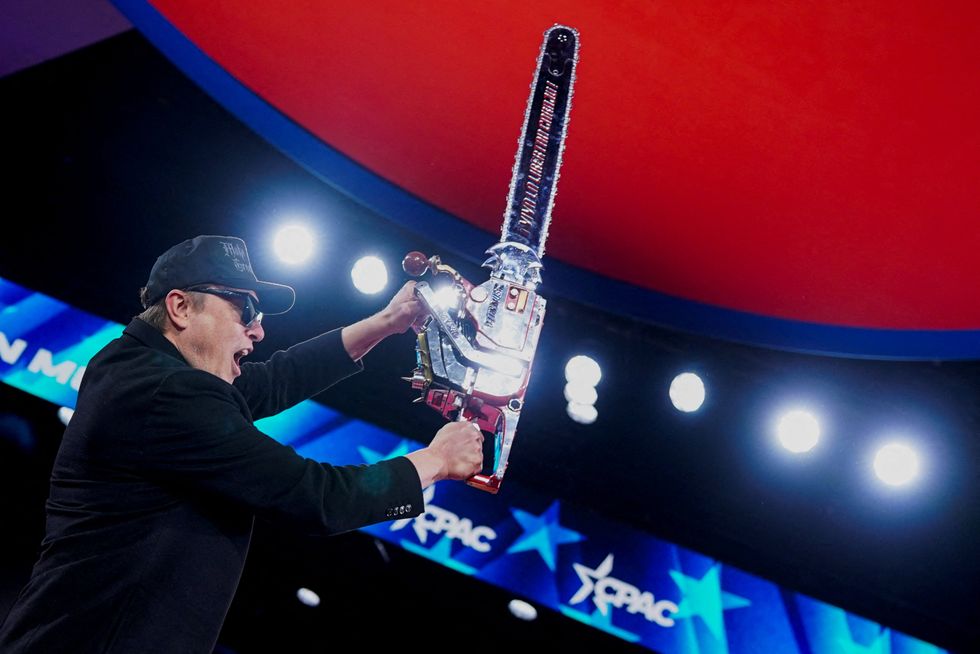
Remember Elon Musk running around in his DOGE garb with sunglasses and a chainsaw? The Republicans are hoping that you don’t.The ostensible point of Musk’s “Department of Government Efficiency” was rooting out trillions of dollars of government waste, fraud, and abuse. Musk gathered together a group of “super-high-IQ” MAGA boys who worked 80 hours a week ransacking all the various government agencies and departments in this effort.Musk promised to cut at least $2 trillion from the US budget with his DOGE gang. Musk came up largely empty-handed in this effort. He did manage to save around $20 billion a year by eliminating USAID, a program that provided health care and nutrition to millions of people in Africa. While this ended the Bush II AIDS program, PREPAR, which has saved tens of millions of lives, it did not do much to help US taxpayers. The $5 billion cost of the program was roughly 0.08 percent of federal spending.It is impossible to believe that there is a large amount of fraud in government without also believing that Elon Musk is a total incompetent.Mostly, what Musk ended up doing was creating chaos in programs that he seemed to not understand. He took credit for canceling contracts that were already completed, fired people who were subsequently rehired, and did things like end a screwworm monitoring program. This last move has led to a screwworm outbreak threatening the country’s cattle stock. But the key point here is that Musk has a free hand and a chainsaw to pursue government waste, fraud, and abuse wherever he saw it. Everyone needs to keep that in mind when they hear Republican politicians yelling about how they will save us billions or hundreds of billions from various programs, not by cutting meat, but by rooting out fraud. This means that when Tennessee Senator Marsha Blackburn claimed a few months back that 12 million people were fraudulently added to the exchange created by the Affordable Care Act, she was claiming that Elon Musk and his super-high IQ boys were too incompetent to find 12 million fraudulent enrollees. That is roughly half of all the people on the exchanges. Similarly, when Speaker Mike Johnson claims that he will deal with a projected $370 billion annual shortfall in the Social Security program, for years 2033 and beyond, by eliminating waste and fraud, Johnson is claiming that Musk and the DOGE boys somehow missed this. That would be equal to roughly 15 percent of the program’s spending. In the same vein, when Trump claimed that Minnesota had $19 billion in fraud in its Medicaid program, he was claiming that an amount roughly equal to the state’s entire annual Medicaid budget was going to fraud. This is despite the fact that Minnesota’s per capita spending on Medicaid is not out of line with other states. But more importantly, Trump had just sent Elon Musk and his DOGE boys looking into this, and they apparently found nothing. At this point, it should be obvious to everyone, even elite reporters, that when Republicans yell about fraud, they are just doing a slightly more polite version of shouting the N-word. Fraud does exist in government programs, and we should do what we can to minimize it. This means the hard work that the Government Accountability Office does, as well as the work that was done by the 16 Inspector Generals fired by Trump just after he took office. It’s also more often done at the high end with major companies ripping off the government, as Florida Senator Rick Scott did in his earlier career as an insurance company CEO. The high-end fraudsters who pocket the big bucks are more likely to be found on Trump’s pardon list or at parties at Mar-a-Lago than the receiving end of a Republican investigation. But whenever Trump and other Republicans yell about fraud, it is important to remember that they handed over the keys of government and a chainsaw to Elon Musk and gave him a free rein. It is impossible to believe that there is a large amount of fraud in government without also believing that Elon Musk is a total incompetent. Logic doesn’t carry much weight in policy circles, but the rest of us should recognize this simple fact.
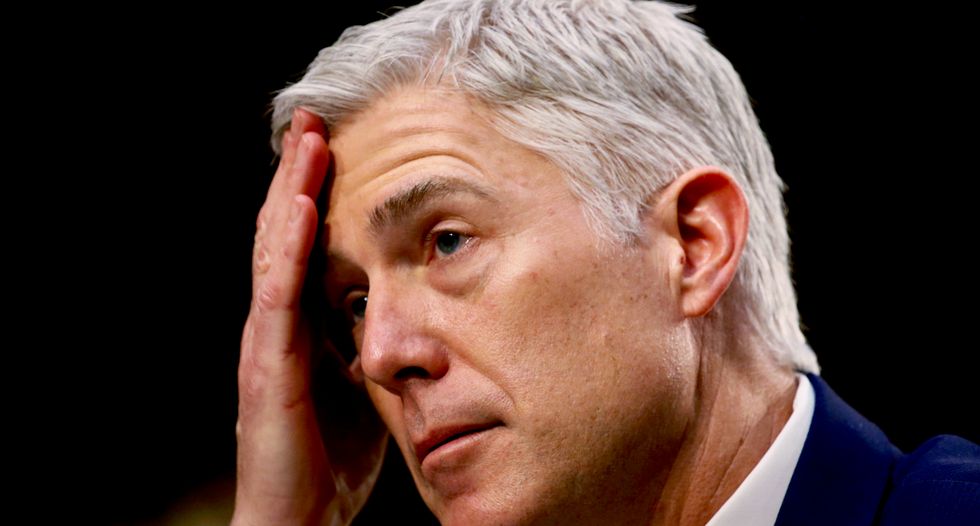
With the Supreme Court soon to rule on three of President Donald Trump’s key priorities, court commentators say he is escalating his attacks against the very conservative justices he appointed. “As the justices prepare to rule on three signature Trump initiatives,” writes Washington Post Supreme Court reporter Justin Jouvenal, including “limiting birthright citizenship, firing the heads of independent agencies and reshaping the Federal Reserve… many legal experts believe that the justices have signaled they will rule against Trump on two out of the three, blocking his bid to deny citizenship to those who were born to parents here illegally or lacking permanent residency, as well as his effort to remove a governor of the Fed board.” This is almost certain to draw the president’s ire.According to Jeffrey L. Fisher, a law professor at Stanford University, “It seems like almost 100 years since you’ve had a clash approaching this level between the president and the court. You’d have to go back to the New Deal to have any kind of an analogue.” Says Jouvenal, Trump’s growing fight with the court is especially notable as he himself appointed three of its conservative justices, who have already been instrumental in handing him several key victories over the course of his first term, like allowing him to freeze foreign aid and dismantle the Department of Education. But as Jouvenal writes, “The wins have not satisfied Trump, who has attacked the court — including his own nominees — in increasingly caustic and personal terms that legal scholars say have little historical precedent; Trump has called the justices ‘bad,’ ‘stupid,’ ‘weak’ and other epithets.”According to one MAGA ally who helped secure Trump-appointed Justice Neil Gorsuch’s seat, the president’s attacks on the justices are a good thing because “Sometimes feeling the heat helps people see the light." To rule against Trump, he argued, would "destroy the legitimacy" of the court. Harvard University law professor Richard Lazarus says that, ultimately, Trump believes that conservative justices should be loyal to him rather than act as an independent branch of government. “There’s no question that Trump, starting with the tariff case, has taken aim at the court and made quite clear his expectation that justices who were nominated by Republican presidents should vote for his positions,” Lazarus said.After the court struck down most of Trump’s tariffs in February, with conservative justices Gorsuch, Amy Coney Barrett, and Chief Justice John Roberts joining liberals in the decision, the president erupted over the outcome, saying he was “ashamed” of the justices and that it was an “embarrassment to their families.” Then in April, he became the first sitting president to attend court arguments in what was widely viewed as an attempt to pressure conservative justices. Shortly after that, “Trump accused the liberal justices of embracing ‘warped and perverse policies, ideas, and cases’ and said the conservatives ‘give the Democrats win after win.’ He added that ‘certain “Republican” Justices have just gone weak, stupid, and bad.’" Then, Trump posted a nearly 550-word rant where he complained about conservative justices’ lack of “loyalty,” claiming, “Well, maybe Neil, and Amy, just had a really bad day, but our Country can only handle so many decisions of that magnitude before it breaks down, and cracks!!!”For their part, say insiders, the justices have privately grappled with whether to quietly ignore the attacks or offer a more forceful public response. So far, they have avoided criticizing Trump directly. When recently asked about the question of judicial loyalty to the president, Gorsuch did assert that his “loyalty is to the Constitution.” And Roberts has argued that attacks against judges and justices are “dangerous” and have ”got to stop," though he did not specify Trump as the assailant.
President Donald Trump and his allies are barreling toward a historic "clash" with the Supreme Court – including with conservative justices he personally appointed – unlike anything seen in nearly 100 years, a legal expert told The Washington Post.“It seems like almost 100 years since you’ve had a clash approaching this level between the president and the court,” said Jeffrey Fisher, a law professor and co-director of Stanford University’s Supreme Court Litigation Clinic. “You’d have to go back to the New Deal to have any kind of an analogue.”The Supreme Court is expected to soon rule on three major cases involving Trump’s agenda – whether the constitutional right of birthright citizenship can be eliminated, whether Trump can fire the heads of independent federal agencies, and whether Trump can reshape the Federal Reserve. The justices – including those appointed by Trump – have “signaled they will rule against Trump” on at least two of those cases.The “growing conflict” between Trump and his allies and conservative justices was made evident during a gathering last year organized by Supreme Court Justice Neil Gorsuch, who was nominated by Trump, the Post reported. During the event, Mike Davis, a conservative lawyer who helped Gorsuch “secure his first federal judgeship,” was “notably absent.”The Post learned why Davis – whom Gorsuch had previously issued the friendly nickname of “the general” – was absent for the justice’s gathering.“The relationship soured last year as the Supreme Court began to rule on some of Trump’s policies, according to two people with direct knowledge of the matter, speaking on the condition of anonymity to discuss a sensitive issue,” the Post’s report reads.“One recounted how Gorsuch became upset when Davis lashed out at Justice Amy Coney Barrett, calling her a ‘rattled law professor’ for siding with the court’s liberals in a pair of rulings against Trump. The other said Davis was angered by Gorsuch’s vote to block Trump’s use of a wartime authority to deport Venezuelans.”