LeBron James’ agent, Rich Paul, went on his “Game Over” podcast with Max Kellerman and broke down which teams are in contention for the 42-year-old superstar. It’s highly unusual for an agent to publicly discuss his client’s active free agency, especially for someone as high profile as James. But we got a glimpse into James’...
Some 163 million people in the U.S. live in areas that experienced dangerous heat on Thursday, according to the National Weather Service — sending “heat risk” forecasts in major cities (including New York, Washington, Philadelphia, Pittsburgh and Atlanta) into the most extreme risk category through Saturday. Part of the reason is the planet is warming dangerously, but Trump calls climate change a “hoax” and is encouraging more use of fossil fuels. Especially endangered are workers toiling under the hot sun, or in stifling warehouses, or in delivery trucks with no AC.Yet Trump’s pick to run the Occupational Health and Safety Administration, David Keeling, is weakening the agency’s own heat standards by removing specific inspection goals. OSHA’s Heat National Emphasis Program expired on April 8. Its proposed heat standard has been stalled.For many workers, heat standards are literally a matter of life and death. Every year, workers collapse, suffer permanent injuries, and die while doing their jobs in extreme heat. Years ago, when I ran the Labor Department, we had the toughest Occupational Health and Safety Administration in history, run by a truly committed worker advocate named Joe Dear. We made workplaces safer — reducing worker deaths and injuries.Since its inception in 1971, OSHA has reduced workplace-related fatalities by almost 63 percent. It has slashed the rate of serious workplace injuries and illnesses by 75 percent. But OSHA under Keeling is retreating from worker safety. Before Trump picked him to head OSHA, Keeling was Amazon’s top safety executive. During Keeling’s tenure at Amazon, a Senate report found that Amazon warehouses were twice as dangerous as those of its competitors.This year, we’ve already seen reports of Amazon workers dying on the job on a near monthly basis, including incidents in Oregon and North Carolina. Why would we trust Amazon’s safety head with the country’s workers?Before he was at Amazon, Keeling was in charge of safety at UPS. How did he do there? OSHA repeatedly cited UPS for exposing drivers to excessive heat. Federal investigators found at least 100 drivers were hospitalized for heat-related injuries between 2015 and 2018. UPS delivery trucks had no air conditioning until 2024, when it was won in a landmark collective bargaining agreement with the Teamsters.Now Keeling is head of OSHA, and OSHA is weakening its heat protection standards. Workers are already paying the price. Reports of worker deaths during extreme heat continue to emerge across the country. Heat exposure can trigger heat stroke, organ failure, and chronic kidney disease. These are among the most predictable workplace hazards, which means they can often be prevented with strong safety standards and rigorous enforcement.But instead of strengthening those protections, OSHA under Keeling has weakened them. At a time when record-breaking temperatures are becoming more frequent, retreating from enforcement sends a dangerous message that worker fatalities are a cost of doing business.When he was in charge of safety at Amazon, Amazon became notorious for dangerous warehouse conditions. When in charge of safety at UPS, UPS resisted providing air conditioning for delivery vehicles. Now, when the agency responsible for protecting millions of workers should be leading the fight against preventable heat deaths — it’s backing away from its most basic responsibility to protect people over profits.Robert Reich is a professor of public policy at Berkeley and former secretary of labor. His writings can be found at https://robertreich.substack.com/.
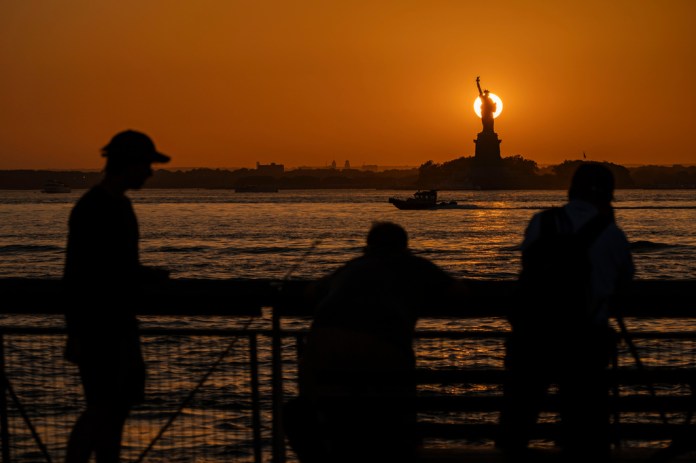
A 52-year-old man reportedly died in New York City on Thursday after setting himself on fire near the United Nations‘s headquarters. A protester with a Tibetan flag carried out the self-immolation, according to the New York Post. He was reportedly protesting China‘s occupation of Tibet. Papers that said “China Out of Tibet” were found at […]
Op-ed views and opinions expressed are solely those of the author. How America Created a Parallel Court System Where Due Process Vanishes, Children Become Commodities, and Judges […]
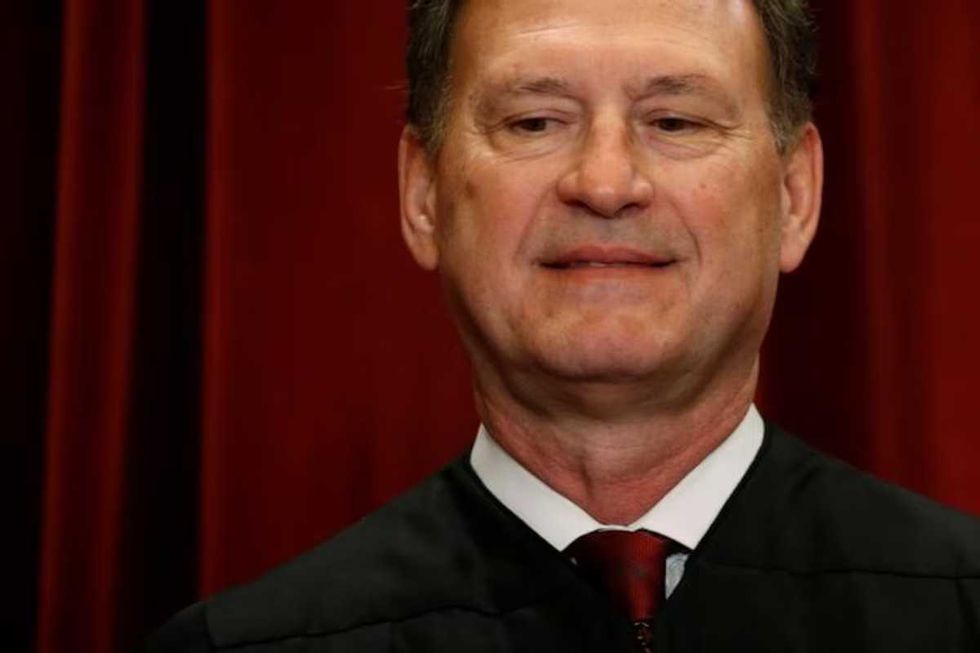
Supreme Court Justice Samuel Alito may have planted the story of his resignation that was published then retracted by NPR on Tuesday in an attempt to uncover a leak in his staff. This so-called “canary trap,” says one advocate of the theory, is the only explanation for the news outlet’s mistake. This is according to conservative journalist Miranda Devine, who posted on Wednesday, “The only way the Totenberg-Alito story makes sense is that this veteran NPR legal reporter had a trusted and highly placed source inside SCOTUS who confirmed that Alito was retiring. No editor would publish such a story unless the reporter were reliable. A reliable reporter does not say 'oh I thought I heard something' without double-checking with a source to confirm. Ideally she would call Alito to confirm as well. But somehow Totenberg and her editors at NPR were satisfied that her sourcing was impeccable without official on the record confirmation.”In other words, Devine is saying that it is highly unlikely that such a story would be run based solely on what the NPR journalist who wrote the story, Nina Totenberg, claimed was something she misheard in the court halls. Typically a new organization requires a report to be confirmed, and as CNN noted, Totenberg’s explanation “didn’t fully explain why NPR published the report without additional confirmation.”With all this in mind, Devine suggests, it is more likely that Totenberg, in fact, did have a second source inside the court who had provided reliable information in the past. “That leaves a very small list of suspects,” writes Devine. “Someone close to Alito who was very confident that he was retiring. As people have speculated, Alito may have planted a false tale to catch out the leaker: a canary trap.”This theory appears to have been first raised by a conservative podcaster who on Tuesday posted, “Did Justice Alito just Canary Trap the Dobbs v Jackson leaker????”A canary trap is a leak‑sniffing tactic where one seeds slightly different versions of sensitive information to different people so the specific version that is revealed identifies the source. As the poster mentioned, in the lead-up to the Supreme Court’s highly consequential 2022 ruling regarding Dobbs vs. Jackson Women’s Health Organization, which ultimately overturned Roe vs. Wade, a draft of the opinion was leaked to Politico, and the source of the leak has remained a mystery ever since. The canary trap, then, could be an attempt to identify that person. This isn’t the only theory surrounding the resignation. According to Douglas Farrar, Former Director of Public Affairs at the Federal Trade Commission, “This looks like an embargo broken to me,” referring to the practice of providing sensitive information to reporters on the condition that they “embargo” it until a certain time. If that is the case, concludes Farrar, “I expect we'll see Alito announce his retirement soon.”