U.S. and Iranian officials met in Switzerland Sunday ahead of negotiations to solidify the tentative peace deal between Washington and Tehran and bring about an end to the U.S. war against Iran, but according to one expert, President Donald Trump and his administration are ignoring a pressing issue that risks blowing up talks before they’ve even started.“I'd be surprised to be that optimistic,” said Richard Haas, former policy director at the State Department, during an appearance Sunday on MS NOW when asked about his thoughts on the likelihood of peace talks succeeding.The pressing issue, Haas warned, was Israel’s ongoing bombardment and occupation of Lebanon, which since March has killed nearly 4,000 Lebanese, wounded close to 12,000 and sparked a humanitarian crisis affecting more than one million people. In the first clause of the tentative peace deal agreed to by Washington and Tehran, a provision explicitly calls for Israel to end its military operations in Lebanon.“What happens if and when Iran demands that Israel vacate Lebanon altogether, that Israel not go back into Lebanon?” Haas said. “That is going to be something of a red line for Israel, and the question is what does the United States do? Do we put pressure on Israel, or do we tell Iran 'no way?' So there's no way you can solve the Lebanon issue once and for all, this has been an open problem for decades and it's going to continue to be one of the many things that's going to really bedevil these negotiations going on.”Trump has tried to pressure Israel to halt – or at least shrink – its military operations in Lebanon, but has been refuted by Israel each time.
“An emergency session to address the conflict” between Israel and Iranian proxy terrorist group Hezbollah has been scheduled for the first day of peace talks between the United States and Iran on Sunday in Switzerland, according to a report released Saturday night. Vice President JD Vance left Joint Base Andrews Saturday afternoon to join U.S. […]
Iran has threatened to close the Strait of Hormuz again, accusing the US of violating the memorandum of understanding signed earlier this week. Hezbollah and Israel continued fighting on Saturday morning, with Hezbollah launching dozens of projectiles and Israeli strikes killing more than a dozen people, CBS reports.
The post Iran Says It’s Closing the Strait of Hormuz After Accusing US and Israel of Violations – VP Vance Says Strait is Still Open With Record Amount of Traffic (VIDEO) appeared first on The Gateway Pundit.
US officials, including President Trump, are denying Iran's claim that the Strait of Hormuz will be closed after accusing the US and Israel of violating the memorandum of understanding. "There will be NO TOLLS in the Hormuz Strait for 60 days during the Cease Fire Period, and there will be NO TOLLS after the 60 day period has expired," Trump said in a statement on Saturday afternoon.
The post JUST IN: Trump Says Strait of Hormuz is Open With No Tolls After Iran Claims Closure, Suggests US Will Charge Tolls “For Services Rendered as the Guardian Angel to the Middle East” appeared first on The Gateway Pundit.
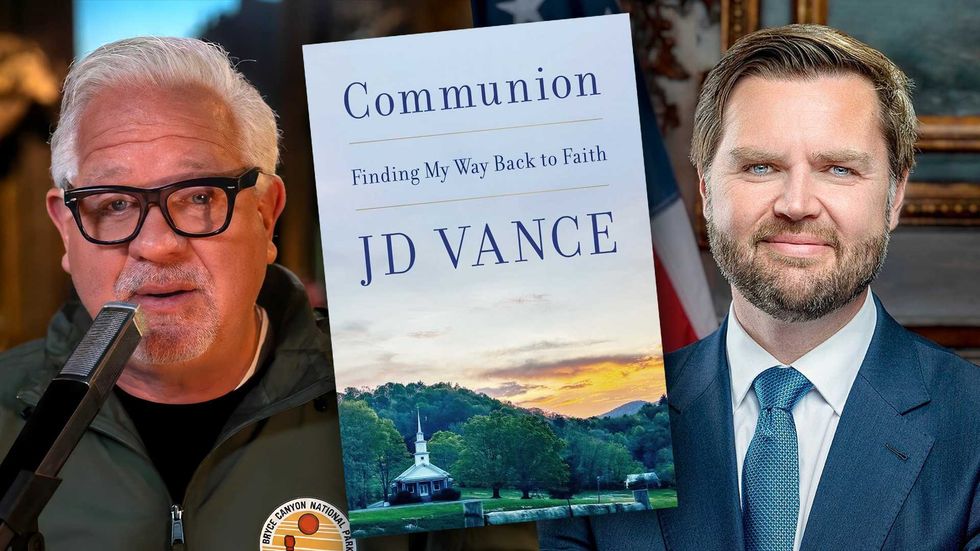
On June 16, Vice President JD Vance released his new book, "Communion: Finding My Way Back to Faith.” It’s a memoir detailing his straying from the Christianity of his youth, his journey to atheism, and his return to faith through conversion to Catholicism in 2019.In a recent exclusive interview with Glenn Beck, Vance opened up about his faith journey. “Can you talk a little bit about the moment you chose to commit [to faith]?” Glenn begins.In the summer of 2018, Vance visited a Catholic cathedral. At this time, he was “curious about Christianity” but “wasn’t yet ready to commit.”“It was completely empty, and I felt this kind of sense of despair. ... There was nobody praying. It felt almost lifeless. And then there was just this beautiful sort of ray of light that came through the stained glass windows,” he recounts.Vance recalls how at that time, the Catholic church was under fire for a massive scandal in Pennsylvania, where a grand jury report exposed credible allegations of child sexual abuse by over 300 priests across six dioceses, harming more than 1,000 victims over decades, along with systematic cover-ups by church officials.“I felt this sense that, you know, yes, the church is going through a tough spot, but things are going to be OK, and I belong here,” he says.“And that was sort of the moment that I decided, you know what, for all of my belly aching and back and forth ... this is my home, and I'm going to try to make this home as successful as possible and contribute as much as I can, and that's what I did.”“That seems like a commitment to the church. Is that the same as the moment to follow Christ? Did that come first and then the commitment to the church or are they the same thing to you?” Glenn asks.Unlike the moment in the cathedral that led Vance to commit to the Catholic church, the decision to follow Jesus was more “gradual.”“I was raised in sort of an un-churched but very devout household. My grandmother would take us to church every now and then, but not regularly ... and so I became as a teenager, sort of an early 20s kid ... an arrogant atheist,” he explains.“I went about trying to achieve every marker of worldly success. You know, I wanted to go to the best schools, and I wanted to have the best job. I wanted to make the most money. I wanted something prestigious to hang my hat on, and I kind of got to this point where I had won all of these elite competitions,” he continues, highlighting his time at Yale Law School.But despite the worldly success, an emptiness haunted him.“I was kind of looking around and saying, you know what, those people that I dismissed as simpletons, they're much happier and much healthier and much more interesting people than the elite crew that I seem to be joining,” Vance tells Glenn.He began to wonder if the "character" and “wisdom” they exhibited came from “this Jesus Christ figure that [he’d] kind of discarded.”“And so [following Christ] was not like a conversion on the road to Damascus. That was me slowly seeing reflections of Christian truth in the way that various Christians lived their lives and the way that they raised their families, and over time, I just started to think, you know what, there's something real here,” he shares.Christ, he decided, was not only something he wanted for himself but for his family too.“I wanted to give my family what I didn't have as a kid, which is a real formation, like an actual church community,” he says, “and I kind of, you know, experimented with different churches and went to a number of different places and eventually, you know, found a home in a church that we love, and that's kind of where we are today.”To hear more, watch the full interview above.Want more from Glenn Beck?To enjoy more of Glenn’s masterful storytelling, thought-provoking analysis, and uncanny ability to make sense of the chaos, subscribe to BlazeTV — the largest multi-platform network of voices who love America, defend the Constitution, and live the American dream.