
New York Post
Malik Tillman’s success in new World Cup role could provide spark USMNT needs
The midfield trio was the engine for what might have been the best U.S. national team performance ever at a World Cup.
Right
There is overwhelming evidence that Platner knew the meaning of his Nazi Totenkopf tattoo before last year.
The midfield trio was the engine for what might have been the best U.S. national team performance ever at a World Cup.
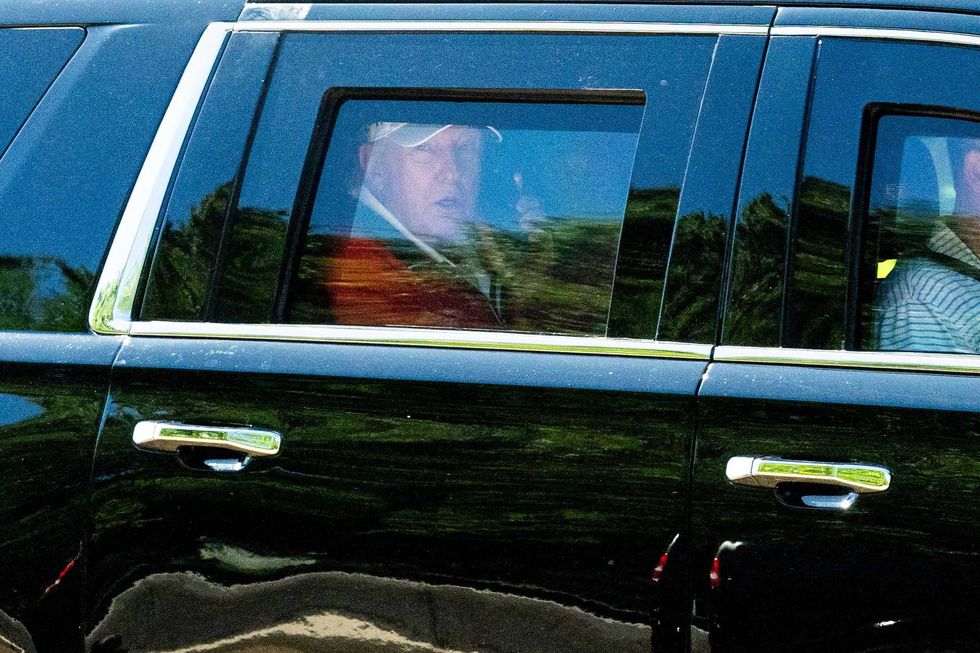
President Donald Trump announced that his administration had reached a "deal" with the Iranian regime that would "reopen" the Strait of Hormuz, a critical global waterway that has been shut down since the early days of the war against Iran. "The Deal with the Islamic Republic of Iran is now complete," Trump wrote on Truth Social. "Congratulations to all! I hereby fully authorize the toll-free opening of the Strait of Hormuz and, simultaneously herewith, authorize the immediate removal of the United States Naval blockade. Ships of the World, start your engines. Let the oil flow!"The deal was announced less than one hour before Trump's "UFC Freedom 250" event at the White House was scheduled to start. The New York Times described the deal as a "cease-fire," which Trump has previously said means "when you're shooting in a more moderate manner.""Iran has not yet officially confirmed the cease-fire agreement, but struck a triumphant tone on the state broadcaster, IRIB. 'The United States was forced to accept an end to the war,' it declared," the NYT reported.
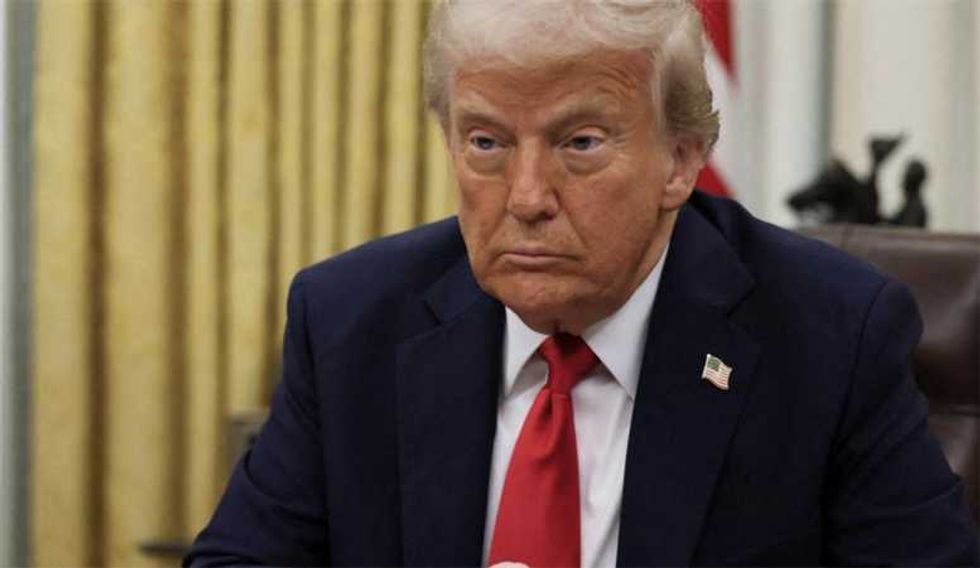
Mark Levin, one of President Donald Trump's most reliable media defenders and a leading hawk on the Iran war, is breaking with the president over the peace deal Trump is racing to sign — demanding to actually see the agreement before it's locked in.In a post on X on Sunday, the conservative radio host pressed for transparency on the memorandum of understanding the administration says it will sign with Iran. Levin asked whether the MOU "has... been released so we can actually read it," answering his own question with a pointed "Why not?" Briefing "selected reporters" through a "senior official" on the deal's "broad outlines," he argued, "is not enough."The complaint lands as Trump pushes to finalize the agreement on Sunday — his 80th birthday. Trump declared on Truth Social that the deal was "scheduled to get signed" and that the Strait of Hormuz would be "OPEN TO ALL" immediately afterward, casting it as a barrier to a nuclear-armed Iran.The reported terms help explain why a hawk like Levin is uneasy. According to Reuters and other outlets, the draft would have Iran reopen the strait while the U.S. lifts its naval blockade, releases roughly $25 billion in frozen Iranian assets — including direct cash transfers — waives oil sanctions and holds off on new ones, with broader nuclear talks pushed to a later phase.The Sunday post wasn't a one-off. British broadcaster Piers Morgan, locked in his own feud with Levin, accused the host over the weekend of having "raged at President Trump for wanting to end the Iran war" and urging him to keep bombing — and Levin's own broadcasts back up the charge. As the fighting moved toward a truce, Levin declared on his show, "I hate this word ceasefire," and argued that Iran "should be forced to sign a surrender document. Unconditional surrender." After an earlier ceasefire, he warned on Sean Hannity's program to "make no mistake: they are the enemy," insisting the regime would not be contained "if there's not regime change."He has been just as dismissive of the diplomacy itself, calling Iran's proposals "an absolute disaster" and branding reported drafts of the deal "disastrous," warning that an agreement along those lines would let the Iranian regime survive. That hard line has put Levin crosswise not only with the president he usually defends but with parts of Trump's own base — figures like Steve Bannon have accused him of undermining Trump's "peace posture" and quietly siding with the neocon hawks the MAGA movement claims to reject.The details of the deal itself remain murky, which is precisely Levin's gripe. Iran has repeatedly cautioned against speculation about the timing and contents, and its Fars news agency reported the strait would stay under Tehran's control, dismissing Trump's "open to all" claim as "incomplete and inconsistent with reality." Trump, for his part, has denied Iran's account of the terms.Also on Sunday, Levin wrote, "Iran’s Hezbollah continues firing missiles into Israel. This is precisely what I and others have been warning about."It all marks a striking turn for a host who spent the war as one of Trump's fiercest defenders. But with Trump now moving to wind the conflict down and cut a deal that delivers Iran sweeping economic relief, Levin has shifted from cheerleader to skeptic — joining a chorus of hawks bristling at an outcome they spent months warning against.
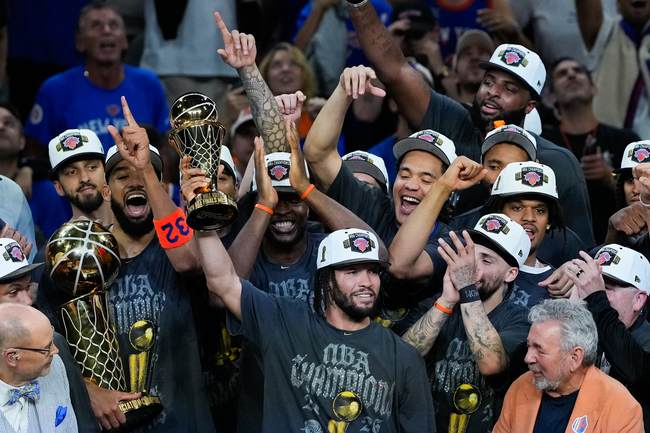
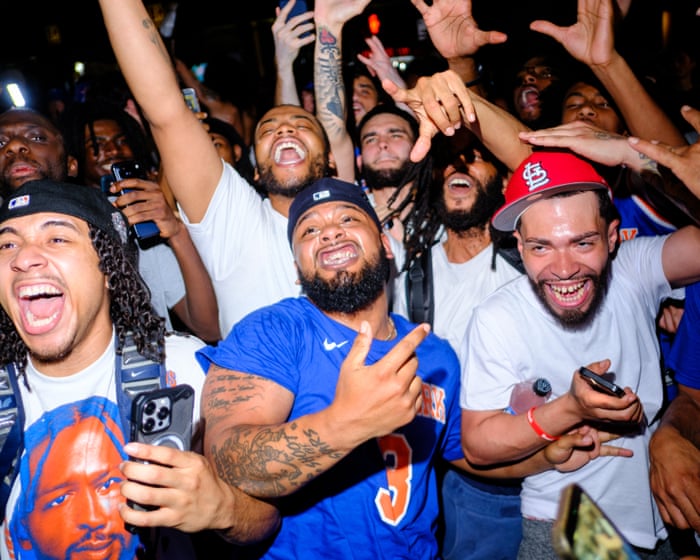
The bar may have been busy for the football but it was nothing compared with the crowd that surged in as team ended 53-year wait for the NBA titleAt John Doe’s bar on 28th and 5th in Manhattan, the crowd was already heaving energetically by early evening, as a multitude of TV screens beamed Vinícius Júnior’s equaliser for Brazil, responding to Ismael Saibari’s opener for Morocco. With competing nations’ flags as bunting and inflatable footballs – the correct, round kind – hanging from the roof, there was no lack of World Cup visibility. Football shirts abounded, with Brazilians here and the odd Moroccan shirt there, as well as a Manchester United and Casemiro fan somewhat aghast at the mobility of his hero.Yet there could be no doubting the main event in town. Despite the fact that New York mayor Zohran Mamdani was at MetLife Stadium for the soccer – a subdued groan met his appearance on the TV screen, followed by loud, defiant Democrat cheers – this was a mere curtain-raiser for the real show. The New York Knicks were bidding to end a 53-year wait to win the NBA title and were playing the San Antonio Spurs in Texas. Continue reading...

The ESPN personality commented on the "Bodak Yellow" rapper's breast size when she performed at Game 3 of the NBA Finals 2026 last week.
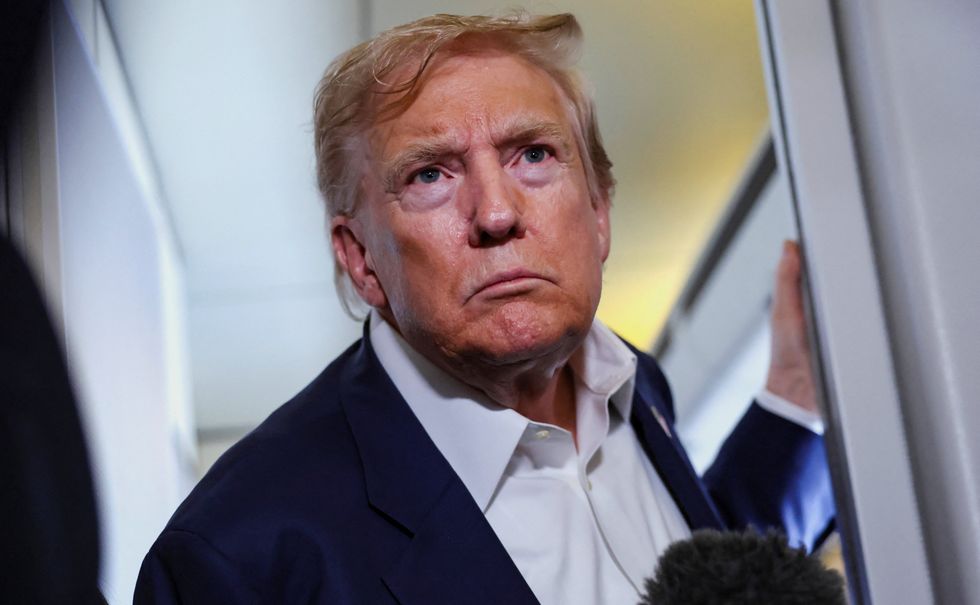
President Donald Trump’s White House is freaking out over reports that their secret conversations in the Situation Room were surreptitiously recorded — and will soon be published.“Top White House officials believe New York Times reporters Maggie Haberman and Jonathan Swan obtained audio recordings of Situation Room meetings for their forthcoming book, ‘Regime Change,’” reported Axios on Sunday. Because independent recording devices are not allowed in the Situation Room, the potential leak would be a major breach from protocol that would place many of Trump’s top officials under immediate suspicion."We're afraid some of our most sensitive conversations were being recorded," an administration source told Axios. "And we have no idea which ones."The conversations apparently included the administration fretting about Trump’s involvement with the late pedophile Jeffrey Epstein, with one official suggesting that Trump pardon Epstein associate Ghislaine Maxwell in the hope that she could say things which take heat off the president. Another tape reportedly has Secretary of State Marco Rubio profanely criticize Israeli Prime Minister Benjamin Netanyahu.“Tellingly, White House officials haven't disputed verbatim dialogue from the top-secret Sit Room talks, including Secretary of State Marco Rubio saying about Bibi's regime-change scenarios for Iran: ‘In other words, it's bulls———,’” Rubio reportedly said.In addition to his friendship with Epstein, which stretched from the 1980s until the two had a falling out over a business deal in the 2000s, Trump is also accused of sexually assaulting a 13-year-old who he met through the convicted sex trafficker.“In 2019, Jane Doe came forward and was interviewed by the FBI four times about her encounters in the early 1980s,” the Post and Courier reported. “This was the individual that Hillary Clinton referenced in her comments to the House Oversight and Reform Committee.”Testifying before the House Oversight Committee, former Secretary of State Hillary Clinton asked why the Trump administration has refused to further their investigation into this account.“And this latest example of the missing files about the allegations, and they are absolutely nothing more than allegations, but the FBI interviewed that witness four times,” Clinton said. “You don't interview a non-credible witness four times. You don't put into the FBI reporting 'protect this source' if you think there is nothing to it. So, of course, I would like to know, like every other American deserves to know, what is in those files and who is going to hold people accountable? Because the Justice Department seems to be either unwilling or incapable of doing so."

On June 1st, despite a ceasefire ostensibly underway in the US-Israeli war on Iran, Israel’s prime minister launched a major escalation against Lebanon, including threatening airstrikes against the Lebanese capital. The US president called the Israeli leader, furiously demanding an end to Israel’s escalation. Six days later, Israel attacked Beirut’s southern suburbs, long understood to be a red line for Hezbollah. The Lebanese resistance organization launched a limited response, sending 11 rockets towards Israel, almost all of which were intercepted; no one was hurt or killed. Trump called Netanyahu again, telling him in a brief call that now that Iran and Israel had each “had their fun,” that Israel should stand down.Commentators across the Middle East and beyond debated whether Netanyahu would abide by Trump’s demand. What virtually none of them mentioned was that Trump had refused to even mention his most important pressure point: that if Israel resisted his order to stand down, the US would simply stop sending tons of weapons and tens of billions of dollars to the Israeli military. The close but sometimes divergent interests of the Middle East’s two powers, the global and the regional, was on full display. It’s now been 106 days since Trump launched his preemptive and illegal military attack on Iran. On February 28, 2026, the world awoke to the fury of a new war in the Middle East after the United States and Israel had launched their joint assault against Iran, with President Trump and Prime Minister Netanyahu standing shoulder to shoulder against their common foe. Claiming unbridled hegemony was on the agenda for both.The US-Israeli war on Iran is rooted in longstanding US imperialist strategy and Israel’s national goals.Today, with yet more fresh promises of a so-called “peace deal” that is nearly ready to be signed by Trump and Iranian leadership, the Israeli military is bombing the suburbs of Beirut despite ongoing claims of a “ceasefire.” Trying to understand the current doom loop, it’s vital we remember how we got here.In the opening salvo of the US-Israeli attack, Iran’s supreme leader Ali Khamenei, along with an unknown number of other top military and political leaders, was assassinated with a ballistic missile. Just an hour later, the US fired a Tomahawk missile directly at the Shajareh Tayyebeh Elementary School in the northern Iranian city of Minab—killing 156 people, 120 of them children, and destroying the school. The war’s official reasons, initially, were to eliminate the ostensible threat of Iran creating a nuclear weapon, and to destroy its conventional military capacity. The no-daylight US-Israeli partnership, Trump and Netanyahu as BFFs, the collaboration between the US and Israeli warplanes, bombers, drones, missiles… all seemed seamless and perfect.Three months later, and half a dozen or so “ceasefires” announced, renounced, ignored and denounced, headlines around the world gleefully recounted a Trump phone call with Netanyahu. Focused on Israel’s escalating bombing of Lebanon threatening to derail the latest US-Iran ceasefire, the June 1 call reportedly started with Trump telling Netanyahu “you’re fucking crazy—you’d be in prison if it weren’t for me.“ The US president then went on to his ”Everybody hates you now“ remark. ”Everybody hates Israel because of this,“ he reportedly said.Trump acknowledged saying it, and then, as is his usual style, moved on, quickly reclaiming his friendship with the Israeli prime minister. As was true with so many earlier ceasefires, Israel continued its massive bombing and its brutal occupation of south Lebanon, making a US-Iran ceasefire impossible. In the meantime, throughout the months of the war, commentators, politicians of all stripes, journalists and analysts across the globe were struggling to figure out what that war was actually being fought for. War for What?Real fear of an actual nuclear bomb was certainly not the answer. After all, US intelligence agencies have agreed for years that “Iran is not building a nuclear weapon and that [Supreme Leader Ali] Khamenei has not reauthorized the nuclear weapons program he suspended in 2003.” Despite that clear assessment, US B-2 stealth bombers still dropped 14 of their 30,000-pound “bunker-buster” bombs on Iran’s civilian centrifuges at Fordo, Isfahan and Natanz at the end of Israel’s 12-day war in June 2025. Trump and his supporters bragged of having “completely and totally obliterated” Iran’s nuclear facilities. And then, eight months after that, in the early days of the US-Israeli 2026 war, those B-2s were back in the air, dropping more 30,000-pound and some smaller versions of the bunker-busters on Iran.