New Fed Chairman Kevin Warsh is caught between the Trump agenda and a hard place
Center Right
Even a month ago, monetary policy sailing looked smooth for incoming Federal Reserve Chairman Kevin Warsh. One possible flare-up for Warsh, who became Fed chairman on May 22, succeeding Jerome Powell after an eight-year tenure, was the threat of the Iran conflict temporarily pushing oil prices higher. Yet in Warsh’s early days heading the nation’s […]
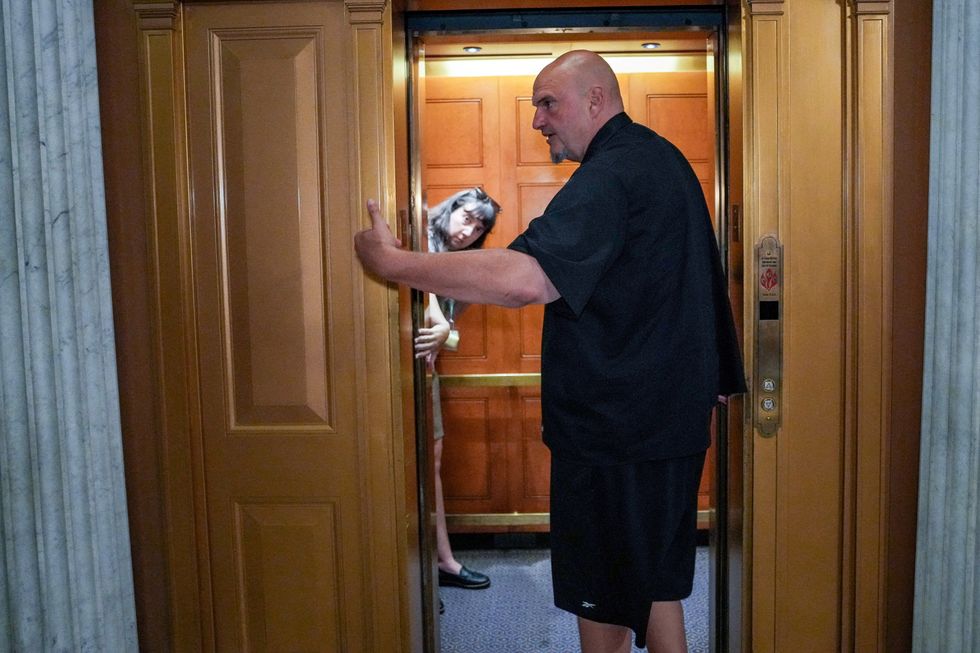
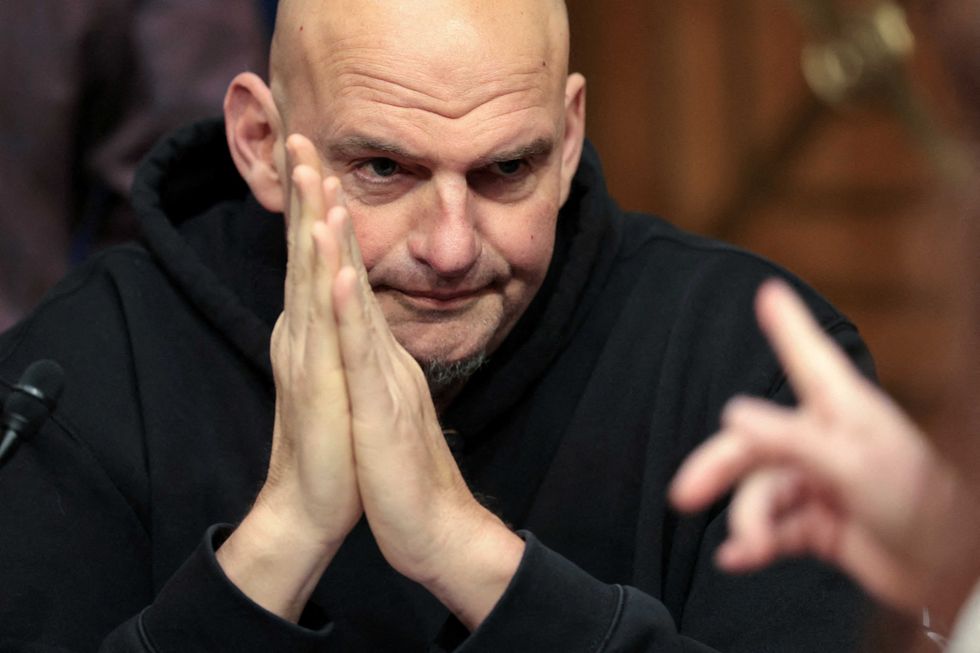
Sen. John Fetterman (D-PA) sparked another wave of liberal outrage after becoming the first Senate Democrat to clear the path for one of President Donald Trump’s judicial nominees during the president’s second term, Punchbowl News reported Friday.Fetterman has become something of a pariah among Democrats after routinely siding with Republicans on various issues, including matters related to immigration enforcement, Trump’s war powers and Israel’s bombardment of Gaza. And on Friday, Punchbowl News confirmed that he had waived his right to block Trump’s lifetime nomination of a federal judge in Pennsylvania, sparking fury among a major liberal and anti-Trump advocacy organization.“These are not normal times, and any senator who thinks that this is standard operating procedure and that any of these nominations are normal course of operations is deluding themselves,” said Josh Orton, president of the organization Demand Justice, speaking with Punchbowl News.“If Democrats truly believe that we have to stand up to Trump’s attacks on the rule of law, they have to do so in every room — not just on Twitter and not just on TV.”Fetterman cleared the path for the Trump-tapped Antonio Pozos to serve as a lifetime federal judge for the Eastern District of Pennsylvania, doing so by turning in his blue slip, a process that waives his right to oppose Pozos’ appointment.“It’s the first time in Trump’s second term that a Senate Democrat has turned in a blue slip for one of Trump’s judicial picks,” Punchbowl News’ report read. “The move is already setting off yet another battle between Fetterman and his numerous critics on the left, who demand unyielding opposition to Trump, particularly on lifetime appointments to the federal bench.”
Sen. John Fetterman, the Pennsylvania Democrat known for causing the party numerous headaches, caved to President Donald Trump, per Punchbowl News, giving him a pass that no other Senate Democrat has during his second term.On Friday morning, Punchbowl reported that Fetterman — sometimes hailed as "Trump's favorite Democrat" for his often right-leaning stances and votes — would be allowing one of the president's federal judicial nominees in Pennsylvania, "waiving" his right to refuse a "blue slip." As the report noted, this is "the first time in Trump’s second term that a Senate Democrat has turned in a blue slip for one of Trump’s judicial picks."A congressional tradition dating back over a century, senators from each state hold the right to refuse to give their support to a president's judicial nominee in their home state, with the act of giving their support referred to as giving them their "blue slip." Refusing to give the slip, typically, results in the nominee getting blocked outright, or at least delayed significantly.Both of a state's senators must give a judicial nominee their blue slip in order for their nomination to progress. As Pennsylvania's other senator, David McCormick, is a Republican, only Fetterman was likely to offer any pushback at all in the process. Critics of Trump have pushed Democrats to be unyielding in the blue slip refusal under Trump's second term, given that these judges will go on to serve lifetime appointments.Trump previously railed against the blue slip process, but Senate Republicans offered a rare rebuke and defended it."The move is already setting off yet another battle between Fetterman and his numerous critics on the left, who demand unyielding opposition to Trump, particularly on lifetime appointments to the federal bench," Punchbowl reported. It continued: "This is also a new test for Senate Democrats. Trump only recently nominated a pair of judges for federal district courts in states with one or two Democratic senators. Trump tapped Antonio Pozos for the Eastern District of Pennsylvania and Michael Martin for the Eastern District of Michigan. Fetterman turned in his blue slip for Pozos to allow the nomination process to move forward, according to a spokesperson for the Pennsylvania Democrat. Michigan’s two Democratic senators haven’t turned in their blue slips for Martin."Demand Justice, a "key liberal group," is now prepping a major ad campaign to attack Fetterman for his approval of Pozos' nomination, and threatening similar attacks against any Democrat who does the same going forward.“These are not normal times, and any senator who thinks that this is standard operating procedure and that any of these nominations are normal course of operations is deluding themselves,” Demand Justice President Josh Orton told Punchbowl.
President Donald Trump faced a new GOP Senate “rebellion” early Friday, and one that included “more than just the usual suspects” in what Punchbowl News described as a “potential preview of what’s to come as Republicans seek distance from Trump with November approaching.”Senate Republicans failed to advance a bill to extend the Foreign Intelligence Surveillance Act (FISA), a law that permits national intelligence agencies to monitor overseas communications without a warrant, including those of Americans. A priority for Trump, the bill failed to advance due to insufficient GOP support, which itself was “prompted by” Trump’s nomination of Bill Pulte — who has no intelligence or national security experience — to serve as director of National Intelligence, Punchbowl News reported.“I don’t think he thinks about the impact on this and the timing,” said Sen. Lisa Murkowski (R-AK) of Trump, Punchbowl News reported. “I don’t think he’s connecting that. Which is unfortunate, because [FISA] really has had an impact.”The vote to advance the bill to extend FISA ultimately failed with a vote of 47-52, and that followed an 18-hour marathon session in the Senate to advance the GOP reconciliation bill to fund federal immigration agencies, one that Punchbowl News described as an “arduous process” that, again, faced GOP opposition prompted by Trump’s actions.“The marathon voting session on the reconciliation bill laid bare the consequences of Trump’s recent moves, from the toppling of two GOP incumbents to the political toxicity of the White House’s handling of an ‘anti-weaponization’ fund for his political allies,” Punchbowl News’ report read.“What was supposed to be a straightforward reconciliation bill to fund immigration enforcement became a major headache for Senate GOP leaders because of this controversial fund. Republicans and Democrats alike tried to add language to the measure to ban the fund.”Even Senate Majority Leader John Thune shared a blunt assessment as to who carried the blame for the Senate GOP’s challenging night.“This would have been done several hours ago if we weren’t having to deal with some of the issues around the fund, which doesn’t exist — which is the point we’re making,” a “frustrated” Thune said, Punchbowl News reported.
After the House voted to direct Donald Trump to end the Iran war, he exploded in fury at the four Republicans who turned against him, terming them “grandstanders” who “should be ashamed of themselves.” This comes as The New York Times reports that extensive internal war games among military officials established that Iran would react to an attack by closing the Strait of Hormuz—which Trump ignored. And incredibly, officials just leaked to The Atlantic that Trump is privately “irritated” by commentary casting his emerging framework as weaker than Barack Obama’s 2015 nuclear deal. Trump also wants a way to argue that Iran “accepted terms from him that Obama never managed to extract.” We talked to former National Security Council veteran Emily Horne, author of the Spin Class Substack. We discuss how all those leaks themselves signal Trump’s growing weakness, why his demand for a “better” deal than Obama’s may be hopeless, and whether that leaves us any way out of this fiasco. Listen to this episode here. A transcript is here.
Viewers angry over CBS's cancellation of Stephen Colbert's "The Late Show" are making their displeasure known, with Byron Allen's replacement program "Comics Unleashed" hemorrhaging more than half its audience — and competitors Jimmy Kimmel and Jimmy Fallon capitalize on the exodus.According to The Daily Beast, the viewership just days after CBS pulled the plug on Colbert tells a devastating story for the network's late-night strategy.Kimmel's show experienced a dramatic surge, drawing 2.185 million total viewers on June 1—a 53-percent year-on-year increase. In the coveted 18-49 demographic, ABC's late-night leader captured an eye-popping 295,000 viewers, representing a staggering 178-percent increase from the same night last year.Fallon's "Tonight Show" came in a distant second with 1.301 million total viewers, though that was still a respectable 10-percent year-over-year increase. The NBC program pulled in 194,000 viewers in the 18-49 demo, a 14-percent improvement from last year.CBS, meanwhile, cratered. Allen's "Comics Unleashed," which debuted a day after Colbert's departure, drew only 628,000 total viewers — a catastrophic 65-percent drop compared to the same time slot last year. In the crucial 18-49 demographic, the show managed just 82,000 viewers, according to the Beast report.The report notes the financial structure of Allen's arrangement insulates CBS from the direct financial damage. Under a "time buy" deal, Allen purchased the 11:35 p.m. time slot directly from CBS and covers all production costs while retaining the right to sell advertising himself. That arrangement means Allen—not the network—absorbs the financial consequences of the poor ratings.A source told The Daily Beast that this model actually benefits CBS by allowing the network to program the late-night slot without exposure to audience and advertiser volatility, even as the show itself collapses into irrelevancy.
If you hadn’t noticed, Trump is failing. Iran is more dangerous today than it was when went to war on it, and energy prices are far higher. Trump’s brutal efforts to crackdown on undocumented people in the United States have generated a huge backlash, including among Latinos who voted for him in 2024 but are moving into the Democratic camp. His attempt to cover up the Epstein files continues to rankle MAGA voters. His $1.8 billion “slush” fund and family immunization from future IRS audits, in “settlement” of his $10 billion lawsuit against the IRS, has drawn widespread bipartisan scorn and hit judicial roadblocks. I could go on, but you get the point. Trump’s failures are mounting. Why? I’ve worked for three presidents and advised a fourth. All of them solicited honest feedback, including criticism. Trump solicits only praise. He relishes compliments. He needs everyone around him to pander to his egomaniacal need for admiration. He punishes the bearers of bad news. He promotes people who kiss his assets, such as Bill Pulte, the home-building heir Trump put in charge of the Federal Housing Finance Agency and who Trump is now making acting director of national intelligence.And Todd Blanche, the lawyer who represented him in his multiple lawsuits and who Trump now wants to become Attorney General. Pulte, with no known experience in national security, got the job because he told Trump what Trump wanted to hear. He weaponized the housing agency and tried to dig up dirt on Trump enemies — specifically, the Fed’s Lisa Cook, Senator Adam Schiff, and New York Attorney General Letitia James. As the person in charge of national intelligence, Pulte will continue to tell Trump whatever he wants to hear. Trump won’t get national intelligence; he’ll get national stupidity.Trump has so many people “he could be listening to,” said a former Trump official, “and he listens to Pulte, who just continually f---- things up.”Blanche got the nod for Attorney General because he went even further than his predecessor, Pam Bondi, was willing to go in throwing integrity and principles odown the toilet in favor of going after Trump’s enemies. He secured a second felony indictment against the former FBI Director James Comey, alleging Comey threatened Trump ia a social media post that arranged seashells to spell “86 47.” Blanche also commenced a bonkers criminal investigation of Fed chief Jerome Powell, and tried to establish a $1.8 billion slush fund for Trump as well as immunity from I.R.S. audits as a fake “settlement” of Trump’s $10 billion lawsuit against the I.R.S.So how does Trump make decisions if he doesn’t have people telling him the truth? He relies, he has said, on his gut. “My gut tells me more sometimes than anybody else’s brain can ever tell me.” He told The Washington Post that he reaches decisions “with very little knowledge other than the knowledge I [already have], plus the words ‘common sense,’ because I have a lot of common sense.”In other words, he doesn’t listen to anyone — especially not anyone who tells him anything he doesn’t want to hear. Presto. He makes colossal mistakes. Even normal people don’t like to get negative feedback. And most people don’t want to give it. Yet receiving and giving truthful feedback are absolutely essential in a complex world. If you have power over other people, it’s even more important to get negative feedback, because your mistakes could harm many others. Yet the more power you have, the less willing people are to give you negative feedback, since they have more reason to fear your reaction to it. Which means you have to go out of your way to solicit it. The best leaders I’ve had the privilege of serving during my nearly 60 years of working life have been people who have actively sought and rewarded negative feedback. Trump does just the opposite. Small wonder he’s one of the worst leaders the nation has ever endured. Robert Reich is a professor of public policy at Berkeley and former secretary of labor. His writings can be found at https://robertreich.substack.com/.
Senate Republicans advanced ICE and Border Patrol funding through the end of President Trump's second term, after beating back multiple amendments targeting his priorities during an 18-hour "vote-a-rama."Why it matters: The party-line vote had been deeply in doubt over the past weeks, as senators revolted against the "anti-weaponization fund" and spending requests for the president's White House renovations. The final vote was 52-47, with Sen. Lisa Murkowski (R-Alaska) voting "no" and Sen. Michael Bennet (D-Colo.) not voting. The "vote-a-rama" allowed senators to offer unlimited amendments, forcing GOP leadership to repeatedly defeat amendments that targeted the two Trump provisions.Zoom in: In the vote's opening act — a series of Democratic amendments designed to force uncomfortable votes for Republicans — Senate Majority Leader John Thune (R-S.D.) relied on Sen. Bill Cassidy (R-La.) to help defeat a Democratic proposal targeting the "anti-weaponization fund."Cassidy's vote allowed a pair of politically vulnerable Republicans — Sens. Jon Husted (Ohio) and Dan Sullivan (Alaska) — to side with Democrats without jeopardizing the amendment's defeat.For both senators, it marked one of their first meaningful breaks with a president whose political standing appears to be sliding.The vote failed, 49-50. Sen. Susan Collins (R-Maine), who is also vulnerable but was expected to vote with Democrats, joined Husted and Sullivan in voting for the amendment.Between the lines: On Trump's ballroom, the universe of Republicans willing to buck their party expanded, with seven GOP senators voting with Democrats to bar any funds for it. But the threshold for that vote was at 60, leading it to fail.Collins, Husted and Sullivan again voted with the Democrats.But so did Sens. Jerry Moran (R-Kan.), Thom Tillis (R-N.C.), Murkowski and Cassidy. Moran is up for reelection in 2028.Zoom out: The vote-a-rama comes as Senate Republicans grapple with deteriorating polling and a series of Trump decisions that have led some GOP senators to question his political judgment.Many Republicans are privately skeptical of Trump's choice of FHFA Director Bill Pulte as acting director of national intelligence.Trump sought to ease concerns by saying Thursday that Pulte would not be his permanent nominee — a move aimed in part at preventing the nomination from complicating the reauthorization of Section 702 of FISA.But enough Republicans joined Democrats in voting to block a procedural vote on FISA renewal that the vote failed shortly after reconciliation advanced early Friday morning.