Lawyers say Pennsylvania student protesters did not know a man who joined scrum was the police chief
Source: The Washington Times stories: Politics · Bias: Center Right
Summary
Lawyers for student protesters detained in Pennsylvania for four days after a scuffle with police say their clients had no idea the stocky older man in street clothes who joined the fray and put his arm around a 15-year-old girl's neck was the local police chief.
Lawyers say Pennsylvania student protesters did not know a man who joined scrum was the police chief
Center Right
Lawyers for student protesters detained in Pennsylvania for four days after a scuffle with police say their clients had no idea the stocky older man in street clothes who joined the fray and put his arm around a 15-year-old girl's neck was the local police chief.
A record-setting fireworks show will close out America’s 250th birthday bash on the National Mall in Washington, D.C., Saturday evening. The celebration — which is set to feature more than seven hours of military flyovers and a speech from President Trump — will go on despite high temperatures and complaints surrounding the president’s participation in…
President Donald Trump's controversial new intelligence chief is clearing house, and career officers warn the man swinging the axe doesn't know what he's cutting.Bill Pulte, Trump's loyal acting director of national intelligence, began notifying dozens of intelligence officials of their terminations Thursday, part of a downsizing Trump ordered when he installed Pulte at the office two weeks ago, MS NOW reported Friday. An intelligence official, who spoke anonymously citing fear of reprisal, told the outlet that leadership is targeting workers it believes are "deep state" and accused them of failing to hand up a complete picture of available intelligence.But former officials aren't buying his rationale. Several told MS NOW they had never heard of intelligence officers withholding information from their superiors. "The premise is absurd," one said. Another questioned how Pulte, who ran the federal housing agency and has no intelligence background, could reach such a conclusion within days of arriving.“I have a real question of how he would know this. This isn’t a guy who is familiar with intelligence,” a former official told the outlet. “How is he going to get to the bottom of this and rely on any information with a matter of fidelity? It would be like me taking over a hospital and firing dozens of surgeons in a matter of days.”The cuts follow Pulte's earlier removal of six political appointees who served under his predecessor, Tulsi Gabbard. His arrival has drawn alarm across party lines: he took the post without ever holding a security clearance, and he can stay in the acting role past November's midterms under federal vacancy rules. Critics note his office doesn't collect intelligence of its own, relying instead on the CIA, the NSA and more than a dozen other agencies to supply it.Democrats and some Republicans fear the purge is less about efficiency than about clearing out analysts who might resist Trump's election claims. The ODNI says it is providing "elite, apolitical intelligence that keeps America safe."
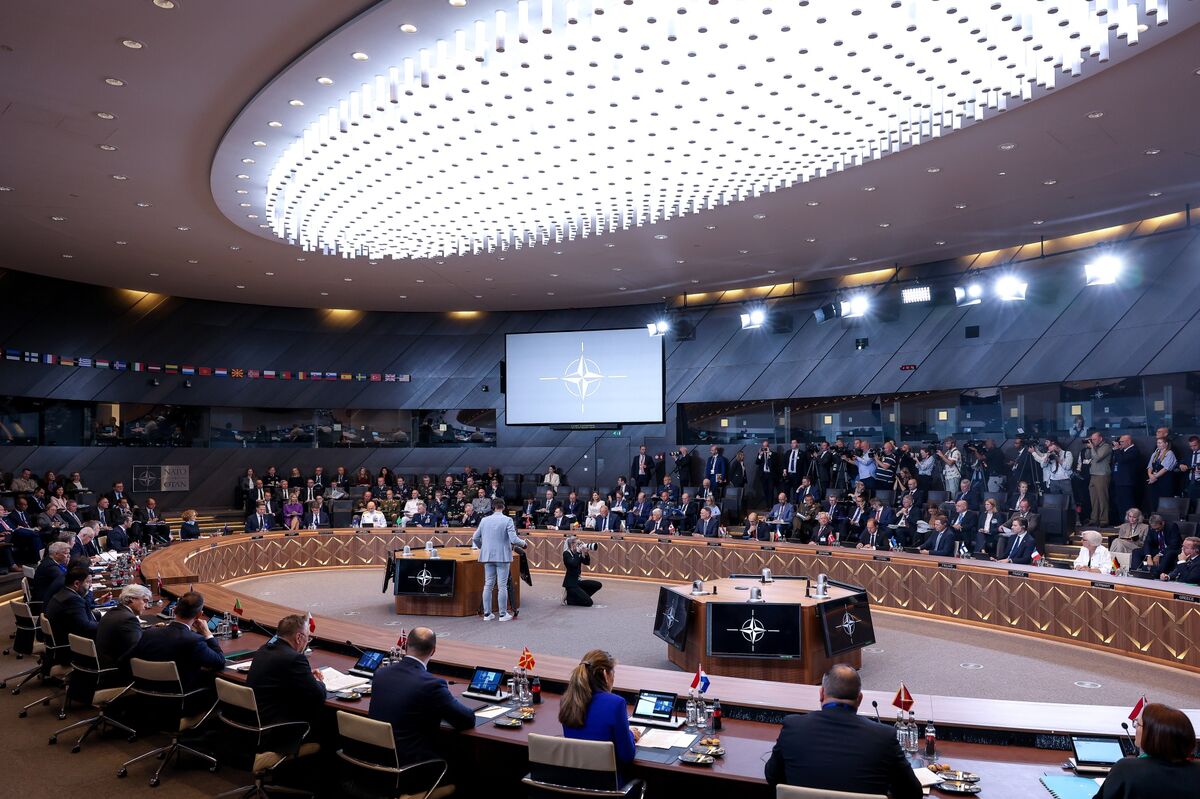
European NATO allies have mostly replaced the assets that the US has cut from its rescue plans in case of a war in Europe, Deputy Supreme Allied Commander Europe Sir John Stringer said in an interview.
At least two Dallas police officers and members of the Egypt national soccer team’s staff were involved in a physical altercation and shouting match, according to videos.
Op-ed views and opinions expressed are solely those of the author. The law enforcement veteran and InVest USA founder discusses why many NYPD officers are in for […]
Sen. Mitch McConnell’s office said Thursday that he is still in the hospital but hasn’t disclosed why he was admitted June 14. It comes as police scanner audio indicates paramedics gave CPR to a person in cardiac arrest at his known address.
The Trump administration is asking a federal judge to quickly lift her recent ruling against major provisions of a presidential executive order on elections, arguing in an appeal that the court’s action will effectively prevent the government from putting new voting restrictions in place before the November election.This article was originally published by Votebeat, a nonprofit news organization covering local election administration and voting access.Last week, U.S. District Judge Indira Talwani halted President Donald Trump’s efforts to create centralized lists of adult citizens and give the U.S. Postal Service unprecedented authority over who can vote by mail. Her 37-page ruling concluded that the president did not have the constitutional authority to regulate state elections, as his March executive order tried to do.The executive order directed the U.S. Department of Homeland Security and Social Security Administration to create a nationwide list of verified U.S. citizens over 18, and thus presumably eligible to vote in federal elections. It also called on the U.S. Postal Service to create a system to handle and accept mail-in ballots only from voters on preapproved lists.Talwani’s order prevents the federal government from enforcing those provisions of the order against the 24 jurisdictions (23 states and the District of Columbia) whose attorneys general and governors brought the lawsuit in federal court in Massachusetts. The list includes most Democratic-led and swing states, including Arizona, California, Michigan, Nevada, New York, North Carolina, Pennsylvania, and Wisconsin.This week, the Trump administration appealed Talwani’s ruling to the First Circuit Court of Appeals and said it is still proceeding with its efforts to set up the new system for the rest of the states. But it warned that the judge’s order will make it impossible for the U.S. Postal Service to create a bifurcated system for the November election, even if the administration ultimately prevails on appeal. Government attorneys asked Talwani to lift her ban by Monday.The request for a quick decision suggests that the Trump administration may be trying to speed things up so the case reaches the U.S. Supreme Court as soon as possible.“Operationally, it would not be possible for us to put a two-tiered system in place where one set of rules apply to the ballot mail of the Plaintiff States, and another applies to the remaining states,” Steven Monteith, the Postal Service’s chief customer and marketing officer and executive vice president, said in a court filing. “Doing so would cause operational confusion and significantly increase the complexity and efficiency of implementing any final rule.”But the Trump administration’s nationwide efforts to use the Postal Service to regulate who gets ballots also hit a separate legal roadblock this week when another federal judge in Washington, D.C., ruled that the executive order violates a years-old agreement requiring the federal government to ensure voters who request mail-in ballots get them in time to ensure they can be counted.U.S. District Judge Emmet Sullivan concluded that the Trump administration’s plans to send ballots only to voters on preapproved lists breached a 2021 agreement between the Postal Service and the NAACP meant to ensure that the agency prioritized ballot delivery. In contrast to Talwani’s ruling, Sullivan’s decision applies nationwide.“These proposed rules directly undermine commitments that the Postal Service made to ensure mail-in ballots are delivered and counted,” said Anthony Ashton, senior associate general counsel for the NAACP, in a statement.The U.S. Postal Service and Department of Homeland Security did not respond to requests for comment.Dion Nissenbaum is Votebeat’s senior national reporter and is based in Houston. Contact Dion at dnissenbaum@votebeat.org. Votebeat is a nonprofit news organization covering local election integrity and voting access. Sign up for their newsletters here.