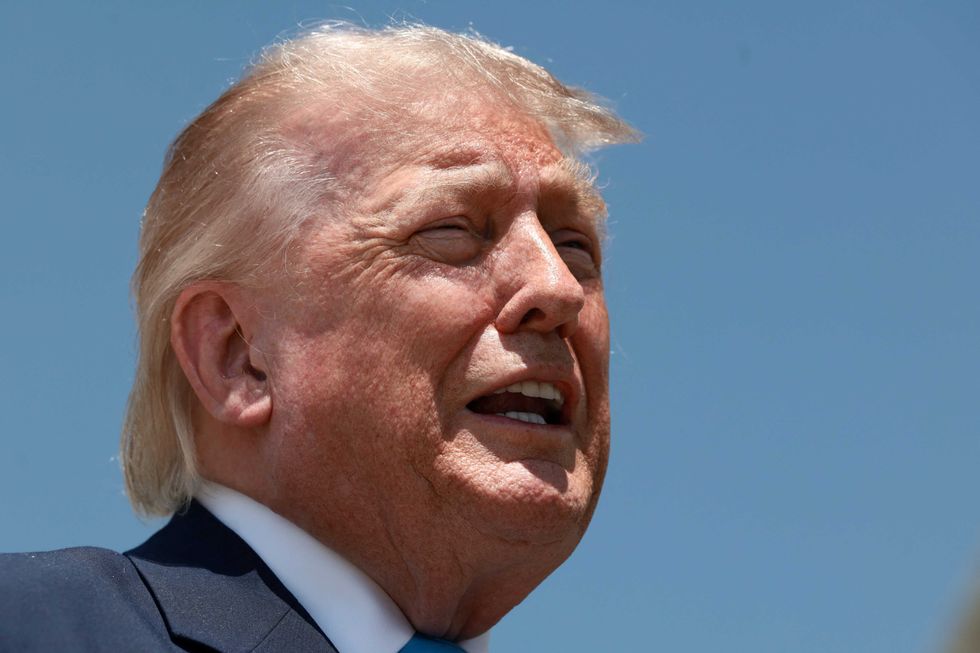
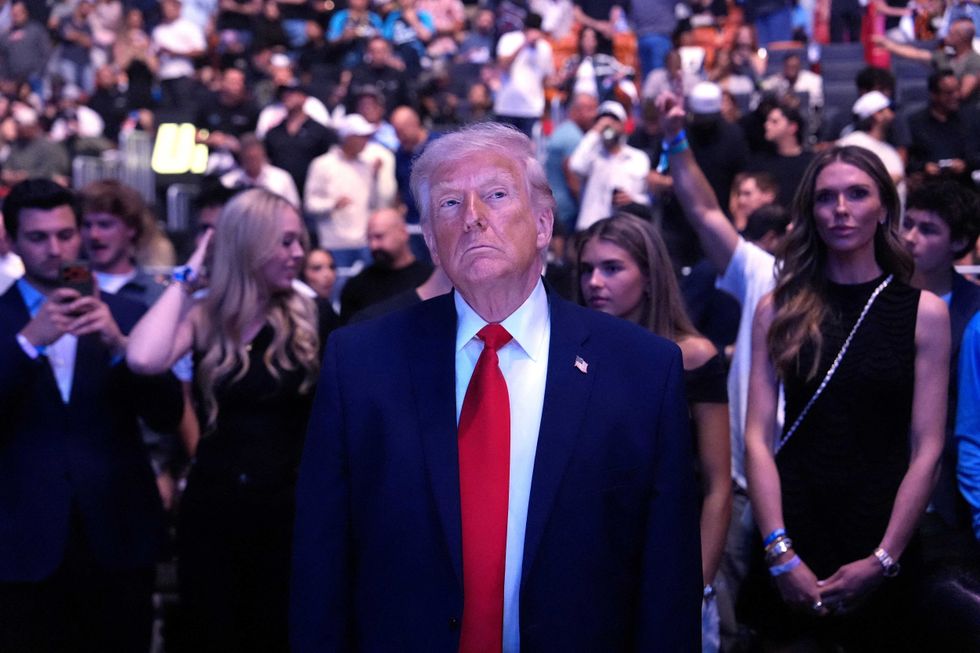
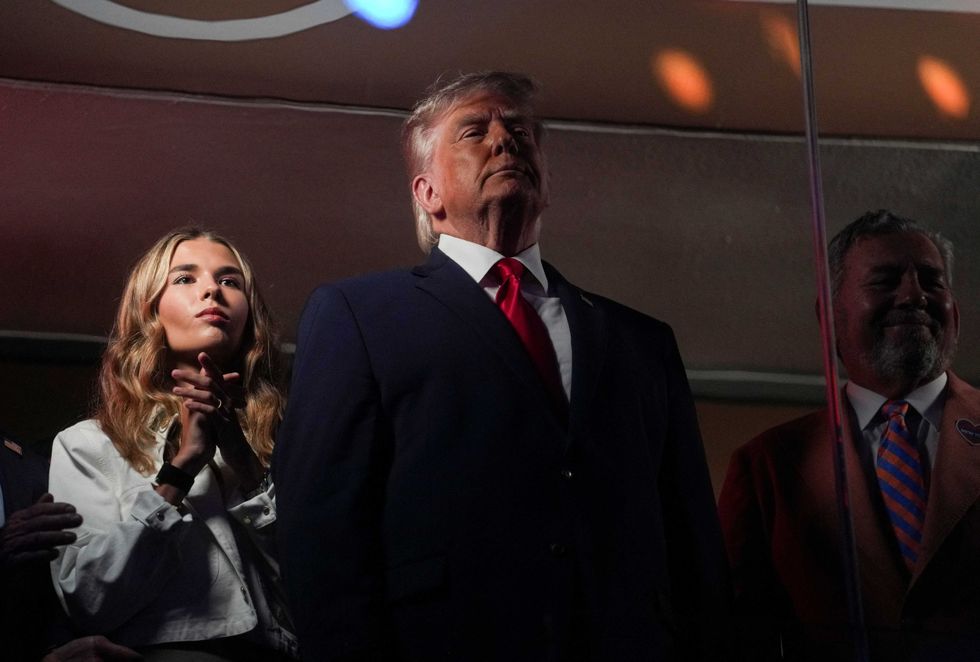
Two of the Senate GOP's most senior figures are openly questioning President Donald Trump's massive new Pentagon funding push, throwing fresh doubt on his ambitious $1.5 trillion military budget goal, according to Punchbowl News.Trump launched his latest funding blitz on Truth Social Wednesday night, demanding Republicans "IMMEDIATELY advance and pass" a $350 billion reconciliation package, which he called "Recon 3.0," that he said is the only way to reach a $1.5 trillion Pentagon budget. He framed the request as building the "ARSENAL OF FREEDOM" and demanded "no games, no delays, and no weak compromises."But the outlook for Trump's plan is "bleak," Punchbowl reported Thursday. Senate Appropriations Committee Chair Susan Collins (R-ME) and Sen. Mitch McConnell (R-KY), who chairs the Defense appropriations subcommittee, have openly raised concerns about the approach. Punchbowl bluntly put it: "Trump wants his Golden Dome and Golden Fleet, but for GOP leaders, the vote counts may not be golden."The fight comes against the backdrop of Trump's escalating Iran war, which has stretched past 100 days with no resolution. Trump threatened recently to "bomb the s--- out of them" if Iran didn't sign a peace deal soon.The Pentagon push is also complicated by Trump's previous demands for emergency war funding, requests that GOP leaders already balked at. The Pentagon's $200 billion supplemental request has stalled in Congress amid bipartisan demands for cost transparency that the White House has yet to provide.Punchbowl reported that the SAVE Act, the GOP voter ID bill Trump wants attached to the reconciliation package, cannot pass via reconciliation due to Senate parliamentary rules.Even defense hawks who applaud the $1.5 trillion request face vote-counting problems in both chambers.
No matter how the US’s illegal military assault on Iran ultimately turns out, Trump’s war was lost before it even started. The war was justified by a flagrant lie and constitutes among the worst, most irresponsible misuses of American military power in modern history.Trump’s claim that Iran posed an “imminent threat” to the US by building nuclear weapons was patently false. America’s former national intelligence director Tulsi Gabbard testified before Congress that Iran wasn’t building a nuclear weapon, which was corroborated by UN nuclear chief Rafael Grossi who said in June 2025 that Iran had no plans to build nuclear weapons. Trump had no legal justification for attacking a sovereign country under the UN charter’s Article 2 (4) prohibition. Only one person bears responsibility for Iran beginning to enrich uranium in 2018 beyond the level needed for domestic energy use: Donald Trump. Iran had been enriching uranium at a maximum level of 3.67% for domestic energy production in keeping with the Joint Comprehensive Plan of Action (JCPOA) agreement negotiated in 2015. As president, Trump pulled the US out of the JCPOA coalition in 2018 and renewed economic sanctions on Iran. Trump’s actions ostensibly blew up the agreement and Iran retaliated by beginning to enrich uranium at an increasingly higher level.There is every reason to believe that had the US remained in the JCPOA, the agreement would still be in place today with Iran abiding by the nuclear restrictions, which were monitored and verified regularly by the International Atomic Energy Agency (IAEA) between 2015 and 2018. First, the nations involved formed a powerful coalition: Iranian allies Russia and China along with the United States, Germany, Great Britain, and the EU. If needed, they could put overwhelming pressure on Iran to abide by the agreement, both through the threat of reduced economic and military support from Russia and China and renewed economic sanctions from the other countries. The agreement was as close to ironclad as it could be.Second, after the agreement was signed, Iran began enjoying an economic resurgence as decades-old sanctions that had crippled the country were removed. To remain sanction-free with the opportunity to continue improving its economy after decades of hardship, Iran’s abiding by the nuclear restrictions in the JCPOA agreement was a no-brainer. Third, since the 1979 Islamic Revolution, there has been no credible evidence that Iran has decided to build or manufacture a nuclear weapon. Although critics remain skeptical, that fact flies in the face of US Secretary of Defense Pete Hegseth’s claim in a Congressional hearing that the US must destroy Iran’s nuclear “ambitions.” Hegseth’s uncanny ability to peer into the black hearts of Iranian leaders is more reliable than any verifiable evidence. Fourth, if Iran ever actually developed a nuclear weapon, do Iranian leaders really have a death wish for their country? If Iran attacked a country with nuclear weapons, it would be destroyed in short order by vastly more powerful nuclear forces. The one thing that has prevented every nuclear country from launching attacks for over 70 years is the most powerful evolutionary motivator in mankind: self-preservation. Iran would be no exception. The 2015 coalition agreement is vastly superior to anything that Trump ultimately negotiates. Trump has scaled down his initial lofty goals to one: ensuring that Iran doesn’t get nuclear weapons. First, there is no evidence that Iran ever planned to get nuclear weapons in the first place, and second, the 2015 agreement accomplished the same thing Trump is trying to negotiate with a much stronger international coalition to enforce it. By comparison, any Iranian nuclear agreement solely with the US helmed by an incompetent, capricious, and untrustworthy president couldn’t be more tenuous.Beyond that, the 2015 agreement was accomplished diplomatically without bloodshed or destruction. Trump’s agreement will come following the US-Israeli bombing of Iran and the deaths of 2,000-to 3,000 Iranian civilians, including 250 to 500 children, 13 dead American soldiers and hundreds more injured. It will come with the destruction of Iranian schools, hospitals, infrastructure, and homes, the displacement of over 3 million Iranian civilians, a humanitarian crisis with a scarcity of food, drinkable water, and adequate health care, toxic clouds of pollution hanging over the cities, and the loss of thousands of jobs. It will come with the war spreading across the Middle East, costing even more lives and increasing infrastructure damage. It will come with the international economic disaster brought on by extreme oil shortages and skyrocketing prices. It will come at a cost of $100 billion to American families between increased military spending and higher oil prices.
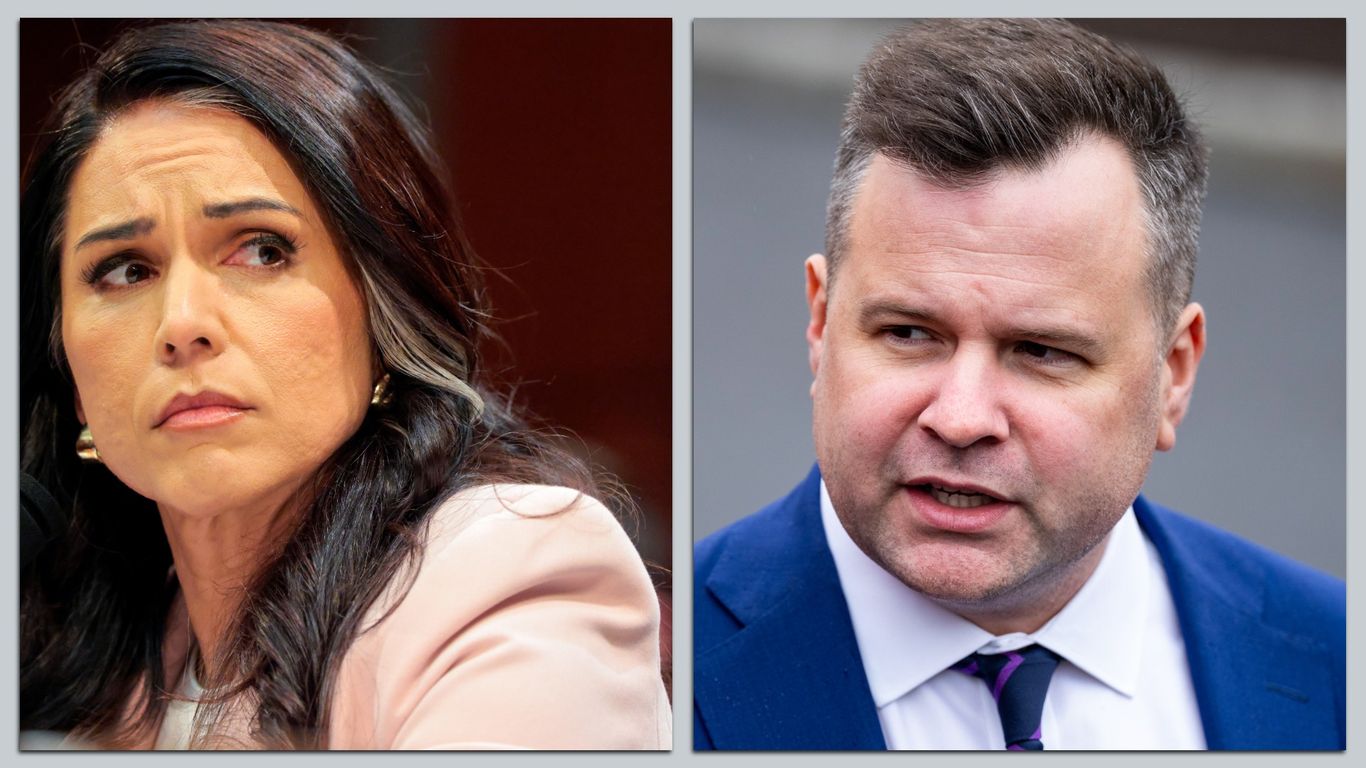
Tulsi Gabbard, the outgoing director of national intelligence, got an unexpected call Tuesday from her controversial successor, Bill Pulte: "Today is your last day," he said.Gabbard was surprised. She had announced she was leaving at month's end, not Tuesday."I need to hear it from the president or the White House," Gabbard told Pulte, two officials briefed on the discussion told Axios.Why it matters: The call, unreported until now, was the latest flashpoint in the intelligence wars that erupted last week in D.C. after President Trump picked Pulte as Gabbard's temporary replacement.After the conversation with Pulte, Gabbard got ahold of Trump, who didn't request her immediate resignation. "What day works best for you?" the president asked, according to one of the sources.Gabbard said June 19, and Trump then posted a statement on his Truth Social account announcing her new exit date.He also confirmed that Pulte would lead the Office of the Director of National Intelligence until he finds a nominee whom the Senate will confirm.The backstory: Pulte's phone call to Gabbard came on a day when top Trump advisers held a meeting in the White House's Situation Room to try to find a solution to the administration's standoff with Congress over renewing the Foreign Intelligence Surveillance Act (FISA).Trump's appointment of Pulte led to a bipartisan revolt in Congress, which has balked at reauthorizing a key federal surveillance law because of concerns about Pulte's lack of qualifications.Pulte, the director of the Federal Housing Finance Agency, has no intelligence experience or even a security clearance to handle classified information.Gabbard's new departure date was a partial win for Pulte; Gabbard initially planned to resign June 30 as she helps her husband battle cancer.The intrigue: Pulte was able to persuade Trump to pick him as Gabbard's successor by promising to fire more ODNI staff, mainly officials who couldn't cut it at other agencies and alleged "deep state" bureaucrats deemed sympathetic to Democrats, a senior administration official said.Pulte's family, Florida-based developers, have been friends with Trump for years and belong to his Mar-a-Lago club in Palm Beach, Fla Pulte, who clashed with Treasury Secretary Scott Bessent last year, is a frequent White House visitor and played a role in Trump posting a controversial meme depicting the president as a Christ-like healer.What they're saying: As Tuesday's Situation Room meeting indicated, Trump's team is still dealing with the fallout from Pulte's appointment. It caught some White House officials off-guard and derailed Congress' negotiations on reauthorizing FISA."Nobody seems to know what the f**k is going on," one administration official said.Retorted a senior official: "This admin official is a dumb f**k and clearly is not in the loop."But Trump's allies in Congress weren't in the loop, either. Said one: "We were so close to FISA passing, and then this Pulte thing blew it up."Trump retrenched somewhat Tuesday by confirming that Pulte's appointment is temporary. But he stood by Pulte, said one adviser who added that "the FISA-for-Pulte hostage deal isn't one the president will buckle to."
The top Manhattan prosecutor in Trump's Department of Justice is alarming legal experts with his behavior.During a recent interview, Adam Klasfeld raised red flags over Jay Clayton, the U.S. Attorney for the Southern District of New York, because of his constant appearances on CNBC. Clayton "sowed doubt" over the California elections, but that wasn't all the stunned Klasfeld, who's been a court reporter for the past two decades."I have never seen a U.S. attorney engage in political commentary on cable, period," Klasfeld said. "And he is now a regular fixture, Jay Clayton, on Squawk Box on CNBC, where he spouts off pro-Trump talking points regularly."In addition to bringing up unfounded fraud concerns around the California elections, Clayton has also talked about how Trump was wronged in criminal prosecutions against him, defended the $1.776 billion slush fund, and engaged in "soft election denialism," Klasfeld said.Michael Popok, a former prosecutor and the host of Legal AF, added to Klasfeld's observations. Popok noted that Clayton "is a very close friend and always has been with Howard Lutnick," Trump's commerce secretary, who's been questioned about his ties to Epstein.Clayton is also a "golfing buddy" with Lutnick and Trump, according to Popok, adding that his purpose is to make the Southern District of New York look good under Trump."When you see him on television, he looks like he's from central casting," Popok said about Clayton. "His sole purpose is to give a veneer of credibility, and to restore some credibility to that office while continuing to be a political hatchet man."THE POPOK POP-UP: BREAKING NEWS AND ADAM KLASFELD, TOO! by Legal AFA recording from Legal AF's live videoRead on Substack
Bloomberg Daybreak Europe is your essential morning viewing to stay ahead. Live from London, we set the agenda for your day, catching you up with overnight markets news from the US and Asia. And we'll tell you what matters for investors in Europe, giving you insight before trading begins.
The US military launched strikes against “multiple” targets in Iran for the second straight day after President Donald Trump accused the country of dragging out talks on an interim peace deal.
Global equities fell to a more than one-month low as a technology-led selloff deepened and the war in Iran showed little signs of ending.
Oracle shares declined in extended trading after the company reported quarterly capital expenses that were higher than estimates, raising investor concerns about the profitability of the AI infrastructure business.
Today's guests: Oscar de Bok, CEO, DHL Global Forwarding; Carsten Brzeski, Global Head of Macro Research, ING. (Source: Bloomberg)
The Trump administration is launching a "massive leak hunt" to find out who spilled details on a panicked conversation inside the White House.A new book by journalists Maggie Haberman and Jonathan Swan has the Trump White House scrambling to find out who leaked details about the Trump administration's "freakout" over the release of the Epstein files, according to reporting by CNN. The New York Times published an excerpt of the book, "Regime Change: Inside the Imperial Presidency of Donald Trump," on Wednesday.The book's excerpt describes a meeting that Trump didn't attend or know about in the Situation Room. Included in the meeting were his senior aides, Vice President JD Vance and White House Chief of Staff Susie Wiles, last year to plan how to contain the fallout. Others present included then-Attorney General Pam Bondi, then-Deputy Attorney General Todd Blanche, and FBI Director Kash Patel, according to reporting by The Daily Beast. According to an excerpt of Haberman and Swan's book, Vance "appeared panicked" about how the Epstein files would divide the president's base.CNN cited a person who "detected" the search for the leaker to confirm that the White House is now hunting them down.
President Donald Trump is increasingly turning his fury at Democratic Senate candidates, MS NOW's Jen Psaki said on Wednesday — because he's seen the data and he's getting scared. The president, she noted, "spent part of his time in the Oval Office today ranting about the Democratic nominees for U.S. Senate in the upcoming election. And he seemed to be focused on one candidate in particular" — that being veteran and oyster farmer Graham Platner, who won a landslide nomination in his primary this week despite a cloud of scandals about his personal life.Psaki played a clip of Trump speaking about Platner."Yeah, once that thug that's up in Maine, he's a thug. He's a thug," said Trump. "I know thugs. I had to deal with thugs. I built a lot of buildings. I dealt with worse than thugs. This guy's a thug. He's a low-level thug. But this is a thug. You know, he's not a businessman at all. His parents supported him. He's a loser. Other than that, he might be very nice.""That is Trump's new line of attack against Graham Platner. He's a thug, the kind of thug who — wait for it — needs help from his parents to start a business, as thugs do," said Psaki, taking care to note that Trump himself relied on his father to get his business off the ground.The key takeaway, she continued, is that "Trump is clearly worried about the Senate. He's clearly worried about Graham. He's clearly worried about [Texas nominee] James Talarico ... And he's not the only one," as a memo from the National Republican Senatorial Committee warned Maine Sen. Susan Collins is uniquely vulnerable to a challenge from Platner."He's still currently leading Susan Collins in the polls," noted Psaki — and "it comes as Platner released his first general election campaign ad today, focused on how he will take on what he calls the 'Epstein class' in Washington." - YouTube youtu.be