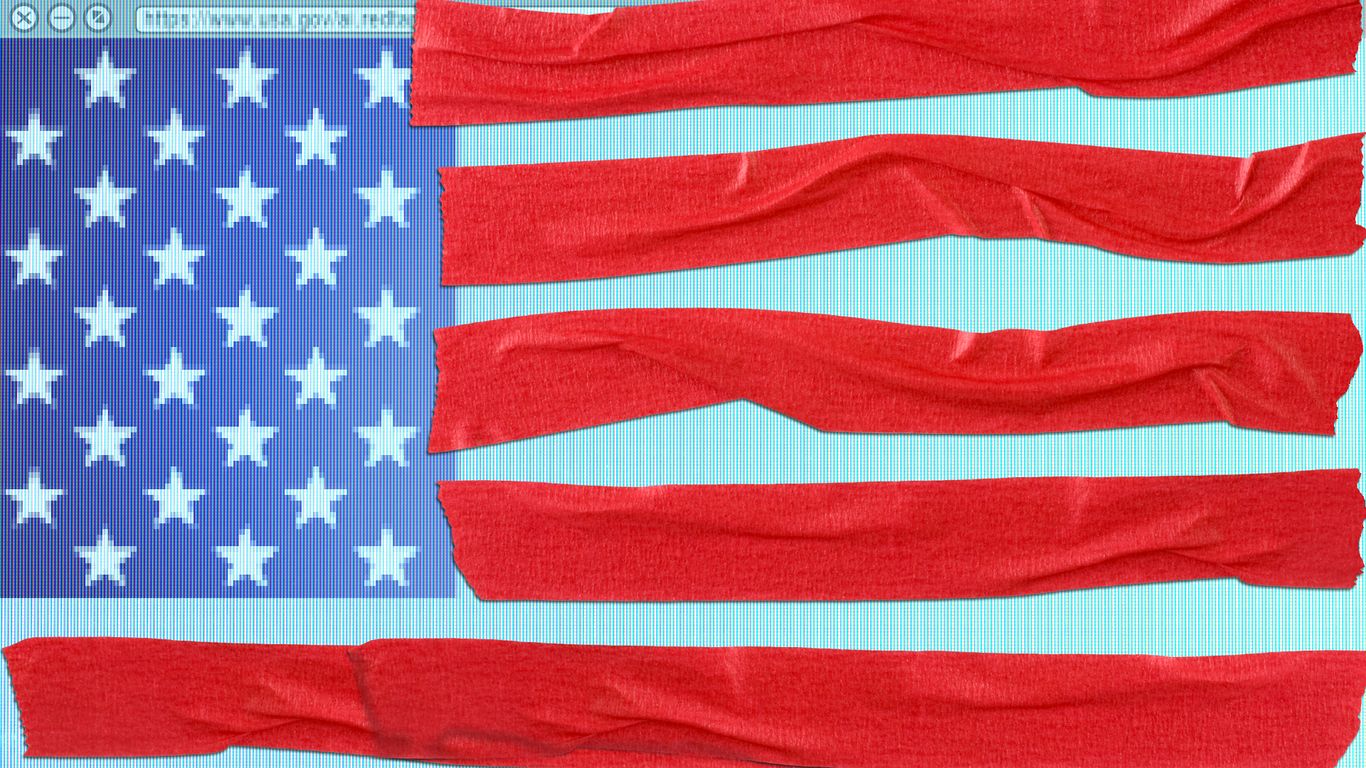
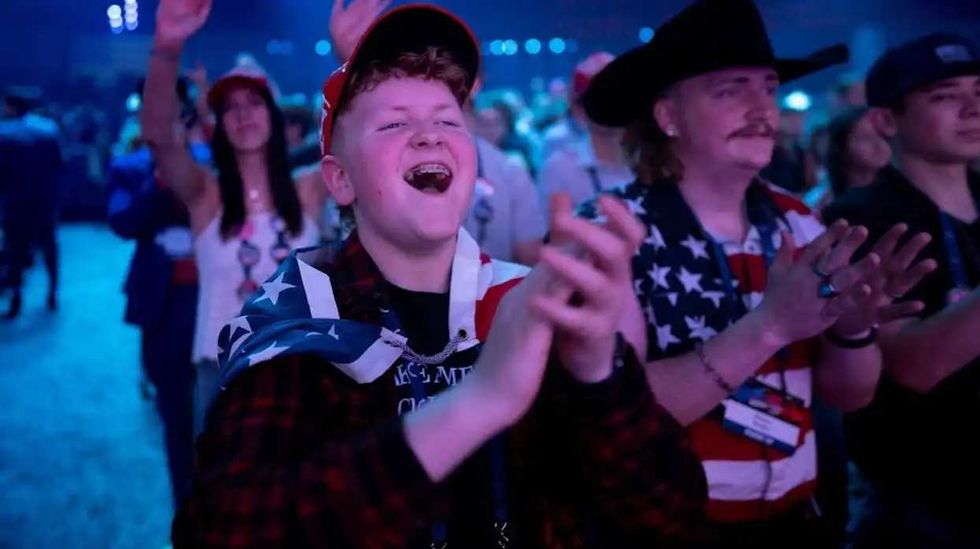
Some Americans who have always celebrated the anniversary of our country's independence see us losing independence and so much else on the eve of our 250th. They aren't in the mood for a parade.
The fight that scrubbed the world's most powerful AI models from the internet featured personality clashes, industry confusion, and international backlash.Why it matters: Anthropic's models are back online, but the impact of its 20-day showdown with the Trump administration will be long lasting.Behind the scenes: It began when Amazon, Anthropic's partner and investor, sounded an alarm that was later disputed by cybersecurity experts.It warned about a "jailbreaking" issue it found with the AI lab's latest models, Mythos and Fable — meaning a technical flaw that could have caused a failure of their guardrails.Amazon flagged its concerns to the administration, triggering sweeping export controls. A U.S. official said the government conducted its own tests once it became apparent that the issue needed to be addressed.Cybersecurity experts, however, later wrote in an open letter to the administration that other leading AI models have the same issue Amazon warned about with Anthropic.On June 12, Commerce Secretary Howard Lutnick, at the direction of President Trump, called Anthropic CEO Dario Amodei. Lutnick made clear to Amodei the issue needed to be resolved fast and alerted the CEO that the company would be receiving a letter imposing sweeping export controls, the U.S. official said.Amodei called Lutnick back that night after receiving the letter, realizing it effectively meant the models would have to be taken offline — to which Lutnick responded that was indeed the goal.That decision led to a three-week, multi-agency crash course in AI safety.Anthropic deployed engineers to Washington D.C. According to a U.S. official, the company wanted to prove everything was already resolved and further changes were being fine tuned.But the federal Center for AI Standards and Innovation and the National Security Agency said those changes weren't good enough, prompting further fixes, according to the U.S. official.Gradually, various agency heads approved of the changes, and on July 1 the models were released, the official said.Out of all of the administration officials Amazon's Andy Jassy could have called, it was Treasury Secretary Scott Bessent who first heard about the jailbreaking issue found in the company report, according to a separate source familiar.Bessent was early to sound the alarm on Mythos, work with White House Chief of Staff Susie Wiles to re-engage the embattled company, and help get a cybersecurity executive order across the finish line.While technical discussions to address the jailbreaking issue took place in D.C., it was Bessent who stood next to President Trump during the G7 where allies called for global cooperation on safety standards.At the center of the showdown was Commerce Secretary Howard Lutnick, who also flanked Trump at the G7 meeting while his department's teams led technical discussions.National cyber director Sean Cairncross, the White House Office of Science and Technology Policy, Treasury Department chief information officer Sam Corcos, and the NSA also all participated in technical discussions, according to various sources.Washington mobilized faster to hold scores of meetings and pulled in far more agencies than one would expect for a single technical issue, one source said.The tension spiraled amid personality clashes and poor communication.Anthropic eventually understood that in order to be successful they needed to be on the same side as the government, the U.S. official said.As discussions turned more technical, Anthropic policy chief Sarah Heck and Anthropic co-founder Tom Brown got more involved. Brown also had multiple conversations with Lutnick and Cairncross the weekend of June 12.There was never a moment where Dario stepped offstage and someone else replaced him, one source said, adding that Brown's technical expertise allowed him to sit in a room with government specialists and go line‑by‑line through how models behave under stress.Between the lines: It remains uncertain when and how Anthropic's models will be released to ally countries around the world — which proponents say is key to beating China — or how other labs from OpenAI to Google will release their latest models.OpenAI, whose latest model GPT-5.6 is on hold, did not have visibility into discussions between Anthropic and the White House and is engaged in daily technical discussions on the release of its own model, a source said.The bottom line: There's a lot of work left to be done on a framework for approving future models with a clear inclusive process that has transparency standards and timelines, sources familiar said.
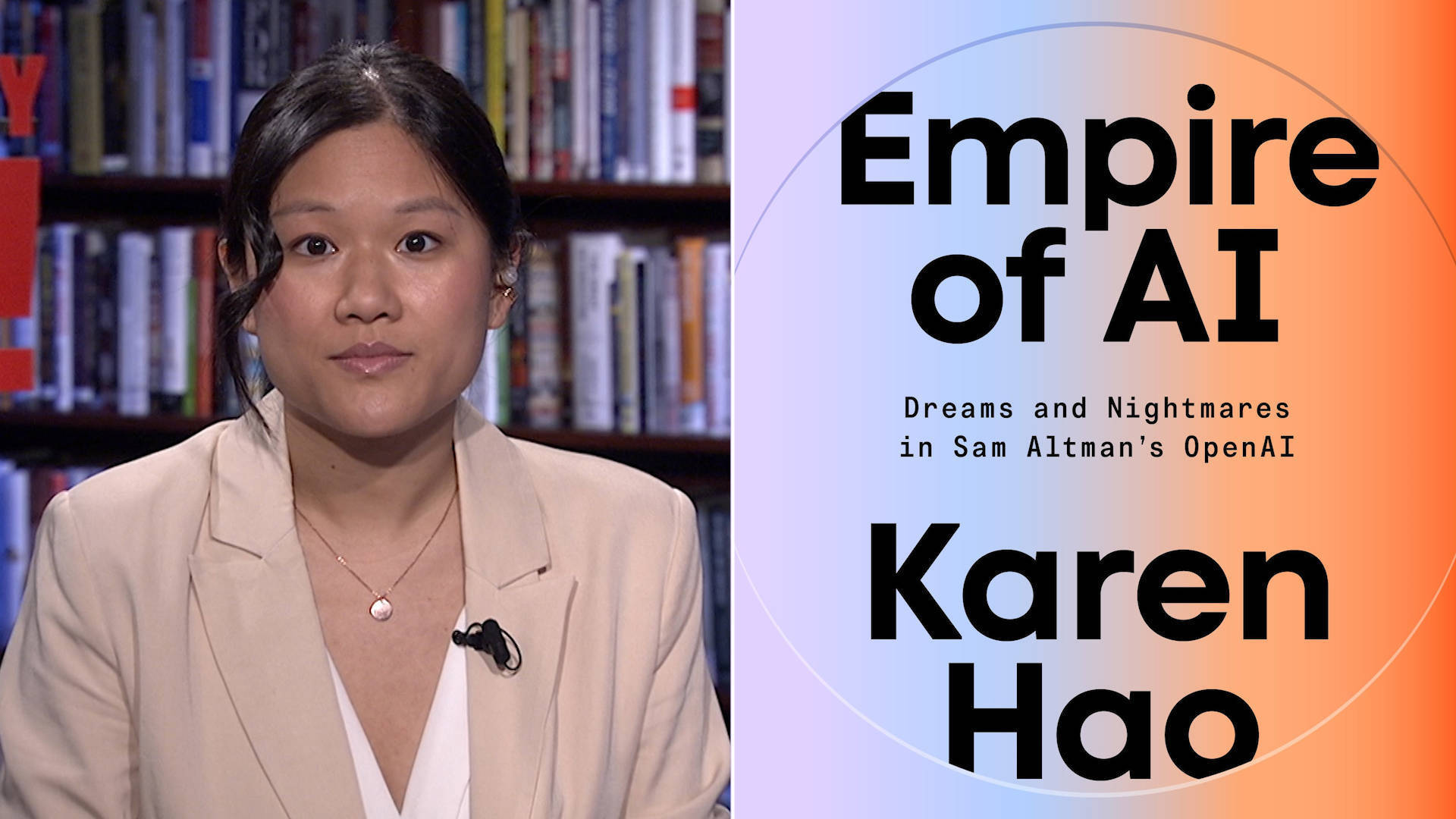
In our July Fourth special broadcast, we revisit our interview with longtime technology reporter Karen Hao, author of Empire of AI, which unveils the accruing political and economic power of artificial intelligence companies — especially Sam Altman’s OpenAI. Her reporting uncovered the exploitation of workers in Kenya, attempts to take massive amounts of freshwater from communities in Chile, along with numerous accounts of the technology’s detrimental impact on the environment. “This is an extraordinary type of AI development that is causing a lot of social, labor and environmental harms,” says Hao in an extended interview.
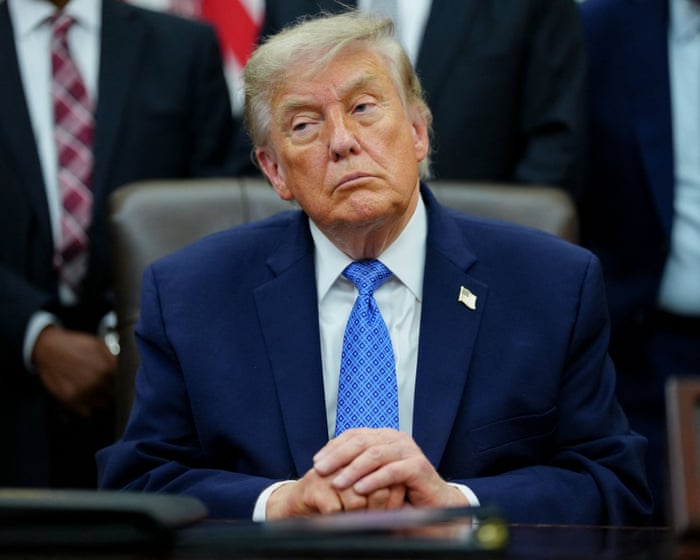
Investigations into president and corruption charges will get heavy scrutiny if Democrats win majority in midtermsDonald Trump’s presidency is facing investigations and corruption charges from a key House Democrat and ex-prosecutors, involving political and personal abuses of power, which legal experts predict will get heavy scrutiny if Democrats win the House majority in the midterms.Legal critics call the scandals dogging the president “target rich” for investigations that Democrats will have a “field day” investigating if they win the House majority. Critics cite, for instance, Trump’s damaging the rule of law by weaponizing the Department of Justice (DoJ) to exact revenge on political foes and protect himself from federal investigations, plus Trump moves to profit in radical ways from his presidency with lucrative and new cryptocurrency ventures. Continue reading...
Everyone knows the song.It’s a warm summer night, the top of the seventh inning has just concluded, and the organ begins to ring throughout the stadium. It’s time to whip out the singing voice for one of America’s most iconic tunes — "Take Me Out to the Ball Game." At a time when baseball fandom was overwhelmingly male-dominated, the character of Katie stands out as an unusual creation for the era.Yet few baseball fans, let alone Americans at large, know the true history behind the 118-year-old symbol of our country’s pastime.To get to the beginning, we must travel back to the time of President Theodore Roosevelt. The year is 1908: The Ford Model T makes its debut in the automobile market; New York City drops the very first New Year’s Eve ball in Times Square; and the Grand Canyon is declared a national monument.The story goes that Jack Norworth was riding a New York subway train when he was inspired by a sign he saw that read, “Baseball Today — Polo Grounds.” Norworth quickly developed the lyrics to the song, with Albert Von Tilzer composing the music.The irony? According to reports, neither of these men had ever been to a baseball game. Norworth did not attend a game until 32 years later in 1940.Norworth and his then-wife Nora Bayes would go on to debut the tune during a vaudeville act at the Amphion Theater in Brooklyn. The song was quickly recorded by multiple different groups, with both the Edward Meeker and the Haydn Quartet versions finding mass success. Although only the chorus is sung at baseball games today, the original song contains multiple verses that tell the story of Katie Casey (later changed to Nelly Kelly by Norworth) — a “baseball mad” fanatic who would rather have her boyfriend take her to the ballgame than to the theater. At a time when women did not even have the right to vote, let alone the fact that baseball fandom was overwhelmingly male-dominated, the character of Katie stands out as an unusual creation for the era.The earliest documented instance of "Take Me Out to the Ball Game" being played at a baseball game was during a Los Angeles high school game in 1934. The song made its Major League debut later that year during Game 4 of the 1934 World Series.Stadium bands began regularly performing the tune during games in the mid-20th century. However, the way baseball fans engage with the song today — singing it during the seventh-inning stretch — was popularized by Chicago White Sox announcer Harry Caray in the 1970s. Caray later brought the tradition to the Chicago Cubs when he became their announcer in 1982. In 2001, "Take Me Out to the Ball Game" was ranked #8 on the "Songs of the Century" list, and later in 2010, Edward Meeker's recording was inducted into the Library of Congress' National Recording Registry.So next time you find yourself indulging in America's pastime, remember to buy some "peanuts and Cracker Jack" so that you can "root, root, root for the home team" — but never forget: "For it's one, two, three strikes, you're out, at the old ball game."Like Blaze News? Bypass the censors, sign up for our newsletters, and get stories like this direct to your inbox. Sign up here!
Even as President Donald Trump and his MAGA movement gut civics in public schools by dismantling the Department of Education and pushing pro-MAGA interpretations of history and “God-centered education,” a new study suggests that Generation Z can ill afford this educational erosion, as they are shockingly ignorant of basic facts about American history.“Nearly two-thirds (61 percent) of Americans under 30 are unaware of what America’s 250th is commemorating this year, while just 39 percent know we are celebrating the adoption of the Declaration of Independence,” reported Cato Institute’s Jonah Messinger and Emily Ekins on Thursday. The right-leaning think tank conducted a survey, the Cato Institute Fourth of July Survey, with the help of the polling firm Morning Consult.Messenger and Ekins added that “a majority (52 percent) of Gen Z Americans also don’t know what country from which the American colonies declared their independence, while 48 percent correctly answered that it was Great Britain.”Additionally, “More importantly, two-thirds (67 percent) of Gen Z do not know why the American colonies declared independence from Great Britain, while 33 percent correctly answered that it was to protest high taxes and a lack of representation in government.”There was a bright spot in the numbers, in that 66 percent of Generation Z knew America’s first president was George Washington. That number, however, is 11 points less than the number of Americans overall who know their nation’s first president.“Six in ten Americans (64 percent) under 30 likewise don’t know what the main purpose of the US Constitution is,” Messenger and Ekins wrote. “Instead, 14 percent thought the main purpose of the Constitution was to declare independence from Great Britain (which is what the Declaration of Independence did), 17 percent thought the main purpose was to create a presidency, Congress, and Supreme Court, 8 percent thought it was to list all federal laws, and 4 percent thought it was to create two major political parties. Another 21 percent admitted they didn’t know. Only 36 percent knew that the main purpose of the Constitution is to establish and limit the powers of government.”In a separate Thursday post about the poll, Ekins identified similarly ominous findings about the American public overall.“A new national survey from the Cato Institute, conducted in collaboration with Morning Consult of 2,253 Americans ahead of July 4th and America’s 250th anniversary, finds nearly half (46 percent) of Americans don’t know what America’s 250th anniversary commemorates,” Ekins wrote. “A little more than half (53 percent) correctly answered that it was the adoption of the Declaration of Independence.”The survey discovered that “while most Americans have at least an instinctive sense that the US Constitution protects their rights, a majority (58 percent) don’t actually know how it accomplishes this. Less than half (41 percent) correctly said that the Constitution’s purpose is to establish and limit the powers of government. The remaining said the purpose of the Constitution was to declare independence from Great Britain (17 percent), create the presidency, Congress, and Supreme Court (12 percent), list all federal laws (7 percent), or create two major political parties (4 percent), while 18 percent conceded they don’t know what the purpose of the Constitution is.”The survey also found majorities of Americans support ideas about how to change America’s Constitution that one or the other party staunchly oppose. These include conservative views such as requiring photo ID to vote (66 percent), requiring a balanced budget (69 percent), making English the nation's official language (64 percent), banning flag burning (60 percent) and banning transgender women from women’s sports (59 percent). It also includes liberal views such as guaranteeing health care (73 percent), providing free college (60 percent), limiting money in political campaigns (69 percent), guaranteeing a right to abortion (58 percent), banning hate speech (58 percent) and increasing taxes on the wealthy (58 percent).