Gordon Wood and the historians who told the real story of the founders
Center Right
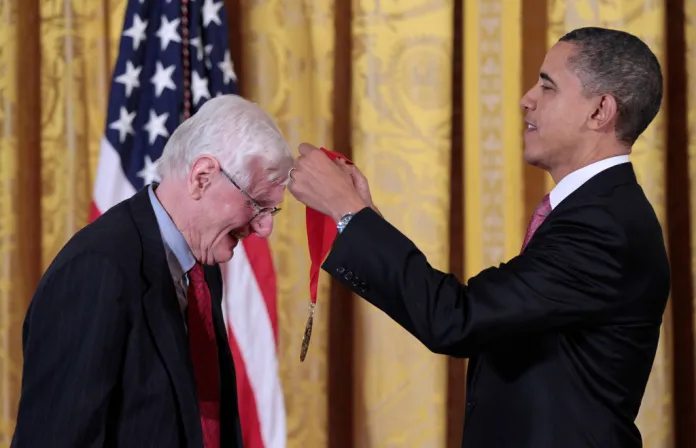
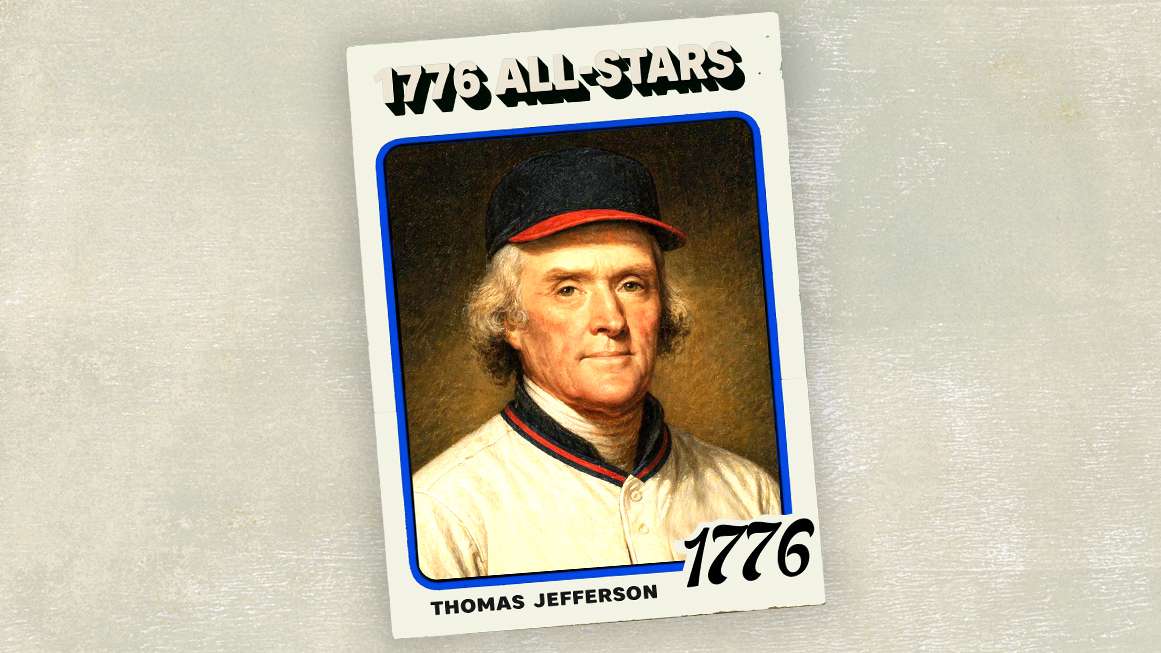
The sudden death of the historian Gordon Wood, just weeks before the celebration of the 250th anniversary of the Declaration of Independence, is one more mark of the closure of a golden age of the historiography of the revolutionary era. It’s an occasion to reflect on the uniqueness, indeed the idiosyncrasy, of the emergence of […]
Former Republican Georgia Rep. Marjorie Taylor Greene slammed President Donald Trump, saying, “He’s the real traitor,” regarding his handling of the Epstein files. “We should consider them traitors,” Greene told CNN’s Kaitlan Collins on The Source with Kaitlan Collins on Wednesday. “They’re traitors, the ones that refuse to release the Epstein files, want to cover […]
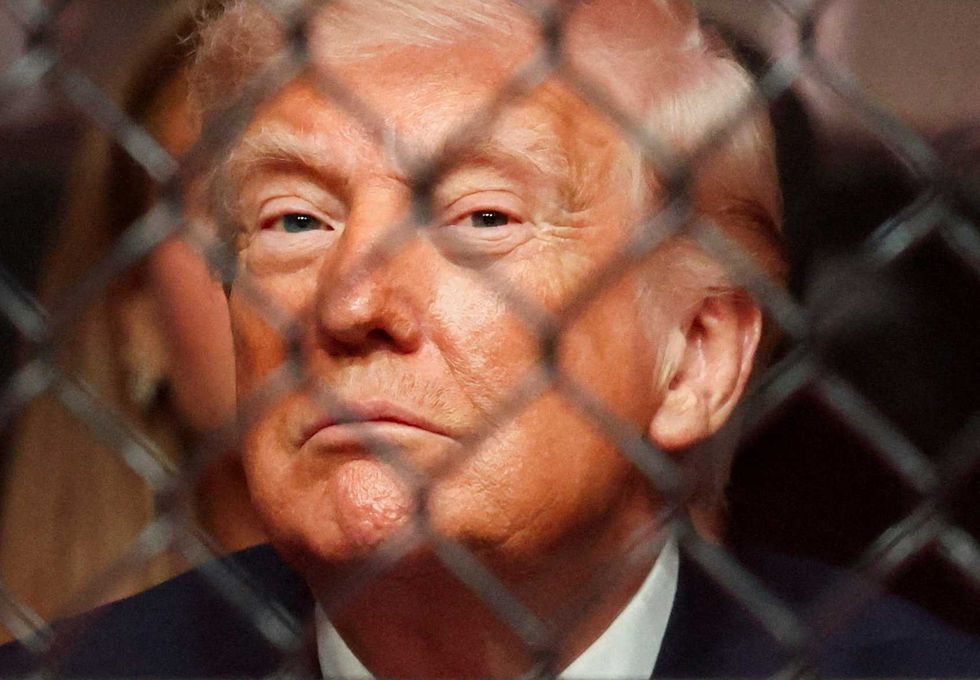
The UFC Freedom 250 fight night, which will be held on June 14 is being presented as a patriotic celebration to mark the 250th anniversary of the United States. But in actual fact, the date doesn’t coincide with the birth of the nation, it falls on the President’s birthday.By installing an MMA octagon on the most symbolically charged turf in American democracy, Donald Trump is doing more than celebrating a sport. He is staging a vision of power in which the head of state no longer serves the nation – he embodies it, as a champion who dominates and subdues.With his administration navigating one of the gravest international crises of his second term, Trump appears consumed by two preoccupations: his plans for a grand White House ballroom and the UFC fight event scheduled on the South Lawn for June 14th. He has compared the structure being erected – a 27-meter-high octagon called “The Claw” to the Eiffel Tower, and has suggested it might never come down.The event was deemed significant enough that according to Politico, the G7 schedule was adjusted G7 schedule was adjusted to avoid a conflict.Claiming ownership of national symbolsOrganisers have framed the event as a patriotic and apolitical celebration of American history: between bouts, the UFC plans to air segments honouring national heroes, the nation’s founding, and the 250th anniversary of the United States. Yet none of the commemorations invoked actually fall on that date. The 250th anniversary of independence will be marked on July 4 2026; the flag’s 250th anniversary comes in 2027; and the Army’s bicentennial was already observed in 2025. The only milestone that actually falls on June 14 is Donald Trump’s 80th birthday. Under the cover of national commemoration, the event functions first as a presidential birthday party – and a political and financial operation.The broadcast will air on Paramount+, whose parent company was acquired in August 2025 by David Ellison, the son of Oracle’s co-founder and a figure closely associated with Donald Trump. The audience has been carefully selected: military personnel selected by the Pentagon under specific fitness criteria will serve as the televised backdrop. Trump has personally acquired shares in TKO Holding Group, the UFC’s parent company, which he has been promoting for months. This is not a sporting event honoured by the president’s presence. It is a presidential event dressed up as an MMA gala.A long-standing fascination with combat sportsTrump has long been drawn to combat sports and the spectacle of violence – this despite having avoided military service during the Vietnam War through a diagnosis of bone spurs provided by a physician who was a family acquaintance.In the 1980s, he cultivated close ties with professional wrestling’s WWE. In 2007, he staged a scripted showdown with WWE owner Vince McMahon in an event billed as the “Battle of the Billionaires”.Professional wrestling operates according to the logic of kayfabe – a convention by which audiences are invited to engage with a narrative everyone knows to be scripted. This dynamic illuminates much about how Trump operates. He grasped early that politics worked on the same principle: he did not turn politics into spectacle, he revealed that it already was one.The UFC, however, belongs to a different register. The fights are real. Trump’s interest dates to the early 2000s, when he hosted several UFC events at his Atlantic City casinos. Dana White, the UFC’s CEO, regularly recalls the support Trump allegedly provided when the organisation was still struggling for legitimacy. This closeness is not a recent enthusiasm – it reflects a long-standing relationship with a cultural world that has become central to a significant strand of the contemporary American right.From civic hero to fighting championTo appreciate the full weight of this choice, it helps to trace how the figure of the heroic American president has evolved. From the founding era onward, presidents have frequently been associated with a form of heroism – beginning with George Washington, whose greatness derived not from force but from his willingness to relinquish power after victory. Lincoln embodied moral authority rather than military might. In the twentieth century, the president-as-hero – from Roosevelt to Eisenhower – drew legitimacy from the idea of service: suffering, sacrifice, putting the nation before oneself. The democratic hero existed to serve something larger than himself.That model began to fracture after September 11, 2001. American political rhetoric gradually displaced it with the notion of toughness – hardness, resilience, the will to dominate. The hero was no longer expected merely to serve; he was expected to win. George W. Bush landing on an aircraft carrier in a flight suit, already gestured towards this shift.
The New York Times had historians look at President Donald Trump's presidential walk of fame and called out obvious biases and an odd writing style.Trump's "Walk of Fame" features 47 plaques and a summary of all of the 47 presidencies, including Trump's. According to a detailed article by the Times, the histories are skewed and "peppered with falsehoods, misrepresentations, insults, praise, self-promotion and erratic capitalizations."Historians familiar with Democratic and Republican presidencies looked at the summaries included in the walkway and found a "skewed narrative" that cast Trump "as the protagonist." The summaries are written in "Trump's signature hyperbolic style, as seen in his social media posts," the Times wrote based on feedback from the historians.Karoline Leavitt, the White House press secretary, said in a statement, "As a student of history, many were written directly by the president himself." Sean Wilentz, an American history professor at Princeton University, told the Times that the presidential walk of fame is "not so much bad history as it is anti-historical."The Times also noted a "sharper and more partisan tone" in the summaries for more recent presidents such as Joe Biden and Barack Obama. The "Walk of Fame" also describes the White House ballroom as already built, and the description of the first year of Trump's second term is longer than those for presidents Abraham Lincoln and Franklin Delano Roosevelt combined.
President Trump appointed Bill Pulte, with no intelligence or national security experience, as the interim director of national intelligence to prove the 2020 presidential election was stolen.
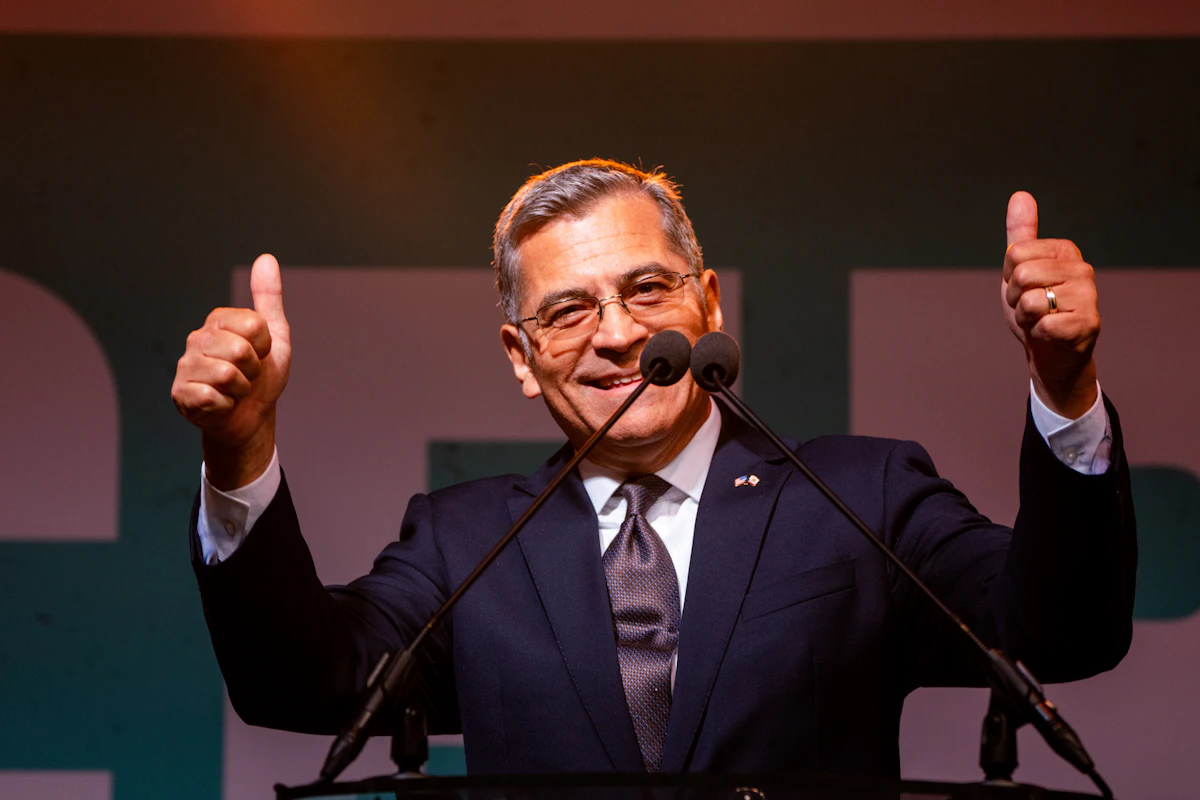
Democrats avoided the worst outcome in the California governor’s race. While it will take several more days for the state’s mail-in ballots to be counted, former congressman, California attorney general, and U.S. Health and Human Services Secretary Xavier Becerra will finish among the top two candidates and therefore advance to the general election. What’s not yet clear is whether Republican Steve Hilton or billionaire Tom Steyer, another Democrat, will be the second candidate. With at least one Democrat in the general election, the most important governorship in the country will almost certainly stay out of Republican hands this November. Thank goodness. But Democrats shouldn’t take much comfort in avoiding a catastrophe. The political party that’s supposed to stop fascism in America is so disorganized and divided that it struggled to secure victory in a state where a clear majority of voters are left-leaning. This Democratic debacle in California makes me deeply concerned about the upcoming presidential primary and general election. For months, there was a very real possibility that only Republican candidates would make it to the general election, because the California Democratic vote would be split among a field of a myriad of candidates. Then the media and Donald Trump saved California Democrats. Journalists at the San Francisco Chronicle and CNN reported numerous accusations of sexual misconduct by then-Representative Eric Swalwell, who was one of the leading Democratic candidates. That helped the party’s voters consolidate around Becerra and Steyer. Meanwhile, Trump endorsed Hilton, a Brit and a former Fox News personality, effectively dooming Riverside County Sheriff Chad Bianco, the other prominent (and more conventionally qualified) Republican. I’m glad we have investigative journalists and strong news organizations, but a well-functioning political party should be vetting candidates on its own and ensuring it doesn’t nominate alleged sexual harassers. Swalwell’s improper behavior around women wasn’t a secret in Democratic circles in Washington or California, and yet party insiders did little to prevent him from becoming one of the front-runners for a hugely important post. I don’t praise Trump very often, but I respect that he is willing to actively lead the voters in his party by urging them to back particular candidates in primaries. It would have been nice if Nancy Pelosi, Gavin Newsom, Kamala Harris, and all of the California Democratic politicians who write books about their courage and wisdom had actually shown some of that by endorsing someone in the governor’s race and making sure Swalwell never became a top contender. Instead, California Democratic Party leaders seemed to go out of their way not to help voters sort through a field without a clear front-runner. Newsom’s aides leaked to reporters his misgivings about all of the candidates. When the University of Southern California tried to host a debate and include only the candidates with decent poll numbers, some Democratic state legislators blasted the process as racist because low-polling candidates of color would be excluded. As Becerra started rising in the polls, people in the Biden administration started slamming him, usually via anonymous quotes, as ineffective as HHS secretary. Who then should California Democrats vote for? These people never said. It was almost as if Democratic Party leaders were intentionally trying to create a chaotic primary. Steyer or Becerra will almost certainly be elected in November, so what’s the problem? Well, the party’s struggle to land on a candidate in California isn’t an isolated incident. The 2020 and 2024 presidential primaries illustrated the same problems. In 2020, there was a massive field of Democratic candidates. Primary voters couldn’t easily sort among them. Many Democratic groups and politicians stayed on the sidelines instead of endorsing anyone. The result was a haphazard process that selected Joe Biden, a bad choice because his age ensured Democrats would again have a presidential quandary in 2024. By mid-2023, it was obvious that a clear majority of Americans were wary of giving Biden a second term. But the party waited a full year to coordinate around sidelining Biden, leading to another haphazard process that produced a candidate (Kamala Harris) who wasn’t one of the party’s strongest politicians and didn’t have time to run a full campaign. Why can’t the Democratic Party effectively choose candidates for the most important races? For three reasons. First, there is a real and growing divide between the party’s progressive wing and its center-left—and many prominent Democrats don’t want to seem too aligned with either camp. It’s not surprising that politicians, whose job is to be popular, want to appeal to as many people as possible.