Superfans and sleuths appear to have their hunches confirmed on Friday, as dozens of black cars dropped off elegantly dressed guests outside of Madison Square Garden in New York City. The wedding bash is expected to last into Saturday morning.
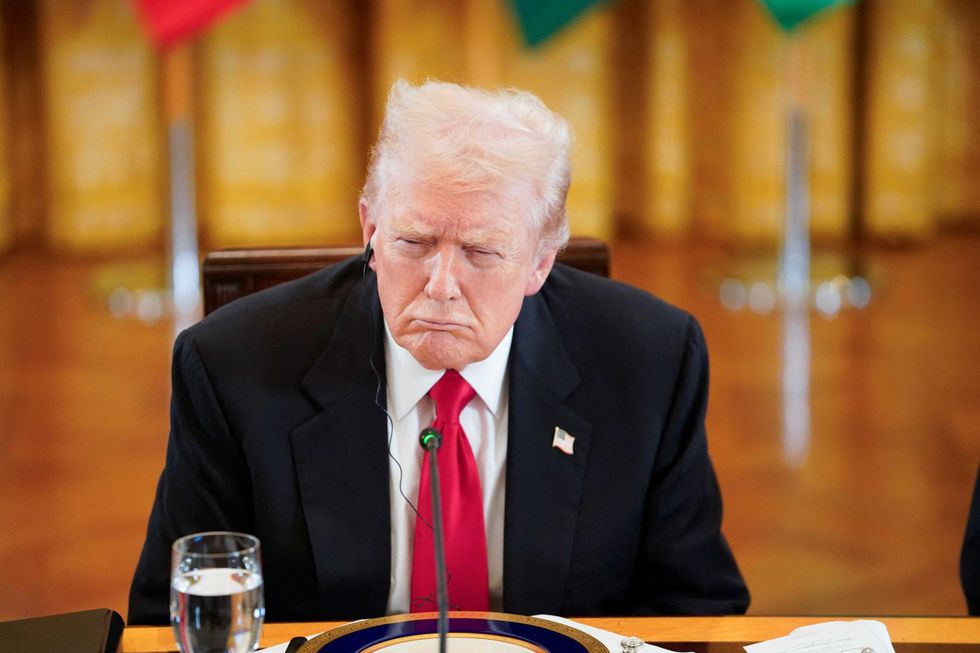
As President Donald Trump rages over his party’s inability to pass his much-demanded SAVE America Act, Politico reports that congressional Republicans have a “dirty little secret”: many of them don’t want to pass it at all. According to insiders, the “inconvenient truth” is that “it can’t even pass the House — at least not the version Trump is pushing.”According to Politico, “Speaker Mike Johnson acknowledged as much this week, appearing to concede he does not have the votes to move forward with a drastic crackdown on mailed ballots that Trump has repeatedly demanded this year.” Instead, GOP House leaders are reverting to an older version of the bill that focuses on proof of citizenship while otherwise letting states more or less run elections as they please. “We all do” want to give Trump what he wants, said Johnson, but a ban on mail-in ballots “is a very difficult thing to regulate at the federal level, because different states do it differently.” “I’m going to do everything I can with the vote tallies that we have,” he added.Hardline conservatives have pushed for an expanded version of the bill, which in addition to the mailed ballot ban would include Trump’s demand for provisions banning transgender people from playing women’s sports, as well as a prohibition on gender-affirming surgery for minors. But Johnson has continued to press a narrower version he thinks is more likely to pass.As Politico explains, “The lack of widespread GOP support for upending the voting systems in states like Arizona, Florida and Alaska is an open secret on Capitol Hill, where many Republicans credit mailed ballots with helping them win tight races.”“Listen, absentee ballots are not a bad thing historically as long as you put some kind of structure on it,” said Representative Mark Amodei (R-NV). “Just have some commonsensical safeguards for when it has to be postmarked by.” Last week, after the Supreme Court struck down Trump’s attempt to limit mail-in ballots via executive order, Amodei said he was happy with the outcome, asserting, “It says mail-in voting in and of itself is not evil. There ought to be some mechanism for you to do that.”Outspoken SAVE Act supporter Representative Julie Fedorchak (R-ND) wants the bill to pass in some form, but worries how a ban on mail-in ballots would affect states with limited polling places, saying, “We’re a rural state. I understand the concerns about mail-in voting… but I think the solution that I’m in favor of is restricting it and creating these commonsense reforms for it.” Johnson seconded her concerns about rural voters, admitting that in some states it can be “very difficult to get to a ballot box, and so they use mail-in ballots very effectively, and I think securely, and that’s something that has to be contended with.”Unsurprisingly, he tailored his criticism of mail-in ballots to target a few states in particular, claiming, “There are other states that do it well, and without a problem. Our concerns are with the handful, five or six blue states, who abuse this, and California is the avatar for this, because it is so ridiculous.”Critics of the president’s attacks on mail-in voting and his demands for other electoral restrictions argue that the SAVE Act will disenfranchise millions of voters. What’s more, as a number of GOP insiders have pointed out, the bill could backfire for Republicans, as conservative voters are less likely to have the appropriate ID and more likely to depend on mail-in ballots.
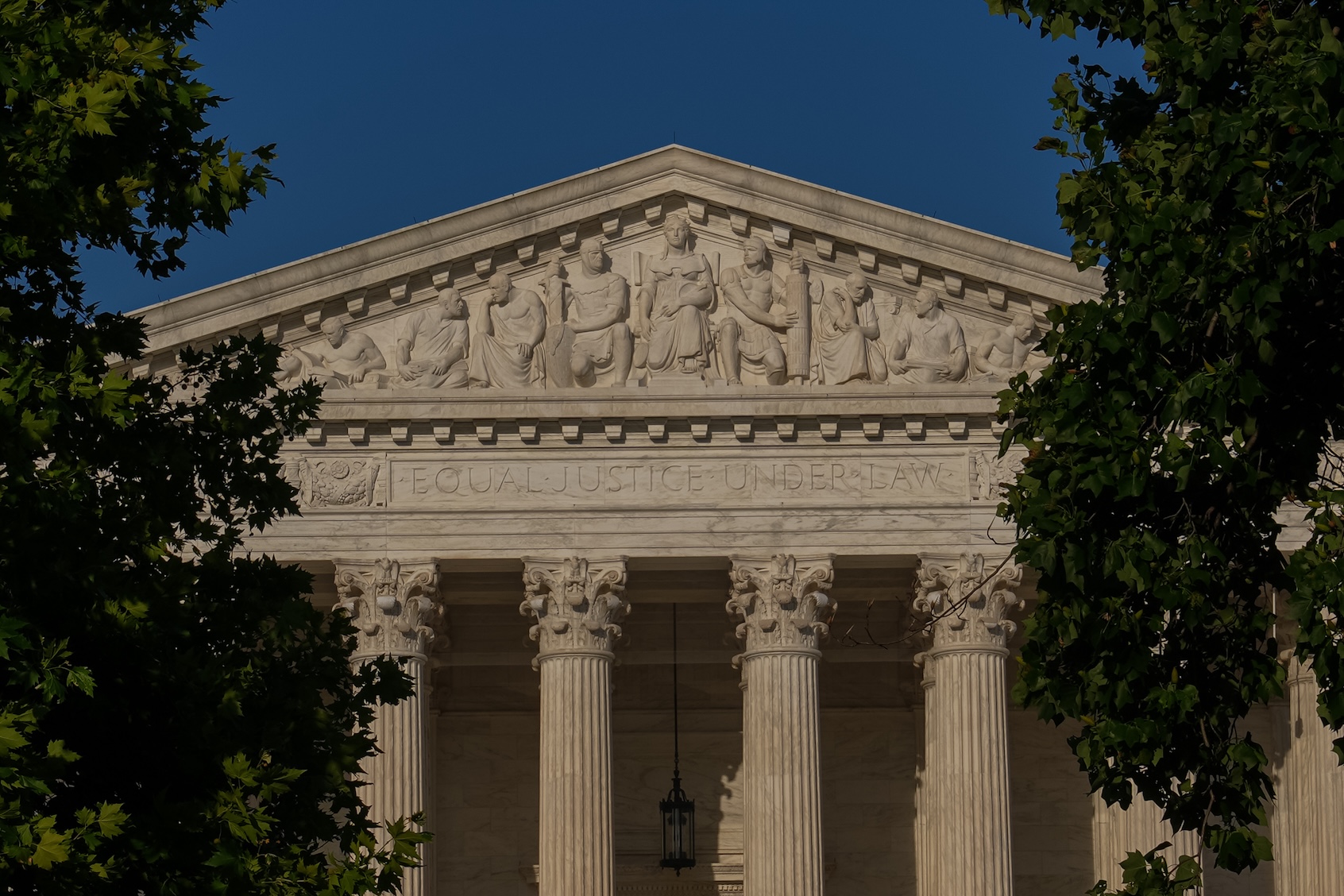
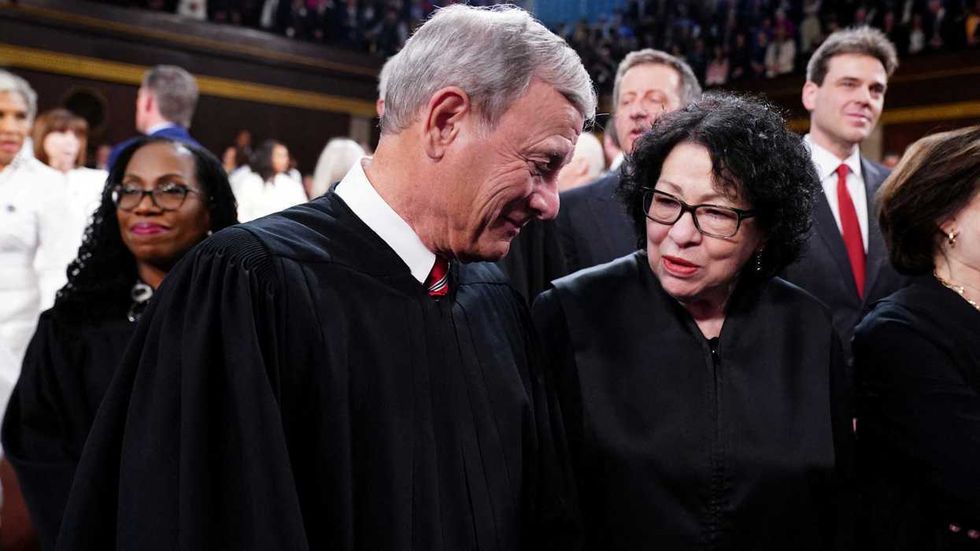
In its term that ended last October, the Supreme Court passed an important milestone that went unnoticed: For the first time, it decided more cases by secret ballot, and with few signed opinions, than it did for cases argued in open court.These decisions, which make up the court’s “shadow docket,” are a fast-track way to get a decision from the top court. They rarely include arguments, have limited briefings and have expedited timetables, and justices infrequently provide explanation of how they voted or to cite legal precedent. The Supreme Court’s increased willingness to bypass its regular process has empowered President Donald Trump at the same time as the administration has increased use of executive authority. The court has repeatedly green-lit policies of his that lower courts have blocked — and has done so with little to no explanation. These emergency decisions have thrown lower courts’ processes into turmoil and have sometimes directly contradicted longstanding legal precedent. The outcomes have been consequential: The high court has used the process to limit federal courts from issuing nationwide injunctions and diminished Congress’ authority over federal agencies, and it has allowed for the detention of American citizens by immigration agents. ProPublica analyzed over two decades of Supreme Court rulings, which cover all of the years under Chief Justice John Roberts and go as far back as the online archives allow. We found that when the last court term ended, justices had issued 63 orders on the shadow docket, as opposed to 56 orders on the more traditional merits docket — where the court hears oral arguments scheduled months in advance and the justices issue signed opinions.Legal scholars and court watchers were shocked by our finding. They told ProPublica it’s likely the first time in modern history that so many consequential decisions were made in secret by its nine members.“The patterns show a court going out of its way to enable Trump,” said Stephen Vladeck, a law professor at Georgetown University and a Supreme Court analyst. He said that our findings reinforce the appearance that the justices are voting on their political preferences. “That’s the real blow to the court’s credibility,” he said.Representatives from the Supreme Court did not respond to a detailed list of questions. In a statement, a spokesperson for the White House wrote, “President Trump has faced a historically unprecedented number of injunctions by liberal lower court judges, the same judges who would rather push their own policy schemes and undermine the Administration’s lawful agenda. President Trump will not stop implementing the America First initiatives on which he was elected.”There are two ways to get a decision from the Supreme Court. One is to exhaust your appeals to lower courts and ask to argue your case in front of the high court. The justices determine whether to take the case on, and if they do, lawyers argue their case in front of them. The other is to petition the justices directly via the emergency docket — to freeze a lower court ruling or government policy while the case goes through appeal.The appeals to the emergency docket have long outnumbered those to the merits docket, but most are procedural requests or requests to stay execution for capital offenses. When those are removed, what’s left is known as the shadow docket — cases that seek to skip the usual order of things and ask for a quick ruling from the court’s justices.The modern shadow docket was born in 2016 when the Supreme Court issued an emergency stay against President Barack Obama’s Clean Power Plan, experts say. Papers obtained by The New York Times show that liberal justices at the time urged Roberts not to decide the case on an emergency basis because it broke with longtime precedent. The conservative justices, meanwhile, forcefully argued that the president’s plan would eventually be overturned by the court anyway and that it would put too much of a burden on the energy industry.Driven by its numerous losses in lower courts, the current Trump administration appeals to the emergency docket significantly more often than previous administrations, and the court has increasingly agreed to take quick action on its appeals.The Obama and George W. Bush administrations together filed just eight petitions in 16 years. The Trump administration filed 32 in 2025 alone, an analysis by the Brennan Center for Justice found.The increased willingness of the Roberts court to intervene on Trump’s behalf — as well as in other issues that favor conservatives and Trump allies — has upended American life, said Donald Ayer, a former deputy solicitor general and deputy attorney general who served under the Reagan and George H.W.
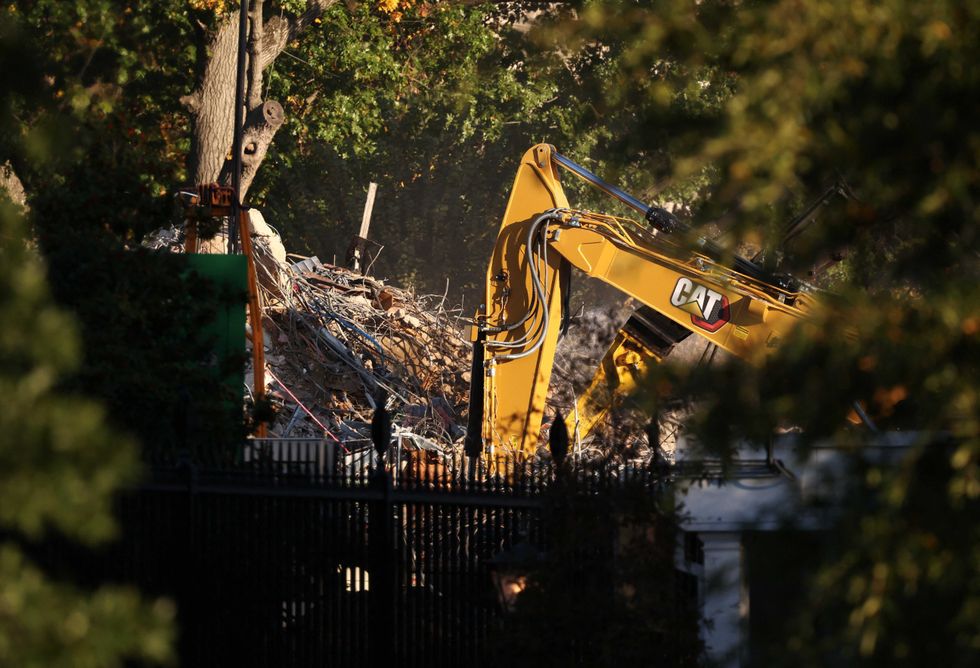
President Donald Trump has orchestrated yet another massive no-bid contract, this time channeling $500 million in taxpayer funds through a loophole to pay for his East Wing ballroom in secret, a report says.According to Washington Post reporting, White House officials used back channels and awarded the half-billion-dollar contract to Clark Construction last year in what the outlet described as a deliberately "unusual arrangement" designed to circumvent standard cost-control procedures and public disclosure requirements.The scheme exploited a legal gray area. By routing the contract through the Executive Residence—an office "typically responsible for routine mansion repairs and furniture purchases" —the White House once again "sidestepped" federal rules.Confidential documents obtained by the Post reveal Trump "personally negotiated" certain costs for the East Wing project, suggesting direct presidential involvement in structuring the deal to avoid scrutiny.The ballroom contract represents just one chapter in Trump's broader strategy of awarding no-bid deals to handpicked contractors reshaping Washington according to his personal vision. The administration has similarly bypassed competitive bidding for Lafayette Square upgrades and the controversial Lincoln Memorial Reflecting Pool renovations, which have become a public relations disaster for the administration.Experts warned the approach has deprived taxpayers of potential savings. "I would certainly expect them to compete a project of this size and complexity," Anthony Costa, a former General Services Administration official with decades of experience overseeing complex federal real estate projects across multiple presidential administrations, told the Post.While the Executive Residence technically operates under exemptions from standard competitive bidding rules, experts noted that soliciting bids would have ensured the "best pricing for taxpayers"—particularly crucial given the extraordinary scale and cost of the East Wing project.
The failure of the American media is one of the biggest disappointments of the last 11 years. Instead of standing together and standing their ground with integrity and dignity when Trump began bullying them in 2015, media organizations let him wear them down with his never-ending litany of insults. Once a toxic narcissist knows they can get away with it, they’ll just keep hurting you and taking things from you. Our media never properly pushed back against Trump because, before his 2016 campaign, they’d never had to defend themselves against personal attacks from a candidate or a president. They went from treating him like the joke he should have always been to giving him absolute power over their newsrooms. While we’ve seen individual moments of pushback here and there, Trump ultimately prevails every time. Either he makes the reporter the story by bullying them, or he gets away with not answering their questions because he’s too busy scapegoating them as a distraction from whatever he was asked about. It disgusts me every time, because no one stands together on that press line. I don’t care which outlet you work for — when Trump bullies one reporter, he’s bullying them all. They should be demanding the answers he refuses to give, because that’s their job. But they should also be demanding that he stop treating their colleagues like a middle school bully. From the outside, it might look like it’s too late. Every news outlet we once trusted is now owned by a billionaire with their own personal political agendas. While ABC beefs with the FCC over Jimmy Kimmel, CBS’s full capitulation to Trump is complete. And now, David Ellison is about to do the same to CNN by putting Bari Weiss in charge there as well. Everything about this is anti-American. Our First Amendment rights are being violated by an oligarch class that’s been allowed to take over far too many media outlets, and with the White House now targeting members of the independent media, how long before Trump tries to shut down the internet so no one can talk about the Epstein Files or his failing health?There are many ways to fight back against male white corporate oppression, however, and one news network is setting the examples for all of us to follow. And there’s no way the FCC can intervene on Trump’s behalf this time, because it’s not an American network.All hail the venerable British Broadcasting Company (BBC), both on television and over the wireless, as they used to say. The BBC has always set the standard for journalism, and that’s remained true during the Trumpian nightmare garbage fire. Because he can’t control them. He can sue them, however, because that’s what Trump does whenever anyone with a big enough audience tells the truth about him. It’s a favorite con of his, burying and then bankrupting his enemies with endless depositions and appeals. Trump is desperate to rewrite the history of his failed coup after losing the 2020 election to Joe Biden, despite all of the footage that’s still readily available to everyone.So, of course, Trump is now suing the BBC for $10 BILLION, crying “defamation” after it aired a documentary about the January 6th insurrection, in which they used some of the footage of his Ellipsis speech that he claims was “edited.” Yes, the same speech that was live-streamed by all of the MAGA terrorists in the crowd, just like the subsequent attack on the Capitol. While plenty of other institutions have caved to Trump, the stiff upper lips at the BBC aren’t intimidated so easily. In fact, they’re going after what the January 6th House Select Committee never could get: Trump’s January 6th phone records.Discovery is glorious, especially when it’s used for good. Not only are they asking for Trump’s phone records from the Day of Rage, but also the days leading up to his desperately violent attempt to stay in power. But they’re not stopping with Trump’s actions regarding January 6th; the BBC has also served a subpoena related to his revocable trust, which is run by Don Jr. It contains private information on the Trump Crime Family’s assets and business relationships, so just imagine what the BBC might find if they gain access to all of Trump’s financials. It’ll be interesting to see how this plays out. Trump’s phone records would show whether or not he ever called any state’s governor to have them send their National Guard troops to the Capitol to fight off the MAGA crowds. We already have the footage of Nancy Pelosi and Chuck Schumer essentially co-Presidenting by taking the action Trump never did and, hopefully, the BBC will also use this clip as part of its defense should the lawsuit go to trial.Any American news outlet could have done the same as the BBC, even without a lawsuit against them, but they haven’t, and they won’t. We all know the truth about January 6th because we were all witnesses. Whether we watched it online or on TV, the live feeds were readily available and were recorded.