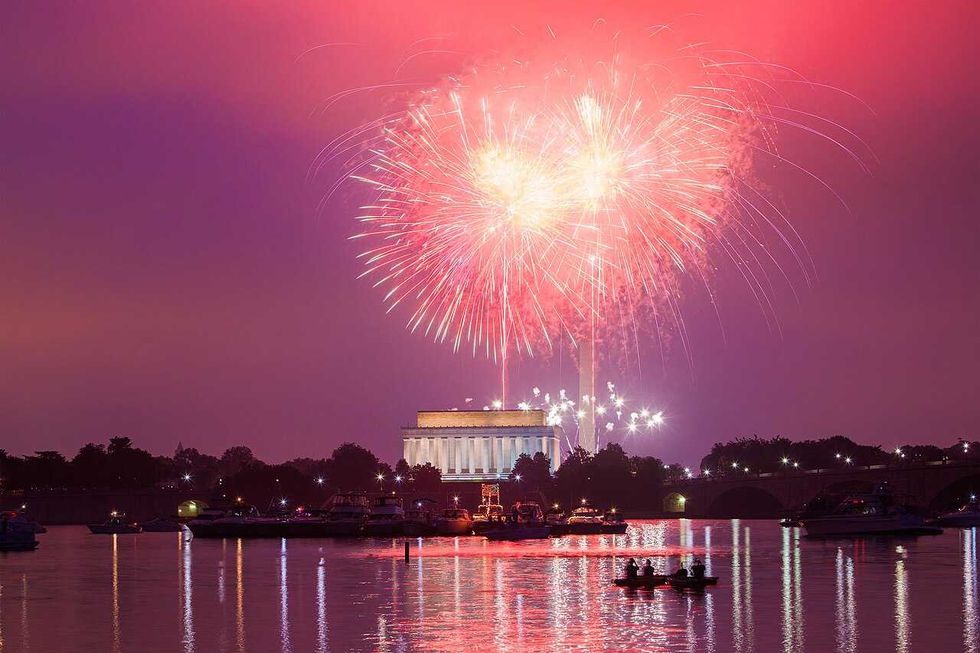
President Donald Trump's own government is warning residents in the Washington, D.C., Virginia, and Maryland area that the July 4 fireworks display will likely cause air quality to reach the worst safety ratings on the scale.Politico's E&E News reported on Thursday that, ahead of the "massive" fireworks display, the president's planned activities for Saturday are likely to cause “hazardous” conditions.The National Park Service included the detail in a draft analysis given to Politico, saying that the 35- to 40-minute program will deploy more than 850,000 fireworks shells. That's more than 100 times what is typically launched on Independence Day, which shoots off 17,000 to 20,000 shells, said Northern Virginia Magazine. The usual event is touted as among the largest in the country each year. This year, Trump wants to set a record for the most fireworks ever used. The current record is 810,904, held by Iglesia Ni Cristo (Church of Christ) in the Philippines. It was set on New Year's Eve in 2016, according to Guinness World Records.The “worst-case” scenario, the National Park Service estimated that the explosions that are set to go off in 10 different locations will "create more than 2,000 micrograms of fine particulate matter — PM2.5 — per cubic meter on the National Mall." It's the kind of air quality seen during the 2023 wildfires in Canada, which blew smoke into the Northeast US. Los Angeles air quality has long been the worst air quality in the U.S. and at no point in the past 20 years has it reached the level that Washington will on the 4th, the American Lung Association data shows. A similar comparison would be Loni, India, is the worst and most polluted in the world currently, the "Live Air Quality Map" shows. In their case, the micrograms of fine particulate matter reach approximately 46.6 µg/m³. On the evening of the 4th of July, the Washington metro area will be approximately 4,190 percent worse than the most polluted city in the world. "The Capital Weather Gang," the irreverent local weather outlet for the city and the immediate area of the National Mall, will be the worst of the worst as the wind blows the smoke to the east. It means that southeastern Washington will get the brunt of the blast. Dr Tracey Lynn Perez Koehlmoos commented that those wards of Washington have "the worst pediatric asthma population in the U.S." The second-worst or "very unhealthy" category level will cover the lower half of the entire district. The northern part of the district and all of the northeast Virginia suburbs and Maryland east of the district, will likely be exposed to particulate matter that could be bad for those with existing breathing problems like asthma. That part of Maryland that is farther north of D.C. will have "moderate" air quality. According to the Washington Post, neither the Interior Department nor the National Park Service responded to questions about the warnings.
The Supreme Court spent its just-completed term sidelining Congress and amassing power for the ascendant branches of government: the presidency and the court itself.Why it matters: As the court strips Congress of its power, decisions over people's money, jobs, votes and health shift toward the president and nine justices appointed for life.After this term, Congress can't insulate regulators from the president, limit political parties' spending or require race-conscious voting districts.The big picture: For decades, conservative lawyers have argued the Constitution grants all executive power to one person: the president.The theory, called the unitary executive, holds that no one who enforces federal law is independent of the president. This term, it won out again and again.Between the lines: The justices overturned precedents, second-guessed Congress, brushed aside facts found by lower courts and applied textualism in ways even some adherents questioned.The result is a court increasingly willing to cast off constraints.Take the Federal Trade Commission case. In Trump v. Slaughter, they chose which parts of the FTC to keep (the powers Congress gave it) and which to shed (the independence Congress designed)."The Roberts Court has adopted for itself a line-item veto," Boston University legal historian Jed Shugerman, a well-known critic of unitary executive theory, tells Axios. It keeps the parts of a law it likes and tosses the rest.Zoom in: The court made it nearly impossible to use the Voting Rights Act to challenge maps that dilute Black and Latino voting power.It struck down limits on coordinated political party spending that the court had upheld in 2001.It curbed Congress' power to make state officials pay damages when they violate federal funding laws, in a case brought by a Rastafarian inmate whose head prison guards forcibly shaved.The court also allowed the president to keep withholding $4 billion in congressionally-appropriated foreign aid, at least for now — a move critics said encroached on Congress' most fundamental power, the purse."The real headline of the current term is 'Supreme Court rules for itself, 6–3,'" Georgetown Law professor Steve Vladeck tells Axios, even if it comes at the expense of Congress, lower courts, and, "every once in a while," President Trump.More and more of the court's power now flows through its so-called shadow docket, in which cases skip full briefing and argument, and orders arrive fast, unsigned and often unexplained.There, the justices have refereed Trump's most contested moves: immigration crackdowns, frozen foreign aid, mass firings of federal workers, changes to voting maps, transgender passport restrictions and more.Reality check: The president didn't win everything. Chief Justice John Roberts wrote all three major rulings against Trump: blocking emergency tariffs, sparing Federal Reserve governor Lisa Cook for now, and rejecting his order to end birthright citizenship.The court reached for whatever legal philosophy delivered the result it wanted, Shugerman says.To end the FTC's independence, the court invoked a rigid rule: the president controls the executive branch. To spare the Fed's autonomy the same day, it carved out an exception that Justices Clarence Thomas and Amy Coney Barrett rejected as an unprincipled "contradiction."Race was a constitutional problem when Louisiana relied on it to protect Black voting power. But allegations that racial animus motivated the Trump administration's decision to end protections for Haitian immigrants didn't stop the court from green-lighting the policy."Some days the court is originalist, and other days it's not," Vladeck says. The justices, he says, use history and text "the way a drunk uses a lamppost: for support, not for illumination."Yes, but: Trump's biggest defeat doubled as the term's loudest warning.On birthright citizenship, four justices were willing to say Trump's order didn't violate the 14th Amendment.The fact that a position deemed "outlandish as recently as a decade ago got four votes," Vladeck says, will "embolden" the next wave of once-fringe constitutional arguments.The bottom line: Congress grows weaker every year, the executive branch gets stronger, and everyone waits to hear from the strongest branch of all: the Supreme Court.
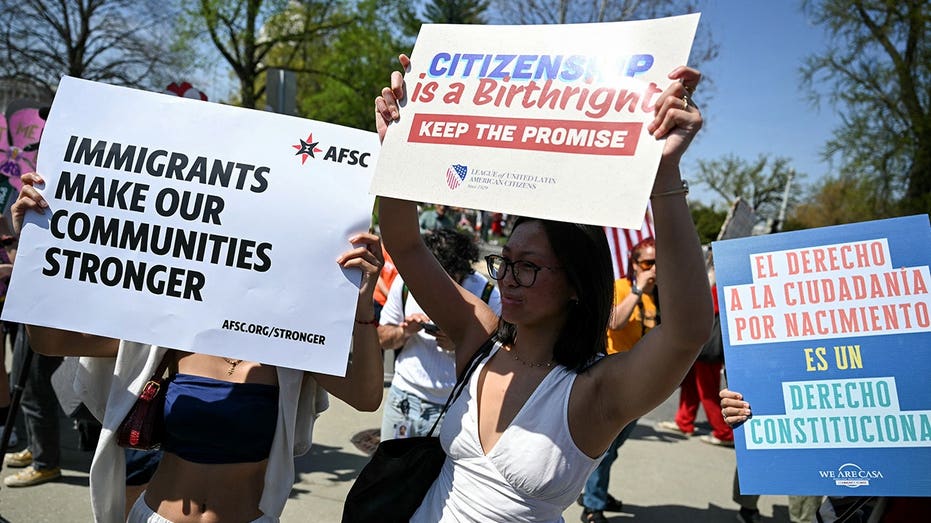
The Oversight Project unveils a plan to combat birthright citizenship effects through mass deportation, ICE at hospitals, and birth tourism crackdowns.
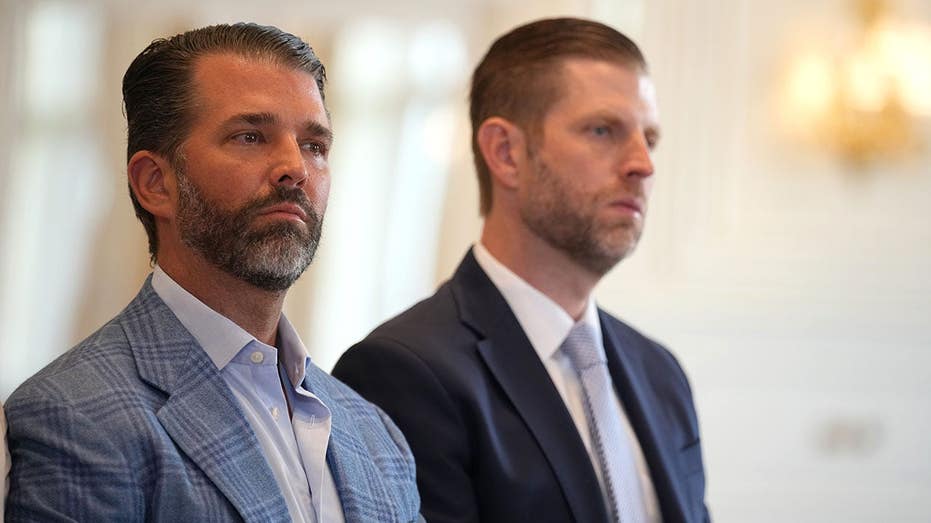
Following a bombshell New York Times report that Don Jr. and Eric Trump will profit off a billion-dollar mining deal President Donald Trump signed with Kazakhstan, there has been much discussion of the family’s rampant corruption. Now, one person formerly in Trump’s orbit has bad news for the Trump boys, who likely expect their father's pardon should they ever face charges: they can still face prosecution, and face other more spiritual forms of punishment. This is according to lawyer George Conway, ex-husband of Trump advisor Kellyanne Conway and former Republican turned Democratic congressional candidate, who on Tuesday asserted that the president’s sons’ Kazakhstan grift is “flat-out criminal.” When asked whether he thought any of those associated with the scheme — which in addition to Trump’s sons includes the sons of Interior Secretary Doug Burgum — would “see the inside of a jail cell,” Conway shared his thoughts on the matter. “Some will,” he asserted. “Many federal offenses can be charged under state law, and many federal offenses involving activity in foreign nations can be prosecuted under foreign law. Trump's pardon power can't prevent these prosecutions. Also — many of these individuals will burn in Hell.”Conway posted this over an explanation of the Kazak deal from Representative Mike Levin (D-CA), who laid out the extent of the gift clearly.“The Trump administration cut a billion-dollar tungsten deal with Kazakhstan,” he explained. “Tungsten is the metal we need for missile warheads, fighter jets, and computer chips. Trump himself got on the phone to close it. Commerce Secretary Howard Lutnick worked it from the inside, sending letters, leaning on the Kazakh president, lining up as much as $1.6 billion in federal financing.” Then their sons got involved: “Within weeks of those negotiations, investors tied to a firm partly owned by Donald Trump Jr. and Eric Trump took a 20 percent stake in an entity connected to the very same Kazakhstan project their father was negotiating. Around that same time, Cantor Fitzgerald, the firm run by Lutnick’s own sons, raised $210 million for a partner in the deal and pocketed the fees.”In other words, “The fathers set the policy. The sons cashed in. Six days after the Trump sons and their partners moved their money, Lutnick signed the final deal.” All told, there are nearly $9 billion in federal tax dollars going to these companies, noted Levin, saying, “This is the most corrupt administration in American history.”News of this corruption has prompted outrage even from those who are typically in Trump’s corner. On Tuesday, the New York Post — which usually reports in the president’s favor — said the deal “stinks to high heaven,” asserting that “the Lutnick and Trump boys have been sloshing around in the muck since their dads came to power 18 months ago. They’ve profited handsomely from cryptocurrency deals while the government their fathers control were setting crypto policy.” And on Wednesday, conservative media personality Megyn Kelly told an Australian news outlet, “I don’t feel great about our leaders, I’m not gonna lie. I’m disappointed with some aspects of the Trump presidency for sure, like the Iran war, that’s number one…it’s so grifty, I’m not gonna lie, it’s grifty. You know, the Trump family is grifty. There’s been like story after story about all the money his sons are making off of the government, these government contracts they’re getting, all that. I can’t stand that stuff.”
As 350.org, Fuel Poverty Action and coalition partners today demonstrate against rising energy prices outside the Department for Energy Security and Net Zero, a new report from the UN Development Programme (UNDP) lays bare the true scale of the fossil fuel subsidy crisis: governments worldwide are on course to spend $1.1 trillion propping up the fossil fuel industry in 2026, a figure that could rise to $1.43 trillion if oil prices reach $110 a barrel. The UNDP report, Military Escalation in the Middle East: Cushioning the Global Shock, finds that governments have responded to conflict-driven oil price spikes by expanding fossil fuel subsidies, price caps and tax rebates. While these measures offer short-term relief, they are consuming public budgets that should be building schools, hospitals and clean energy infrastructure. Many developing countries entered the latest crisis already burdened by rising debt, and fossil fuel handouts to keep prices artificially low are depleting public budgets and increasing their risk of debt distress.Anne Jellema, Executive Director of 350.org, said:"The $1.1 trillion that governments are pouring into fossil fuel subsidies this year is not a safety net, it is a ransom payment. Every dollar spent shielding the fossil fuel industry from the consequences of its own price volatility is a dollar not spent on the clean energy systems that can bring costs down for good.We need a phase out to end public subsidies for fossil fuel companies, and a permanent windfall tax on fossil fuel profits. Not a one-off levy, but a permanent, legislated mechanism that redirects the extraordinary profits of an industry driving this crisis into the just transition every country needs. That means affordable clean energy, retrofitted homes, and funding to protect people from the extreme weather unleashed by fossil pollution..”The UNDP report calls for easier access to international climate financing and accelerated investment in renewable energy, and explicitly frames energy security and the energy transition as inseparable.