
RealClearPolitics - Homepage
CA Gov Race & the Fight for Democratic Party's Future
A massive field, no clear frontrunners and one big scandal have turned the high-stakes battle into a head-scratcher
Center Right
The release by Democrats of their party's so-called autopsy on the 2024 election is deservedly getting trashed for being late, superficial and scattershot.
A massive field, no clear frontrunners and one big scandal have turned the high-stakes battle into a head-scratcher

Murder is down, but assault is up—a dangerous sign.
This story was originally published by Grist and is reproduced here as part of the Climate Desk collaboration. Democrats and Republicans agree on virtually nothing at this point, except the desperate need to build more housing in the United States. Depending on your viewpoint, the country needs new domiciles because it puts people to work and stimulates local economies, or […]
Ahead of the November midterm elections, Democrats are making a play to peel away as many tenuous Republican voters as they can. If Sen. Cory Booker (D-NJ) gets his way, a core group of voters that his party will go after is the “Make America Healthy Again” movement. Booker recently implored Democrats not to fight […]
As antisemitism rises across the United States, many Jewish Americans are no longer simply asking where extremists stand. They are asking where America’s political leadership stands. That frustration is no longer confined to private conversations inside Jewish communities. It is increasingly becoming part of a public debate as synagogue protests, anti-Israel demonstrations, online radicalization, and […]
Reps. The post (VIDEO) RINO Brian Fitzpatrick Defends His Push with Democrats to Stop Trump’s Weaponization Fund – Says He’s Not Afraid of Trump, Admits He’s Pandering to Liberal Voters appeared first on The Gateway Pundit.
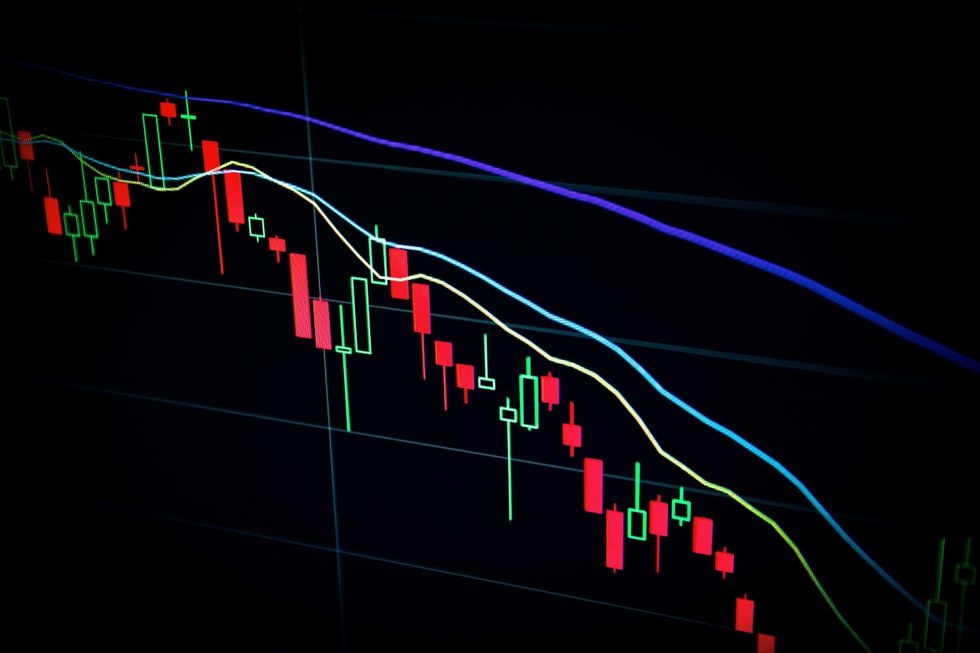
Multiple polls and surveys released in recent days have shown US consumer sentiment cratering—and all the while, the US stock market keeps hitting record highs.The Kobeissi Letter, a financial newsletter, posted a graphic Saturday that matched consumer sentiment as measured by the University of Michigan’s Surveys of Consumers with the performance of the S&P 500 stock index over a 30-year span.The graphic shows that, up until around 2020, consumer sentiment matched stock market performance closely, although there was a large divergence between the two leading up to the 2008 financial crisis, where stocks briefly outperformed consumer sentiment before crashing downward as the housing bubble burst.But throughout the last six years, the graphic shows, the S&P 500 has produced an almost continuous upward surge even as consumer sentiment spirals downward.“Absolutely incredible,” commented Kobeissi Letter. “Over the last six years, the S&P 500 has risen +130% while US Consumer Sentiment has collapsed by -55%, to its lowest since data began in 1952. We are witnessing the formation of the biggest wealth divide in modern history.”Kobeissi Letter produced the graphic one day after the University of Michigan’s latest survey found consumer sentiment hitting the lowest level on record. Joanne Hsu, director of the survey, observed that “the cost of living continues to be a first-order concern, with 57% of consumers spontaneously mentioning that high prices were eroding their personal finances, up from 50% last month.”On the same day, Gallup published new data showing that Americans’ economic confidence has fallen to its lowest level since October 2022, with just 16% of Americans rating the economy as excellent or good, and nearly half describing it as poor.Axios reported on Saturday that even Republicans have been growing sour on the US economy, citing a recent poll from The Associated Press showing GOP approval of President Donald Trump on the economy to be at around 60%, down from 80% just three months ago.“The growing GOP gloom could hardly come at a worse time for Trump and the party,” Axios noted, “less than six months out from a midterm election that’s likely to turn on the economy.”The gap between overall consumer sentiment and stock market performance also lines up with recent consumer spending trends. Data published by The Financial Times earlier this year showed that the top 10% of earners in the US now account for nearly half of all consumer spending, while the bottom 80% of earners now account for less than 40% of all consumer spending.A February report from TD Economics economist Ksenia Bushmeneva noted that “the economic divide between America’s households at the top of the income spectrum and everyone else continued to widen last year,” as “upper-income households benefited from the still-robust wage growth, strong gains in equity markets, and better access to consumer credit.”
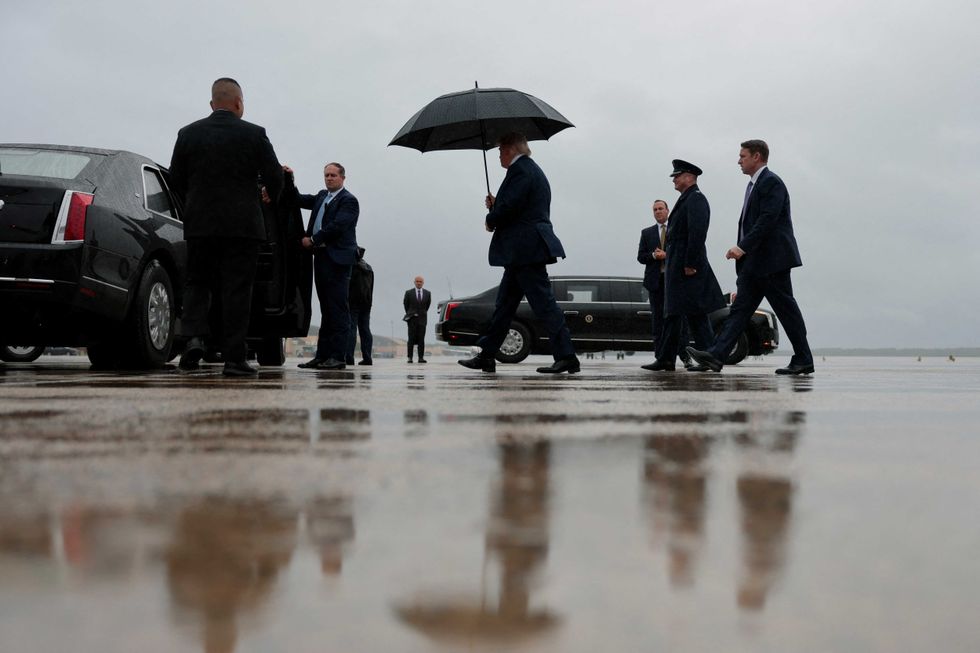
As President Donald Trump appears to inch closer toward authorizing a major U.S. military operation this weekend, renowned international security expert Robert Pape warned the president on Saturday that he may very well be walking directly into what he called “the biggest trap yet.”Reporting suggests that the Trump administration is actively preparing to launch a new wave of strikes against Iran, and officially end the ongoing but weak U.S.-Iran ceasefire. The president teased a full U.S.-takeover of Iran Saturday morning, and later said there was a “solid” chance he decides to blow Iran “to kingdom come” by Sunday.“The administration may be approaching a dangerous decision point. And the real danger is not simply another round of strikes on Iran,” wrote Pape, a professor of political science at the University of Chicago, writing on his Substack. “The real danger is that Trump may be approaching the biggest Smart Bomb Trap yet.”The “Smart Bomb Trap,” as he called it, was the notion that a quick resolution to the U.S. war against Iran could be achieved with “one precise strike” targeting Iran’s new supreme leader or senior leadership. As noted by Pape, the U.S. war against Iraq began with a series of strikes targeting former Iraqi President Saddam Hussein, similar to how the ongoing U.S. war against Iran began with strikes targeting former Iranian Supreme Leader Ali Hosseini Khamenei.With the U.S. war against Iran hammering Americans’ pocketbooks both at the gas pump and elsewhere, and with the GOP’s midterm outlook growing more dire, such an option would be hard to resist for Trump, Pape argued.“The possibility that one precise strike could suddenly end the crisis, collapse the regime, restore deterrence, and produce a dramatic political victory,” Pape wrote.“For any president under pressure, that possibility becomes extraordinarily difficult to resist. Especially for Trump, whose instinct in crisis has repeatedly been to search for decisive demonstrations of strength through precision force.”However, the unique and asymmetrical circumstances that have allowed Iran – which has military spending roughly 130-times less on its military – to block the Trump administration from achieving its stated war objectives, Pape cautioned, could very well backfire spectacularly.“Iran would still retain dispersed missile capability, underground infrastructure, asymmetric escalation pathways, and – most importantly – the ability to widen economic disruption across the Gulf faster than Washington could stabilize it,” Pape wrote.“Especially if the US attacks Iran’s leaders, retaliation could well include Saudi, UAE, and Kuwaiti leaders – the leadership of countries that Iran would surely like to weaken decisively as US allies crucial to future basing of more military power against Iran in the future. That is the key asymmetry in this war.”