Behind the recovery: What it takes to find a missing child
Source: Washington Examiner · Bias: Center Right
Summary
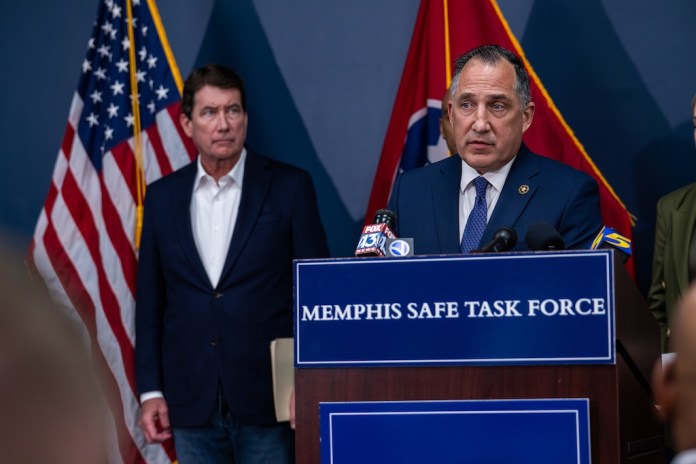
When a child goes missing, the public often sees only a brief glimpse of the situation: a photograph, an alert on their phone, or a news story announcing the child has been found. What they do not see is the coordinated effort unfolding behind the scenes. Recovering a missing child is not a single action. […]
Behind the recovery: What it takes to find a missing child
Center Right
When a child goes missing, the public often sees only a brief glimpse of the situation: a photograph, an alert on their phone, or a news story announcing the child has been found. What they do not see is the coordinated effort unfolding behind the scenes. Recovering a missing child is not a single action. […]
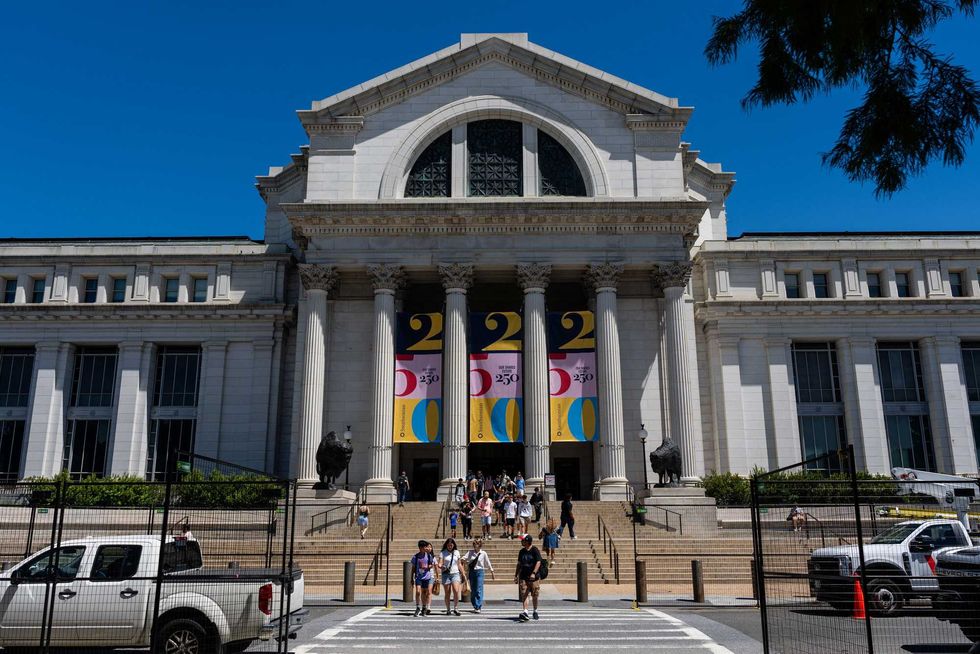
President Donald Trump's moves to discredit the Smithsonian Museum of American History are being driven by a notorious Christian nationalist "fake historian," according to a new report. According to Judd Legum's Popular Information, Trump's "Restoring Trust in the Smithsonian Institution" executive order, which requires signs be placed outside the museum disclaiming its exhibits as "inaccurate" and anti-American, closely mirrors the claims made by David Barton, a prominent far-right activist who has gained prominence in both GOP and Christian nationalist circles.Barton, along with his son Tim, head up WallBuilders, a group that promises to “teach US history and how our beginnings were overwhelmingly rooted in Christian ideology” — an easily debunked claim as Christianity and Biblical law are never mentioned anywhere in the Constitution and the document explicitly prohibits an "establishment of religion" by Congress."Despite having no degree in history, David Barton calls himself a historian," wrote Legum. "For decades, he has pushed the view that the founding fathers never intended for there to be a separation between church and state. David Barton’s work has been rejected repeatedly by actual historians" — and his 2012 book about Thomas Jefferson "was pulled from the shelves by its publisher after a group of historians from Christian universities accused him of including distortions and false information."There are a number of similarities, Legum noted, between Barton's work and Trump's new anti-Smithsonian order.For instance, the order says NMAH is too harsh on slavery, saying that "the words, actions, and ideas of America’s Founders helped spark a worldwide movement that ultimately ended slavery” — a similar distorted claim to the Bartons, who have written that slavery demonstrates "American exceptionalism." Trump's order and the Bartons also push rehabilitation of Christopher Columbus and call him an "American" hero, despite his never having set foot in the United States.Additionally, noted Legum, "the report ... alleges that the NMAH does not give proper attention to the founding fathers or the Declaration of Independence because it does not want to show that Christianity had an influence on them," a claim the Bartons have been making for years.To top it all off, the Bartons themselves have hinted they were involved in the creation of the report, as "in a podcast episode from January 6, 2026, the Bartons said that the White House had asked them to help identify problematic Smithsonian exhibits," said the report.Trump's Smithsonian order has come under heavy criticism, with Rep. Melanie Stansbury (D-NM) calling it "one of the dumbest and most bizarre Executive Orders we have ever read."
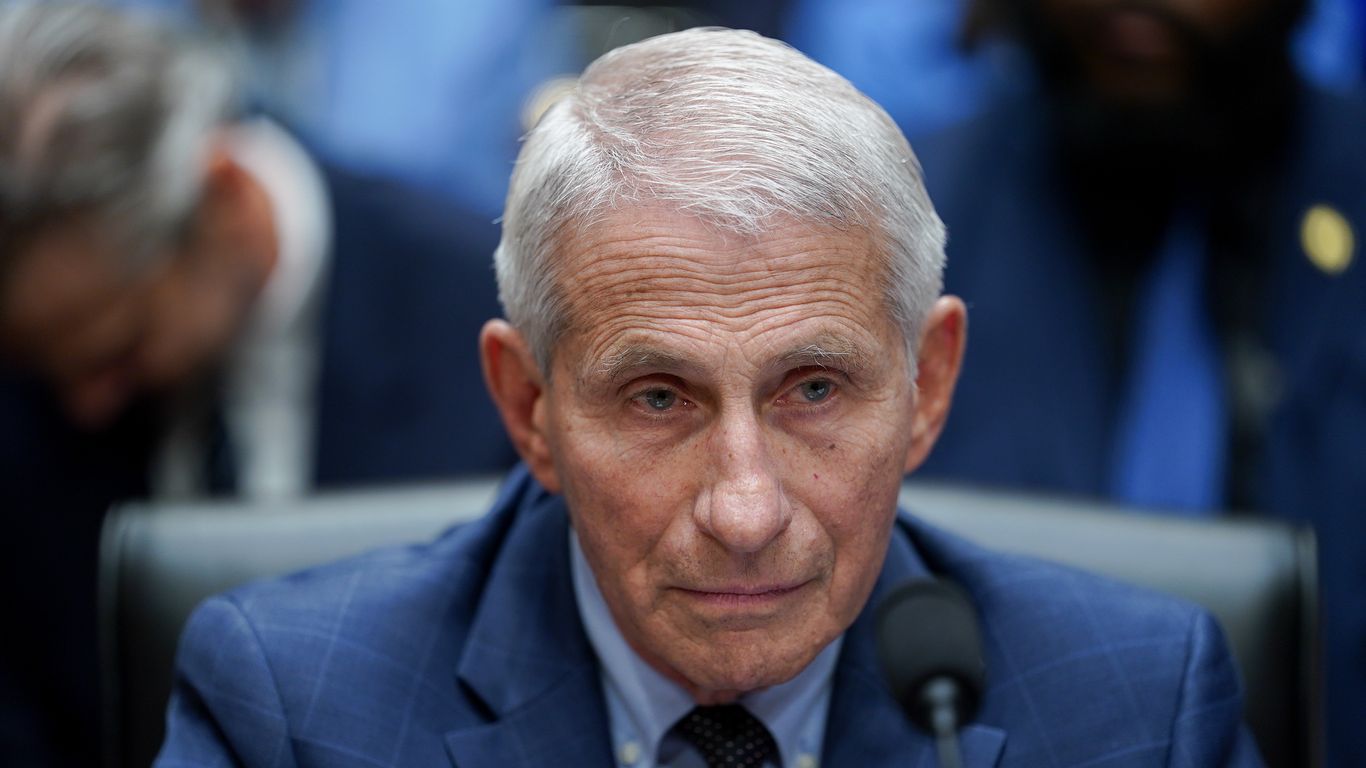
Dr. Anthony Fauci, who led the nation's infectious disease efforts during the pandemic, invoked the Fifth Amendment on Wednesday and declined to answer questions from a Senate committee investigating the origins of COVID-19.Why it matters: Fauci said Sen. Rand Paul (R-Ky.), the head of the Senate homeland security committee, was trying to get him to say something that could put him in legal jeopardy.Former President Biden gave Fauci a preemptive pardon before leaving office, but Fauci argues he could be in trouble if he makes any statements that could open new lines of investigation for the committee.What he's saying: Paul has an "unhinged obsession with me," and his motive for the hearing is to "get me to say something — anything — that could vindicate his repeated public pledges that I end up, in his words, quote, behind bars unquote," Fauci said."Although it pains me to do so … under the advice of my attorneys, I will invoke my right under the Fifth Amendment of the Constitution to refrain from answering your questions," Fauci said.The other side: "There will be repercussions to your refusal to testify today," Paul told Fauci.This is breaking news. Check back for updates.
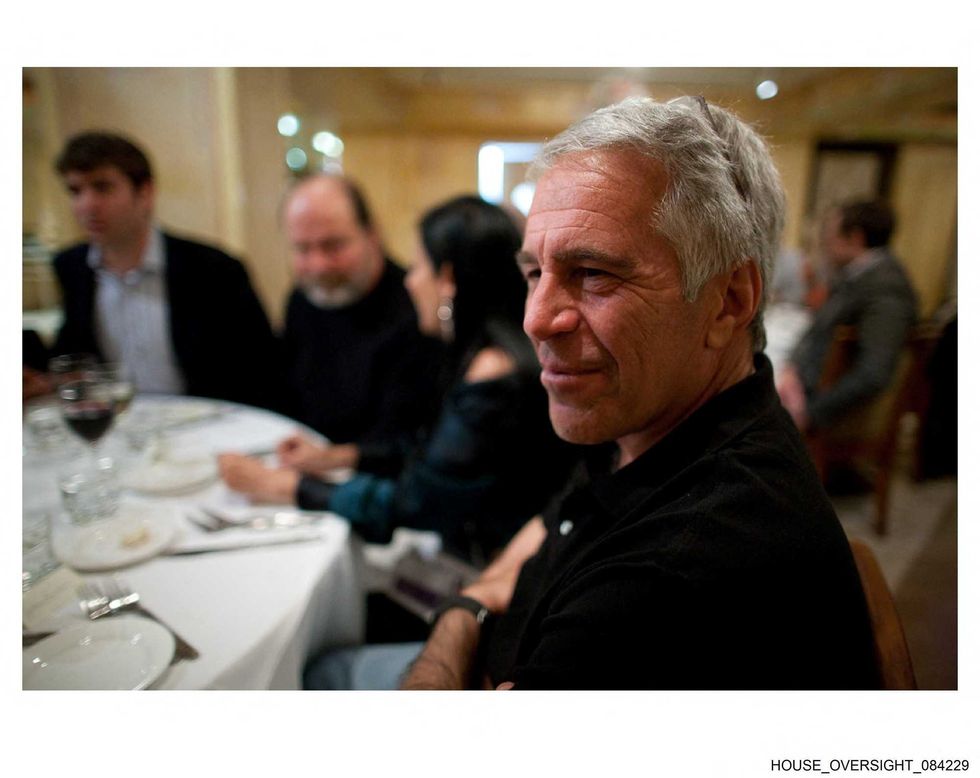
A two-year investigation identified 47 adults accused of sexual misconduct against students at a Michigan arts institution with deep ties to Jeffrey Epstein, drawing on more than 70 firsthand accounts of abuse dating back to the 1950s, MLive reported Tuesday night.Epstein has a well-documented history with Interlochen Center of the Arts, having attended the institution in 1967 when he was around 14 years old. In the 1990s, Epstein became a major donor to the institution, and previous reporting has revealed how he and his accomplice Ghislaine Maxwell used the center to target young girls. Recent reports also revealed that Epstein had set up his own lodge at the institution, and was accused by the mother of soap opera actress Nadia Bjorlin of trying to groom her daughter when she was 13.Carried out by Sanghavi Law Office at the behest of the institution, the new investigation revealed that the scope of abuse was far greater than previously known, including new allegations of abuse by Epstein himself.“The information gathered during this investigation is, simply, devastating,” reads Sanghavi Law Office’s report. “Despite the deep and positive connections that many individuals expressed to the investigative team regarding Interlochen, some of these same individuals detailed the significant negative impact of the conduct that they reported.”The law office’s investigative team forwarded the names of the alleged abuser to the Grand Traverse County Prosecuting Attorney’s Office, though a significant number of accused adults are now deceased, per the report. Having conducted around 180 interviews, the law office also uncovered a previously unreported allegation against Epstein.“One alum said that when she met Epstein and Maxwell at Interlochen, they offered to pay for her tuition, which they did. She noted that they withdrew financial support for subsequent schooling after she did not engage in requested conduct,” the law office’s report reads. “This alum said that during the time she interacted with Epstein and Maxwell at Interlochen, they asked her to Epstein’s lodge on campus, and that while there, Epstein engaged in sexual conduct with her, brushing against her body over her clothes, in a manner in which he indicated was accidental.”The same alum told investigators that she visited Epstein at his home in New York on three occasions while a student at Interlochen, during which Epstein would make unwanted sexual physical contact, and that she “did not tell anyone about Epstein’s conduct towards her until decades later.”In another new revelation, investigators discovered that a male faculty member at the institution had allegedly made unwanted physical advances and contact with a female student. That student told investigators that she confronted the faculty member and read aloud a letter to him: “Can you promise me that you won’t do this to anyone else?”The faculty member, according to the student, “told her that this was part of how he expressed love, and that he could not promise he would not do it again with anyone else,” the law office’s report reads.Per the report, the student informed leadership at the institution of the alleged unwanted physical contact. Within days of informing leadership, the male faculty member accused of abuse received a letter of recommendation from an institution administrator, and a second letter of recommendation from another administrator a month later.
The following is a lightly edited transcript of the July 29 episode of the Daily Blast podcast. Listen to it here.Greg Sargent: This is The Daily Blast from The New Republic, produced and presented by the DSR Network. I’m your host, Greg Sargent.Donald Trump just unleashed a barrage of unhinged threats toward Iran in a new interview with Fox News. He threatened to bomb all Iran’s bridges and power plants, and said explicitly that the entire population of Iran might soon be without electric power.There’s a temptation to dismiss moments like these as bluster. But we can’t let ourselves lose sight of what exactly he’s threatening to do, just how sociopathic these threats really are, and just how terrible it is that the media is now largely numb to them. This all comes as some MAGA figures are warning against escalation in some surprising new ways as well.So we’re trying to make sense of it all with former State Department official Emily Horne. Emily, always good to have you on.Emily Horne: Thanks, Greg, for having me.Sargent: OK, so we’re in this weird holding pattern where Trump has held off on escalating and he just keeps making all these threats, and he keeps saying Iran is desperate to talk to him. Yet at the same time, the reporting indicates that in reality the Iranians are not in any rush to talk to Trump at all. Emily, can you sum up the situation as of now?Horne: The TLDR on that, to use bureaucratic terms, is that Iran has all of the leverage and all of the momentum at this moment in the conflict. I think they’ve shown that there’s a real willingness on their end to pass the cost of this war to the Iranian people, which, as terrible as that is, is a major asset for them. They are not particularly troubled by their own people’s suffering. And that, plus their control of the Strait of Hormuz, gives them a lot of incentives to maintain the status quo, and a lot of leverage over the status of negotiations.They also continue to have a nuclear program, because Trump walked away from the JCPOA in his first term. So no matter what Trump has said at various points in Trump II about obliterating Iran’s nuclear program, again, that is something that Iran has as a bargaining chip, and they have been very clear that they’re going to control the direction of the conversation moving forward.Sargent: Why is it that they don’t seem to fear Trump escalating, exactly?Horne: I think part of it is that, again, they have the leverage here. As you and I have talked about before, this is an existential conflict for the IRGC. Many of them have lost family members, have already suffered greatly; they have already inflicted a great deal of suffering on the Iranian people. And so there’s a tremendous sunk cost that has already been absorbed by the IRGC in this conflict. And from their perspective, maintenance of the status quo is fine by them—as much as that continues to put Trump in an impossible position, because again, he just doesn’t have a lot of leverage at this point.But also, their strategy has been working for them. They don’t just control the strait, they are able to inflict a great deal of pain on the broader Middle East region, including by attacking tech infrastructure like data centers, attacking desalinization plants in Kuwait and other Gulf countries, attacking civilian infrastructure across the Middle East. And that again sends a signal that it is Iran’s momentum at this point in the conflict, not the U.S.’s.Sargent: Well, in that context, let’s check out something Trump just said on Fox News. He starts by saying, I could knock out all the power plants, then it keeps going from there. Listen to this.Donald Trump (voiceover): I could knock out the power plants within one day. All of their power plants would be gone. And I let ‘em know that, you know, with negotiations. They say, look—people want me to do that. I think about 91 million people without power, without bridges, with that to live. And it’s a very, very delicate balance. So I think we have a very strong position right now. They know I’m going to do that if they don’t make a deal. The bridges are going to be gone. Literally, in less than a—I would say in two hours, most of the bridges, the major bridges, will all be gone. And the power plants in one day.Sargent: Emily, I could be wrong, but I think this might be the first time that Trump has explicitly said not only that he’d knock out all the power plants, but also clarified that he really means knocking out electricity for all of Iran’s 91 million people. He said that. And that would be like a humanitarian catastrophe of unthinkable proportions. What would actually happen if he did that?Horne: So if Trump were to follow through on his threats to attack Iranian civilian infrastructure like power plants en masse, then you would likely see an immediate and mass humanitarian crisis that would affect at minimum tens of millions of people.
On Fox News, Donald Trump threatened to bomb all of Iran’s bridges and all of its power plants. Making this worse, Trump declared that his threat could leave all of Iran’s 91 million people without power. That may be the first time Trump has explicitly said this threat could apply to Iran’s entire population, which would constitute an extraordinary atrocity. Though Trump presented this as something he’d be reluctant to do, the key is he still confirmed it’s under consideration. Meanwhile, many MAGA figures are very upset about Trump’s new meeting with Benjamin Netanyahu, fearing it portends an escalation: As Steve Bannon put it, this is a “disaster for America First.” MAGA doesn’t care much about Iranians, but Trump’s escalation threats do rattle them for other reasons. We talked to former State Department official Emily Horne, author of the Spin Class Substack. We discuss the humanitarian horrors Trump is actually hinting at, what MAGA pressure on Trump means, and why the logic of the trap ensnaring Trump could lead to a terrible ending. Listen to this episode here.
Immigration and Customs Enforcement agents have a new strategy to round people up for mass deportation: head to the airport.According to The New York Times, "Immigration agents in plain clothes have whisked away targets at check-in counters and arrival gates, with enforcement actions in at least 15 airports in recent weeks. Some of the arrests have occurred quietly, while others have happened as angry fellow passengers filmed the encounters" — and it all seems to be the result of a partnership between ICE and the Transportation Security Administration.This comes after a December report from The Times "that ICE officers were arresting people with deportation orders at airports with the help of information provided by airlines to the T.S.A."A huge source of illegal immigration into the United States comes from people who enter on lawful visas but overstay. Not all of them have even broken any law on purpose, The Times noted: "Many with expired visas occupy a legal gray area, as they are awaiting visa extensions or green cards and have been issued work permits. Such individuals were not prioritized for deportation in the past unless they had committed crimes, and they were rarely detained while waiting for visa extensions or green cards."Under the Trump administration, however, these people are fair game to deport.A viral video this week showed one such arrest, of 27-year-old Ecuadorian national Chantal Morales Rojas, who was held back by plainclothes officers in the jetway after scanning her Southwest Airlines boarding pass from Denver to Oakland, California. The video showed her being seized and led through a side door, while she shouted in panic.ICE has not just been relying on data from airports; another recent report indicated ICE can gain information on where people live whenever they take out a new credit card.As the administration has ramped up mass deportation efforts and imposed ever more stringent arrest quotas on ICE agents, reporting from the Washington Examiner suggests that even within ICE itself, morale over their job has plunged to new lows.
House Republicans are pressuring the Senate to advance their reconciliation package as President Trump pushes for quick action.Why it matters: The roughly $95 billion package is House Republicans' latest effort to enact Trump's priorities without Democratic votes using the reconciliation process.The framework already cleared some early hurdles, but House Republicans are pressing the Senate to move quickly to keep Trump's legislative agenda on track before the midterm elections.The reconciliation plan would require a simple majority in the Senate and avoid the 60-vote filibuster."We are ready to work side-by-side with the Senate to get this done for the American People!" Trump wrote on Truth Social last week.Here are key elements of the plan.Iran war and military operationsThe budget bill instructs the House Armed Services and House Intelligence committees to draft legislation that could increase the deficit by up to $73 billion combined.The Armed Services Committee has a cap of $60 billion, while the Intelligence Committee has a cap of $13 billion.This would mainly aid defense priorities, which experts say likely includes military operations tied to the Iran war — a conflict that has already cost more than $37.5 billion since it began in February.State of play: Last week, the House again rebuked the Iran war by passing a resolution to curb Trump's military campaign.The vote came after three U.S. troops were killed in the region earlier in July.The resolution is largely symbolic and carries no force of law.Farm aidThe resolution allows the House Agriculture Committee to draft legislation increasing the deficit by up to $12 billion — funding expected to help struggling farmers.This is separate from the Farm, Food, and National Security Act of 2026 that passed the House earlier this year. That package is still awaiting passage in the Senate.What they're saying: The American Farm Bureau Federation celebrated the decision."We applaud members of the House of Representatives for recognizing the economic toll facing farm country and advancing farm aid as part of their reconciliation package," AFBF said in a statement.SAVE America ActThe bill calls for the House Administration Committee to make changes to law that will increase the deficit by a maximum of $10 billion.Because the committee oversees federal election law, any legal changes are expected to go toward implementing aspects of the SAVE America Act — a major political priority of Trump.The other side: Elements of the SAVE Act funding have drawn criticism from some conservatives, who posit that the cash won't be used as intended.Rather than including the full SAVE Act, the package offers grants to states to adopt voter ID requirements."That's just free money for Florida," Rep. Randy Fine (R-Fla.) said of the grant program last week, Axios previously reported. Blue states "will never take the grant money. I'm not a big fan of carrots. I like sticks."Senate and the reconciliation billWhat's next: Majority Leader John Thune (R-S.D.) has shown some resistance to the reconciliation bill, but House Republicans are increasing pressure on the Senate to pass the package, Axios reports.Thune said he plans to wait until government funding is resolved before tapping into the budget resolution.The White House is expected to turn up the heat on Senate Republicans, too.What we're watching: Trump has publicly urged the Senate to pass the bill.On Monday, the president urged Thune to keep the Senate in town until the SAVE America Act passes, another sign he's pressing senators to move quickly.Go deeper: Democrats hit the anti-incumbency trap