Appeals court strikes down War Department’s ban on transgender troops
Center Right
A federal appeals court ruled on Monday against the Trump administration’s policy of barring transgender troops from the military, finding the policy was arbitrary and implemented with animus. A three judge panel on the U.S. Court of Appeals for the D.C. Circuit found 2-1 that the Department of War’s January 2025 policy, which held that […]
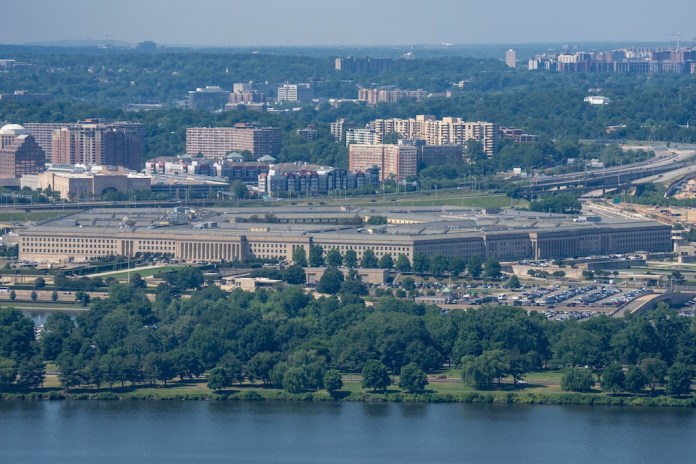
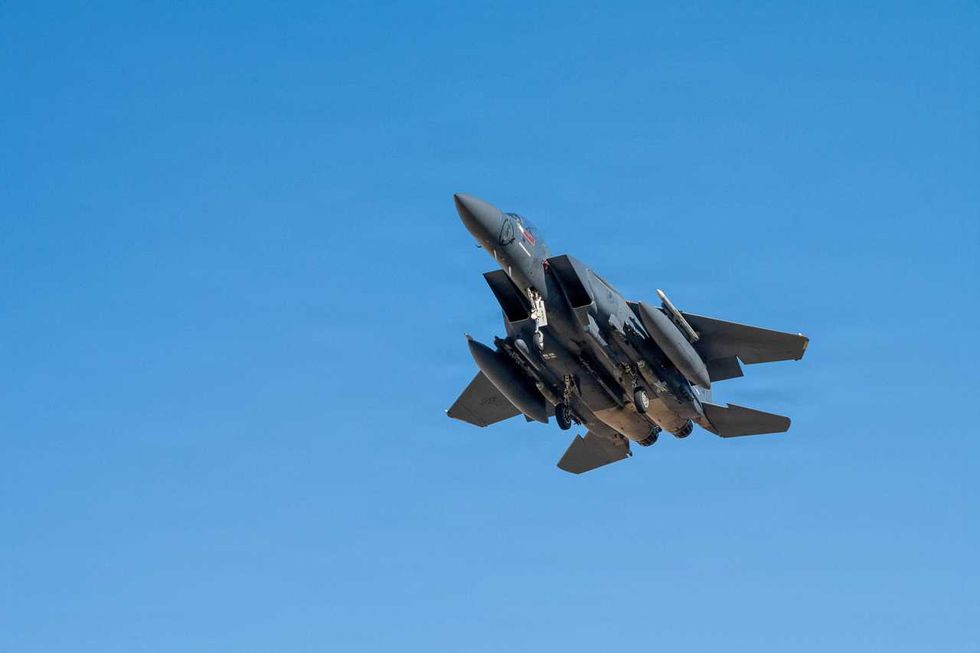
According to satellite imagery and video analysis, Iran has attacked at least 20 American military facilities across the Middle East, with some experts estimating as many as 28 bases targeted. The report by BBC Verify significantly exceeds public U.S. acknowledgment of the attacks. Strikes have hit key installations across eight countries: Saudi Arabia, United Arab Emirates, Qatar, Kuwait, Iraq, Jordan, Bahrain, and Oman, causing hundreds of millions of dollars in damage. Notable losses include three THAAD anti-missile batteries, each costing approximately $1 billion, and forming a complex regional defense network that cannot be quickly replaced. At Prince Sultan Airbase in Saudi Arabia alone, 42 aircraft have been destroyed or damaged since February, including F-15s, F-35s, Reaper drones, and an A-10 attack plane worth up to $700 million. Iran's tactics evolved from mass missile barrages to precise strikes targeting high-value assets. The Pentagon declined to dispute the BBC's findings, while the U.S. requested satellite imagery restrictions on the region.Watch the video below. Your browser does not support the video tag.
FBI Director Kash Patel's girlfriend and country singer Alexis Wilkins has filed a lawsuit against MS NOW, claiming that the outlet's reporting about her use of FBI agents is "hogwash," according to reports on Monday.Wilkins had filed the defamation lawsuit on Friday, citing that "MS NOW had knowingly and recklessly published lies about her," The New Republic reported. The lawsuit involved a December story that included anonymous sources claiming that Patel told FBI agents to take Wilkins's drunk friend home after a night of partying in Nashville. “This was hogwash and they knew it,” Wilkins's attorneys wrote in the 16-page suit, which also claimed that the security detail had not yet been created for the FBI director's significant other, who is 27 and "does not drink." "She does concretely have one now—the first time in U.S. history the bureau’s director has extended such protection," The New Republic reported.However, the story never reported that Wilkins was inebriated, yet the singer's legal team has appeared to be confused over the details of her claims. "In their filing, her team contradicted themselves, later writing that Wilkins 'very rarely drinks,'" according to The New Republic."As a country singer, author, and political advocate, known for her Christian, patriotic, America-First, and pro-law enforcement values, her brand and ability to work in her profession would be significantly damaged if her employers, her publishers, her listeners, or her readers, believed that she was abusing the public trust and using her relationship with Director Patel to misappropriate FBI resources," according to the suit.The suit has accused MS NOW of writing a story "in George Costanza fashion" in order "to self-promotingly advance their own agenda and notoriety" at the expense of Wilkins.Rebecca Kutler, MS NOW president, shared a statement with Raw Story regarding the lawsuit."We stand firmly behind MS NOW’s reporting. As a general matter of practice, we don’t comment on ongoing legal matters," Kutler said.Patel has been accused of excessive drinking in a report from The Atlantic and faced grilling from lawmakers over the allegations, which he has denied.
A prominent economist has calculated the overall cost of President Donald Trump’s Iran war on American consumers, boiled it down to how much it is costing each U.S. household, and is issuing a warning on the economy.Dr. Mark Zandi is the chief economist at Moody’s Analytics and the co-founder of Economy.com. He puts the total cost of Trump’s war at $100 billion — a conservative estimate to some — which amounts to about $750 per household so far. That $100 billion includes “the additional U.S. military costs and the higher energy and other prices resulting from the war,” says Zandi, who calls it a “big economic blow.” Last week, Zandi told CNBC that if prices stay roughly the same, and the war drags on to a full year, the total cost will jump to about $2,000 for each U.S. household.He warns that while Trump’s “deficit-financed tax cuts have cushioned it” so far, as of the middle of last month, “the bigger tax refunds Americans have received this year no longer cover the higher costs of gasoline, diesel, and jet fuel caused by the war.” Patrick De Haan, the head of petroleum analysis at GasBuddy, on May 19 reported that “Americans will be spending $2 billion more on gasoline over the four day Memorial Day weekend compared to a year ago, according to GasBuddy estimates, or roughly $22 million more every hour.”Looking at the “hard-pressed middle and lower-income households,” Zandi found that the financial pressure is “mounting quickly.”He notes that the U.S. consumer’s savings rate is now “about as low as it ever goes,” and warns that “unless the war ends soon and energy prices come down,” Americans “will have little choice but to rein in their spending, weighing further on the already sagging economy.” Gregory Daco, chief economist at EY-Parthenon, told CNBC that consumers “are increasingly facing an income squeeze, which is forcing them to use savings, credit and wealth to sustain their spending patterns.”The Trump White House over the weekend offered a different take.Kevin Hassett, the director of the White House National Economic Council, told reporters that “People are spending more on gas, but they’re also spending more on everything else — not just groceries, but restaurants and so on,” MS NOW reported. “I think that that’s a sign that you would see when people are optimistic about the future.”
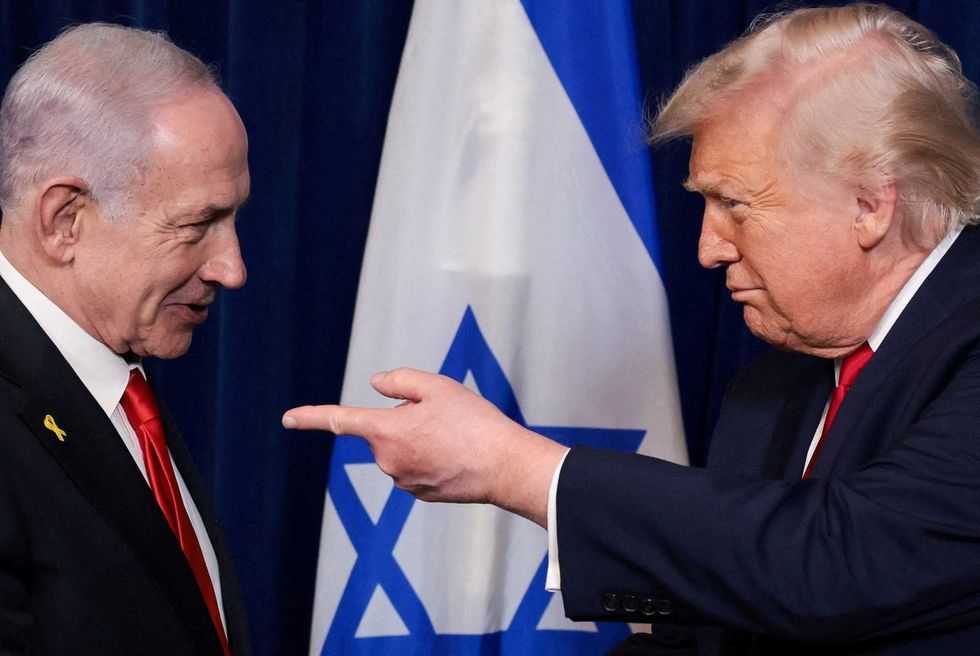
President Donald Trump announced Monday that a key obstacle standing in the way of his administration’s negotiations with Tehran to end the U.S. war against Iran had apparently been addressed, potentially clearing the path to an end to the conflict.“I had a very productive call with Prime Minister Bibi Netanyahu, of Israel, and there will be no Troops going to Beirut, [Lebanon], and any Troops that are on their way, have already been turned back,” Trump wrote on his social media platform Truth Social. “Likewise, through highly placed Representatives, I had a very good call with Hezbollah, and they agreed that all shooting will stop – That Israel will not attack them, and they will not attack Israel.”Trump’s inability to pressure Israel to halt its bombardment and invasion of Lebanon – which he explicitly demanded in April – has been a key factor in the negotiation stalemate between Washington and Tehran. Iranian officials have demanded that any agreement to end the conflict include Israel halting its bombardment of Lebanon, which since early March has killed more than 3,100 Lebanese and injured nearly 10,000.Whether Israel abides by Trump’s latest request to cease hostilities remains to be seen, with the Middle East nation having flagrantly disregarded the president’s demands in the past.
As the war with Iran enters its fourth month and President Donald Trump struggles to reach a peace deal to end the conflict he started, the Hill reports that Senate Republicans have become deeply divided over how to proceed. This ‘messy debate’ comes as the GOP is already at odds over several key legislative priorities. According to the Hill, several hawkish Senators led by Senate Armed Services Committee Chair Roger Wicker (R-MS), Lindsey Graham (R-SC) and Ted Cruz (R-TX) reject the deal that has been emerging with Iran, urging the president “not to agree to any deal that would allow Iran to continue its nuclear enrichment program or ease sanctions while it continues to support Hezbollah and Hamas.” American Enterprise Institute senior fellow Danielle Pletka typifies this view, “arguing that it would be even weaker than the Joint Comprehensive Plan of Action that the Obama administration negotiated with Iran in 2015 — a deal Trump abandoned in his first term.”“The reporting on it suggests that it’s a terrible deal, that the president has gotten basically nothing that he said he was getting, and that his negotiators have embarrassed him,” she said. “Anything that ends with Iran believing that it can open and close Hormuz at times of its choosing is a loss for the United States.”For the senators’ part, Wicker has warned that the deal would be a “disaster,” Graham argues that it would make Iran the region’s “dominant force,” and Cruz asserts that giving Iran billions in sanctions relief while allowing the country control over the Strait of Hormuz would be a “disastrous mistake.” According to Republican strategist and ex-Trump National Security Council spokesperson John Ullyot, however, “They will certainly make their feelings clear, and loudly, but it’s hard for the Senate to stand in the way of a deal by any president in an ongoing military operation since it’s not subject to a vote that would block it.”But the views of other GOP lawmakers have the party further divided, as “a growing number of Republican senators are losing patience with the lack of a clear plan for ending the conflict, which has caused gas prices to rise by nearly $1.40 per gallon since late February.” Four Republican senators recently voted to discharge a war powers resolution that would have directed Trump to withdraw U.S. troops from the war. These include Republican senators Rand Paul (R-KY), Susan Collins (R-ME), Lisa Murkowski (R-AK), and Bill Cassidy (R-LA), and the measure advanced because three Republicans were absent. It would have passed if just one more Republican had voted for it, “sending a loud rebuke to Trump over his handling of the conflict.”“The Senate is expected to vote this week on a motion to proceed to the resolution to end the war, but Senate Majority Leader John Thune (R-SD) and Democratic Leader Chuck Schumer (D-NY) need to work out a time agreement,” explained the Hill. “The measure is close to having enough support to pass the House as well, though Trump is certain to veto it.”According to the Hill, Republican senators on both sides of the divide will likely extend Trump some latitude as the deal is negotiated, but that once details are revealed, the backlash could be pronounced. Many are watching how Senator John Cornyn (R-TX) votes as he just lost a primary race to a Trump-endorsed opponent. Now that Cornyn knows he’s leaving office, he has little incentive to bend to Trump’s will, who has recently accused the senator of being “very disloyal.”
The war in Iran has not been the unequivocal success that Donald Trump has claimed it to be.Tehran has damaged at least 20 regional U.S. military sites since the war began in late February, according to satellite imagery reviewed by the BBC. The damages have destroyed air defense systems, radars, and aerial refueling planes, costing the U.S. millions of dollars.The Pentagon, on the other hand, claimed in early April that it hit more than 13,000 targets in Iran within just 38 days of combat operations.Iran’s supreme leader, Mojtaba Khamenei, has tried to rally attention toward the attacks. Last week, Khamenei wrote in Farsi on his official X account that “America will no longer have a safe haven for mischief and the establishment of military bases in the region.” Khamenei further vowed that the phrases “Death to America” and “Death to Israel” would remain the rallying cry of the Islamic community and “the oppressed of the world, especially the youth.”The reality is obviously a far cry from the Trump administration’s public declarations, which have involved claims as far back as June 2025 that Iran’s nuclear ambitions were obliterated and its military sites damaged beyond any scope of immediate repair.A peace plan does not seem to be on the table, despite a preliminary agreement that was drafted early last week. Iran on Monday suspended talks with the United States over continued Israeli attacks on Lebanon, which they say violate the ceasefire.That’s not likely to please Trump, who spent the weekend ranting about congressional opposition to his war.“Iran really wants to make a deal, and it will be a good one for the U.S.A. and those that are with us,” the president wrote on Truth Social late Sunday. “But don’t the Dumocrats, and various seemingly unpatriotic Republicans, understand that it is MUCH tougher for me to properly do my job and negotiate, when political hacks keep negatively ‘chirping,’ at levels never seen before, over and over again, that I should move faster, or move slower, or go to war, or not go to war, or whatever.“Just sit back and relax,” Trump concluded. “It will all work out well in the end—It always does!”