Top Democratic leaders are cutting ties with Democratic Maine Senate candidate Graham Platner as his past has caught up with him, which could create chaos amongst the Democratic Party.
The French government has criminalized the use of nicotine pouches. Users can be punished with up to 5 years in prison and a fine of almost half a million dollars.
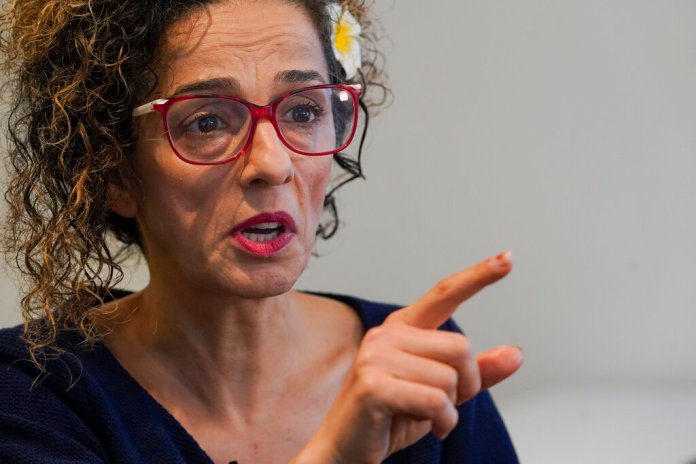
A Staten Island man was sentenced on Wednesday to 10 years in federal prison for participating in a plot to kill a journalist and prominent critic of Iran‘s government in a case prosecutors say was directed by operatives tied to Tehran. Jonathan Loadholt, 37, pleaded guilty earlier this year to conspiracy to commit stalking and […]
In choosing Ken Paxton, Texas Republicans rejected of “the establishment conservatism that [Sen. John] Cornyn represented” — which should serve as “a warning to observers about American politics,” argues USA Today’s Nicole Russell.
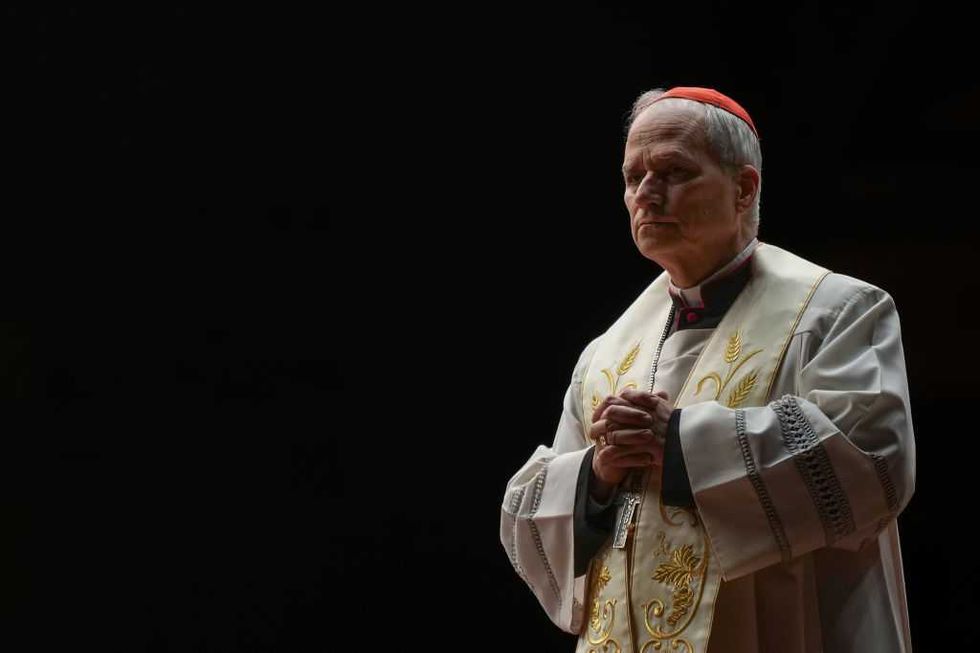
Pope Leo XIII issued a papal encyclical in 1891 titled "Rerum Novarum," which the Vatican notes "became the document inspiring Christian activity in the social sphere and the point of reference for this activity."In that groundbreaking document about the just ordering of society, Leo XIII applied Catholic doctrines to the modern conditions that manifested as a result of the Industrial Revolution.Besides rejecting socialism as a means of remedying social ills and setting the stage for localism, the late pope expounded on the Church's doctrine on work, private property, the rights of workers, the obligations of the rich, the dignity of the poor, and other timely terms and issues.'It can only bring about conflict more quickly and render it more impersonal.'The current pope, Leo XIV, has set out in his first encyclical, "Magnifica Humanitas," to do for his era what his predecessor did 135 years ago.The Roman pontiff has, accordingly, scrutinized "the great trends of our time, particularly technological advances," through the lens of the Church’s Scripture- and tradition-based social doctrine — that living "legacy of wisdom, where we find principles for thought, criteria for discernment and judgment, and concrete guidelines for action."While the pope covers a great deal of ground in his encyclical, five remarks stand out as especially provocative and/or memorable.1. The two citiesAt the outset, Pope Leo XIV raises the questions of where man is going and toward which goal does he wish to orient himself.Leo XIV notes that in the era of AI, mankind is faced with a choice — not whether or not to embrace technology, which he does not regard as a force intrinsically antagonistic to humanity — but of whether to "construct a new Tower of Babel or to build the city in which God and humanity dwell together."RELATED: It’s not easy being pope — Leo's big new tech encyclical proves it Alessandra Benedetti - Corbis/Corbis/Getty ImagesThe American pope suggested that the choice will inevitably dictate how the transformative technology of the age is employed, given that this technology takes on the "characteristics of those who devise, finance, regulate, and use it."Following in the footsteps of Nimrod and choosing the first option would mean giving way to an ancient temptation and pursuing "a single language, a single technology, a single direction"; building a society "on pride and the claim to self-sufficiency"; and working toward a "future that excludes God and reduces the other to a means."The second option would not similarly mean dominating the heavens but rather patiently cultivating a "space in which humanity rediscovers its solid foundations and its final end" — a place "less visible and less spectacular" that is founded on the common good and has for its bedrock a firm relationship with the Almighty.Building for the common good necessitates resisting the "Babel syndrome" that animates transhumanism and other vainglorious efforts to correct what God has created and instead "accepting the limits and weakness of humanity without considering them an error to be corrected," said the pope.2. Falling victim to achievementLeo XIV observed that within the ascendant technocratic paradigm previously denounced by Pope Francis, there is a "tendency to let the logic of efficiency, control, and profit alone shape personal, social, and economic decisions."'Speed and efficiency should never be the supreme motivating force for the irreversible decisions.'This contagious way of looking at the world — which threatens to reduce "creation to an object of exploitation and human beings to mere cogs in a system driven toward ever greater efficiency" — has spread in concert with "the expansion of artificial intelligence, cognitive science, nanotechnology, robotics, and biotechnology," said the pope.Pope Leo XIV warns that unless technological progress advances with corresponding ethical and social progress, "the result may be an increase in means without a growth in humanity: 'having more' without 'being more.'"3. More dehumanization on the battlefieldSensitive to the increasing ease of war-making, "tragically marginal" efforts to prevent conflicts, and the "perpetuation of conflict as a source of power and income," the pope discussed the need to rein in and regulate the use of AI where the battlefield is concerned.Leo XIV noted that moral judgments of a lethal or irreversible nature cannot be reduced to calculation and should not be entrusted to artificial systems.RELATED: Killer drones have conquered the skies. Can we ever be safe again?
American defense contractors will take upwards of three years to replace the primary munitions the U.S. military used during its 39-day bombing campaign against Iran, according to a new estimate from a D.C.-based think tank, emphasizing the concern from experts that the Iran war could impact a possible future conflict with China. Secretary of War […]
Are we close to a deal with Iran? A sentence away from an agreement to end the war, as Secretary of State Marco Rubio claims? Who knows? But what we do know from credible reporting is that the deal being negotiated looks a whole lot like the deal that Barack Obama’s team struck with Iran in 2014 and 2015.Donald Trump is a salesman trying to convince us that this used car is actually brand new. What he is trying to get is a deal that trades dollars for “dust,” his term for the enriched uranium held by Iran. Trump would give Iran billions of dollars by unfreezing Iranian assets in U.S.-linked banks and ending U.S. sanctions. In exchange, Iran would get rid of its stockpile of enriched uranium that it could enrich further to make the cores of nuclear bombs.Most likely, Iran would give up not just its 440 kg of uranium enriched to 60 percent, but the more than 10 tons of uranium that it has enriched to various lower levels. This is what the Obama negotiations accomplished in 2015. Iran took its then-eight tons of uranium and downblended it with natural uranium, which has less than 1 percent of the U-235 isotope needed for fission. That brought the uranium down to very low levels of enrichment, potentially usable for fuel but not for a rapid sprint to weapons-grade of 90 percent U-235.Then, in a belt and suspenders approach, Iran shipped all of that uranium to Russia. It was allowed to keep only 300 kg of uranium at the low 3.67 percent level used for fuel. All of this meant that the 2015 deal moved Iran from being able to produce the cores for bombs in a few weeks to needing a full year. In exchange, the United States released Iranian funds frozen in foreign banks by U.S. sanctions. Critics of the deal harshly criticized this as shipping “pallets of dollars” to Iran. But this is precisely what Trump is proposing as part of his deal. That’s because there really isn’t any other way to do this. Either you trade something Iran wants for something you want, or you go to war. Trump could have gotten this deal without going to war. In late February, the Iranians agreed to get rid of their uranium stockpile. Plus, they agreed to suspend all enrichment for three to five years—something they were not willing to do in 2015. That was such a good deal that the Omani foreign minister mediating the talks flew to Washington on February 27 to brief Vice President JD Vance on the deal. Britain’s national security adviser Jonathan Powell said that he was surprised at how good the offer was—and added that he didn’t think it was their final offer. But Trump got greedy. He listened to Israeli Prime Minister Benjamin Netanyahu and Saudi Crown Prince Mohammed bin Salman and attacked. Trump thought there was no need to negotiate, he could overthrow the whole regime. He failed. Now he is back at the table trying to get the same deal he could have gotten without the war.This is nowhere near the original goals of Trump’s illegal war. It is not regime change, or liberation for the Iranian people, or unconditional surrender, or weakening Iran, or eliminating its entire nuclear program. But it could still be a good deal. It would put Iran back to where it was under the 2015 Joint Comprehensive Plan of Action, before Trump ripped it up in 2018. Plus, if it actually includes a multiyear enrichment suspension, it would be a major barrier to Iran building a bomb. It would not secure an absolute end to the program, but it buys time to build on the agreement with other agreements that could further restrict the program and address other areas of concern, like Iran’s missile program. That was the path laid out by Obama. It is the path Netanyahu campaigned against; the path that Trump mocked. It is the path that Trump may now take, while trying to convince everyone that it is a brand new deal.
One of the NFL's most talented running backs is facing serious criminal charges, potentially putting his career in jeopardy.
The post NFL Star Running Back Busted on FIVE Criminal Charges, Including Felony Strangulation and Suffocation – Faces YEARS in Prison appeared first on The Gateway Pundit.