
National Review
Supreme Court Drives a Stake Through Hawaii’s ‘Vampire Rule’
This was the right result, but the decision should have been unanimous.
Center Right

The central issue in the Roundup case, filed by Missouri resident John Durnell, was who decides what should appear on a pesticide or insecticide label—and whether a federal law overrides state claims.
This was the right result, but the decision should have been unanimous.
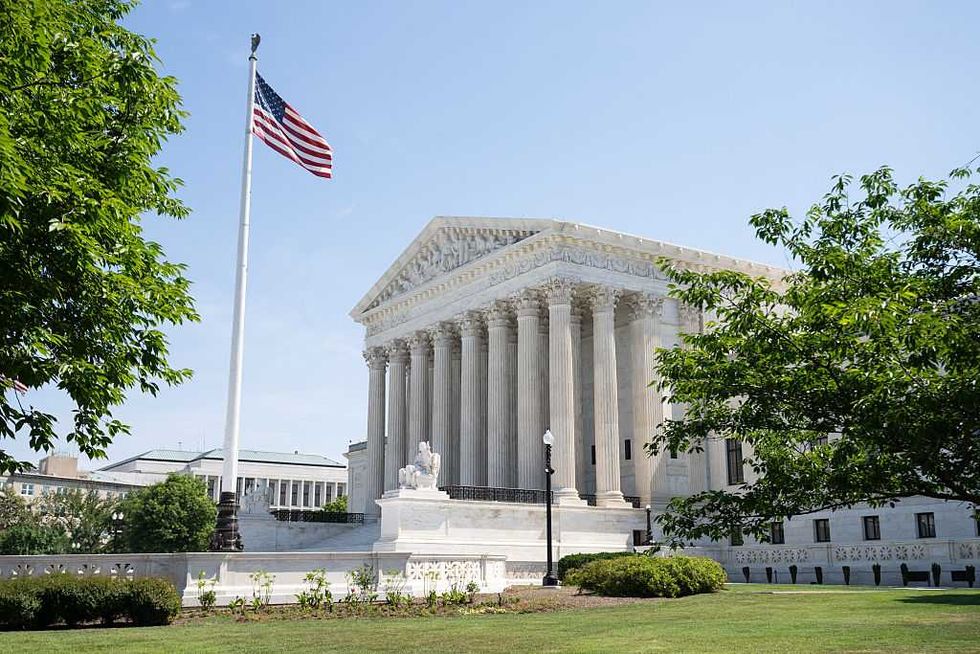
The Supreme Court has ruled in favor of Homeland Security Secretary Markwayne Mullin and the Trump administration regarding when asylum-seekers officially "arrive" in the U.S.In a 6-3 decision split along ideological lines, the Court held that aliens seeking asylum do not “arrive in the United States” until they physically cross the border into the country and therefore are not entitled to inspection by border officials until they have entered onto U.S. soil.'An alien "arrives in the United States" only when he crosses the border.'The case stems from the federal government’s “metering” policy — first adopted in 2016 amid a surge of migrants at the southern border — that limited the number of aliens whom Customs and Border Patrol agents would inspect each day for asylum. When a port of entry reached capacity, officials physically prevented additional aliens from entering until capacity became available again. In 2017, asylum-seekers and Al Otro Lado, an immigration advocacy organization, brought forward a class-action lawsuit arguing that the federal government was unlawfully denying aliens access to asylum procedures. The federal district court in Southern California granted summary judgment in favor of the noncitizens and declared the government’s policy unlawful. The metering policy was then discontinued in November 2021, though the second Trump administration has attempted to revive it. A divided Ninth Circuit panel affirmed the summary judgment, ruling that an alien “arrives in the United States” when said alien — even while standing on the Mexico side of the border — encounters a U.S. official and thus must be inspected for asylum claims. Writing for the majority, Justice Samuel Alito reversed the lower court’s ruling. The court held that the meaning of “arrives in the United States” requires physically entering the country. Therefore, under the Immigration and Nationality Act of 1952, an alien standing on the Mexico side of the border is not entitled to inspection by a U.S. official. “We hold that an alien who is standing in Mexico does not ‘arriv[e] in the United States’ by attempting, and failing, to set foot in this country. An alien ‘arrives in the United States’ only when he crosses the border,” Alito wrote.RELATED: Ketanji Brown Jackson melts down over SCOTUS ruling against Hawaii gun law: 'The court's objective is protecting guns' U.S. Supreme Court Associate Justices Samuel Alito (L) and Clarence Thomas (R).Chip Somodevilla/POOL/AFP/Getty ImagesThe court highlighted the text of other INA provisions and subsequent amendments to the statute to indicate that Congress intended asylum and inspection rights to apply only after an alien enters the country. “That Congress amended §1158(a) in IIRIRA to replace ‘at a land border or port of entry’ with ‘arrives in the United States’ suggests that we should not read those phrases — which carry different ordinary meanings — to have the same meaning.”Justice Sonia Sotomayor, joined by Justices Elena Kagan and Ketanji Brown Jackson, dissented, arguing that Congress intended border officials to inspect and process all aliens who present themselves at ports of entry, regardless of whether they have physically stepped into the U.S. The dissent contended that the majority’s decision “ignores the statutory context and history” of the INA and weakens the asylum protections Congress created for people fleeing persecution. "The Court today holds that the Executive Branch may circumvent all these mandatory procedures by having U.S. immigration officers stand at the border and physically block noncitizens from setting a foot onto U.S. soil.” Sotomayor added, "The Court's illogical interpretation is driven almost entirely by a fixation on a single word: 'in.'"Like Blaze News? Bypass the censors, sign up for our newsletters, and get stories like this direct to your inbox. Sign up here!

Almost a fifth of Americans would like Pride Month to be canceled.

The Supreme Court has ruled to allow the Trump administration to end the Temporary Protected Status for thousands of immigrants from Haiti and Syria. NBC News' Gary Grumbach reports on the court's split among ideological lines and how the ruling impacts the administration's immigration policies.
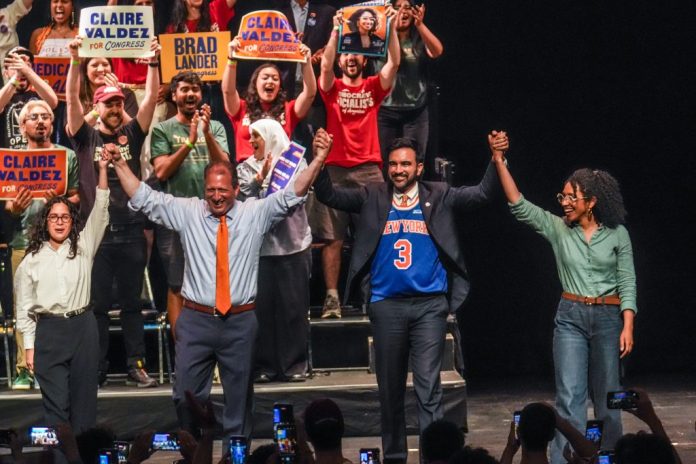
The newly picked New York Democratic nominee for the House, Claire Valdez, has called for abolishing the Transportation Security Administration’s PreCheck and ultimately nationalizing the airline industry, positions that are likely to draw scrutiny as Democrats grapple with the rise of the party’s socialist wing. Valdez, a member of the Democratic Socialists of America, defeated […]
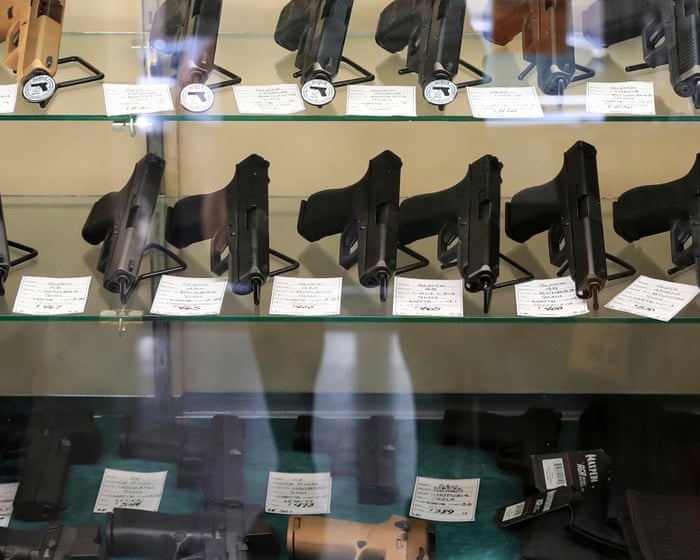
The law banned people from carrying guns in most public spaces and private property without owner’s permissionUS politics live – latest updatesSign up for the Breaking News US email to get newsletter alerts in your inboxThe US supreme court struck down a restrictive gun law in the state of Hawaii that bans people from carrying guns in certain public spaces and on private property without the permission of the property’s owner.The decision was made in a 6-3 vote, with Justice Samuel Alito offering the majority opinion – backed by the other members of the court’s rightwing supermajority – and Ketanji Brown Jackson writing the dissent. Continue reading...
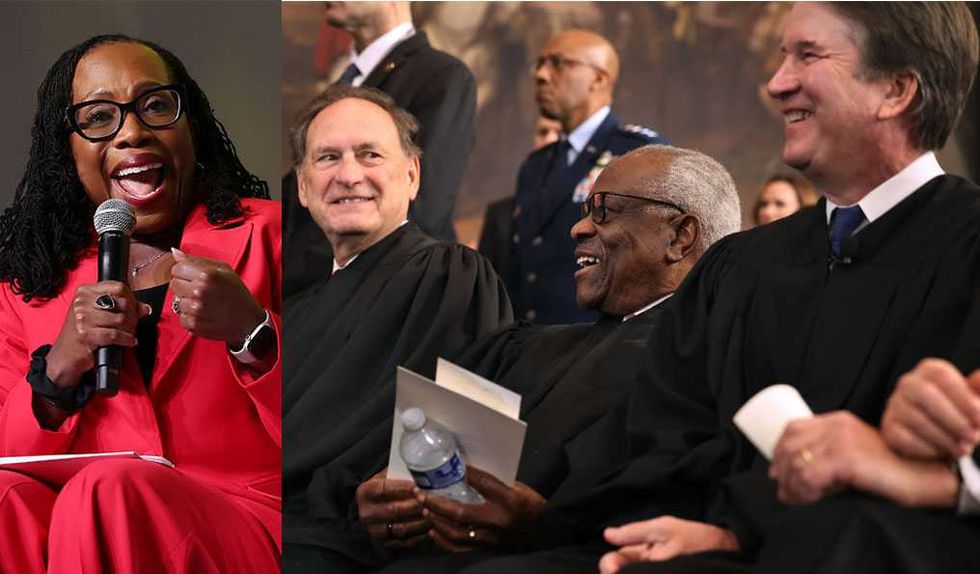
The U.S. Supreme Court ruled four years ago in New York State Rifle & Pistol Association Inc. v. Bruen that the Second and 14th Amendments protect Americans' right to carry handguns outside of their homes for self-defense. Hawaii Democrats came up with an apparent workaround to curb gun rights in their state, passing a law in 2023 that banned the carrying of guns onto private property without verbal or written consent of the property owner. Those who ran afoul of this law faced up to a year in prison.'Hawaii's law does not restrict the right to carry a gun at all,' Jackson wrote.This didn't sit well with a trio of Maui County residents with concealed-carry permits who, with the Hawaii Firearms Coalition, sued on the basis of the understanding articulated again by Solicitor General D. John Sauer last year: "Because most property owners do not post signs either allowing or forbidding guns, Hawaii’s default rule functions as a near-complete ban on public carry."To the great chagrin of liberal Justice Ketanji Brown Jackson, the Supreme Court determined in a 6-3 ruling on Thursday that Hawaii's so-called "vampire law" is unconstitutional.The court, which reversed a 2024 decision from the San Francisco-based 9th Circuit Appeals Court, noted that law-abiding permit-holders "not only must ... take care to avoid all the territory where the possession of a gun is prohibited outright, but they may also be barred from entering many places that people routinely visit in the course of their daily routines, such as gas stations, restaurants, and stores."While recognizing the right of establishments that are open to the public "to admit or exclude persons who are carrying guns for self-defense under either the common-law rule or Hawaii’s law," the court noted that the so-called vampire law "flips the default rule at common law, under which anyone has an implied license to enter property held open to the public unless the property owner withdraws consent."Justice Samuel Alito noted in the opinion that the "regime" established in Hawaii "hobbles what the Second Amendment protects: the right of Americans to carry arms for self-defense as they go about their daily lives."RELATED: ‘Shall not be infringed’ — even if you're high, Supreme Court rules Maxine Wallace/The Washington Post/Getty ImagesJackson was once again of a different mind than her conservative colleagues on the meaning of the "right to bear arms."At the outset of her dissenting opinion, which was joined by Justice Sonia Sotomayor, Jackson framed — in Orwellian fashion — Hawaii's infringement on Americans' constitutional rights as an effort to "protect the rights of its residents — both those who wish to carry guns and those who prefer that guns are not carried on their private property without their express permission."Jackson —who repeatedly stressed that she still disagrees with the decision in Bruen, calling it a "grave mistake" — claimed that "the court's objective is protecting guns, not consistently preserving any principle of law."According to Jackson, the vampire law that effectively requires law-abiding citizens to everywhere obtain consent before exercising their Second Amendment right not only "does not implicate the Second Amendment" — "Hawaii's law does not restrict the right to carry a gun at all."The liberal justice apparently assigns state law and custom greater weight than federal law on the matter of guns, stressing that "recognizing state autonomy in this respect is especially appropriate here, since Hawaii has never had a custom of armed carry."Jackson concluded her 32-page dissent with yet another attack on her colleagues, writing, "While purporting to constrain judges, the majority has unmasked the discretionary choices that lie beneath the court’s decisions regarding which analogues are 'vastly different' ... and whose historical experiences are worthy of inclusion."Justice Elena Kagan wrote a separate dissenting opinion.This ruling will reportedly impact a handful of blue states, including New York, Maryland, and California, which took a similar approach to Hawaii.John Commerford, executive director of the National Rifle Association's Institute for Legislative Action, said of the outcome, "Law-abiding gun owners will no longer be forced to beg for special permission simply to exercise their constitutional right to bear arms in public places."Like Blaze News? Bypass the censors, sign up for our newsletters, and get stories like this direct to your inbox. Sign up here!
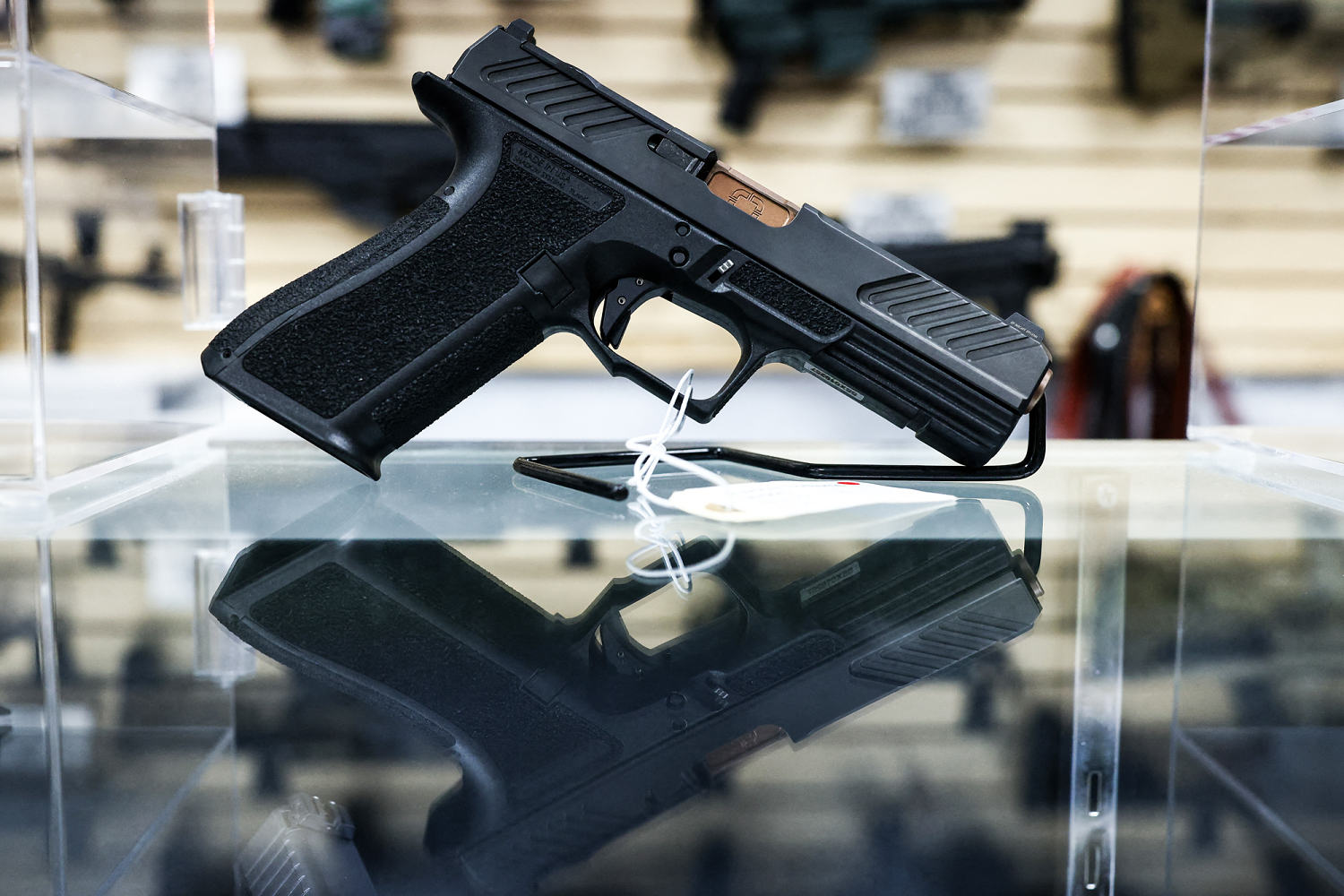
The Supreme Court struck down a Hawaii gun restriction that limits when people can carry firearms on certain private properties, known as the “vampire rule.”