US and Iran reach tentative deal to extend ceasefire, US sources say
Center
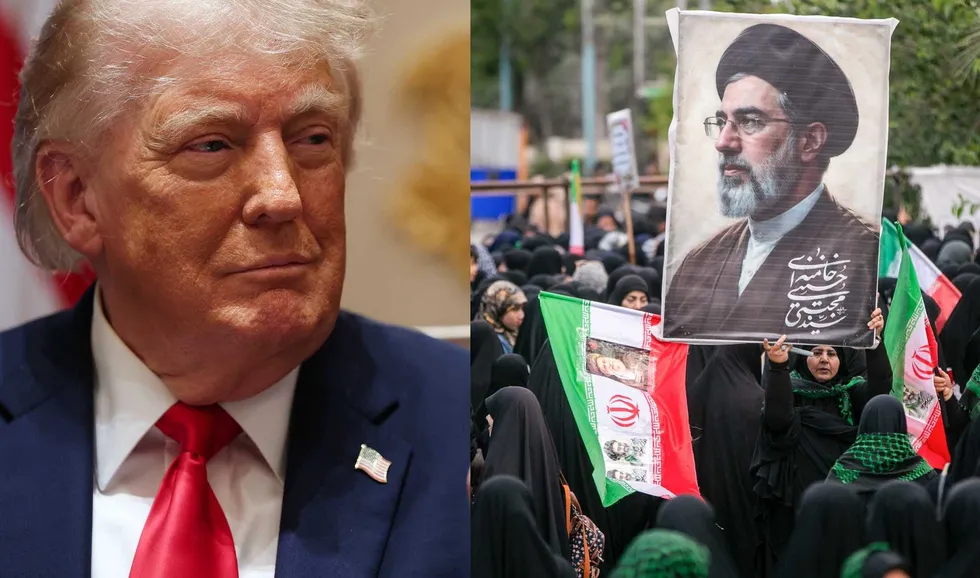
The framework, which has reportedly yet to be approved by the leaders of the US and Iran, would extend the fragile ceasefire and launch nuclear programme talks.
On this episode of Bloomberg Businessweek Daily, Alexis Christoforous and Matt Miller speak with Jordan Fabian on the latest from Washington DC ahead of Treasury Secretary Scott Bessent's press briefing. They also spoke with Bloomberg News US Treasury Reporter, Dan Flatley on the latest developments from the briefing. (Source: Bloomberg)
Negotiators representing the U.S. and Iran have reached a tentative agreement about the ceasefire, according to various news outlets.If signed by President Donald Trump and the Iranian regime, the ceasefire would extend for another 60 days. Trump has not yet signed off on the memorandum of understanding, according to an official who wanted to remain anonymous.'President Trump is not going to make a bad deal for the American people, for the US.'"This is an agreement to get everybody to the table," the official told Axios. "We will work out the details in the negotiations."If both sides agree to the ceasefire, it would lead to the Strait of Hormuz being opened to trade again and possibly lowering gas prices across the globe. Other policies to be decided include billions of dollars of frozen assets that Iran would like to regain and restrictions on its ability to refine uranium for military nuclear capabilities.The president had lambasted previous offers from the regime and at one point called its proposals "garbage" and "unacceptable."RELATED: Trump offers unique insight into Iran's 'strange' negotiations: 'It won't be pretty!' When Treasury Secretary Scott Bessent was asked about the deal on Thursday, he would not answer directly."Everything depends on what the president wants to do, and President Trump is not going to make a bad deal for the American people, for the U.S.," he said.This is a developing story. Like Blaze News? Bypass the censors, sign up for our newsletters, and get stories like this direct to your inbox. Sign up here!
Economist and public policy scholar Justin Wolfers says Republicans and President Donald Trump have not only set themselves up for a brutal midterm, but voters will probably be holding them accountable for high inflation and fuel prices for years.“There is a bomb that has hit the world economy and to any of us who watch the economy, there's no question that the economy today is different than it was in February,” Wolfers told podcaster Jacqueline Cole.The damage Trump and the GOP have done doesn’t amount to a dip or a drop. It’s much bigger than that — and more permanent. Wolfers described it more as a “crater” resulting from Trump’s bomb“Okay, so we'll start with the oil prices. Oil prices today are higher than they were — they’re about $100 a barrel. They were $60, but I can see oil price futures, which tells me how long oil prices will be higher than they would otherwise be and the answer is ‘for several years,’” said Wolfers. “It could be that they think this conflict goes on for longer or they think that this conflict is laying the ground for future conflicts. But get used to it. Energy is more expensive and will be for a while.”Wolfers was loathe to speak of the costs of Trump’s Iran was in terms of “billions” or “trillions,” because numbers like that sound too general. He prefers to talk in terms of what it will cost the average U.S. family. And when you pare those numbers down to the impact on individual families things start to sound painful.People do not measure mass shootings by the number of bullets, he said. They measure it by pain, suffering and the many expensive ancillary costs that come of mass shooting. Similarly, some Fed researchers recently constructed an index of the geopolitical risk of Trump’s war. And when Wolfers applies their unit of measurement it translates into U.S. income and output being $200 billion lower as a result of Trump’s Iran invasion.“The point that I want to get across though is every way I look at this, the bill ends up being hundreds of billions of dollars. Okay, so if this war ends up costing ... $130 billion dollars and there's 130 million Americans. That means that the average cost per household is … several thousand dollars.”And these costs aren’t going anywhere due to the lingering effects of geopolitical damage hammering down onto U.S. citizens, in addition to other costs. But, don’t worry. Trump and the Republicans who made it all happen will still be handing around in office, waiting to for voters to show them how thankful they are for this.
Oil pared gains on a report that the US and Iran have reached a preliminary agreement to extend the ceasefire between the two countries and launch negotiations on the Islamic Republic’s nuclear program.
The memorandum of understanding would extend the truce by 60 days and states that shipping through the vital Strait of Hormuz would be “unrestricted,” without any tolls paid to Iran, but the potential pact still requires President Trump’s approval, Axios reported. Trump wants several days to mull over the deal, according to the report.
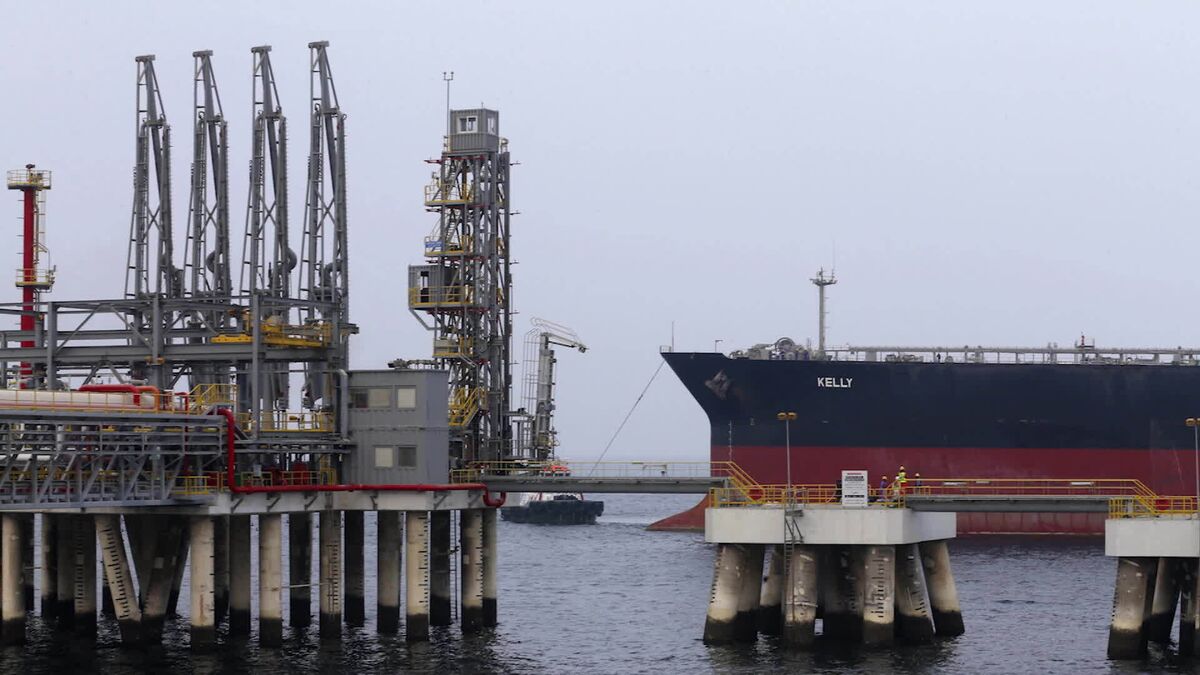
An agreement to extend the truce would represent a diplomatic breakthrough and potentially bring the US and Iran closer to reopening normal maritime traffic through the strait, which usually carries around a fifth of the world’s oil and liquefied natural gas supply. For more, we speak with Mike McGlone, Senior Commodity Strategist for Bloomberg Intelligence. (Source: Bloomberg)
A reported breakthrough in negotiations.
The post NOW: US and Iran Reportedly Reach Agreement on 60-Day Ceasefire Extension Pending Trump’s Approval appeared first on The Gateway Pundit.
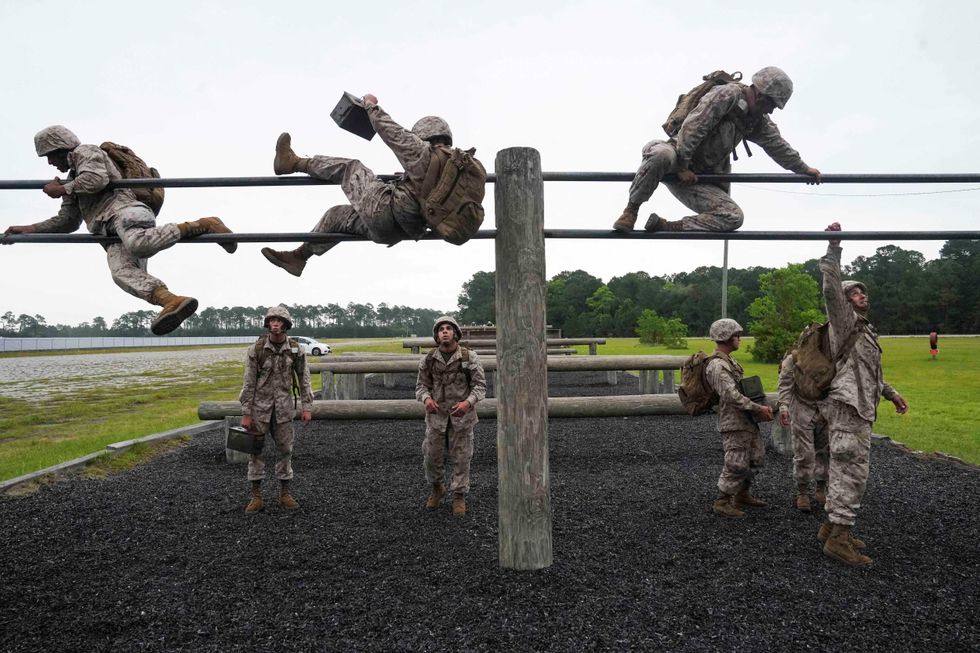
War has existed throughout human history, but the weapons have changed dramatically over the years. Medieval warfare was fought with cavalry, swords and armor; in 1945, during World War 2, U.S. President Harry Truman used nuclear bombs against Japan. The United States still has the world's largest military, but according to conservative New York Times columnist Ross Douthat, U.S. military technology is behind the times and remains overly reliant on 20th Century methods.In a late May Times podcast, Douthat examined the "future of high-tech warfare" with Christian Brose, president and chief strategy officer of the defense technology company Anduril.When Douthat noted that "drones and robots and autonomous weapons are remaking battlefields," guest Brose responded that "in order to talk about the future, we probably also have to talk about the past and present." "When you look at the future," Brose told Douthat, "I would argue that the assumptions that are now very evident to us in the present are almost the opposite of what we've built our military around. I don't think that we have the kind of military dominance that many of us in the 1990s and early 2000s just took for granted. We have peer competitors and rivals in the world who are adapting to and really disrupting the American way of war. I think that we are going to find a much more contested battlefield, where we're going to lose a lot of planes, ships, satellites and other things."The defense expert continued, "We're going to shoot a lot of weapons, and we're going to have to replace that as an act of production over a long period of time. I think that is not a future that we're really ready for. All of this points in the direction of autonomous systems, lower-cost systems — things that are much more like consumer technology or commercial capabilities than they are legacy military capabilities."According to Douthat and Brose, two current conflicts — the war in Iran and the Ukraine/Russia war — show how much war methods have changed since the 20th Century.Douthat asked Brose if he envisions a "near future where infantry itself starts to be obsolete and you literally just have drones and robots maneuvering against each other."Brose responded, "I think that's further out, if it's ever something that becomes feasible, simply because, so long as human beings continue to live on and inhabit the Earth — which I'm pretty sure we're going to do for the indefinite future — I think it becomes very difficult for these types of robotic systems to entirely go in, take and then hold ground. We've seen plenty in the war in Ukraine that militaries can be, at various different times in the battle, adept at taking ground. It's the holding of it that becomes very difficult."Brose added, "The question then becomes: Can those gains be solidified? Can those gains be held entirely through nonhuman means? That's not a bet that I would make at the moment."