U.S. and Iran announce a deal to end the war, reopen Strait of Hormuz
Center
The deal is a major breakthrough in the conflict that set the Middle East aflame and shook the global economy. However, it did not resolve critical issues set aside for further negotiations.
Both President Trump and Vice President Vance electronically signed a memorandum of understanding with Iran on Sunday, while Mohammad Bagher Qalibaf, speaker of the Iranian Parliament, signed for the Iranian side, senior U.S. officials said Monday. The details of the memorandum will be released in 24 to 48 hours, the officials said. The agreement is…
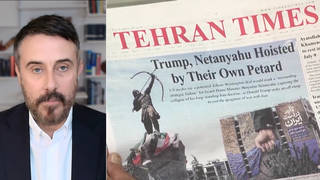
The United States and Iran reached a tentative agreement Sunday to bring about an end to the war, which one Iranian official involved in the negotiations credited, in part, to Tehran’s unorthodox approach to addressing what they considered to be President Donald Trump’s “mental illness.”Investigative reporter Jeremy Scahill shared a startling revelation last week that Iranian negotiators had recruited psychologists to help navigate what they believed was Trump’s “impaired mental state.” And on Monday, Scahill provided an update on Iran’s unique approach to the negotiations, which he said Tehran partially credited for Sunday’s success.“Senior Iranian psychologists began working with the negotiating team to try to cater the messages that the Iranians were sending via mediators back to Donald Trump to try to take into account what they say as his specific mental illness and mental deficiencies,” Scahill said in an interview with Democracy Now published on Monday.“Almost quite clinically, they said [they] began to see this process yielding results as [they] worked with psychologists to send these communications to Donald Trump, and they credit that, in part, with getting to this point where Trump finally accepted some version of his manufactured and almost entirely false victory narrative.”Trump’s cognitive function has come under renewed scrutiny during his second term in office, with The Washington Post reporting last week that the president was assessed by 22 medical specialists during his most recent medical checkup, a figure “nearly double the number of specialists who assessed Trump for his past medical checkups as president.” The president has also been spotted appearing to doze off during important meetings.
The U.S. Energy Information Administration dropped its latest Short-Term Energy Outlook this week, and the numbers clearly demonstrate that America’s shale revolution isn’t slowing down — it’s […]
The biggest political cover-up in American history has been taking place in plain sight for the last two years, and it’s finally reached a point where even the most loyal of Trump supporters are being forced to admit it. Jeffrey Epstein has been Donald Trump’s political albatross ever since he returned to office. Trump kept promising to release them while on the campaign trail — all while flying around on the repainted Lolita Express, a screaming confession burning fuel above everyone in the sky. Calling the Epstein Files scandal “Trump’s Watergate” isn’t nearly strong enough. Nixon had some guys break into a hotel room. What Trump has done to this country is exponentially worse because the ripple effect is impacting the entire world. Along with never challenging the 2024 election, I’ll never understand why the Harris/Walz campaign never used Trump’s well-documented friendship with Epstein against him, especially after thousands of pages of previously sealed evidence were finally released in January 2024. The whole “we go high” thing has never really worked for Democrats in this current garbage fire of a political climate, and it’s well past the time for the party to start playing dirty. The bombshell revelation that Trump’s staff met nearly a year ago to discuss the Epstein Files is compounded by the fact that they did it in the Situation Room. It probably shouldn’t surprise anyone that the most criminal administration in history further sullied the People’s House by using that space to figure out how to keep protecting Trump instead of focusing on bringing justice to victims.Covering up the Epstein Files, or at least distracting from them whenever possible, has been Trump’s main priority for the last 17 months. It’s why he keeps bombing Iran, because if the Iran War ends, he’ll have to figure out a different country to bomb. It’s why he keeps vaguely threatening Cuba; he’s got to have multiple distractions on hand, just in case. This cover-up includes literally everyone who works in the White House, with JD “Vladimir Futon” Vance at the helm. If he had the sense of a goat, Vance would’ve sprinted to the press with the Epstein Files to declare to all the world that Trump is indeed implicated.They turned the Situation Room into the Epstein War Room. The Vice President and every member of the administration have been complicit in the Epstein Files cover-up all along. Every lie they’ve told the American people matters, especially the ones told during any of the hearings that have already been held. As an additional sidebar, this is also another example of journalists learning damaging information about Trump and his staff, but sitting on it until their book about it was being released, a la Bob Woodward. I can’t reconcile any reason to sit on the knowledge that Trump understood just how deadly the Coronavirus was, but, then again, I also can’t comprehend anyone choosing loyalty to Trump over our country. Silly me needing to have morals and whatnot.But returning to the “How is this even happening” of it all, what we’re talking about is far beyond a hotel break-in and enters right into a very serious and real discussion about removing this corrupt regime that has defied everything that the presidency is supposed to stand for and continues to evade any accountability.They are covering up potential evidence that Trump was part of Epstein's awful crimes. It’s time to stop sugarcoating anything about the Epstein Files and start laying the groundwork to end Trump’s reign of terror. Article Two, Section Four of the Constitution lays out the framework to do just that. In my heart of hearts, I want to believe there’s already a Shadow Cabinet in place, but I also wanted to believe Democrats were going to fight a lot harder for Kamala Harris. Anyway, it states that the President, Vice President, and “all civil officers of the United States” can be removed from office “if convicted of treason, bribery, or other high crimes and misdemeanors.”All of those things have already been happening all day, every day, starting from the day Trump wouldn’t put his tiny hand on the Bible when he was sworn in during an indoor ceremony because it was too cold out for him, plus he didn’t want to have to face yet another sparse inauguration crowd. Democrats need to sweep the midterms in both the House and Senate so we can have our version of the Nuremberg Trials in January 2027. And the Epstein Files need to remain front and center every time Democrats are in front of cameras or are otherwise speaking on the record. That’s five months' worth of daily accountability, and we’re all going to have to stay on our elected officials to stay on message.
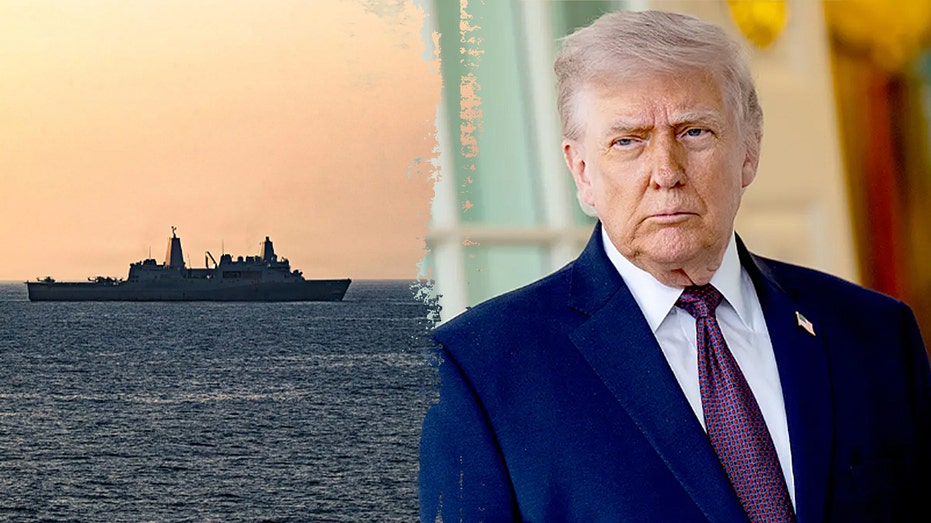
Defense Secretary Pete Hegseth crumbled when he tried to explain the difference between Donald Trump’s new deal with Iran and Barack Obama’s Joint Comprehensive Plan of Action. Spoiler alert: there is none. Speaking on CBS News’s Face the Nation Sunday, Hegseth struggled to justify what the U.S. had actually won after months and months of mass destruction and global economic turmoil.“The document says Iran will never have a nuclear weapon, won’t seek one, won’t buy one, won’t have one,” Hegseth explained. “JCPOA said that, too,” host Margaret Brennan pointed out.Pretty much verbatim, actually. The preface of Obama’s 2015 nuclear deal states: “Iran reaffirms that under no circumstances will Iran ever seek, develop or acquire any nuclear weapons.” Hegseth scrambled to defend the new deal. “But they didn’t have the threat of military force the way that we do that Iran respects in a very—in a way that their regime is more devastated, more devastating, excuse me, more devastated than it’s ever been in its 47 years, and that’s why they’re at the table,” he ranted incoherently. HEGSETH: The document says Iran will never have a nuclear weapon, won't seek one, won't buy one, won't have oneBRENNAN: The JCPOA said that tooHEGSETH: But they didn't have the threat of military force the way we do that Iran respects. President Trump led with military might. pic.twitter.com/PQcS6hHhEe— Aaron Rupar (@atrupar) June 14, 2026“The huge difference is, we did this from a position of strength. President Trump led with military might,” Hegseth added. “That military might will stay as long as necessary.”But let’s assess that military might, shall we? It will take at least three years and an estimated $24 billion for the United States to replace the munitions it expended during Trump’s military campaign against Iran. A recent report from the Center for Strategic and International Studies estimated a multi-year “window of vulnerability” for the United States in potential future conflicts. Hegseth denied that there were any shortages in the U.S. weapons stockpile. More to the point, the U.S. has demonstrated our unique powerlessness in the face of a regime that has been reminded it can control the Strait of Hormuz. And as for Iran’s regime, it’s far from being “devastated.” Not only was there no regime change, but the regime has arguably gotten even more extreme—and Trump is still ready to hand them billions of dollars.It’s increasingly apparent that Trump pulled out of the JCPOA, only to drag the United States into an expensive war that no one voted for and then walk away with an identical deal. The major difference this time? One $300 billion check for Tehran to rebuild everything Trump destroyed.
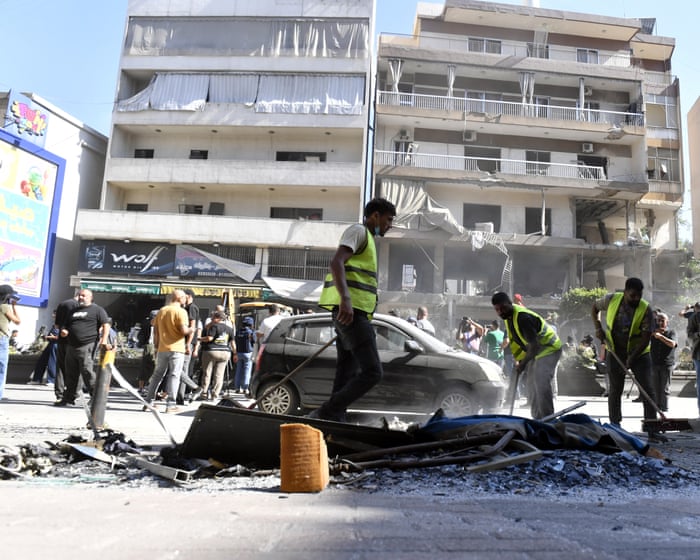
President Donald Trump celebrated a tentative 60-day ceasefire agreement with Iran Sunday, declaring, "Let the oil flow!" Journalist Martin Pengelly, who previously worked for Raw Story as an investigations editor, warned the deal remains fragile and unresolved despite the President's celebratory spirit. “Ultimately, as those who announced the deal said, it’s only a ceasefire, good for 60 days while yet more talks take place,” Pengelly wrote in an analysis published in Zeteo Monday.Iran's core demand — Israel halt its bombardment of Lebanon— has been rejected by Israeli officials, who announced they will maintain military occupation of approximately 10% of southern Lebanon. Members of Israel's government took to social media to express their opinions.“Trump's agreement does not bind us,” wrote Israeli National Security Minister Itamar Ben-Gvir, according to an automatic English translation from Hebrew. Adding, "Israel is not subject to the United States, and we are an independent and sovereign nation!”On an X post, Israel's Finance Minister Bezalel Smotrich warned the Lebanese city of Dahiyeh, "For every shot fired toward our territory, ten buildings will fall.” According to reports by Al Jazeera, since Israel invaded Lebanon, 3,750 people have been killed and 11,600 injured. According to reporting by Modern Diplomacy, the war also sparked a humanitarian crisis by displacing millions. Pengelly characterized the agreement as merely a temporary ceasefire and not a peace treaty. He also claimed new hardliners emerged in the capital of Iran, Tehran, who are determined to make the U.S. suffer in response to the war, he writes.With five days until a signing ceremony hosted in Switzerland, Israel's explicit refusal to comply threatens to unravel negotiations entirely.Watch the video below. Your browser does not support the video tag.
Vice President JD Vance said a 60-day preliminary ceasefire extension between Iran and the United States was signed digitally ahead of in-person meetings to sign the deal in Europe later this week. “We already signed the deal digitally yesterday,” Vance told ABC’s Good Morning America on Monday about the memorandum of understanding. “And there’s been […]
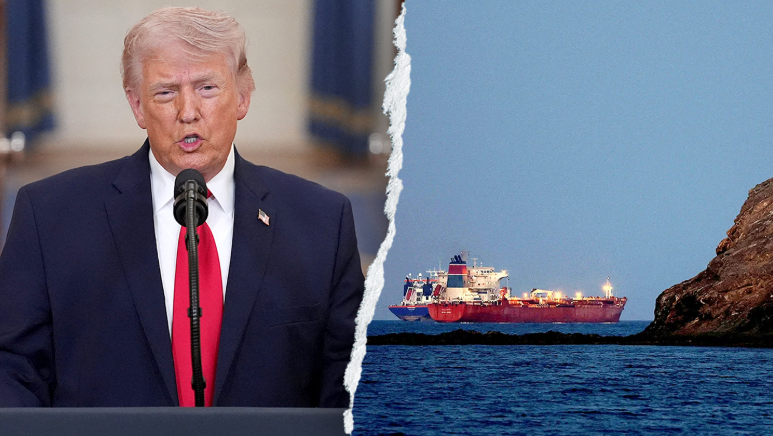
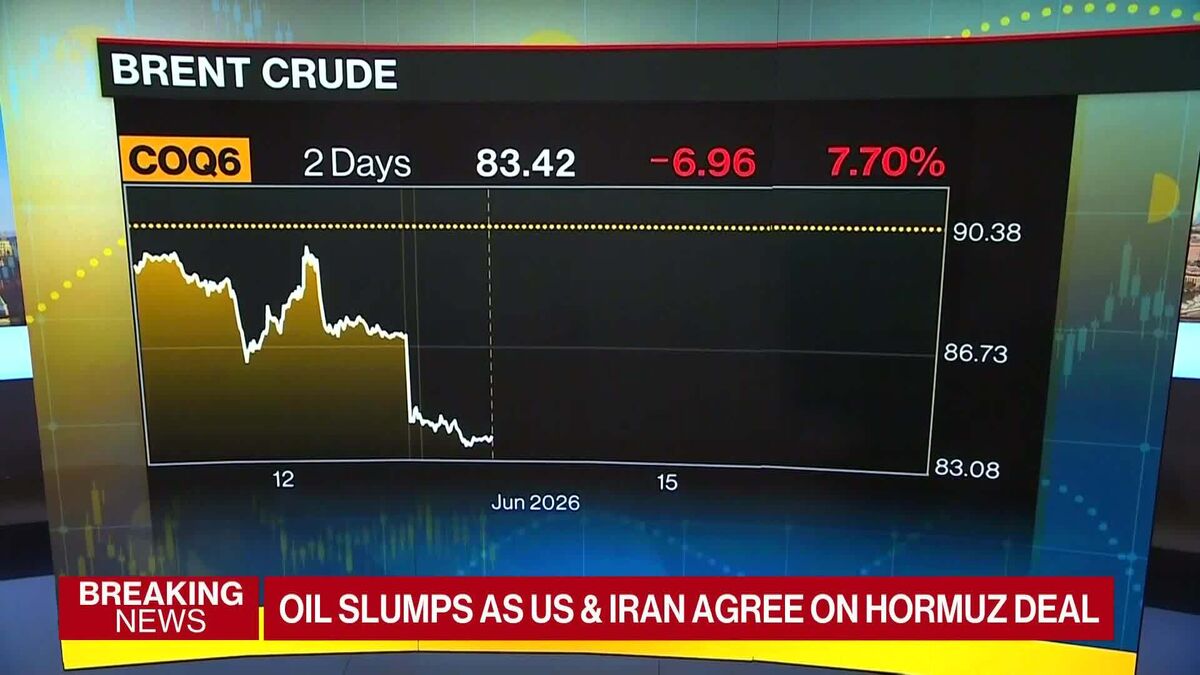
Crude oil prices fell to a three-month low Monday after President Donald Trump announced that the United States and Iran had reached a deal, which resumed tanker traffic through the Strait of Hormuz. Benchmark crude fell nearly 5% to around $83 per barrel, while U.S. West Texas Intermediate crude dropped below $81 per barrel for […]