Trump’s Defense Department Sees Growing Espionage Threat From Israel
The Defense Department has increased the counterintelligence threat assessment to its highest level, and Israel is believed to have eavesdropped on American negotiations with Iran.

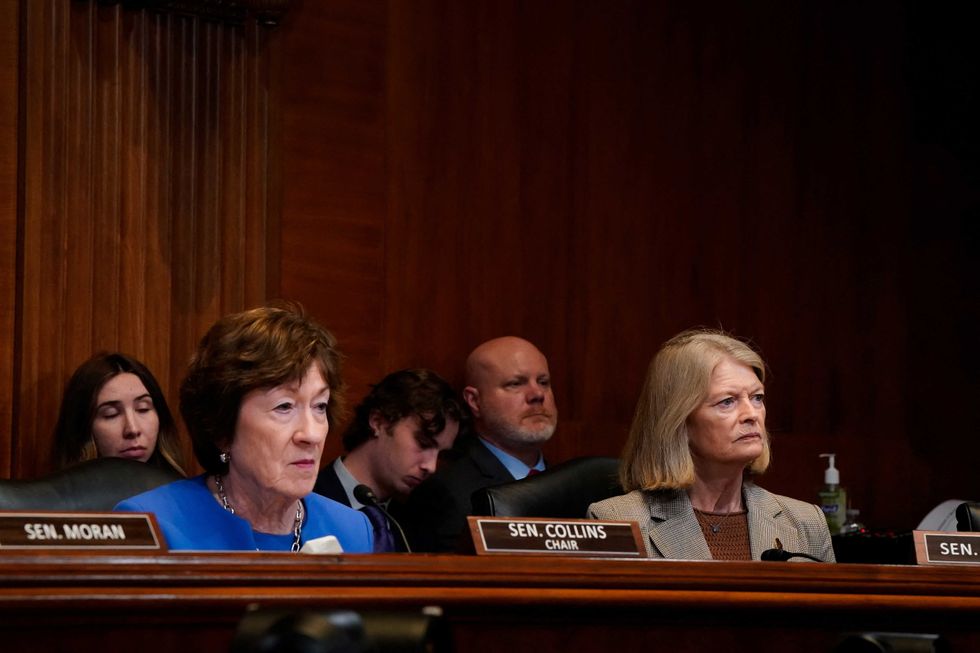
Tensions are rising between President Trump and Senate Republicans, and their disagreements spilled into public view this week when GOP senators repeatedly used amendment votes on a $70 billion budget reconciliation bill to create distance from the president. Three Republican senators facing tough races in November — Sens. Susan Collins (Maine), John Husted (Ohio) and…
The Defense Department has increased the counterintelligence threat assessment to its highest level, and Israel is believed to have eavesdropped on American negotiations with Iran.
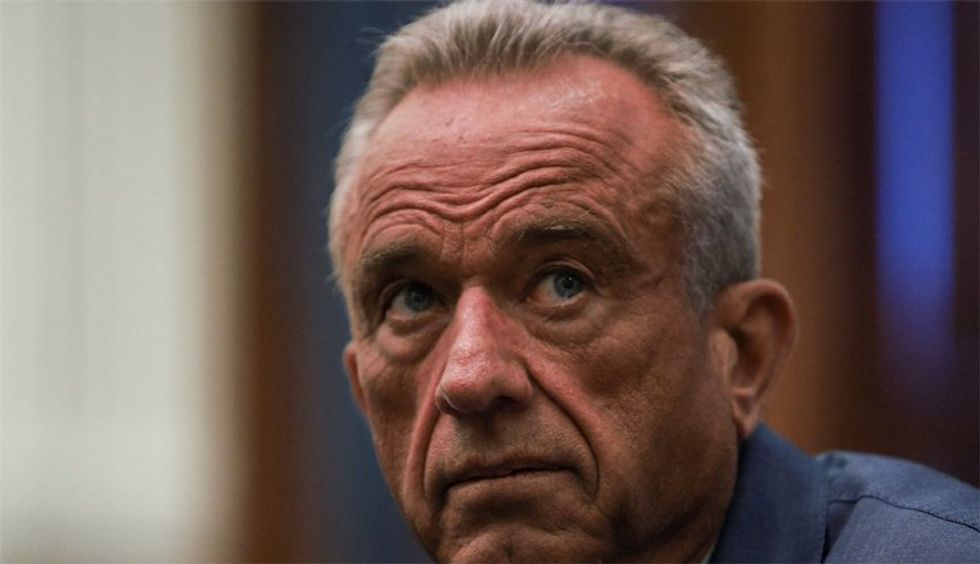
Health and Human Services Secretary Robert F. Kennedy Jr.'s Make America Healthy Again (MAHA) movement is facing criticism for strategic incompetence and playing it safe by concentrating its political resources on Republican primary races already destined for victory while ignoring endangered GOP candidates in crucial battleground contests.According to a Politico analysis by Amanda Chu, the movement's political organizations—MAHA Action and MAHA Institute—have largely ducked the races that will determine congressional control, despite Kennedy's fervent supporters representing a boost in turnout that endangered Republicans desperately need.The report singles out Tony Lyons, publisher of Kennedy's books and a lead organizer for the movement's political groups, for having failed to make use of Kennedy's appeal and turn it into the "electoral juggernaut" Republicans had hoped for. "The majority of those candidates that got that endorsement were going to win anyway," John McCarthy, founder of McCarthy Strategic Solutions, a Republican political strategy firm in Kentucky, told Politico.The numbers tell the story of missed opportunity. MAHA groups have endorsed just one Republican—freshman Michigan Rep. Tom Barrett—in a competitive House district, while ignoring the rest of the battleground races that will determine chamber control.In the Senate, where Republicans must defend vulnerable seats in Alaska, Iowa, Maine, North Carolina, Ohio, and Texas, MAHA has backed no one, with no financial support or grassroots mobilization in these critical races.Of the 20 candidates MAHA endorsed in primary races this spring, most were establishment figures in state races already aligned with MAHA's messaging on vaccine optionality and food regulation. Few received any financial backing from the movement's organizations.According to Politico, Kennedy's actual impact has been limited to state-level politics. He has traveled extensively to state capitals promoting his agenda, and a Politico analysis found that state lawmakers introduced hundreds of bills with bipartisan support echoing his priorities—some of which have passed.But the movement's impact on electoral politics remains an open question. State primary races have been dominated by economic concerns, with MAHA-backed candidates who won primaries focusing overwhelmingly on issues that defined the 2024 presidential election rather than Kennedy's signature health and food policy priorities.More than two-thirds of MAHA-endorsed candidates emphasized affordability and tax cuts on their campaign websites, while nearly half focused on immigration. Less than one-third mentioned vaccine safety or food system policies central to Kennedy and his supporters, Chu elaborated.
My younger brother and I paid a visit to the Trocadéro in Paris nearly 11 years ago. The place affords a sweeping, beautiful vista of the city with the Eiffel Tower bisecting the view. But we didn’t come for the view. We were there for the history. It was on the very spot we stood… The post Trump’s time is coming appeared first on Palmer Report.
Guardian writer Chris Stein says do not expect the lock-step Republican Party to find it’s spine and wholly disown it’s MAGA king in time for the November midterms — but you can expect a smattering of GOP adherents to break away as a matter of political survival.“The wrath of Donald Trump has kept congressional Republicans in line for much of his second term thus far,” said Stein. “But as the November midterm elections draw closer, the president’s allies in the Senate and House of Representatives appear increasingly willing to defy a president who appears to have asked lawmakers for too much in some areas and too little in others, all while the public sours on his administration.”Stein points out that in both chambers, tiny enclaves of Republicans have joined with Democrats to advance resolutions requiring that Trump receive Congress’s permission before continuing hostilities against Iran. Republican dissidents in the House, he said, have helped Democrats pass another round of aid for U.S. ally Ukraine in its effort to repel an invasion by Trump’s friend Russian leader Vladimir Putin. Other joined Democrats in an effort to protect Haitians from deportation. In the Senate, a host of Republican senators stepped up to give Trump’s nominee for director of national intelligence, Bill Pulte, “a cold reception.”Republicans do not disagree with Trump unless they want the tiny MAGA turnout in Republican primaries to replace them with Trump’s chosen puppet, but Stein says Republicans “appear bedeviled by the complications of their three-seat majority in the Senate, and historically slim hold on the House.”“While they managed to enact a major domestic policy bill less than six months after Trump’s inauguration, the president has made few serious asks of Congress in the months since, leaving lawmakers to navigate shutdowns instigated by Democrats in protest of his policies and the brouhaha over the government’s investigation into convicted sex trafficker Jeffrey Epstein,” said Stein.And Trump “has made no apologies for his apparent disengagement with the concerns of congressional Republicans,” said Stein, reminding readers that the president announced at a recent cabinet meeting that: “I don’t care about the midterms.”However, the GOP does. Trump’s approval ratings are historically low and Democrats are leading Republicans on the generic ballot. Gas prices are high and polls show voters believe Trump’s entirely voluntary war on Iran is afflicting them with inflation.Those trends may indeed have been motivating defections by some lawmakers, particularly Sen. Susan Collins (R-Maine) and Reps. Tom Barrett (R-Mich.) and Brian Fitzpatrick (R-Penn.) But if Republicans are looking for a sudden rash of independence to save their reputation with voters in the midterms, they should temper their enthusiasm, said Doug Heye, a former House Republican leadership aide. Instances of Republicans standing up to the president “may be less significant than they appear,” and thus unlikely to convince voters the party can act as any sort of mediating influence over the president.“What does it say about Trump’s hold on the party that 1.8 percent of the House Republican conference voted against him? I’d submit nothing,” he said.
Leftist comedian Bill Maher dismantled one Democratic senator’s pearl-clutching take on CBS News and “censorship.” The firing of “60 Minutes” correspondent Scott Pelley came as a shock […]
The ruling strikes down Trump's freeze on processing for immigrants from 39 countries, which left many in legal limbo.
As President Trump prepares to watch the New York Knicks take on the San Antonio Spurs at Madison Square Garden, officials are planning for a heightened security posture, sources said.
White House chief of staff Susie Wiles has dismissed claims from the Daily Mail tabloid magazine that she’s preparing to leave her post. The Mail ran an […]