Supreme Court Revives $1 Billion Exxon Suit Over Cuba Assets
Center
The Supreme Court sided with Exxon Mobil in its efforts to sue a Cuban conglomerate for operating oil and gas assets seized in 1960 following the country’s Communist Revolution.
Nearly half of Republicans oppose a key measure in President Donald Trump’s plan to end the war with Iran, according to a new poll from the Economist and YouGov. Forty-eight percent of Republicans polled believe that the United States should not provide Iran with $300 billion for reconstruction and economic development, with only 23% in […]
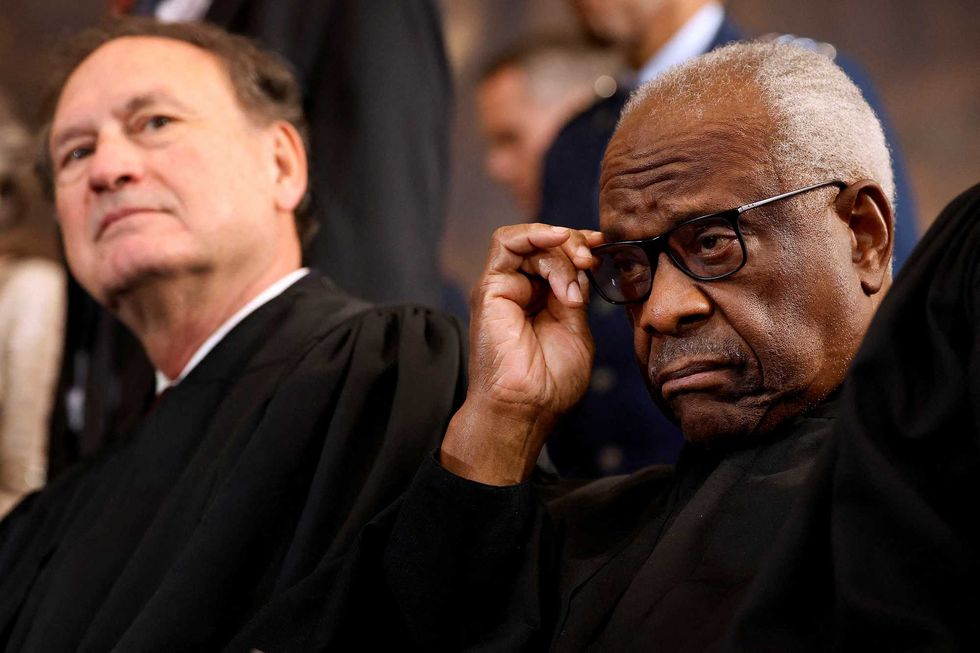
A "disturbing" Supreme Court ruling will allow border officials to subject green-card holders to a "Kafkaesque nightmare," per a Slate analysis.According to the analysis by legal reporter Mark Joseph Stern, the 6-3 Supreme Court vote along usual partisan lines in the case Blanche v. Lau established that border officials don't need "clear and convincing evidence" that green-card holders committed a "crime of moral turpitude" to deny them entry.The case originates from a lawful permanent resident named Muk Choi Lau, who lost his green card and was paroled into the U.S. after he was accused of selling designer-style shorts with a counterfeit trademark, Stern wrote. Lau argued that the border official shouldn't be able to take his green card and have so much discretion.Although a lower court agreed with Lau, the Supreme Court tossed that decision with a ruling that Stern described as "egregiously wrong."Lau was allowed into the United States on parole, but that status puts an immigrant in "legal limbo" and makes them "far more vulnerable to deportation."Stern brought up Justice Ketanji Brown Jackson's dissenting opinion and echoed her point that by taking a legal permanent resident's green card, it can make it harder for them "to work, open bank accounts, secure housing, obtain health insurance, and enroll in school."Meanwhile, Stern called out Justice Clarence Thomas's opinion, saying it "blesses one part of the Trump administration's multipronged attack against green-card holders, validating its campaign to revoke these individuals' rights on a whim," and highlighted that Thomas "expressly declined to say what, if any, burden the government bears at the border."
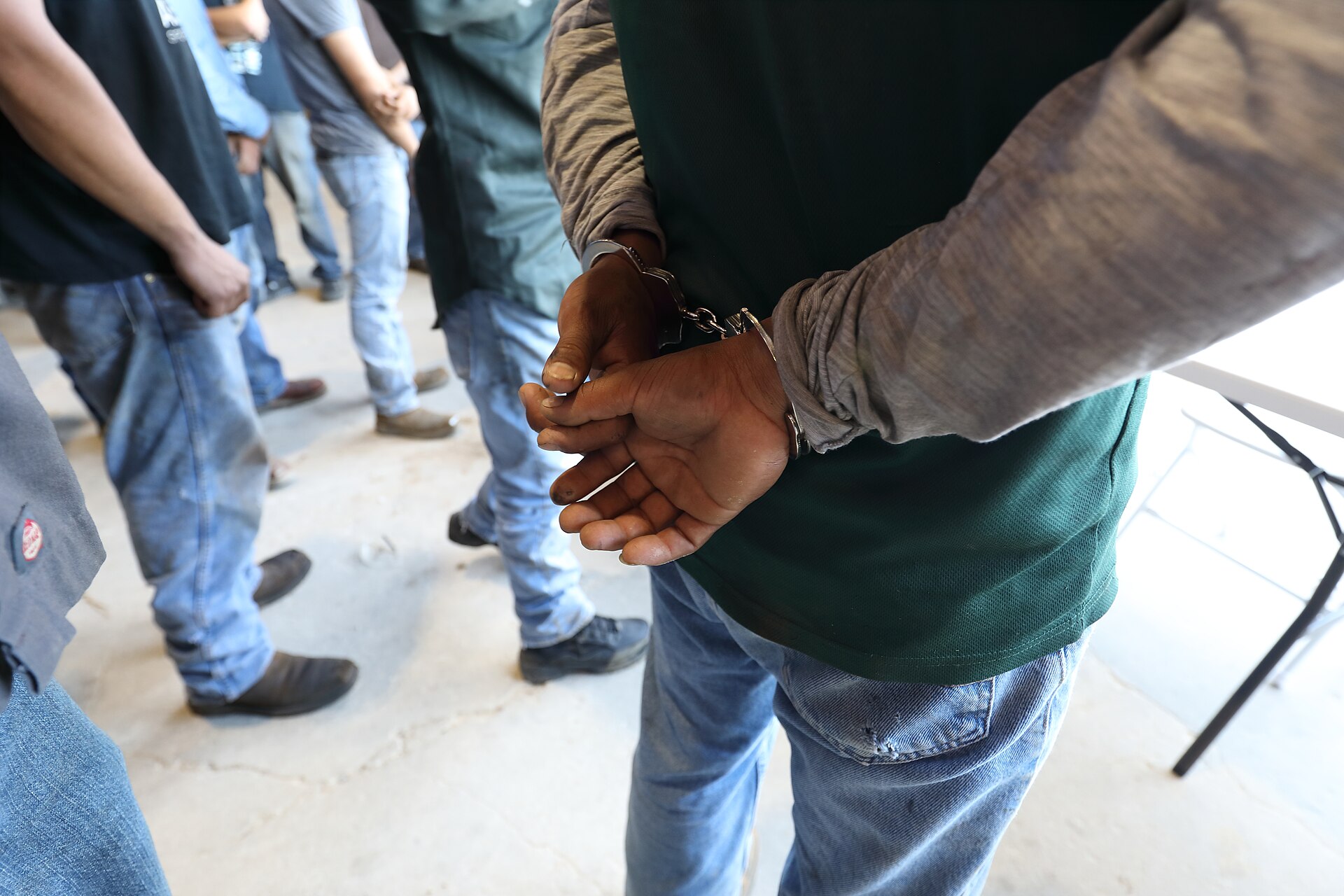
A federal appeals court on Tuesday sided with Trump and ruled that ICE may resume swift deportations.
The post Federal Appeals Court Bats Down Biden Judge, Sides with Trump, Says ICE Can Resume Swift Deportations appeared first on The Gateway Pundit.
A federal appeals court gave the Trump administration the green light to resume its fast-track removal of illegal aliens throughout the United States on Tuesday. In a 2-1 ruling, the three-judge panel for the D.C. Circuit Court of Appeals overturned an August 2025 decision by Biden-appointed D.C. District Judge Jia Cobb. That ruling attempted to […]
WHAT’S HAPPENING TODAY: Good afternoon and happy Tuesday, readers! The Trump administration has announced plans to offer nearly $17.5 billion in loans to support the construction of 10 new large nuclear power reactors, with operations aimed to begin by the mid-2030s. ☢️ In other news, traffic in the Strait of Hormuz is increasing. Keep reading […]
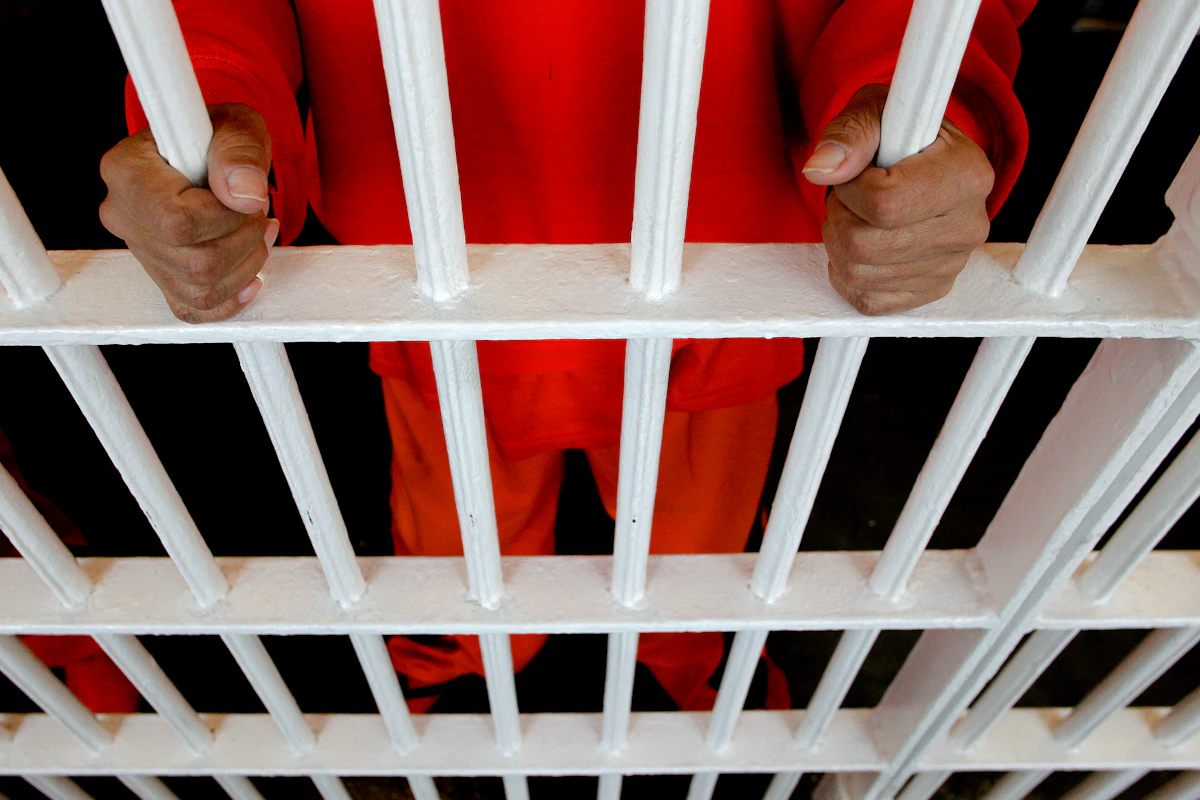
It’s one of the Supreme Court’s most palpable fears: Somewhere, somehow, a government official might one day be held personally accountable in some way for their official conduct—or, more accurately, their misconduct. A new case at the court will likely be the latest demonstration of the court’s pro-impunity mindset.The justices agreed on Monday to hear Nielsen v. Watanabe in the upcoming term, which starts next October. The case will give the court an opportunity to further narrow what are known as Bivens claims, which allow for people to sue federal officials for damages under increasingly narrow circumstances.The plaintiff in the case, Ketei Watanabe, was a prisoner at a federal prison in Honolulu in 2021. During that time, he was “brutally assaulted” in a “gang-related fight,” according to his brief for the justices. After the fight, he told multiple prison officials, including nurse Francis Nielsen, that he had suffered significant injuries and was in a great deal of pain.Nielsen and other officials declined to obtain specialist treatment for Watanabe or to transport him to a local hospital for treatment. Instead, his filings said, Nielsen gave him over-the-counter pain medication. “Several months after the attack, Watanabe finally received an x-ray: It showed that he had a fractured coccyx and that bone chips had migrated to surrounding soft tissue areas,” his brief explained to the court. Even after this diagnosis, Watanabe alleged, Nielsen and other officials refused to provide him with outside medical treatment and he did not obtain proper medical care until his release from prison three years after the initial fight. The Supreme Court has previously held that prisons have a duty to provide medical care for prisoners under the Eighth Amendment. Accordingly, Watanabe sued the officials in federal court for their alleged mistreatment.What happens when a government official violates your constitutional rights in some way? If they are a state or local official, like a police officer in a major city, you might file a Section 1983 lawsuit in federal court for damages. That Reconstruction-era law allows people to sue state and local officials in federal court in their personal capacity for violating a federal constitutional right. (More on this later.)If a federal official violates your constitutional rights, on the other hand, there are very few ways to hold that official personally accountable. Congress has not enacted a Section 1983–style law for suing federal officials, though there have occasionally been proposals to do so. Nor do other congressionally enacted remedies, like the Federal Tort Claims Act, allow people to pursue damages against specific officials who violate their constitutional rights.Watanabe instead relied upon an implied cause of action rather than an explicitly created one. This approach became more common after the 1971 case Bivens v. Six Unknown Named Agents of the Federal Bureau of Narcotics. Most people just call the case Bivens for short. In Bivens, federal agents searched the home of a New York man without a warrant and arrested him on drug-related charges. Bivens sued the agents in question in federal court for violating his Fourth Amendment right to be free from unconstitutional searches and seizures.The narcotics agents argued that they could not be sued in their personal capacity because Congress had not created a cause of action to do so. The Supreme Court, led by Justice William Brennan, sided with Bivens. While Brennan acknowledged that the Fourth Amendment “does not in so many words provide for its enforcement by an award of money damages for the consequences of its violation,” he concluded that Bivens could rely upon an implied cause of action instead to vindicate his violated rights.Between 1971 and 1980, the Supreme Court applied that reasoning to two other contexts: gender-discrimination lawsuits by congressional staff under the Fifth Amendment and, as relevant for Watanabe’s case, prisoner lawsuits over improper medical care by prison officials under the Eighth Amendment. The latter is grounded in the 1980 case Carlson v. Green. In Carlson, prison officials effectively killed an asthmatic prisoner by holding him in conditions over doctors’ protests, denying him treatment for an asthma attack for roughly eight hours, and then giving him substandard care until he died.Since Carlson, the Supreme Court’s increasingly conservative majority has gone out of its way to clip the wings of Bivens claims. Justices ranging from Warren Burger to Neil Gorsuch have argued that, under the Constitution’s separation of powers, it is Congress’s responsibility to create causes of actions to vindicate constitutional rights, not the judiciary’s. To that end, they have effectively refused to extend Bivens to new contexts, while also—for reasons known only to the justices—declining to overturn Bivens altogether.In the 2017 case Ziglar v.
The Department of Justice (DOJ) unveiled on Tuesday charges against more than 450 defendants for alleged health care fraud totaling over $6.5 billion in false claims, as part of the Trump administration’s heightened focus on stopping fraud. It was the second largest amount ever charged in a health care fraud operation, officials said. Charges were…
Fraud and error in the UK welfare system is costing the taxpayer £10 billion ($13 billion) a year, according to analysis by the government’s budget watchdog.