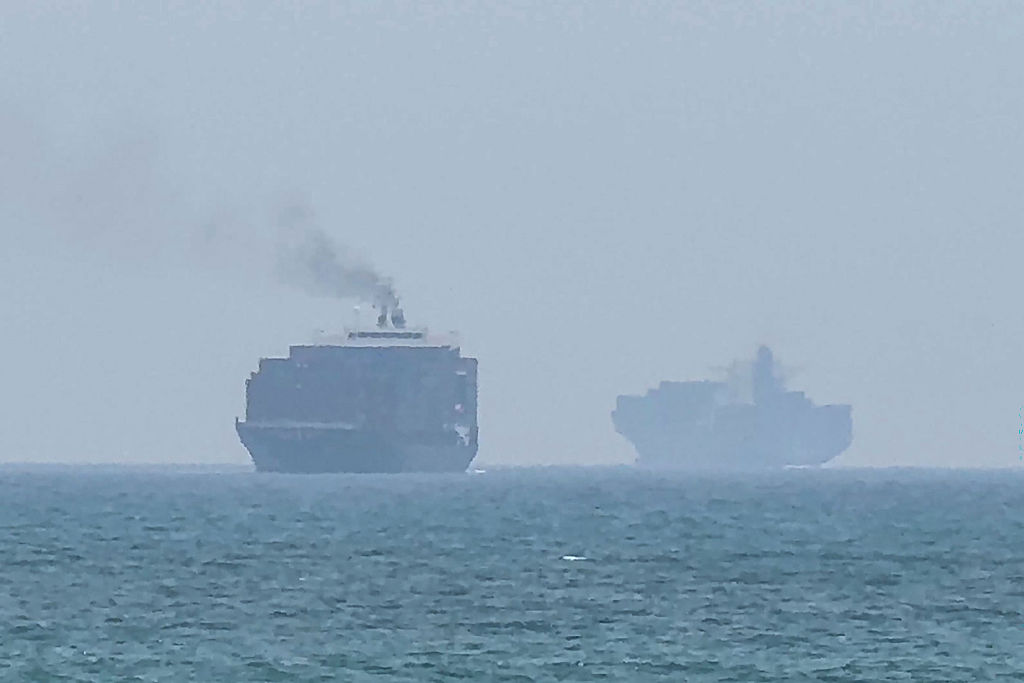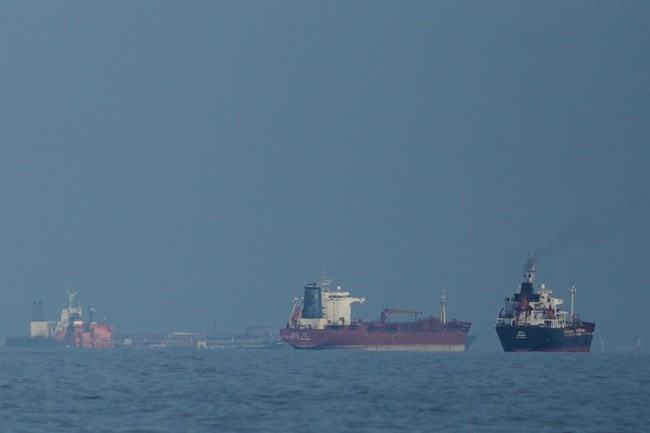
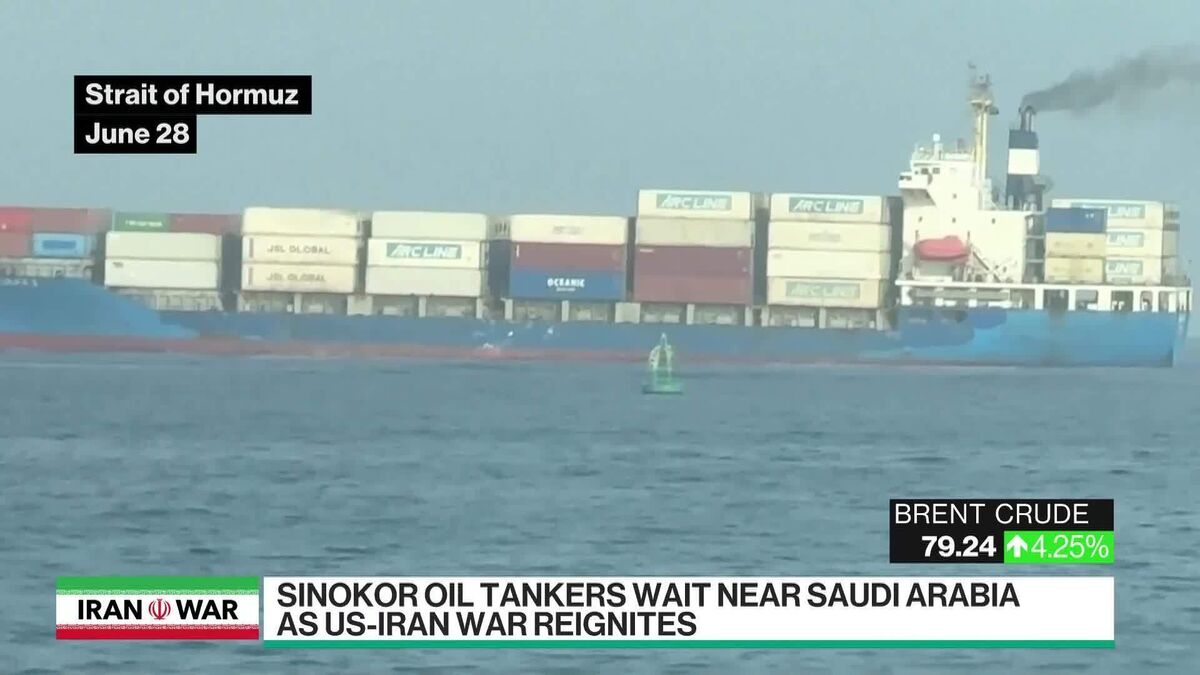
A steady stream of ships has passed through the Strait of Hormuz in secret in recent days, while observable traffic has dwindled. Shipowners’ preference to go dark when pushing through Hormuz comes as the US and Iran exchange tit-for-tat attacks and also offer competing narratives of who is in charge of the strait. Bloomberg's Anthony di Paola reports. (Source: Bloomberg)
U.S. military forces disabled a tanker trying to get through the Strait of Hormuz on July 24, stopping what officials said was a deliberate attempt to run a regional blockade after the crew repeatedly ignored warnings.
President Donald Trump's escalating military campaign against Iran is achieving the “opposite” of its intended effect, according to a senior U.S. official cited in a New York Times report Saturday.“The official said the strikes have the opposite effect of what is intended, keeping Iran cohesive and allowing Iranian leaders to focus attention on an external threat,” the Times’ report reads.The assessment came after insiders leaked details to the Times about a Friday meeting between Trump and his top advisers and Cabinet members, where officials weighed whether or not to escalate the war further. According to the Times, few, if any, in Trump's inner circle believed intensifying the bombing campaign was wise.A separate senior official who was briefed on the discussion expressed doubts that resuming major combat operations would push Iran back to the table at all.The “private deliberations” focused on what officials warned was the Pentagon’s “shrinking inventory of Patriot interceptors and other air defenses,” the Times reported.“Gen. Dan Caine, the chairman of the Joint Chiefs of Staff, has cautioned privately that resuming major combat operations against Iran was doable but that it would dangerously deplete interceptors available to the military’s Central Command, which is responsible for operations in the Middle East, the officials said,” the Times’ report reads.Earlier this week, Defense Secretary Pete Hegseth told a congressional committee that Trump’s deeply unpopular war against Iran had cost taxpayers $37.5 billion so far.The internal skepticism adds to a growing list of signs that the administration's approach to Iran isn't producing the results Trump has publicly promised, even as the financial and human costs of the conflict continue to climb.
Commercial shipping through the Strait of Hormuz has slowed dramatically since the US resumed strikes on Iran two weeks ago, with traffic falling to levels not seen since the height of the conflict as insurance costs soar and security risks mount — but some vessels secretly continue to brave the waterway anyway.
In late 2021, Joe Biden's German Shepherd was taken away after he bit a Secret Service agent and 'nipped' a member of the National Park Service. Five years on, we reveal what happened to him.
U.S. Secret Service Agent Victor Gonzales was awarded the WHCA President’s Award for Exceptional Service in recognition of his efforts to stop the gunman who tried to break through security during April’s White House Correspondents’ Dinner.
President Donald Trump has already made it clear he plans on rigging the 2026 midterm elections. From trying to implement a multitude of voter suppression measures (like purging voter roles, demanding voter ID, sending troops to the polls, seizing ballot boxes and interfering with mail-in voting) to refusing to give a whit about public opinion, Trump is obviously worried that if the American people have a say, they will put Democrats in control of one or both chambers of Congress.Yet he is not merely doing this to maintain his own personal hold on power. Trump is a man with a plan — the same plan, not coincidentally, that America’s rich and powerful have worked on for more than a century. To better understand this agenda, AlterNet had an in-depth interview with historian Thom Hartmann, whose new book Who Killed the American Dream?: The Greatest Political Crime Ever Told addresses these very topics. While he has plenty of rough words for Trump, Who Killed the American Dream? is far more than just another anti-MAGA book. In great detail, Hartmann lays out how the fascist plutocracy that Trump is trying to make into a literal dictatorship has its roots all the way back in the 19th century.This interview has been lightly edited for clarity and context.MATTHEW ROZSA: First, your book focuses on Santa Clara County v. Southern Pacific Railroad Company, and argues that from this case all the way through Citizens United v. Federal Election Commission, there has been an anti-democratic pattern of the Supreme Court acting like corporations have the same rights as people. Can you elaborate, in layperson's terms, why this jurisprudential assumption has been so toxic?THOM HARTMANN: Sure.For the first, basically, 100 years of the Republic, everybody understood that there were two kinds of persons: natural persons and artificial persons. Natural persons are you and me, human beings — we have protections in the Constitution, and we even have rights specified in the Constitution through the Bill of Rights and the 14th Amendment. Artificial persons were corporations and nonprofits and churches and other kinds of entities that were not human, but had to have some sort of personhood status in order to pay taxes, sign contracts, sue or be sued, open checking accounts, things like that. And that distinction was always quite clear. In 1886, the railroads tried to argue that they were being unfairly taxed between two different counties in California because the tax rates were different, and that this was not equal protection under the law, which is what the 14th Amendment says all persons are entitled to.The court did not rule in their favor, at least with regard to that argument in that case. But the clerk of the court and one of the Supreme Court justices conspired to assert that it had. And that assertion, which was in the headnote of the 1886 decision, kind of lay around like a hand grenade until it was picked up by Lewis Powell in 1978 with the Bellotti v. Baird decision, and then really set off with the Reagan Revolution — John Roberts, the Reagan Justice Department, and then the Supreme Court. I think Citizens United in 2010 is probably the most classic example of it. Now, to more directly answer your question: the reason a corporation can pour money into a politician or a political campaign to get a politician elected who will do their bidding is because the Supreme Court has since ruled that corporations have rights under the First Amendment, and those rights include the right to free speech.But because a corporation doesn't have a mouth, they did this workaround, saying, "Well, its money is the same thing as its mouth, so it can speak with its money." There's another example, under the Fourth Amendment. The Fourth Amendment says the government cannot invade your privacy unless somebody swears before a judge that there's reason to believe you committed a crime. Well, Dow Chemical was illegally venting benzene into the air over one of their chemical factories, and the EPA found out about it and flew an airplane over the factory to photograph it and use it as evidence to stop them. Dow Chemical sued and took it all the way to the Supreme Court, and the court ruled that under the Fourth Amendment, Dow Chemical has privacy rights. So now it's almost impossible for the federal government, or state governments for that matter, to do surprise inspections of factories and polluting facilities, et cetera.Corporations have also claimed rights under the Fifth Amendment, which says you cannot be forced to testify against yourself and that the government can't take your assets without due process of law — that they don't have to admit to crimes in court, they don't have to testify in ways that could hurt them, and that the government can't take their property if they commit crimes.
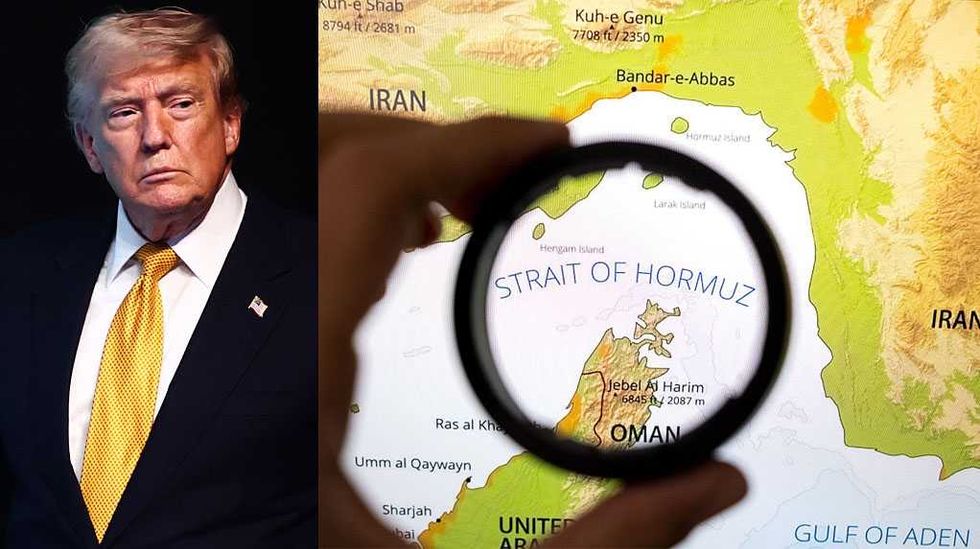
The U.S. and U.K. are planning to convene a high-level meeting in London next week that will focus on a potential international coalition to protect maritime shipping in the Strait of Hormuz, two European diplomats and two other sources with knowledge told Axios. Why it matters: The reopening of the strait for commercial shipping is a key element of any U.S. exit strategy from the war with Iran and of efforts to stabilize global energy markets.The itinerary and date are still under discussion and haven't been finalized. It will potentially bring together defense ministers and top military commanders from Western countries and countries from the region, the European diplomats said.Defense Secretary Hegseth and the Chairman of the Joint Chiefs Gen. Dan Caine would potentially attend. The White House and the Pentagon did not immediately respond to a request for comment. The British embassy in Washington declined to comment. Driving the news: Since Iran started attacking ships in the Strait of Hormuz two weeks ago, the U.S. has been conducting daily strikes against Iranian military targets along the country's southern coast.Over the last four days, there have been no Iranian attacks against commercial ships. Some U.S. defense officials say the reason is that Iran's military capability around the strait has been all but eliminated due to the U.S. strikes. Other officials say Iran is still capable of attacking ships in the area.On Wednesday, President Trump threatened to bomb bridges and power plants, including in Tehran, if Iran attacks more ships in the strait. Iran responded by threatening infrastructure in Gulf countries allied with the U.S. The big picture: The escalation over the Strait of Hormuz started after negotiations between Oman, Iran and Qatar on a new arrangement there ended without results.Shortly after, Iranian foreign minister Abbas Araghchi went back to Tehran for consultations and the IRGC began firing at ships in the strait. On Friday, an Omani delegation arrived in Tehran to resume talks on the mechanism for reopening the strait. Behind the scenes: The U.S. wants to build on discussions that the U.K. and France had with multiple countries in recent months about a potential international coalition for the Strait of Hormuz, the sources said. One of the key conditions many countries have set is that fighting in the strait ends so that conditions on the ground are safe enough for an international maritime mission. The sources said the U.S. wants its allies to send assets to the region like de-mining vessels, naval vessels and drones to help secure shipping lanes. "The Americans are looking for a way, out and they want our help," the European diplomat said.