Senate Passes Immigration Bill, Avoids Axing Weaponization Fund
Center
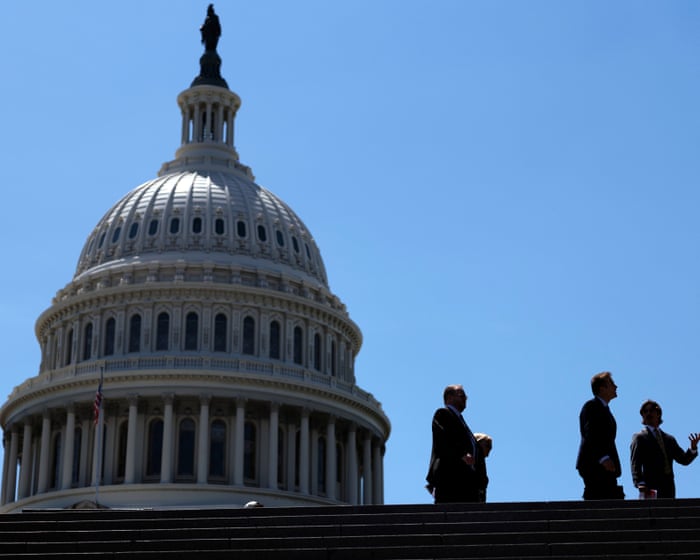
The Senate passed a $69.5 billion bill giving over three years of funding to two immigration enforcement agencies, taking a final step toward resolving a months-long dispute.
President Donald Trump faced a new GOP Senate “rebellion” early Friday, and one that included “more than just the usual suspects” in what Punchbowl News described as a “potential preview of what’s to come as Republicans seek distance from Trump with November approaching.”Senate Republicans failed to advance a bill to extend the Foreign Intelligence Surveillance Act (FISA), a law that permits national intelligence agencies to monitor overseas communications without a warrant, including those of Americans. A priority for Trump, the bill failed to advance due to insufficient GOP support, which itself was “prompted by” Trump’s nomination of Bill Pulte — who has no intelligence or national security experience — to serve as director of National Intelligence, Punchbowl News reported.“I don’t think he thinks about the impact on this and the timing,” said Sen. Lisa Murkowski (R-AK) of Trump, Punchbowl News reported. “I don’t think he’s connecting that. Which is unfortunate, because [FISA] really has had an impact.”The vote to advance the bill to extend FISA ultimately failed with a vote of 47-52, and that followed an 18-hour marathon session in the Senate to advance the GOP reconciliation bill to fund federal immigration agencies, one that Punchbowl News described as an “arduous process” that, again, faced GOP opposition prompted by Trump’s actions.“The marathon voting session on the reconciliation bill laid bare the consequences of Trump’s recent moves, from the toppling of two GOP incumbents to the political toxicity of the White House’s handling of an ‘anti-weaponization’ fund for his political allies,” Punchbowl News’ report read.“What was supposed to be a straightforward reconciliation bill to fund immigration enforcement became a major headache for Senate GOP leaders because of this controversial fund. Republicans and Democrats alike tried to add language to the measure to ban the fund.”Even Senate Majority Leader John Thune shared a blunt assessment as to who carried the blame for the Senate GOP’s challenging night.“This would have been done several hours ago if we weren’t having to deal with some of the issues around the fund, which doesn’t exist — which is the point we’re making,” a “frustrated” Thune said, Punchbowl News reported.
The Senate passed a $70 billion immigration enforcement funding bill after an overnight vote. And, former first lady Jill Biden discusses her husband's 2024 campaign with NPR's Newsmakers.
Senate Republicans advanced ICE and Border Patrol funding through the end of President Trump's second term, after beating back multiple amendments targeting his priorities during an 18-hour "vote-a-rama."Why it matters: The party-line vote had been deeply in doubt over the past weeks, as senators revolted against the "anti-weaponization fund" and spending requests for the president's White House renovations. The final vote was 52-47, with Sen. Lisa Murkowski (R-Alaska) voting "no" and Sen. Michael Bennet (D-Colo.) not voting. The "vote-a-rama" allowed senators to offer unlimited amendments, forcing GOP leadership to repeatedly defeat amendments that targeted the two Trump provisions.Zoom in: In the vote's opening act — a series of Democratic amendments designed to force uncomfortable votes for Republicans — Senate Majority Leader John Thune (R-S.D.) relied on Sen. Bill Cassidy (R-La.) to help defeat a Democratic proposal targeting the "anti-weaponization fund."Cassidy's vote allowed a pair of politically vulnerable Republicans — Sens. Jon Husted (Ohio) and Dan Sullivan (Alaska) — to side with Democrats without jeopardizing the amendment's defeat.For both senators, it marked one of their first meaningful breaks with a president whose political standing appears to be sliding.The vote failed, 49-50. Sen. Susan Collins (R-Maine), who is also vulnerable but was expected to vote with Democrats, joined Husted and Sullivan in voting for the amendment.Between the lines: On Trump's ballroom, the universe of Republicans willing to buck their party expanded, with seven GOP senators voting with Democrats to bar any funds for it. But the threshold for that vote was at 60, leading it to fail.Collins, Husted and Sullivan again voted with the Democrats.But so did Sens. Jerry Moran (R-Kan.), Thom Tillis (R-N.C.), Murkowski and Cassidy. Moran is up for reelection in 2028.Zoom out: The vote-a-rama comes as Senate Republicans grapple with deteriorating polling and a series of Trump decisions that have led some GOP senators to question his political judgment.Many Republicans are privately skeptical of Trump's choice of FHFA Director Bill Pulte as acting director of national intelligence.Trump sought to ease concerns by saying Thursday that Pulte would not be his permanent nominee — a move aimed in part at preventing the nomination from complicating the reauthorization of Section 702 of FISA.But enough Republicans joined Democrats in voting to block a procedural vote on FISA renewal that the vote failed shortly after reconciliation advanced early Friday morning.
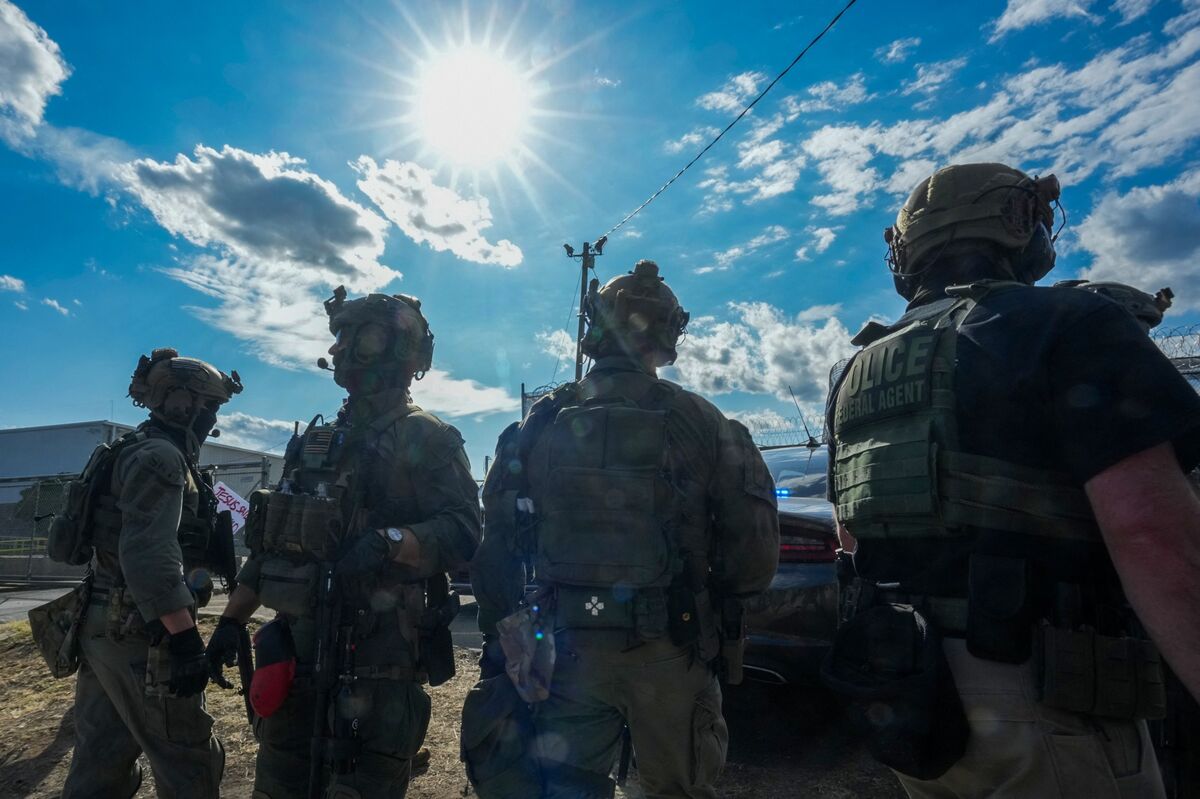
For more than two weeks, around 300 immigrants locked up at Delaney Hall, an immigrant detention camp in Newark, New Jersey, have been on a hunger and labor strike, refusing to eat and refusing to work maintaining the prison for its operators, the GEO Group. They are not alone: Outside the camp’s chain-link fence, in an industrial area, their family members, loved ones, and a broader community of supporters have gathered and remained despite violence from ICE and the New Jersey State Police. As Gabriela Soto, whose husband was detained at Delaney Hall, told reporters a few days into the hunger and labor strike, their demands are to “close Delaney Hall and free every person in there.”Since the strike began, immigrants inside have shared four letters, published by Cosecha, an immigrants’ rights organization. “We feel vulnerable, in a way, kidnapped or detained without justification,” the prisoners wrote in one letter. They have reported being denied medications (one woman said staff told her that pain medication was “cosmetic”), being fed spoiled food, and being forced to endure outbreaks of illness across the facility, which has poor ventilation and does not have adequate medical treatment or emergency responders.Another letter, released on Wednesday, describes the opening days of the strike, when Delaney Hall administrators demanded to speak to its leader. “They were upset when we told them there was no leader and that the strike was a collective effort,” the letter recounts. In response, the letter continues, administrators retaliated against one person who had helped with translation, trying “to take him away in handcuffs, which all of us, seeing the injustice, wanted to prevent by peacefully blocking their path with our hands raised so that they wouldn’t take him away.” Next came “beatings, pepper spray, and from ‘ICE,’ a riot squad came up spraying pepper spray throughout the facility, causing many people to be rushed to the hospital.” That was on May 25. “To this day, we haven’t heard anything about those people.” Despite the violence, the strike has continued, as have similar strikes in GEO Group–run detention facilities in California, Michigan, and Pennsylvania.The conditions inside Delaney Hall, which are appalling, dangerous, and a violation of the rights of those detained, are entirely in keeping with how other such “detention centers” are run across the country; a recent AP investigation found hundreds of immigrant detainees reporting medical neglect in lawsuits across 33 states. The solidarity shared by people trapped in these camps, as evidenced by the multiple simultaneous strikes, makes sense; it has extended outside the camps, as well, with local groups working to shut down ICE facilities offering their support. The resulting crackdown on both striking detainees and their supporters tracks with all the other times Immigration and Customs Enforcement has harmed witnesses and protesters in the course of the agency’s carrying out Trump’s signature campaign of mass deportations. People coming together is treated as a threat by those running the camps because it is precisely the thing the camps are meant to break.“The opposite of a camp is community,” journalist and translator John Washington writes. He uses “immigration camp” to more clearly describe the dangers posed by the “hundreds of ‘detention centers,’ ‘processing centers,’ ‘holding facilities,’ as well as leased local jail and prison cells in every state of America.” He argues in his forthcoming book, How to Close a Camp: Dispatches From the Fight Against Immigrant Detention (out in July), that the camp shapes our politics and our ways of making community. “A camp warps and degrades reality,” he writes, “both for those in fear of ending up in one and for those living alongside them.” But for as long as there have been such camps, there has been resistance to them, including by those caged within. Camps are, after all, not abstract systems but the products of people’s decisions. “A camp is a long series of choices that need frequent reaffirmation,” Washington observes, and each choice is an opportunity to end, or at least slow, the camp’s operations. For one thing, camps need approval from myriad city, county, and state authorities; all stages of approval can be contested. As an example, Washington offers a site in Adelanto, California, where immigrants began a hunger strike earlier this month. The camp’s opening required sign-off from agencies such as the state’s Environmental Health Department, CAL FIRE, and the Native American Heritage Commission, among many, many others. That camp also needed permits for everything from native vegetation removal to signage to pollution discharge.
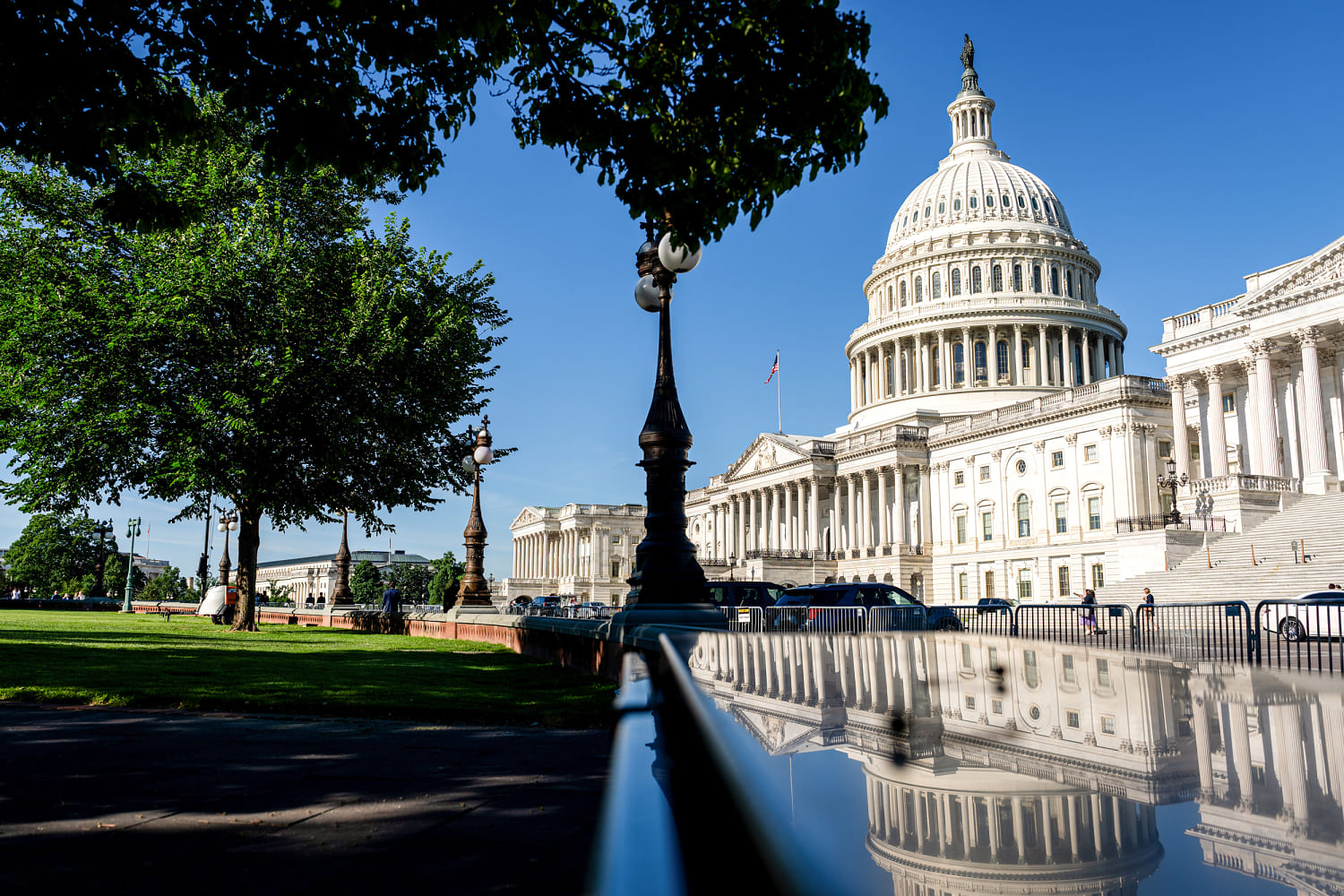
WASHINGTON — The Senate passed legislation early Friday to fund President Donald Trump’s immigration enforcement agencies, after intense bipartisan backlash over a $1.8 billion “anti-weaponization” fund threatened to derail the bill