
New York Post
LA mayoral candidate Spencer Pratt drops astonishing truth bomb about city that leaves Bill Maher stunned
Pratt's comments echo a common perception that Los Angeles attracts large numbers of homeless people from elsewhere.
Right

Republicans on Capitol Hill are battling a bad case of déjà vu, as intraparty disputes over an immigration enforcement funding package and an extension of the government’s warrantless spying powers have left lawmakers no closer to a resolution on the two matters than they were a month ago. Senate Republicans departed Washington last week without…
Pratt's comments echo a common perception that Los Angeles attracts large numbers of homeless people from elsewhere.

Monday was supposed to be the deadline for getting an immigration enforcement funding package on President Trump’s desk. Instead, the Senate will return Monday evening, preparing for a showdown over the bill after negotiations on the measure blew up more than a week ago following the White House’s announcement of the creation of a separate, controversial “anti-weaponization” fund that would issue payouts to those…
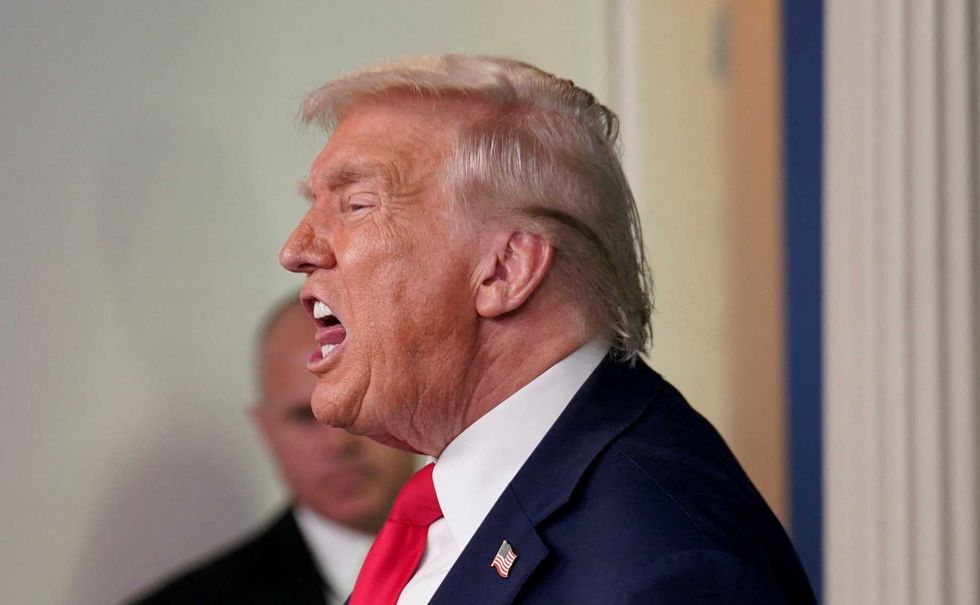
As the war with Iran enters its fourth month and President Donald Trump struggles to reach a peace deal to end the conflict he started, the Hill reports that Senate Republicans have become deeply divided over how to proceed. This ‘messy debate’ comes as the GOP is already at odds over several key legislative priorities. According to the Hill, several hawkish Senators led by Senate Armed Services Committee Chair Roger Wicker (R-MS), Lindsey Graham (R-SC) and Ted Cruz (R-TX) reject the deal that has been emerging with Iran, urging the president “not to agree to any deal that would allow Iran to continue its nuclear enrichment program or ease sanctions while it continues to support Hezbollah and Hamas.” American Enterprise Institute senior fellow Danielle Pletka typifies this view, “arguing that it would be even weaker than the Joint Comprehensive Plan of Action that the Obama administration negotiated with Iran in 2015 — a deal Trump abandoned in his first term.”“The reporting on it suggests that it’s a terrible deal, that the president has gotten basically nothing that he said he was getting, and that his negotiators have embarrassed him,” she said. “Anything that ends with Iran believing that it can open and close Hormuz at times of its choosing is a loss for the United States.”For the senators’ part, Wicker has warned that the deal would be a “disaster,” Graham argues that it would make Iran the region’s “dominant force,” and Cruz asserts that giving Iran billions in sanctions relief while allowing the country control over the Strait of Hormuz would be a “disastrous mistake.” According to Republican strategist and ex-Trump National Security Council spokesperson John Ullyot, however, “They will certainly make their feelings clear, and loudly, but it’s hard for the Senate to stand in the way of a deal by any president in an ongoing military operation since it’s not subject to a vote that would block it.”But the views of other GOP lawmakers have the party further divided, as “a growing number of Republican senators are losing patience with the lack of a clear plan for ending the conflict, which has caused gas prices to rise by nearly $1.40 per gallon since late February.” Four Republican senators recently voted to discharge a war powers resolution that would have directed Trump to withdraw U.S. troops from the war. These include Republican senators Rand Paul (R-KY), Susan Collins (R-ME), Lisa Murkowski (R-AK), and Bill Cassidy (R-LA), and the measure advanced because three Republicans were absent. It would have passed if just one more Republican had voted for it, “sending a loud rebuke to Trump over his handling of the conflict.”“The Senate is expected to vote this week on a motion to proceed to the resolution to end the war, but Senate Majority Leader John Thune (R-SD) and Democratic Leader Chuck Schumer (D-NY) need to work out a time agreement,” explained the Hill. “The measure is close to having enough support to pass the House as well, though Trump is certain to veto it.”According to the Hill, Republican senators on both sides of the divide will likely extend Trump some latitude as the deal is negotiated, but that once details are revealed, the backlash could be pronounced. Many are watching how Senator John Cornyn (R-TX) votes as he just lost a primary race to a Trump-endorsed opponent. Now that Cornyn knows he’s leaving office, he has little incentive to bend to Trump’s will, who has recently accused the senator of being “very disloyal.”
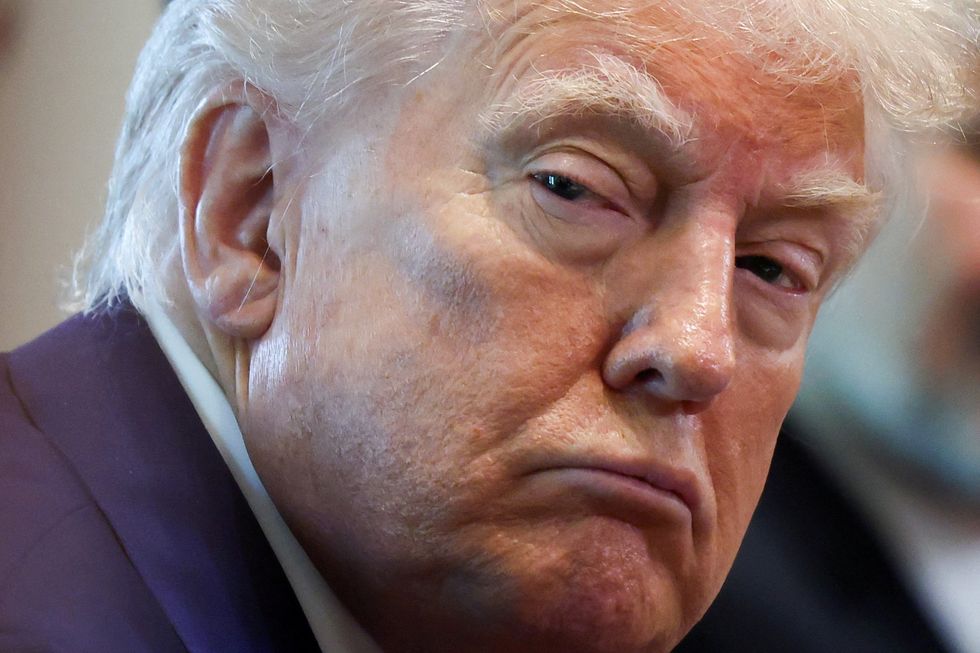
With Congress returning to session this week, Republicans are juggling several crises of President Donald Trump’s making as the party struggles over contradictory priorities. Faced with many problems that have few solutions, Punchbowl News founder Jake Sherman says the GOP is in a “very bad jam.”As Punchbowl News reports, “These are critical weeks for Trump and the GOP-controlled Congress, with just over five months left until Election Day. Trump has been bogged down in peace negotiations with Iran. The conflict remains at a stalemate somewhere between war and peace. Trump blames ‘Dumocrats, and various seemingly unpatriotic Republicans’ for not understanding that ‘it will all work out well in the end.’” Now the president faces a war powers vote in which the numbers are increasingly against him.But meanwhile, Trump and congressional Republicans are embroiled in a slew of other legislative quagmires, many of which reach an impasse this week. On Wednesday night, they hope to begin a vote-a-rama that will result in the passage of the immigration reconciliation bill Thursday morning. But this effort has been complicated by Trump’s highly controversial anti-weaponization “slush fund” as well as his demand for funding for his White House ballroom. Security funding for the wildly unpopular ballroom was already attached to the reconciliation bill, diminishing its support among lawmakers who recognize the potential for electoral blowback. An even greater obstacle, however, is the anti-weaponization fund. On one hand, some Senate Republicans have expressed an unwillingness to pass the reconciliation bill until the White House submits a plan to place guardrails around the fund, which the administration hasn’t done and shows little interest in. At the same time, Democrats are lining up for a “massive amendment blitz” that will tie the fund to the bill, forcing Republicans to vote publicly either for or against the fund, which has been condemned as “the biggest heist in history.”“Senate Democrats will launch a coordinated effort to kill the slush fund before one cent goes out the door,” Senate Minority Leader Chuck Schumer declared on Monday. “And no matter what Republicans do, we will force them to vote on it.”In the end, says Punchbowl, “The anti-weaponization fund and its impact on the reconciliation bill have been a political gift to Democrats.”Beyond that, this week Republicans hope to reauthorize FISA Section 702, which has divided the party between those who say it’s an essential security tool and those who argue it can be used as a “backdoor” for spying on Americans. After much wrangling, “The negotiated bill is expected to include a key sweetener to attract votes from privacy hawks who have long called for reforms to Section 702: a provision that narrows the definition of an electronic communications service provider. An ECSP is the type of company that would be required to provide records to the government.”And all of this is on top of several consequential votes involving the conflicts in Iran, Lebanon and Ukraine. While Republicans have been hesitant to draw Trump’s ire by opposing even broadly unpopular endeavors like the ballroom, the slush fund has drawn such universal outrage that it could derail the entire GOP agenda. According to Senator Gary Peters (R-MI), it is "a bridge too far for some of my Republican Senate colleagues. I hope they realize that what was done is simply unacceptable and that they'll stand firm."
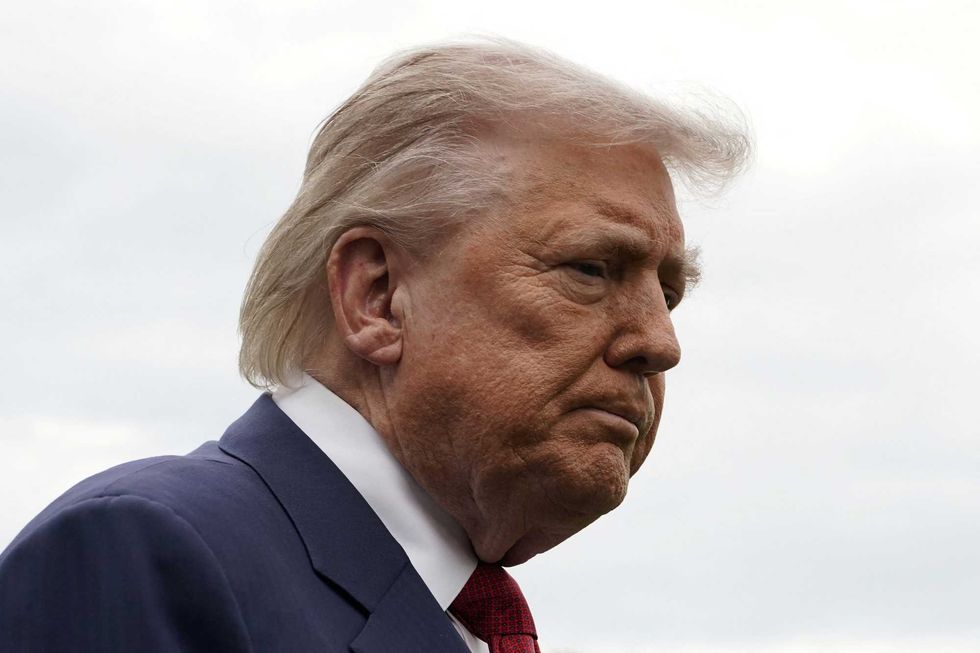
President Donald Trump revealed early Monday morning that his efforts to negotiate an end to his deeply unpopular war against Iran were being compromised by “chirping” critics, whom he pleaded with to stop, “sit back and relax.”“Iran really wants to make a deal, and it will be a good one for the U.S.A. and those that are with us,” Trump wrote on his social media platform Truth Social.“The Dumocrats, and various seemingly unpatriotic Republicans, understand that it is MUCH tougher for me to properly do my job and negotiate, when political hacks keep negatively ‘chirping,’ at levels never seen before, over and over again, that I should move faster, or move slower, or go to war, or not go to war, or whatever.”The Trump administration has struggled to broker a deal with Tehran to end the war, in large part due to the president’s inability to pressure Israel into halting its bombardment of Lebanon – a condition Iran has insisted must be part of any agreement. And, with the war causing economic turmoil across the globe, Trump has reportedly been looking for a way out of the conflict he initiated since at least early March, but to no success.Critics across the political spectrum, Trump admitted, were apparently making negotiations “much tougher,” and to them, the president issued a plea.“Just sit back and relax, it will all work out well in the end,” Trump wrote.

Meanwhile U.S. forces successfully intercept two Iranian ballistic missiles targeting American forces

New York Times columnist David French told MS NOW Monday morning that Senate Republicans are quietly reaching a breaking point with Donald Trump — not because they have suddenly grown a spine, but because they are learning that no amount of loyalty is sufficient to protect them from his wrath.French, appearing on Morning Joe with anchor Jonathan Lemire, said the dynamic driving the frustration has been largely missed in the broader political coverage."There's a very important distinction that a lot of these senators are very aware of that has been sort of underplayed in the public," French said. "Trump turned on senators who had, in many ways, been doing everything that they could to signal their loyalty to Trump."He pointed to John Cornyn as the clearest example. Cornyn, who lost his Texas primary last week to Attorney General Ken Paxton after Trump endorsed Paxton, had been working repeatedly to demonstrate his loyalty to the president in the days before the endorsement. His sin, in Trump's eyes, was voting to certify the 2020 election — a single break in an otherwise unwavering record of support."You were not talking about senators who had defied Trump all over the place," French said. "Just very rarely, very selectively. And so they're now learning that to be with Trump, it's 100% or you're going to have a target on your back."French stopped well short of predicting a Republican revolt. But a small degree of independence — yes, he believes that's coming.The signs are already visible. Lemire noted that Senate Republicans cut their recess short last week, going home early after refusing to take up the anti-weaponization fund in the wake of the Cornyn news. They have also put roadblocks in front of funding for Trump's proposed White House ballroom.Lemire suggested the pattern could have lasting consequences, noting that Trump's primary purges may be undermining his own ability to govern and potentially jeopardizing Republican control of the Senate in November — adding to what he called Trump's "increasingly lame duck status."French agreed the frustration was real. "Loyalty is a moving target," he said. "And I do think that frustration is going to spill over in some important ways."

Senate Republicans will try to get on the same page as President Trump amid stark differences over security for a White House ballroom and a $1.776 anti-weaponization fund. Their goal is to finish a budget reconciliation package, while some in the House GOP press for a third. Plus, Trump is seeking a deal with Iran,…