RealClearPolitics - Homepage
'Erroneous' SCOTUS Ballot Ruling Screams for SAVE Act
Von Spakovsky said that Barrett's 'unfortunate' opinion 'makes it even more important that the U.S. Senate pass the SAVE Act.'
Center Right
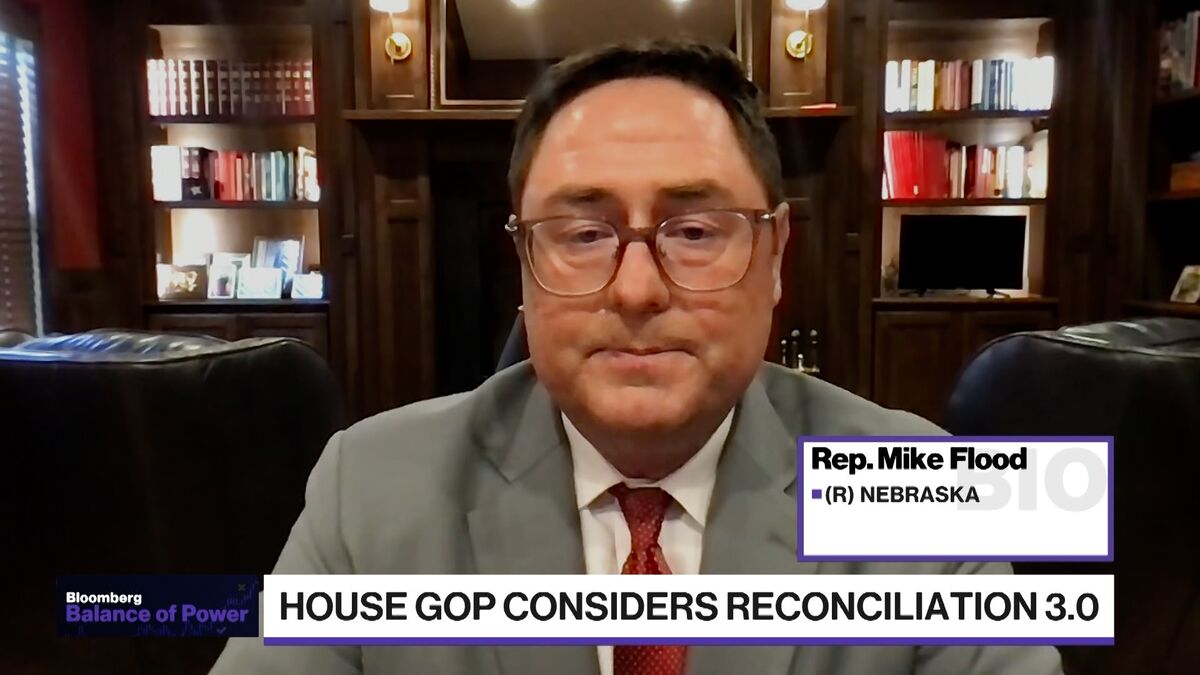
Republican Congressman Mike Flood of Nebraska says he has an "open mind" to adding ethics provisions to crypto market-structure legislation, including limits on executives or family members operating in the space. Flood says he supports the Clarity Act, backs a ban on stock trading by members of government, and expects a major housing bill to become law with or without President Trump's signature. He speaks with Kailey Leinz and Joe Mathieu on the late edition of Bloomberg's "Balance of Power." (Source: Bloomberg)
Von Spakovsky said that Barrett's 'unfortunate' opinion 'makes it even more important that the U.S. Senate pass the SAVE Act.'
"This is Citizens United 2.0," Representative Greg Casar said Tuesday about the Supreme Court's ruling allowing political party campaign committees to coordinate directly with campaigns without a cap on spending. Republicans praised the decision, while Democrats issued dire warnings about the fate of democracy.

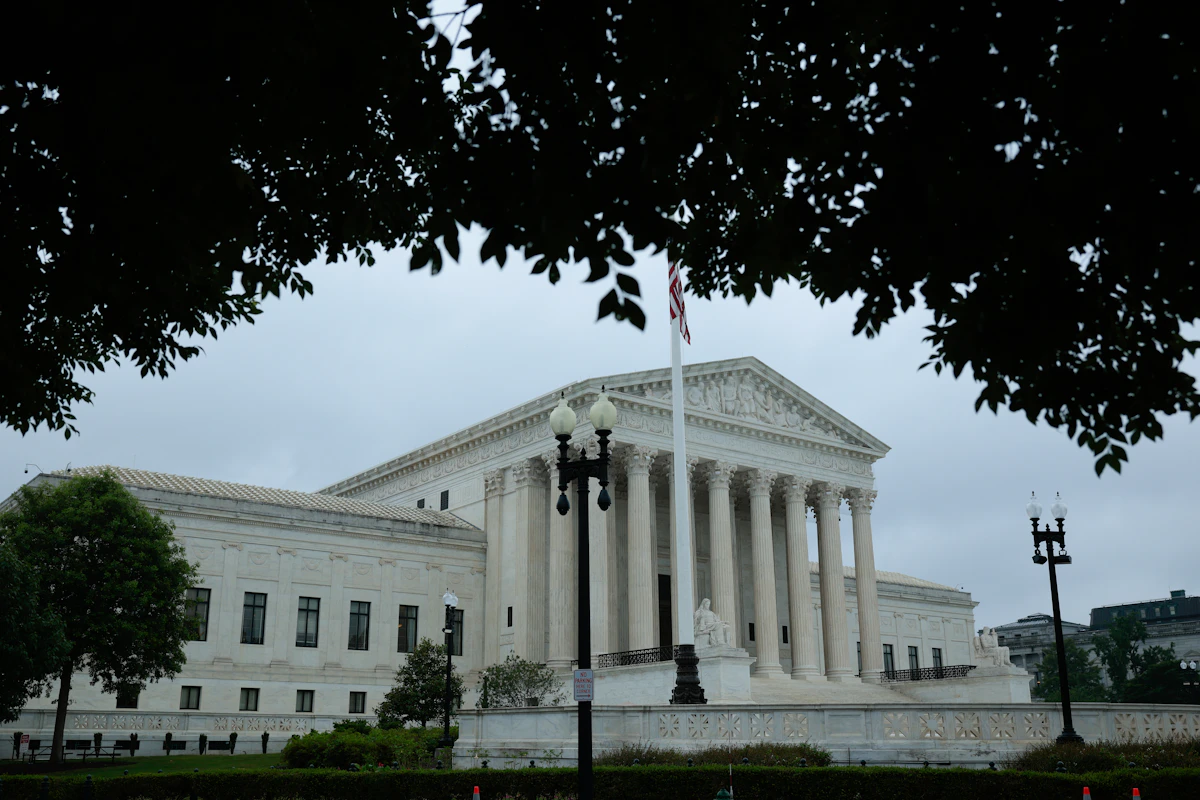
“This is Citizens United 2.0,” Representative Greg Casar said Tuesday about the Supreme Court’s ruling allowing political party campaign committees to coordinate directly with campaigns without a cap on spending. Republicans praised the decision, while Democrats issued dire warnings about the fate of democracy.But behind the partisan divide, there’s an interesting disagreement about what, exactly, the ruling will do: Some analysts say this decision could weaken the power PACs have over elections, making political parties the dominant spending force. Unfortunately for Democrats, though, the decision will probably heighten a fundraising advantage Republicans already have this year. Then-Senator JD Vance, then-Representative Steve Chabot, the National Republican Senatorial Committee, or NRSC, and the National Republican Congressional Committee, or NRCC, first brought National Republican Senatorial Committee v. Federal Election Commission to federal court in 2022. They argued that the court should overrule its 2001 decision restricting the amount of money political parties can spend in coordination with candidates—particularly via committees like the Democratic National Committee, Republican National Committee, or House and Senate campaign committees. The petitioners argued that these limits violated the First Amendment.Due to Tuesday’s ruling in favor of Vance and his associates, political parties can now both coordinate with candidates and raise unlimited funds—giving them an advantage over PACs, which can raise unlimited funds but cannot coordinate directly with candidates.Super PACs have become a dominant force in campaign spending since 2010, when the Supreme Court struck down caps on independent spending by corporations in Citizens United. That decision gave corporations immense power to influence elections, but with the important caveat that super PACs aren’t able to coordinate with campaigns. (Campaigns have found creative ways to get around this, namely by putting “red boxes” on their websites that instruct PACs how to spend their money without directly communicating with them.) Super PACs will remain important forces in elections. But after Tuesday’s decision, political parties may once again have an advantage over super PACs.Democrats are concerned about both the short- and long-term impacts of the decision. In the short term, they say, this could deal a blow to vulnerable House and Senate candidates, since the RNC has a major fundraising advantage over the DNC. At the end of May, the RNC reported its highest-ever cash-on-hand total, $125 million. In comparison, the DNC had just $14.4 million on hand and was $18 million in debt.On the Senate side, candidates in competitive races like Mary Peltola in Alaska and Sherrod Brown in Ohio may face better-funded opponents this fall. The Democratic Congressional Campaign Committee’s “frontline” candidates, incumbents running in swing districts, could face a similar challenge from their Republican opponents. The ruling could throw a wrench into the Democratic Party’s confidence that they will be able to retake the House, and perhaps the Senate, this fall.In a statement, Democratic Senatorial Campaign Committee, or DSCC, Chair Kirsten Gillibrand, Democratic Congressional Campaign Committee, or DCCC, Chair Suzan DelBene, and DNC Chair Ken Martin downplayed the threat to Democratic candidates. “In November, voters will reject Republicans’ toxic agenda and efforts to rig the system and weaken our democracy by electing a Democratic House and Senate majority,” they wrote.In the long term, Democrats say the ruling will make elections more corrupt and flooded with dark money. Casar called the decision an example of the “hyperpartisan donor-purchased Supreme Court” reversing one of the landmark campaign finance wins of the post-Watergate era. “It’s essentially legalizing corruption in our political system,” he said.Senator Sheldon Whitehouse, the ranking member of the Senate Judiciary Subcommittee on Federal Courts, had a similar view. “Republicans would get laughed out of Congress if they tried to repeal the few remaining guardrails against dark money and special interest influence,” he wrote in a statement. “So instead, Republicans run to their captured Supreme Court to do the democracy-damaging work for them.”

Tuesday's birthright citizenship ruling by the Supreme Court has provided Americans with the answer to an ever-pertinent question -- who is an American citizen? The post Meet the Poster Child for Why Birthright Citizenship Is Horrible: Rep. Ramirez – Born to an Illegal and Now Trashes America and Supporters Terrorists appeared first on The Gateway Pundit.
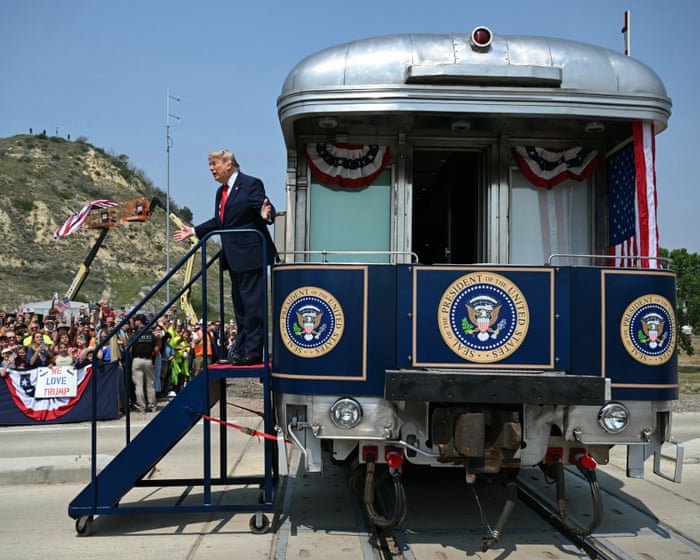
Bizarre 250th spectacle in North Dakota sees Trump take ride on red, white and blue train – and speak with hologram of 26th presidentThe sound of YMCA by the Village People booming through the badlands of North Dakota could only mean one thing: Donald Trump’s 250th anniversary travelling circus had reached a remote corner of America more familiar with bison, wild horses and bighorn sheep.The US president visited Medora on Wednesday to dedicate a $450m library and museum honouring Theodore Roosevelt, the 26th president, in the region where he roamed as a cowboy and big-game hunter in the 1880s. Continue reading...
In financial disclosures released Tuesday, Trump reported earning more than $1.4 billion last year from his several cryptocurrency ventures. All told — including other parts of his vast holdings, such as his real estate assets —Trump pulled in at least $2.2 billion last year. That compares to the roughly $622 million his enterprises raked in for all of 2024, before he returned to the presidency. In other words, it’s a fair guess that last year he made more than $1 billion off his presidency. We’re talking big money and big looting. Trump has conflicts of interest up the wazoo. For example, as a candidate in 2024, Trump embraced crypto. Then he and his family invested like mad in it — through CIC Digital — a Trump Organization affiliate that is behind his memecoin, $TRUMP. And through another Trump family-backed crypto company, World Liberty Financial, co-founded by Trump, his sons, and the family of special envoy Steve Witkoff in the middle of the 2024 presidential campaign. World Liberty is now behind several prominent crypto tokens.The problem here is more than potential conflicts of interest, more than the mere appearance of conflicts of interest. The conflicts are real, blatant, outrageous. Since taking office, Trump has installed friendly regulators to oversee digital assets, and he’s pushed for landmark crypto legislation that would further free crypto from being treated as a security (in which case all sorts of disclosures would have to be made about it). It goes way beyond crypto. His investment accounts made more than 20,000 trades last year — and many appear to be timed to take maximum advantage of his public announcements that moved markets.Just one day before he announced a 90-day pause on his sweeping tariffs, for example, his investment accounts made 327 individual stock purchases, each valued as much as $250,000. It was one of the largest single-day buys disclosed in Tuesday’s financial disclosures. The following day, when Trump announced the pause, the S&P soared nearly 10 percent — one of the biggest single-day gains in the index’s history. He’s made a bundle from real estate deals that foreign governments have been eager to strike with him and his family, presumably because he’s given them — or will give them — something in return. Entities from the Persian Gulf paid around $300 million to Trump’s businesses last year, more than any other foreign region identifiable in his financial disclosures.On Wednesday, he traveled to North Dakota on the maiden flight of the new Air Force One, a $400 million jet gifted to him by the Qatari royal family whose ownership will transfer to Trump when he leaves office (technically, it will go to Trump’s own presidential library foundation, but there’s nothing stopping him from using it for private purposes).This is called corruption, folks. And it’s on a massive scale. A White House spokesperson says neither Trump nor his family “has ever engaged — or will ever engage — in conflicts of interest.”Oh please. Next we’ll be told Trump never tells a lie, either. Conflicts of interest like these make it impossible for the public to judge whether Trump is working for America or for himself when he advocates for or implements a particular policy, such as his crypto policy or his moves in the Middle East. We don’t even know for sure that Trump has disclosed all his investments. The financial disclosure made Tuesday was voluntary. Can anyone be certain Trump has come clean about all his conflicts of interest?But perhaps the most troubling thing about all this is Trump doesn’t give a shite. In his first term, when asked about conflicts of interest, he said, “the president can’t have a conflict of interest … because everything a president does in some ways is like a conflict of interest.”He’s also said Americans “don’t care at all” about his unreleased tax returns or his personal finances. In his second term, he’s even less inhibited about raking in money. “I found out that nobody cared,” Trump told The New York Times in January. Now, he has nothing to lose by making as much money as possible off his presidency. He probably figures he’s survived two impeachments so far and won’t be impeached for pesky conflicts of interest. He won’t be running for the presidency again, so he doesn’t have to worry that his conflicts of interest will be used against him in a future campaign. Why not rake in as much as he can?As to his historic legacy, Trump isn’t worried about that either. He likely believes he can create his own history. That’s what he’s tried to do for the 2020 election and the subsequent attack on the Capitol on January 6, 2021. That’s what his “Presidential Walk of Fame” in the White House is all about — framed portraits of all U.S.