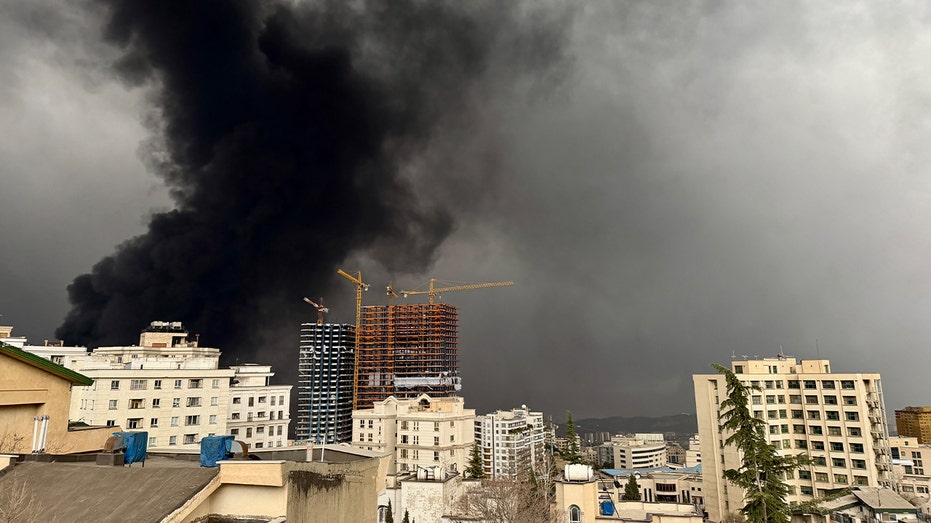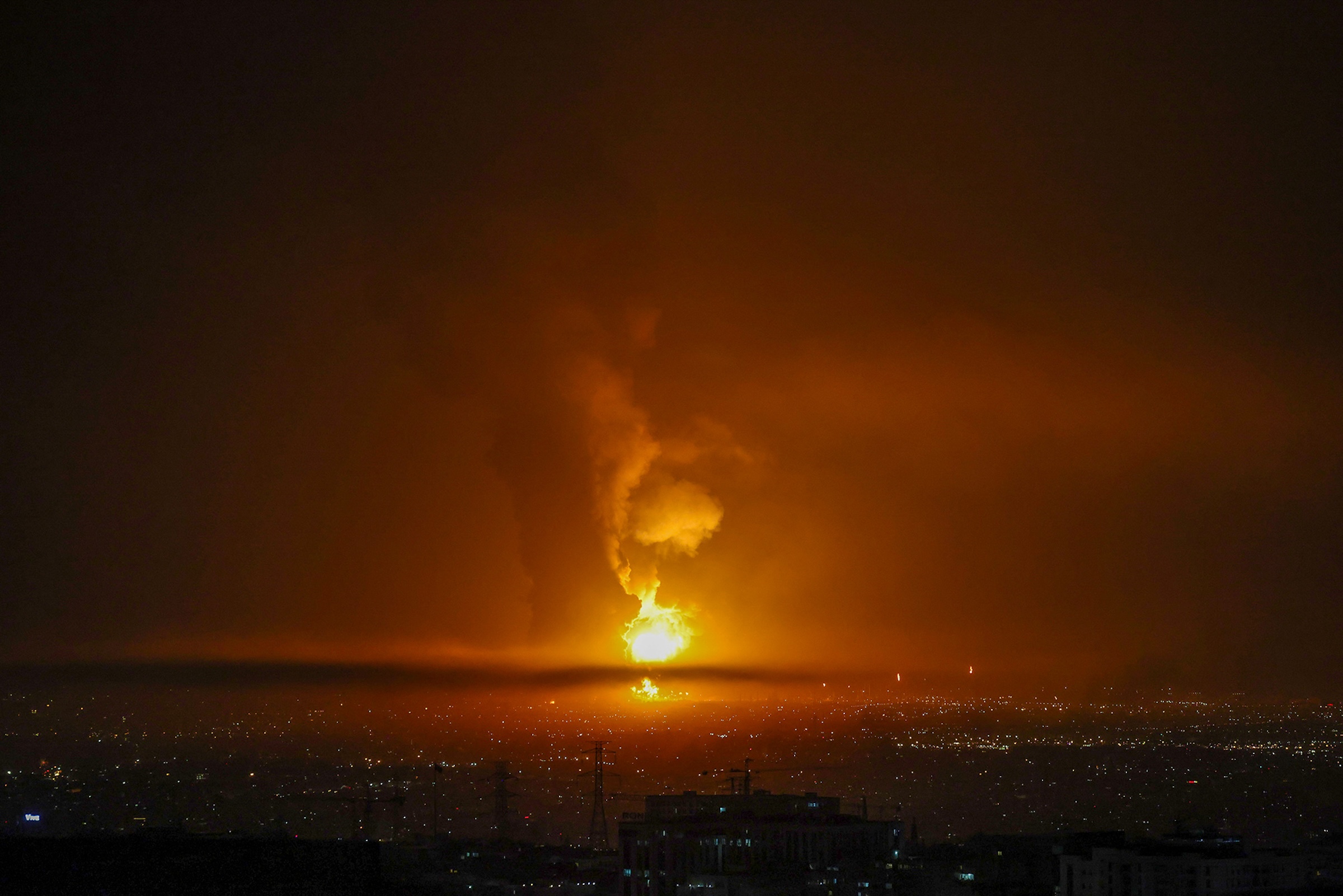
Pentagon burned through $5.6B in munitions in first 2 days of Iran war
Source: The Hill News · Bias: Center
Summary
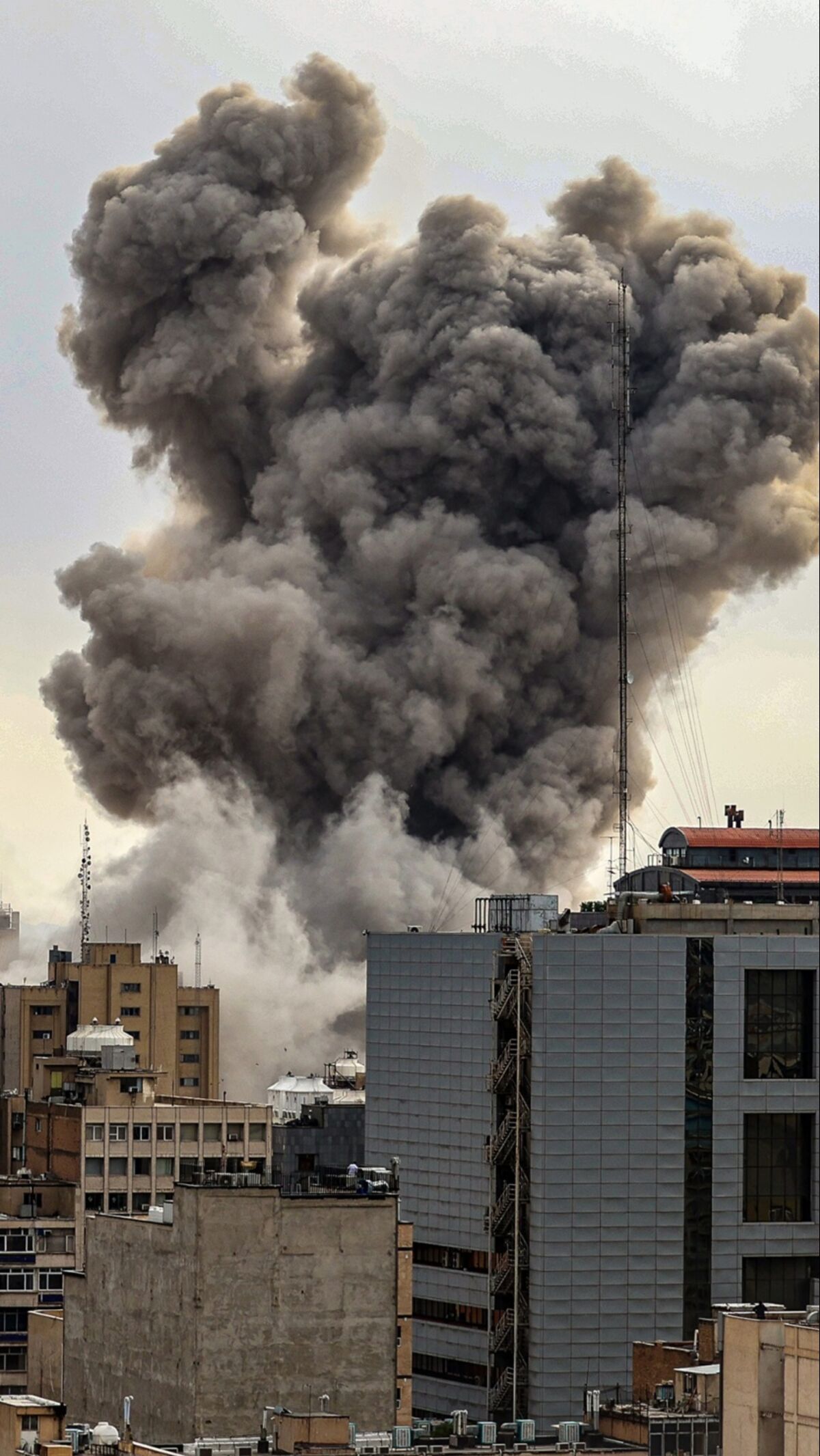
The Pentagon churned through about $5.6 billion worth of munitions during the first two days of the U.S. war with Iran, a congressional source familiar with the matter told The Hill Monday night. The Defense Department delivered the estimate to Congress on Monday, the source said. The source did not elaborate on what kind of…
Pentagon burned through $5.6B in munitions in first 2 days of Iran war
Center
The Pentagon churned through about $5.6 billion worth of munitions during the first two days of the U.S. war with Iran, a congressional source familiar with the matter told The Hill Monday night. The Defense Department delivered the estimate to Congress on Monday, the source said. The source did not elaborate on what kind of…
Data: U.S. Drought Monitor; Map: Erin Davis/Axios VisualsFirework associations expect a massive boom in backyard fireworks this July 4, a surge that collides with dry conditions and a blistering heatwave that could drastically increase the risk of fires.Why it matters: Climate change is increasing the likelihood and severity of wildfires, and large chunks of the U.S. are under burn bans because of severe drought.What they're saying: "It only takes one small spark landing in dry vegetation under the right conditions to start a fast-moving wildfire," April Newman, a public information officer at Cal Fire, tells Axios.Embers can smolder for over a minute, Newman says, "increasing the potential for ignition even after the visible display has ended."Even if a lawn looks green, the "eye test can be deceiving," Brian Fuchs, a climatologist at the National Drought Mitigation Center, tells Axios. Dig just a few inches into Mid-Atlantic soil, "you hit dryness again."State of play: Local governments navigating the drought created a patchwork of burn bans across the country.Colorado Springs issued a citywide burn ban earlier this week before canceling all fireworks displays — even professional ones — citing "extreme fire danger."Utah Gov. Spencer Cox suspended a state law that prevented local governments from enacting blanket bans, prompting Salt Lake County and others to outlaw fireworks.The other side: Florida has no statewide fireworks ban despite lingering droughts and nine county-level burn bans.State law includes a "fireworks holiday" giving anyone over 18 the right to set them off.By the numbers: The national landscape is dangerously primed for ignition, and tragedy is already playing out.Roughly 50% of the U.S. is currently in a drought, according to Fuchs.On July 1, the National Interagency Fire Center reported 257 new fires, and firefighters are trying to contain 51 large fires nationwide.Three firefighters died combating a major fire in western Colorado on Saturday.The intrigue: July 4 celebrations bring a massive, sudden influx of potential ignition sources.When you combine millions of flying sparks with dry vegetation, humidity and a heatwave, wildfires get the exact catalyst they need to explode, safety and climate experts say.Between the lines: Consumer demand for fireworks to commemorate America's 250th anniversary is at record levels."People look like they're going to be showing their patriotism" Ed Vasel with the National Fireworks Association, tells Axios. "We're thinking things are going to be up maybe as much as 20-25% in some areas this year."Professional pyrotechnicians follow strict distance requirements and work with on-site fire departments, but neighborhood celebrations often lack those safeguards, he says.Worth noting: Conditions for President Trump's record-breaking firework plans are better than they were weeks ago Fuchs says, but drought and sweltering heat still remain.While recent rain has provided some surface-level relief, these showers are not a complete "drought buster," Fuchs says.The bottom line: "There's a lot of angst amongst people who believe that fireworks is a right, and that it is culturally valuable, and that it is something that no one should be able to interfere with," David Barrett, executive director of The Safe Community Project, tells Axios."I appreciate and have empathy for those opinions. I do think at the same time…they recognize that the decisions they make don't affect only themselves for their personal pleasure, but those around them who they might inadvertently injure or kill."Go deeper: Trump's July Fourth event faces dangerous D.C. heat - Axios Washington D.C.
A political civil war is rocking the very core of the Democratic Party. On one side are upstart rebels — Jihadi-loving socialists who hate America and want to drag it down to destruction. On the other side are traditional moderate Democrats, Jihadi-loving socialists who hate America and want to drag it down to destruction, but ...
Iran’s Parliament Speaker Mohammad Bagher Qalibaf has warned of an Iranian response if the U.S. and Israel breach the interim peace deal, as Tehran prepares to bury its former supreme leader, Ayatollah Ali Khamenei. “We strongly demand full implementation of the agreements, and if the U.S. and the Zionist regime fail to fulfill their commitments, Iran…
Iran's entire regime made a red carpet entrance to the first of three funeral ceremonies for late Supreme Leader Ali Khamenei — except the dead ayatollah's own son and successor.
Trump administration officials reportedly believed that the Israeli government intended to assassinate Iran’s top negotiators—including the country’s foreign minister—during peace talks with the US in an effort to sabotage diplomatic progress.The New York Times reported Thursday that “American concerns about the targeting of two particular Iranian officials—Abbas Araghchi, Iran’s foreign minister, and Mohammad Bagher Ghalibaf, the speaker of the Parliament—spiked during delicate ceasefire negotiations that began in April.” In response, the US “went so far as to ask other countries in the region to warn Iran about the possibility Israel could target the two officials,” according to the Times, which cited unnamed current and former American officials.The US and Israel have killed dozens of top Iranian officials since launching their illegal joint war in late February. But the allied countries reportedly removed Araghchi and Ghalibaf from their target list in late March, opening the possibility of high-level negotiations to end the war.But Israel remained bent on targeting the negotiators, according to the Times, whose reporting was later corroborated by The Washington Post.The Times detailed one dramatic incident in April, when Ghalibaf was planning to travel to Pakistan’s capital to meet with US Vice President JD Vance:Pakistani fighter jets escorted the Iranian airplanes carrying a delegation of more than 70 Iranians from the border of Iran to Islamabad and back again when the session was over.But on the way back to Tehran, an Israeli security threat emerged.Iran’s security forces notified the plane carrying Mr. Ghalibaf back to Tehran that they had picked up intelligence that Israel planned to attack the plane and that two Israeli fighter jets had entered Iran’s airspace from its western border near Iraq, the two officials said.Mahdi Mohammadi, a senior adviser for Mr. Ghalibaf, who accompanied him to Islamabad, confirmed this account on his social media page. The plane made an emergency landing in the city of Mashhad, Iran’s closest airport to the Pakistani border, and the Iranian delegation traveled some eight hours by land back to Tehran, Mr. Mohammadi and the two officials said.The Post reported that “cracks emerged” between the US and Israeli approaches to the war following Israel’s assassination of top Iranian national security official Ali Larijani in March.“They’ve wiped out everybody,” Trump told reporters in late March, suggesting Israel’s assassination campaign was making it difficult to find potential negotiating partners.Trita Parsi, executive vice president of the Quincy Institute for Responsible Statecraft, wrote in response to the new reporting that “Israel is a state that, on paper, is a US partner, but in reality is so extreme in its obsession to undermine US diplomacy that it even tries to assassinate those the US engages with in crucial negotiations.”“I can’t recall a government as terrified of peace as the one running Israel,” Parsi added.At present, the Israeli government—led by Prime Minister Benjamin Netanyahu—is endangering tenuous US-Iran peace talks with its continued occupation of and assault on Lebanon, which Iran has highlighted as a key factor in the negotiations.Visiting occupied southern Lebanon earlier this week, Netanyahu declared to Israeli troops that “our insistence is that we will not leave... until the threat is removed.”Parsi wrote earlier this week that “beyond his long-standing desire to use American force to subjugate Iran to Israeli domination and achieve a regional balance favorable to Israel,” Netanyahu “now also has stark political and personal reasons to restart the war” with Iran.“The [US and Iran’s memorandum of understanding] has come at a steep political cost for Netanyahu,” wrote Parsi. “His prospects for reelection in October are weaker than they have been in months. Once seen as the Israeli leader uniquely capable of delivering President Trump, he now confronts the prospect that both the war and the ensuing diplomacy will leave Israel in a strategically weaker position—undermining the very case he has made for his leadership.”“And of course,” Parsi added, “if he loses the elections, he will likely spend the next few years in jail, as he will lose his immunity as prime minister and face trial over corruption charges.”The story was published in partnership with Common Dreams, read the original here.
Investigations into president and corruption charges will get heavy scrutiny if Democrats win majority in midtermsDonald Trump’s presidency is facing investigations and corruption charges from a key House Democrat and ex-prosecutors, involving political and personal abuses of power, which legal experts predict will get heavy scrutiny if Democrats win the House majority in the midterms.Legal critics call the scandals dogging the president “target rich” for investigations that Democrats will have a “field day” investigating if they win the House majority. Critics cite, for instance, Trump’s damaging the rule of law by weaponizing the Department of Justice (DoJ) to exact revenge on political foes and protect himself from federal investigations, plus Trump moves to profit in radical ways from his presidency with lucrative and new cryptocurrency ventures. Continue reading...
Rep. Anna Paulina Luna (R-FL) committed to block House floor proceedings unless House Speaker Mike Johnson (R-LA) inserts the SAVE Act into a must-pass piece of legislation, Punchbowl News reported on Friday.Luna has pressed for the SAVE America Act – a bill that mandates voter ID and citizenship checks while adding new restrictions on mail-in ballots – to be folded into the annual defense policy bill."We should be doing all of the above," Luna told Punchbowl News for its report published Friday. "Why not try? It's crazy."Luna has already disrupted leadership's plans once – she helped defeat a rule that would have inserted SAVE Act language directly into the defense bill, despite House GOP leaders having spent three years working to keep unrelated amendments out of it.Meanwhile, Senate Republicans have grown frustrated with inter-party disputes. Sen. Ron Johnson (R-WI) told Punchbowl that Republicans "need to be very careful" about how they message the standoff, arguing that Democrats – not Republicans – are the ones blocking the SAVE Act's passage.“The message we need to convey to our supporters – it’s not Republicans that are preventing the SAVE America Act from being passed. It’s Democrats,” Johnson told Punchbowl News.