NATO Allies Spar Over Pipelines, Ukraine Support in Summit Talks
Center
NATO members are struggling to coalesce around a joint statement for their summit next week due to disagreements over projects to extend the alliance’s fuel pipelines to eastern Europe and the duration of financial support for Ukraine.
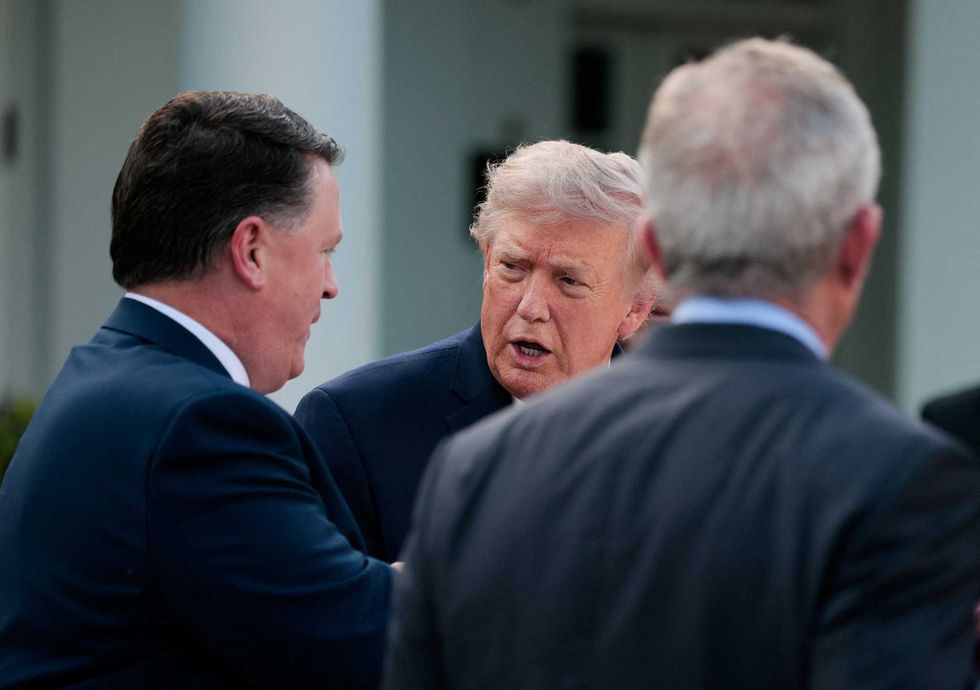
President Trump says it would be "ridiculous" for the United States to continue its "one sided" relationship with NATO. His remarks came less than a week before a NATO summit in Turkey.
An ex-GOP operative flagged how Trump is killing what he once touted as his "best" deal at the expense of his supporters.During an episode of The Bulwark Podcast, Tim Miller described Trump's plans concerning the United States-Mexico-Canada Agreement, which Trump negotiated and boasted about during his first term."The Trump administration decided not to renew the USMCA," Miller noted. "Which is pretty interesting because Donald Trump said that was the best agreement we've ever made, the best trade deal of all time."While "it's strange that they would not renew the best trade deal of all time," Miller explained, "They're now going to do yearly reviews where Trump shakes down the leaders of Mexico and Canada...not great."According to Miller, Trump will ditch the USMCA in favor of an arrangement where the U.S. conducts annual reviews of trade with Mexico and Canada. He predicted that the new arrangement would likely hurt American farmers, who supported Trump."The farmers, it's one hit after another for the farmers, who, it seems like, every Trump policy is like it's almost like an elaborate plot to see how much he can p— off the farmers and still run up the numbers in rural America," Miller said.Miller's guest on the show, New Yorker writer Susan Glasser, agreed."As far as the farmers go, Donald Trump loves to provide evidence that his ride or die supporters will be there no matter how much he humiliates them," Glasser said. "No matter how much he backs away from policies that would support him, no matter how much he fails to deliver the things that he said he would deliver. That to Trump, that's the ultimate sort of political own, and he loves that move."
As the FBI's widening public corruption probe has expanded to scrutinize Gov. Gavin Newsom and his wife, Jennifer Siebel Newsom, a bombshell new revelation is exposing how investigators quietly penetrated the governor's political inner circle from the inside.
The Supreme Court’s ruling upholding birthright citizenship has prompted an outcry from the far right, including members of President Trump’s own administration, who have suggested the U.S. limit the entry of pregnant women into the country. The high court in a 6-3 decision Tuesday killed a Day 1 executive order from Trump seeking to limit birthright citizenship only to…
In 1874, the state geologist of Pennsylvania, then the nation's leading oil producer, warned that the U.S.
The post “We’re Running Out of Oil”: The Lie Used to Support the Green Energy Agenda appeared first on The Gateway Pundit.
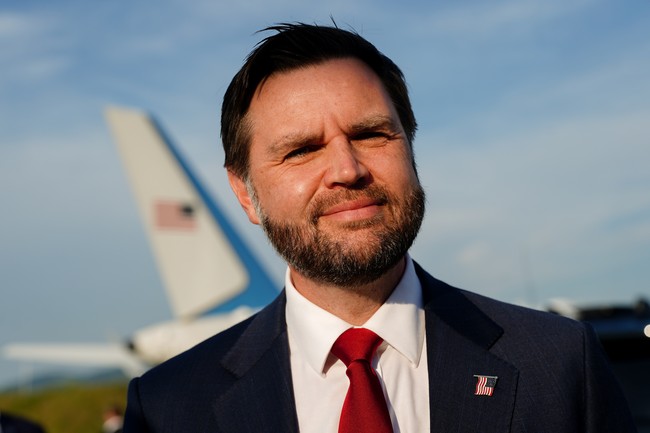
President Trump is redefining what it means to be a U.S. ally in the AI era.Why it matters: For the White House, it's now about how partners can help the U.S. win the AI race.For decades, shared values and security interests have underpinned alliances with Europe and other partners around the world. Under Trump, that's no longer enough.As AI becomes central to economic and military power, frontier AI models, chips and infrastructure are turning into new instruments of American influence.Driving the news: The Trump administration is blocking allies from accessing the world's most powerful models, playing it close to the vest and criticizing Europe for not having its own robust AI industry.With export controls on Fable and Mythos lifted on Tuesday, Anthropic and the Trump administration are continuing Project Glasswing efforts, which the company previously said would give access to Mythos to 150 more organizations across more than 15 countries.Fable is also back.Commerce retains the power to pull back access when it deems appropriate. "The problem we have is that we are leading everybody by a lot," Trump said in a recent interview with "The Axios Show." "Europe has to be very careful. They're losing their way entrepreneurially."Trump pointed to the U.K. not tapping into energy sources in the North Sea because of environmental concerns: "It's crazy." Between the lines: The Trump administration's AI restrictions are part of a broader transactional approach to alliances.Catch up quick: Vice President JD Vance's speech last year at the Paris AI Summit set the stage for a confrontational relationship with the European Union.The U.S. was quick to rebuke the EU's focus on safety over innovation with Trump entering his second term laser-focused on deregulation. But the president now finds himself behind an ad hoc licensing regime that's creating its own regulatory uncertainty, both domestically and abroad.OpenAI's GPT-5.6 was forced into a staggered rollout last month due to government concerns.What they're saying: European Commission spokesperson Thomas Regnier on Wednesday said the bloc is looking forward to "intensifying" discussions with Anthropic to gain access to Mythos through Project Glasswing and that, in the meantime, it has access to GPT-5.5-Cyber.The EU has a delegation in the U.S. to determine the scope of a future tech dialogue, the frequency of meetings and the level at which they'll be held.The dialogue is expected to include frontier AI models, chip supply chains and cybersecurity."But we have one clear line," Regnier said, "which is that our sovereign legislation is not up for negotiation."Omran Sharaf, the United Arab Emirates' assistant foreign minister for advanced science and technology, told Axios "it's very important that trusted partners and strategic partners are included in the process."That way it is "synchronized and we're applying similar standards in controlling such technologies, rather than having something that gets imposed."The big picture: AI is changing what the White House wants in its alliances.Just last week, the EU and several European governments signed onto Pax Silica, the U.S.-led effort to secure AI supply chains and critical minerals, even as the White House restricts their access to frontier AI models.For the U.S., Europe is all of the above: a restraint, an indispensable partner and a competitor.The administration is simultaneously rejecting Europe's AI rules, inking deals with the region to secure supply chains and blocking access to cutting-edge technology.The bottom line: With the most advanced AI, allies will have to adjust to being considered trusted U.S. partners only in some cases."The conclusion that governments are coming to is: We'll be part of Pax Silica, yes. We'll work with the U.S. ecosystem where we can. We'll build around what we can't," A.J. Bhadelia, Cohere's head of global government affairs and external affairs, told Axios.