Live updates: Trump taps Pulte for acting DNI job; Rubio, Blanche face Senate panels
Center
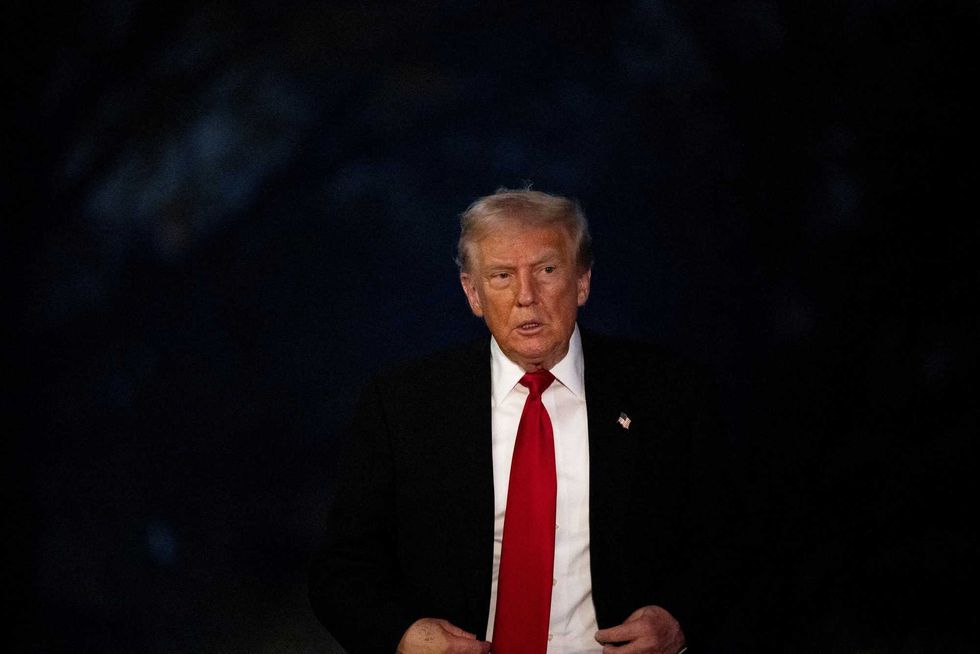
President Trump on Tuesday morning announced he would appoint Bill Pulte to replace outgoing Director of National Intelligence Tulsi Gabbard. Pulte moves from his role as director of the Federal Housing Finance Agency. On Capitol Hill, Secretary of State Marco Rubio and Acting Attorney General Todd Blanche will testify before the House on Tuesday morning…
President Trump has named Bill Pulte, the head of the Federal Housing Finance Agency, as the acting director of national intelligence after Tulsi Gabbard resigned from the position. NBC News' Gabe Gutierrez reports on the appointment and Pulte's past work in the administration.
The Trump administration abandoned a $1.776 billion "anti-weaponization" fund created through a Department of Justice, or DOJ, settlement with the Internal Revenue Services, or IRS, over the President's leaked tax returns. The fund was designed to compensate individuals who claimed improper prosecution, with multiple of President Donald Trump's allies indicating they would seek payments. In his latest Substack essay, former federal prosecutor Harry Litman characterized the retreat as Trump's "biggest self-inflicted wound of Trump 2.0," noting the President was "pinned between a rock and a hard place." The fund became "politically radioactive" after reporters questioned Republicans about potentially paying individuals convicted of assaulting police officers during the January 6 insurrection. Litman warned Trump could face "serious lumps" from the MAGA base approaching the midterms. He added, the retreat represents a public defeat for a president whose political brand centers on bravado and winning, though the full parameters of the reversal remain unclear as of the report."All of that amounts to a richly deserved comeuppance for Trump’s staggering audacity in trying to make the American people not just pardon but financially reward the most serious assault on American democracy since the Civil War," Litman wrote. Watch the video below. Your browser does not support the video tag.
Democratic lawmakers are airing their frustration Tuesday, after President Trump appointed Bill Pulte to serve as acting head of the Office of the Director of National Intelligence (ODNI). Trump named Pulte, the head of the Federal Housing Finance Agency )FHFA), to replace Tulsi Gabbard after she resigned from the office last month. “Bill Pulte is…
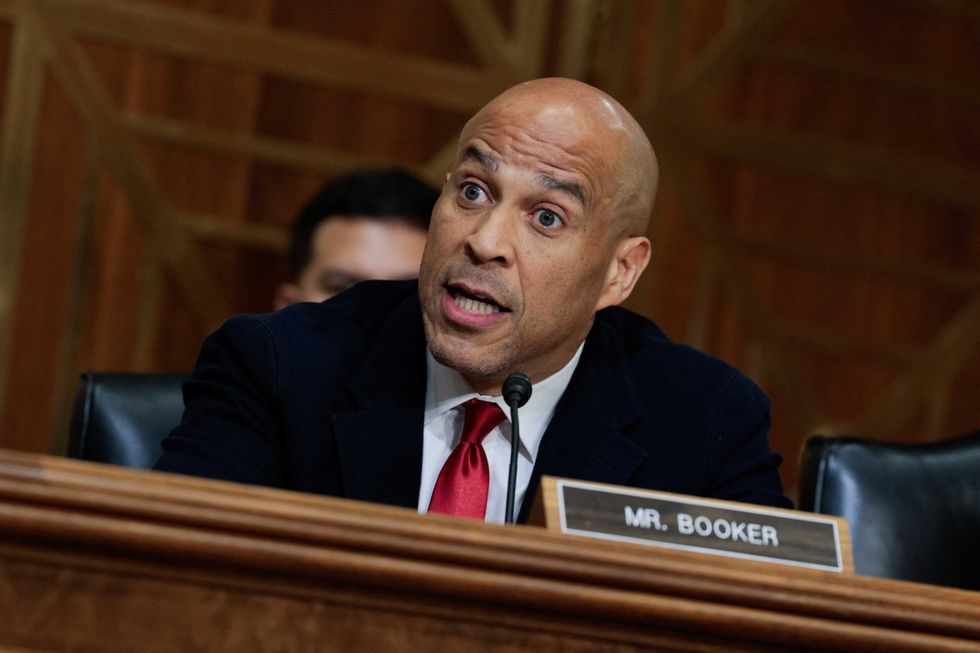
Secretary of State Marco Rubio got in a heated exchange with Sen. Cory Booker (D-NJ) during the Senate Foreign Relations Committee hearing on Tuesday.Rubio was testifying for the first time since the United States launched the Iran war and Booker raised questions about the Ebola crisis and the military operation. Booker told Rubio he was concerned the U.S. had rolled back its investment in eradicating diseases in Africa, and expressed doubt that the Iran war was over, despite the Trump administration's claims that it was."With the crisis of Ebola, we see the challenges have been brought about as a result of our surveillance, early detection, and the like. I'm concerned about what the administration's strategy is," Booker said. "We are clearly seeing that what goes on on the continent of Africa directly affects our public health as well."But Rubio did not see eye to eye with Booker."I don't agree with the assessment," Rubio said. "It's not about cutting back. The response is that how much money you spent it's the results you will get. Ebola, the outbreak was in a war-torn, isolated, rural area in the DRC. Since then, our response has been very rapid."Booker pushed back."You did not cut early detection?" Booker asked. "That's not the reason there was Ebola," Rubio said. Booker cut him off as the conversation intensified."I'm not trying to get in an argument. I would like to have my questions answered," Booker said. "We cut early detection when it comes to infectious diseases on the continent, factually. This is not an opinion. We cut early warning systems on the continent."Rubio continued to argue with Booker and interjected the senator, saying "It had nothing to do with the Ebola outbreak.""I don't need to tell you, we are living in a place where an infectious disease crisis anywhere is a threat everywhere," Booker said, adding that he worried further budget cuts would complicate future outbreaks. "The United States made major reductions in these areas putting us more at risk. If you're talking about the Ebola crisis, other cuts we have made, you see it factually. Even our own State Department personnel I've talked to are saying we are less prepared for a global outbreak than we were before."Rubio denied Booker's comments."I don't agree with that assessment," Rubio said. "I don't know who told you that at the State Department." "You can't even agree on the facts. It is not accurate that we cut early detection?" Booker asked, pressing Rubio to respond. "Those have been repurposed," Rubio said. "The different arrangements with the countries are an example."But Booker wasn't convinced. "If you're telling me that we are as or more prepared before the Trump administration came in, I would like to see the facts," Booker said. "I think when the reforms are finalized we will be better prepared. We are responding faster not just humanitarian crises but faster than before," Rubio said.Booker then moved on to discuss the Strait of Hormuz blockade."The conclusion I have is the Strait of Hormuz was opened before this unjustified war," Booker said. "We are now scrambling to find a way to get it back open again." Booker argued the U.S. was now in a "worse situation, an adversary and our enemy is causing havoc in the region, funding proxies and terrorists, has discovered, thanks to you all, the power of shutting down the Strait of Hormuz." He said Iran was now in a better position, while America was worse off."It made our adversary have a stronger negotiating position," Booker said. "We are the strongest on earth and we are in a stalemate with Iran. We are begging to get back into a deal that you trashed in the first place." "There is no one begging," Rubio maintained.Rubio argued that the war was over — and Booker pushed back, saying that although Trump says it has ended, it hasn't."You keep saying how we are winning the war," Booker said. "The war is over now," Rubio said. "The war is not over. The American people see how we are losing at the pump and with costs. Yet this thing has not been resolved," Booker said.
President Donald Trump named Bill Pulte to oversee the entire national security apparatus of the United States. He will serve in the job while also remaining in his current job as Federal Housing Finance Agency Director. This adds to Pulte's other job, chairman of Fannie Mae and Freddie Mac.Pulte has a history of using his government position to aid Trump's retribution campaign, targeting Federal Reserve Board of Governors member Lisa Cook and New York Attorney General Letitia James. Cook was never charged by the Justice Department and James' charges were dismissed. You know, to call this appointment an unorthodox one, I think, would be an understatement," said senior CNN reporter Kevin Liptak. "You know, he's the heir to a construction company, fortune. He's been in this mortgage role for the last year or so. What he is, is a real, true Trump loyalist. You know, he's a frequent guest on Air Force One and at Mar-a-Lago. And what you've seen him doing is leveraging this role that he's in at the mortgage agency to try and go after some of Trump's perceived enemies..."While the Cook efforts have failed, Liptak said that it has likely "engendered an enormous amount of goodwill towards him by the president."He noted the seriousness of the Director of National Intelligence post, overseeing 17 intelligence agencies. The post was created after Sept. 11, 2001, when a report found there was intelligence ahead of time that an attack was imminent, but that bureaucratic silos prevented the various intelligence agencies from connecting all of the dots. Liptak said that Trump has relied more on the CIA for international intelligence than he did on Gabbard. "He looked to her to, sort of, go after some of his obsessions, whether it's to try and advance claims of voting fraud, whether it was to try and downplay allegations of Russian election meddling," said Liptak. "This, I think, suggests that the president will put in this position someone who has gone after this retribution campaign, who has advanced some ideas of vindication against some of his enemies. [Trump] doesn't say whether he will be appointing him to the permanent job, but because Bill Pulte was already approved by the Senate for his current job, he will be able to stay in this position for quite some time."CNN host Wolf Blitzer asked whether the White House had yet to explain what qualifies Pulte to run the nation's intelligence apparatus."The only qualifications that the White House has specified is what President Trump is pointing out on his Truth Social, which is what he calls experience 'managing the most sensitive matters in America,'" Liptak said."I do think you can read into what Pulte has used his job to do as how President Trump views the DNI position," Liptak continued. "He has used his access to the mortgage information in his current position to go after Trump's perceived enemies. And I don't think it's a stretch to suggest that he would use his access as the intelligence director to also potentially advance the retribution campaign. That has been the most prominent way we have seen Bill Pulte act in the job that he is currently in."Trump, he explained, has put a "premium on trying to go after his enemies, but also has been frustrated that [it's] not been particularly effective or particularly quick so far in his term."It's one of the reasons Trump fired former Attorney General Pam Bondi. Pulte, wrote Will Neal for the Daily Beast in November, "has reportedly made such a song and dance of pandering to the president that it’s starting to drive other aides insane."