Live updates: Trump confers with Zelensky, Netanyahu ahead of Lindsey Graham funeral
Source: The Hill News · Bias: Center
Summary
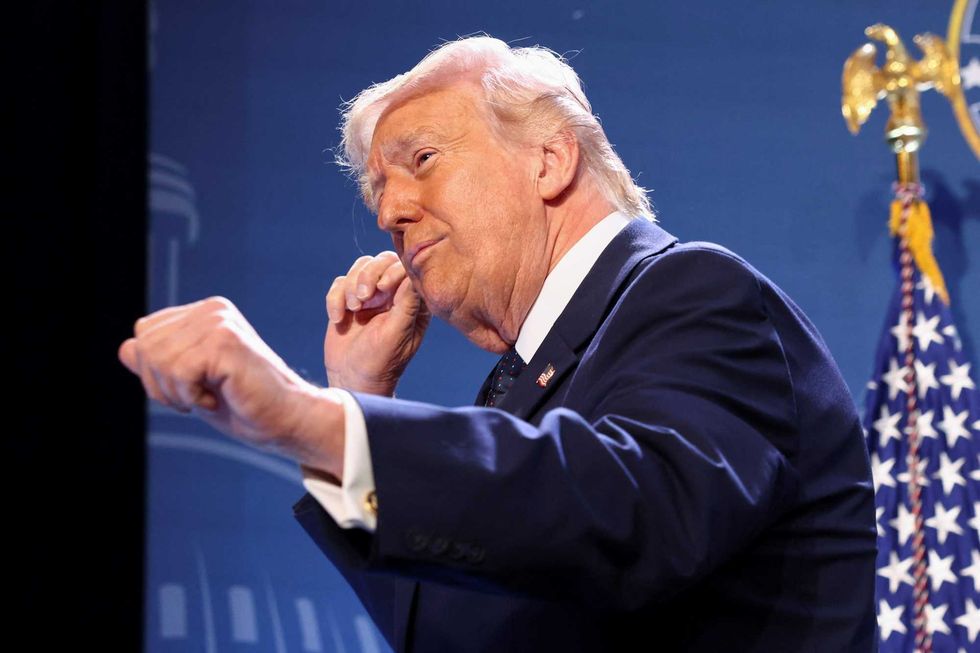
President Trump has a busy schedule on Tuesday. To start the day, he’s set to meet with Ukrainian President Zelensky then Israeli Prime Minister Netanyahu at the White House. Trump’s relationship with Zelensky has warmed in recent weeks. Over the weekend, the Ukrainian leader noted his military attacked a Russian ship in the Caspian Sea…
Live updates: Trump confers with Zelensky, Netanyahu ahead of Lindsey Graham funeral
Center
President Trump has a busy schedule on Tuesday. To start the day, he’s set to meet with Ukrainian President Zelensky then Israeli Prime Minister Netanyahu at the White House. Trump’s relationship with Zelensky has warmed in recent weeks. Over the weekend, the Ukrainian leader noted his military attacked a Russian ship in the Caspian Sea…
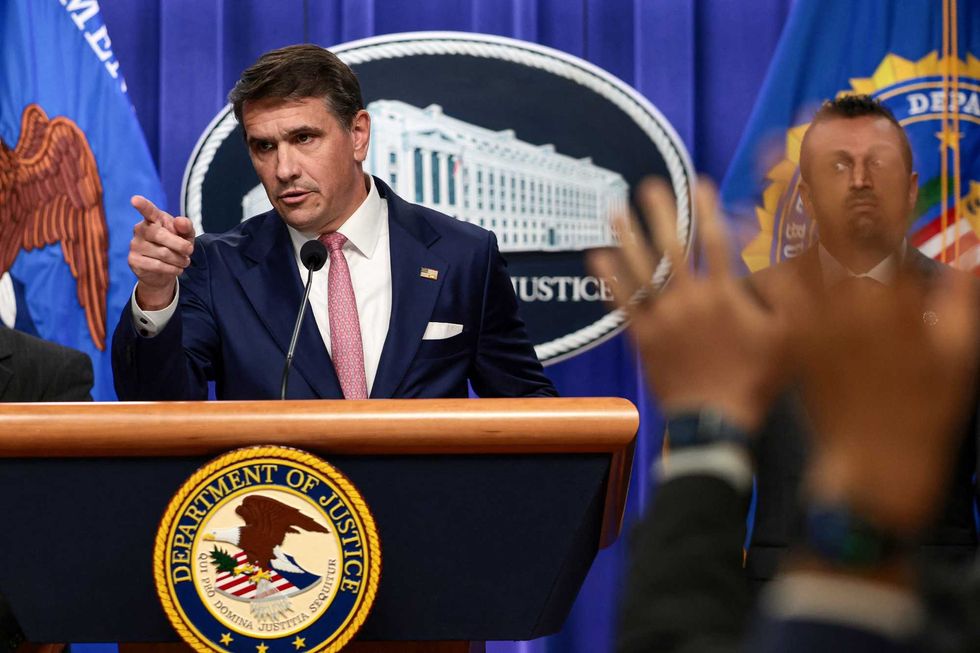
Across the country, federal judges are calling out Department of Justice lawyers, questioning in unprecedented ways whether they can be trusted to tell the truth or uphold centuries-old legal norms.From Washington, D.C., to Rhode Island to Oregon, federal judges nominated by presidents from both parties, including Donald Trump, have zeroed in on what’s called “the presumption of regularity.” It essentially means that judges must presume that the government — whether it be federal prosecutors, an IRS auditor or an FBI agent — did their jobs according to the rules and in good faith.Until Trump’s second term, which has seen an exodus of veteran DOJ lawyers and a transformative shift in priorities from issues like enforcing civil rights to instead defending a mass deportation agenda, this foundational tenet had rarely been discussed in federal courtrooms, former judges, lawyers and scholars say. But as Trump’s DOJ exhibits behavior that judges have called “unlawful,” “unethical,” “unseemly” or otherwise dishonest, adherence to that bedrock standard is now being questioned.ProPublica reviewed hundreds of cases since Trump retook the White House in which judges criticized the actions of DOJ lawyers and found more than 40 in which they explicitly referenced the presumption of regularity. In many cases, judges have expressed frustration that they can no longer take the government at its word.“Judges simply don’t believe the representations that are being made by United States attorneys, assistant United States attorneys and the like,” said John E. Jones, a former federal judge for the District of Pennsylvania, appointed by President George W. Bush.“I don’t think in the annals of the Department of Justice, in the history of jurisprudence in the United States, we’ve ever seen anything close to this.”In Rhode Island in May, Trump-appointed federal Judge Mary McElroy rebuked federal prosecutors’ conduct — saying they withheld information and misrepresented facts — as she quashed their requests for a subpoena in their investigation into a hospital’s care of transgender children. The judge alleged the DOJ had inappropriately claimed its investigation was operating out of Texas to secure subpoenas targeting sensitive medical records of patients in another state and that it falsely claimed the Rhode Island hospital hadn’t communicated with the department.“The discrepancy between the honorable conduct expected of federal prosecutors and DOJ’s tactics in this case is unsettling,” McElroy wrote. “The Court cannot help but share the sentiment that ‘[t]he presumption of regularity that has previously been extended to [DOJ] that it could be taken at its word — with little doubt about its intentions and stated purposes — no longer holds.’”Judges have emitted a chorus of condemnations against the legal basis for some of Trump’s political agenda, including the mass firings of federal workers, an immigration dragnet that has imprisoned hundreds of U.S. citizens and retribution campaigns against the president’s political enemies.In doing so, federal judges are imbuing forceful language into their orders in a way that scholars say signals to the Trump administration that the third branch of government is losing trust in the Justice Department.“I don’t think in the annals of the Department of Justice, in the history of jurisprudence in the United States, we’ve ever seen anything close to this.” Former federal Judge John E. Jones, a George W. Bush appointeeFederal judges rarely grant interviews, and none of the judges who criticized the Justice Department in their orders granted interviews to ProPublica.In a statement, a spokesperson for the DOJ said its attorneys are “dedicated public servants who represent the United States with integrity, in accordance with their ethical obligations and the law.”“The Department stands firmly behind the professionalism and good faith of its attorneys,” said spokesperson Kiersten Pels. The White House did not respond to a request for comment.Federal judges have found that the government filed statements generated by artificial intelligence that referenced nonexistent case law, wrote briefs that ignored facts and filed declarations with inaccurate dates, the ProPublica review shows.In one case, the government included documentation claiming a detainee had been convicted of marijuana possession in 2009. That detainee, the judge noted, citing what she called the government’s persistent “sloppiness,” would have been 4 years old.“This Court will no longer blindly accept statements of fact from [the U.S. government] unless they are made under oath by an individual with personal knowledge,” Judge Christine O’Hearn, a President Joe Biden appointee, wrote in New Jersey while reviewing a writ of habeas corpus petition filed by a man who claimed he was unlawfully imprisoned by immigration officers.
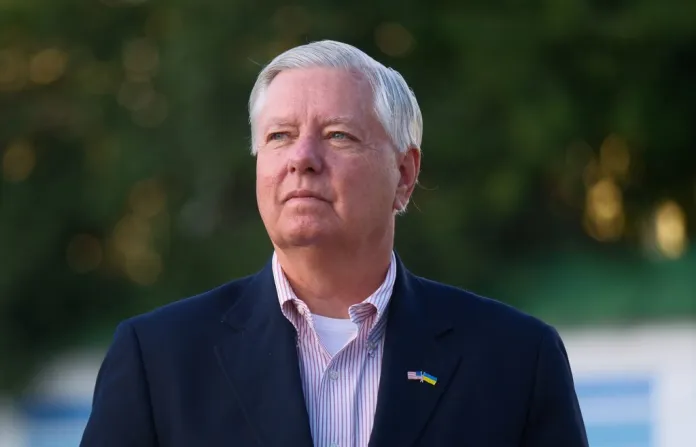
World leaders, politicians, and family members of late Sen. Lindsey Graham (R-SC) will gather in Washington on Tuesday for funeral services memorializing the well-known foreign policy hawk who unexpectedly died at 71 earlier this month. Graham’s remains will arrive at the Capitol at 10 a.m., his casket carried by service members and memorial guards to […]
The late Sen. Lindsey Graham (R-S.C.) will be honored in the U.S. Capitol Rotunda on Tuesday morning ahead of his funeral service in Washington, D.C. Graham, who died July 11 at age 71 from an aortic dissection, was a staunch conservative and known war hawk. His dedication to fighting for Israel and Ukraine — including [...]
The late Sen. Lindsey Graham (R-S.C.) will be honored in the U.S. Capitol Rotunda on Tuesday morning ahead of his funeral service in Washington, D.C. Graham, who died July 11 at age 71 from an aortic dissection, was a staunch conservative and known war hawk. His dedication to fighting for Israel and Ukraine — including…
Voters across battleground states are expressing mounting frustration with the U.S.-Israel conflict with Iran that has produced no clear resolution — only rising costs and disrupted lives.In Wisconsin, Robert Edelstein, who runs a window-tinting business, didn't hold back, calling the decision to strike Iran the "stupidest thing that could ever possibly have happened" and comparing it unfavorably to the Iraq War, reported The Guardian.“It’s screwed everything up, as we all know," Edelstein said. "It’s absolutely stupid.” Fellow Wisconsinite Terrence Dahmen, a retiree who typically votes Democratic, called American involvement "a huge mistake," arguing the U.S. wasn't provoked and suggesting the real motive was oil. He said the money would have been better spent on renewable energy.In Georgia, retired teacher Jimmy Carter watched Trump's motorcade pass near his old school with disbelief, dismissing the war as a "dumba-- idea" — a sentiment he said even his Trump-voting brother shared.The frustration isn't purely ideological. Clay Harvison, a Marietta mixed martial artist who voted for Trump, said the war should have ended months ago and warned that younger voters are increasingly questioning why a president who campaigned against foreign wars is now overseeing one.“He should have left it when he had already bombed them,” Harvison said. "Being remembered as being great ... he’s messing with that really bad right now.”Beyond the political anger, the war's costs are showing up in everyday life. Gasoline prices have climbed above $4 a gallon for the first time in years, according to AAA, with lower- and middle-income households absorbing a disproportionate share of the pain.In Maine, logging worker Lydia Stone described being squeezed by rising fuel costs while prices for her product stay flat.“It’s been a huge jump in prices, and makes life a lot harder,” she said.She also connected her frustration over funding the war to cuts in programs like SNAP, noting longer lines at her local food pantry and a friend's husband being deployed with little warning.Not every voter interviewed opposes the war outright — some with military ties expressed conditional or full support, wanting either a clearer exit strategy or full-throated confrontation with Iran. But across party lines and regions, voters are increasingly concluding the war isn't worth the cost.
A crucial meeting in the Oval Office on Tuesday has allies of President Donald Trump on edge that it could lead to an expansion of the unpopular war in Iran.Benjamin Netanyahu is coming to the White House with a singular objective: convince Trump to escalate military operations against Iran, reports Politico. The Israeli Prime Minister, who reportedly helped incite the initial February attack along with the late Sen. Lindsey Graham (R-SC), is once again maneuvering to push the president toward a more aggressive and durable conflict.Trump's anti-interventionist America First base is bracing for impact after the "pivotal" meeting. Steve Bannon expressed their collective alarm: "Netanyahu has had twice as many visits to the White House in 18 months as Churchill had in all of World War II — with every one of them a disaster for America First."The Iran war has already dragged on for five months with no resolution in sight, the report notes. The U.S. and Iran briefly suspended tit-for-tat strikes over the weekend amid cautious hopes for a ceasefire. But Trump continues threatening "massive attacks," keeping the door wide open for renewed escalation.Netanyahu's seventh visit to the White House since Trump took office signals his desperation to lock in permanent war. America First allies fear this meeting could transform a temporary conflict into a years-long Middle East quagmire.According to the report, "The meeting comes as new polling shows that a growing share of the president’s base no longer believes the war is worth its economic costs. And Republicans are increasingly resigned to the fact that the war will likely still be hanging over voters in some form when they head to the polls in November."That led Curt Mills, executive director of American Conservative magazine, to describe the meeting as "DEFCON 1.""Netanyahu is going to argue for the essential logic of escalation," Mills explained. "If Trump is not willing to give the memorandum of understanding a chance and if Trump is not willing to walk away from the conflict entirely without a resolution—then I think we probably will escalate, and that's what we've been seeing these last couple of weeks."Trump's own allies acknowledge Netanyahu wouldn't be doing his job if he didn't push for military expansion. But that's precisely what terrifies them: Netanyahu will succeed, dragging Trump deeper into a conflict that's already hemorrhaging support within his base.
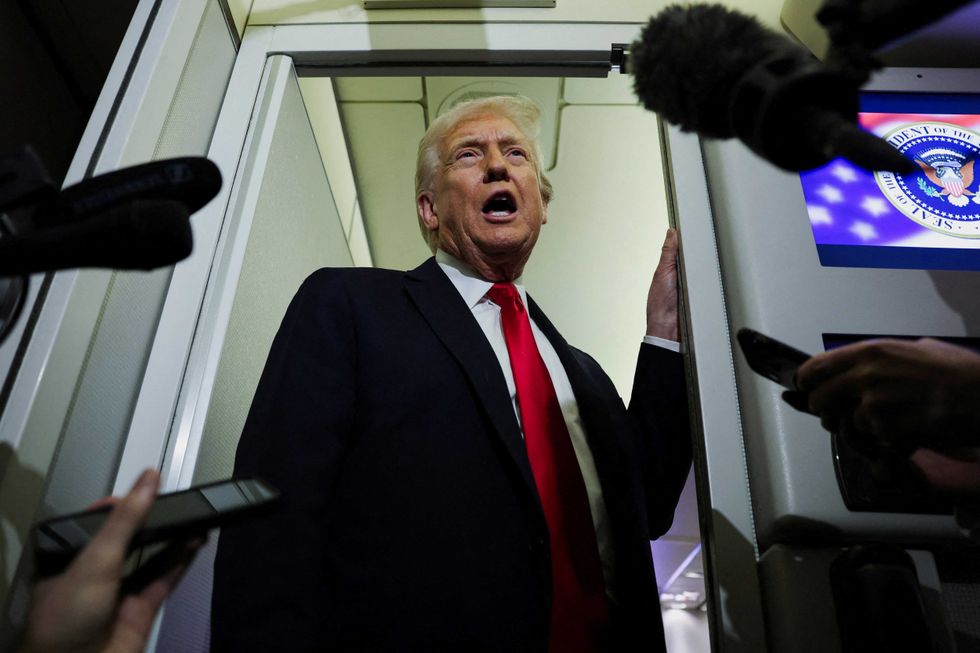
President Trump publicly rebuked Israeli Prime Minister Benjamin Netanyahu Tuesday after The Post reported that the leader of the Jewish state is expected to present Trump with evidence that Iran is pursuing nuclear technology at its subterranean Pickaxe Mountain site.
Ukrainian President Volodymyr Zelensky arrived in Washington, D.C. early Tuesday morning for a meeting with President Trump and to attend the funeral for Sen. Lindsey Graham (R-S.C.). “Our number-one priority is anti-ballistic defense and strategic cooperation with America. Peace needs to be brought closer,” Zelensky wrote in a post on X at 1:30 a.m. EDT. …