RealClearPolitics - Homepage
What the Supreme Court Said About Firing Bureaucrats
On Monday, Donald Trump sealed one of the most lasting parts of his legacy.
Center Right

The Supreme Court will issue its final rulings of the term on Tuesday morning, with a heavy-hitting lineup of cases birthright citizenship, transgender athletes and campaign finance. Top U.S. officials, including Steve Witkoff and Jared Kushner, are in Doha, Qatar, on Tuesday. But Iran’s foreign ministry has denied there are direct talks happening, according to…
On Monday, Donald Trump sealed one of the most lasting parts of his legacy.
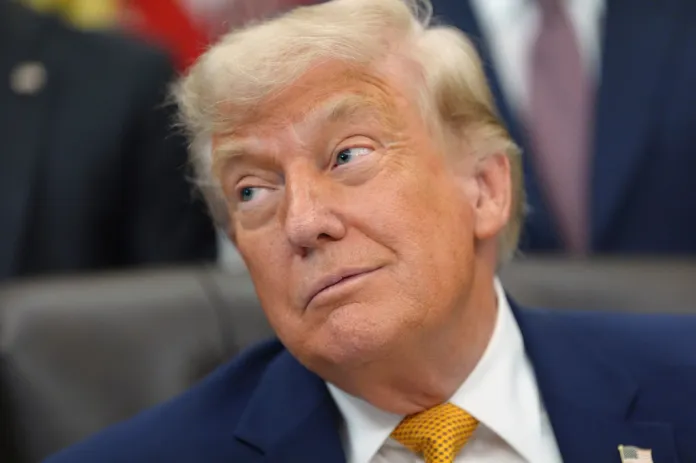
The Supreme Court did something on Monday that constitutional scholars have been debating for 91 years. It overruled Humphrey’s Executor and told Congress it cannot wall off executive branch officers from presidential removal by dressing them up as “independent.” The vote was 6-3. The decision was correct. And the reaction from the Left tells you […]

The Supreme Court handed President Donald Trump another victory Monday by expanding his authority to fire heads of independent agencies, a decision that Zeteo’s Andrew Perez argued was just the latest example of the court’s “far-right justices” executing a long sought-after plan.“Fundamentally, Trump and the justices are partners in fascism,” Perez wrote in an analysis published in Zeteo Tuesday. “With teamwork, a handful of elite, unelected far-right operatives and a narcissistic game-show host can take apart American liberal democracy piece by piece, and replace it with authoritarian rule.”The Supreme Court has handed Trump a number of unprecedented victories in recent years, chief among them its ruling that granted the president “absolute immunity from criminal prosecution” for “official acts,” a decision that killed the criminal case against him over his efforts to overturn the 2020 election results.Despite the Supreme Court handing Trump win after win – with some exceptions, notably when Trump’s interests conflicted with those of the uber-wealthy – some of its justices “almost certainly can’t stand the man,” Perez argued.“They want this monstrous man to be king,” Perez wrote. “This is not something you’ll hear every day in the mainstream media, but it’s precisely why the right-wing justices, three of whom Trump appointed, have repeatedly granted this president king-like powers – even though they surely know he is out of his mind.”Amid the Supreme Court’s embrace of Trump and his novel legal theories, its favorability among Americans has plummeted. A recent Pew Research survey found a 22-percentage point drop in favorability for the court among Americans between 2020 and 2025, with a growing number of Democrats continuing calls for the court to be reformed.In the midst of its newfound unpopularity, the Supreme Court has moved – quietly – to double its own personal police force in a move that has frustrated lawmakers.“The far-right justices want a king – through whom they can rule over us,” Perez wrote.
The two highly anticipated rulings are core agenda items for President Donald Trump.

The Supreme Court is set to wrap up its term with blockbuster rulings on birthright citizenship and transgender athletes after handing President Trump a series of major wins—and setbacks—earlier this week. Meanwhile, gas prices have dipped below four dollars a gallon, but a new government report warns the Strategic Petroleum Reserve is at its lowest...
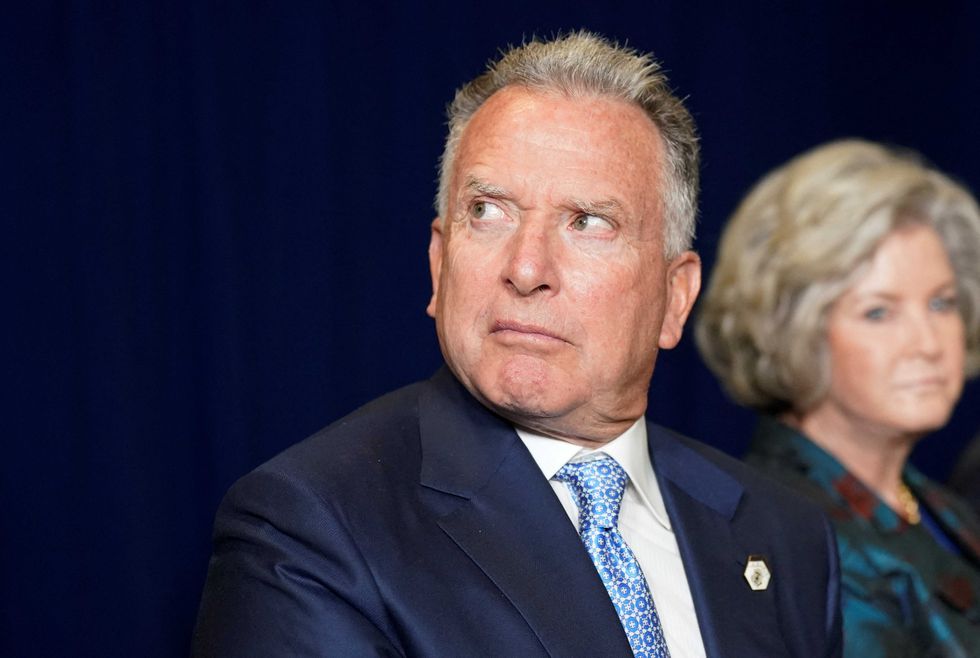
A bipartisan briefing on the Iran ceasefire deal turned tense when President Donald Trump's special envoy Steve Witkoff reportedly berated a Democratic congresswoman and cut off her microphone after she pressed him on the details of the agreement.Rep. Madeleine Dean (D-PA) said she asked Witkoff direct questions about who authored the 14-point memorandum of understanding with Iran and why its terms appeared to favor Tehran from the start, and she also asked how much of his time as envoy was actually devoted to U.S. diplomatic work versus his own business interests, reported The Daily Beast.“How much of your work in the region is for the United States of America and resolving these issues, and how much of your time is being spent on your own ventures?” Dean said. “That, I think, really ticked them off, and that’s when I got cut off. As I said, they cut off my mic. They had not done that to other people, and so I didn’t get to have a rebuttal.”Witkoff, a real estate investor with no prior diplomatic experience, has taken a lead role in negotiating foreign policy alongside Trump's son-in-law Jared Kushner, and Dean complained that the Trump pal was vague about Iran's uranium and an offer to allow the country to access to a $300 billion reconstruction fund.“I was simply asking tough questions about who wrote the MOU, why does it sound so in favor of Iran, and from literally paragraph one, we’re already out of sync with what was to happen,” Dean said.Speaking afterward, Dean argued the war with Iran as reckless and unconstitutional, and reminded Republican colleagues on the call that more than a dozen American service members have died in the conflict since late February, with hundreds more wounded and significant civilian casualties across the region.Dean also raised concerns about Witkoff's dual role as a businessman and presidential envoy, suggesting it warrants closer scrutiny. She said she expects that scrutiny to come in the form of formal oversight if Democrats win back the House majority in November.The congresswoman compared her call with Witkoff to a separate bipartisan dinner she attended that evening at the Qatari embassy, where she said diplomats from Qatar, Oman and Saudi Arabia struck a far more cooperative tone, expressing a desire to work within the existing agreement to reopen the Strait of Hormuz while keeping Iran from acquiring a nuclear weapon.“So it was a jarring contrast,” she said. “I’m talking with literally our alleged envoy and diplomat. They were not diplomatic with us. They were not forthcoming with us, and we had a very robust conversation at the embassy this evening.”The White House has not yet responded to a request for comment on Dean's account of the call.

The Colorado Supreme Court on Monday tossed out two cases involving new redistricting ballot measures that would have favored Democrats. One ruling said the redistricting measure violated the state constitution’s “single subject” requirement that calls for measures proposed by petition to focus on one issue for inclusion on the ballot. The Democratic aligned group, Coloradans…

The Supreme Court this term gave President Trump powers over the federal government that no modern president has held. But it blocked his administration on two of the biggest issues for markets: the Fed and tariffs.Why it matters: Its rulings hand the president firmer command of the federal bureaucracy, signaling to businesses that regulatory policy will be less stable — and more political — with every election.But the cases preserve limits around the Fed and emergency tariff powers, where investors feared political interference could unsettle markets.Between the lines: Case by case, the court gave Trump a freer hand to fire, deport and act before judges could catch up.The court gave his administration major immigration wins, including on asylum access and immigrants' temporary protected status.It repeatedly sided with Trump on emergency appeals, letting contested policies take effect while litigation continued.It also let him fire Federal Trade Commission officials at will, weakening the ability of Congress to create independent agencies outside direct White House control.Yes, but: The court gave Trump more control over business regulations, but not over the authorities governing tariffs or the Federal Reserve.Tariffs: It ruled he couldn't use the International Emergency Economic Powers Act (IEEPA) to impose sweeping tariffs — eliminating one of his fastest and broadest trade tools.The Fed: It denied his bid to immediately fire Federal Reserve governor Lisa Cook, upholding Congress' requirement that he clear legal and procedural hurdles.Reality check: The rulings haven't ended either battle.The White House has continued to pursue tariffs through other legal authorities after losing on IEEPA.Trump has said his administration will keep investigating whether it can ultimately remove Cook.The intrigue: The court carved out the Fed from the broader expansion of presidential removal power it announced the same day.It means future presidents can more quickly replace leaders at agencies overseeing antitrust, consumer protection and other major areas of economic regulation.That makes the agencies inherently more political and gives Trump and his successors more power to quickly rewrite regulations and abandon their predecessors' policy agendas.What they're saying: "Now when a new president comes in, they can clean house at all these agencies," says Graham Steele, a former Biden-era Treasury administration official."You have a regulatory pendulum that goes back and forth, depending upon whether you have a Republican or Democratic president," creating more uncertainty for businesses, Steele says.The big picture: Investors worried that giving Trump broader authority to remove Fed officials could erode the central bank's independence and its resolve to keep inflation in check when that inevitably clashes with White House priorities.That, in turn, risked unsettling the Treasury market and raising borrowing costs across the economy.Chief Justice John Roberts justified the Fed exception by warning that the Founders understood the "calamities" that could arise from even the "suspicion" of political manipulation of monetary policy.What to watch: The tariff case carried a different risk: blessing broad emergency tariff powers could make U.S. trade policy swing with the politics of the moment — the kind of uncertainty businesses and investors hate.