Trump Says Fed’s Warsh Faces Board That’s a ‘Bit Hostile’
President Donald Trump said Federal Reserve Chair Kevin Warsh may not be able to compel his colleagues on the central bank to do what the new chair wants on monetary policy.

Nobel laureate Paul Krugman, a research professor at the City University of New York's Graduate Center, says all jobs data is "noisy" when reacting to the June US employment report. Speaking on "Bloomberg The Close," Krugman also says he is "disturbed" by Federal Reserve Chairman Kevin Warsh's point of view on monetary policy and warns that the Supreme Court's Trump v. Slaughter ruling gives too much discretionary power to President Donald Trump. (Source: Bloomberg)
President Donald Trump said Federal Reserve Chair Kevin Warsh may not be able to compel his colleagues on the central bank to do what the new chair wants on monetary policy.
The White House is facing the prospect of a summer slowdown in the job market, with economic issues top of mind for voters heading into November’s midterms. NBC News correspondents Kelly O’Donnell, Brian Cheung and Keir Simmons report on renewed economic concerns. Oil industry expert John Kilduff discusses what consumers can expect to pay at the gas pump heading into the fall.
Under Germany’s former policy, workers were allowed to take up to six weeks of paid leave for an illness. That's on top of the six weeks of vacation time that most employees get.
The decision not to renew the USMCA is less dramatic than it might appear. Even so, Trump is exchanging stability for more uncertainty.
An Air Force major was arrested on the steps of the Capitol on Wednesday after calling for President Trump and Vice President Vance’s impeachments. Peaceful demonstrations are permitted on Capitol grounds, but a protester must remain alongside a member of Congress to speak openly from the steps. Originally, Air Force Maj. Jason Watson was accompanied…
June’s jobs report is a one-off following several months of very strong jobs days, and it doesn’t reflect the state of the underlying economy. Only 57,000 jobs were created […]
A new report challenges the housing shortage narrative, arguing slower population growth and reduced immigration could mean fewer homebuyers ahead.
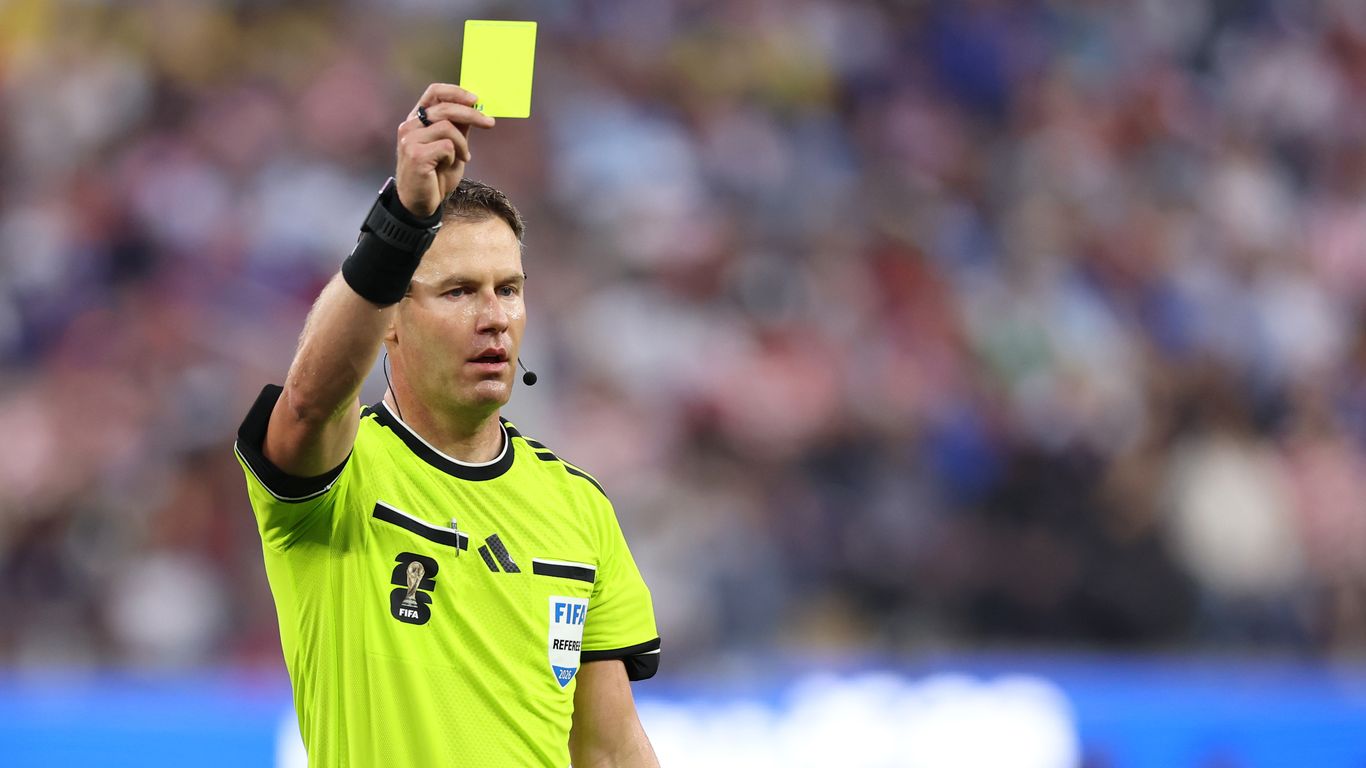
The job market entered the summer with less momentum than looked to be the case just a month ago.Why it matters: Call it a yellow card for the labor market. Thursday morning's employment report doesn't undo three months of stronger hiring, but it does warn that the rebound is less durable than first thought.Hiring has remained concentrated in a handful of industries, leaving fewer opportunities for Americans looking to switch jobs or reenter the workforce.What they're saying: "June's jobs report put a damper on the fireworks, coming in well below expectations and pointing to a labor market that's more fizzle than sparkle," Glassdoor chief economist Daniel Zhao wrote Thursday morning.Driving the news: Payrolls rose by 57,000 in June, roughly half the gains that economists expected. New revisions also show that hiring was weaker than expected over the previous two months, with payroll employment revised down by a combined 74,000 jobs.Payroll gains averaged 111,000 over the past three months, down from 164,000 in May. That's well above the 33,000 pace a year ago, but suggests that the labor market's spring rebound has faded.Zoom in: Fewer Americans were working in June, and fewer were looking for work — a combination that mechanically pushed the unemployment rate down a tick to 4.2%. Household employment fell by 507,000, while roughly 720,000 people left the labor force in June, driving the participation rate down 0.3 percentage point, to 61.5%.Fewer prime-age workers, those between 25 and 54, were working or looking for a job in June: The participation rate slid 0.6 percentage point, the biggest one-month decline outside the pandemic in at least a decade.The big picture: Slower hiring, downward revisions, weaker labor force participation and a narrower mix of industries creating jobs leave economic policymakers with a more difficult question than they faced a month ago.It's unclear whether the uneasy mix of labor market factors in June was a blip or the start of a slower labor market phase.One notable exception to the report's softer tone was wages. Average hourly earnings rose 0.3% in June — the second consecutive month of acceleration — and 3.5% from a year earlier, though slower hiring in lower-paying industries may have lifted the average.What to watch: Federal Reserve chairman Kevin Warsh said last month that the labor market's three-to-six-month trend mattered more than any single jobs report, while noting that the job market had been "moving in a good direction."Financial markets' outlook for the Fed barely budged after the report. One weaker report is not enough to push off expectations that the central bank might have to raise interest rates to contain too-high inflation.Traders now see a roughly 78% chance of at least one rate hike by year-end, down only modestly from about 83% before the jobs report, according to CME FedWatch.