The United Arab Emirates said it was aiming to reduce its reliance on the Strait of Hormuz to “zero” after the war with Iran laid bare the vulnerabilities of the key waterway. After the launch of Operation Epic Fury, Iran immediately moved to close the Strait of Hormuz, attacking shipping with drones and missiles, which […]
According to conservative commentator Andrew Egger, whenever President Donald Trump lays out a goal, history has shown that there are typically four steps between having the commander-in-chief announce his intentions and having them fail “spectacularly.”Writing for the Bulwark, Egger explained “how the president has approached basically all problems since retaking office last year. Step 1: Announce your intent to solve some longstanding problem, like America’s trade deficit,or Iran’s pursuit of a nuclear weapon, or the national debt, or an algae-ridden reflecting pool. Step 2: Ignore all logistical challenges that made the problem difficult in the first place; proclaim confidently that the only reason previous attempts to solve them failed is because your predecessors were giant idiots. Step 3: Try to solve the problem via the first idea you think of. Step 4: Fail spectacularly and immediately.”This script, asserts Egger, has been repeated again and again over the course of Trump’s second term. For example, “After months of castigating the ‘filthy, dirty’ pool as a symbol of failed Democratic leadership… and just days after the White House declared the mission of cleaning it up accomplished, the reflecting pool is once again resolutely algae-green. National Park Service teams could be seen scurrying around Monday and Tuesday, brandishing pool skimmers and gallon jugs of 12 percent hydrogen peroxide solution in a ferocious attempt to restore the pool to its ‘American flag blue’ glory. Hey, look on the bright side: It might not be quite what Trump wanted for the Fourth of July, but it’ll work great next year for St. Patrick’s Day!”Or for another example, “How to fix the American economy? Simple: Throw a million tariffs on it. ‘For decades, our country has been looted, pillaged, raped, and plundered by nations near and far, both friend and foe alike,’ Trump thundered on ‘Liberation Day’ in April 2025. ‘I don’t blame these other countries at all for this calamity. I blame former presidents and past leaders who weren’t doing their job.’ He then spent months in a fever dream of tariff negotiations and renegotiations, setting and resetting rates with mad abandon and whipping the economy around like a rag doll, until the Supreme Court declared the whole mess unconstitutional earlier this year.”From there, Egger lambasts Trump's strategy for tackling the national debt. According to Egger, the president’s approach is “simple: Just throw open the government books to some smart tech guys and let them figure out what to cut. Trump and Elon Musk, Press Secretary Karoline Leavitt said last February, were doing ‘the exact same things that Democrat politicians promised the American people they would do for decades. President Trump is just the first president in our lifetimes to actually do it.’ Musk then spent a few months rampaging through the government tearing the wiring out of the walls; a project that did major damage to vulnerable populations around the world and U.S. science research but made no appreciable dent in federal spending.”Finally, Egger raises an issue that has been looming largest in the news: the war with Iran. So what was Trump’s plan to “bring Iran’s mullahs to heel? Simple: Bomb the hell out of the country until they give you everything you want. ‘For 47 years, no president was willing to do what I’m doing, and they should have done it a long time ago,’ Trump said of his war on Iran back in March. He then spent months watching economic pain pile up in America and waiting in vain for the Iranian capitulation to come, before finally getting sick of the thing and throwing in the towel this week.”As Egger concludes, “Each time this happens, Trump and Co. are compelled to deal with a certain amount of strain in the base. It’s not easy these days being the sort of Trump supporter who rushes in to trumpet every one of his actions as a masterstroke; he tends to leave you with a certain amount of rhetorical cleanup to do.”
Hesitance to resume transport through the Strait of Hormuz reportedly has the president considering a “VIP pass” to restore operations. Since President Donald Trump announced a deal […]
For years, the conservative partisan playbook to win working-class votes was to ignore economic inequality and demagogue the culture war. The journalist Thomas Frank published a best-selling book about this in 2004. “The trick never ages; the illusion never wears off,” Frank wrote in What’s the Matter With Kansas.“Vote to stop abortion; receive a rollback in capital gains taxes.”It may be aging now. Public approval of labor unions, which bottomed out during the Great Recession of 2007-2009 at 48 percent, has been rising ever since, according to Gallup, and lately it’s around 70 percent, which is higher than at any time since the salad days of President Lyndon Johnson’s Great Society. Although support stands highest (90 percent) among registered Democrats, in 2022 a 56 percent majority of Republicans also approved of unions. That’s fallen since to 41 percent, but it’s still a significant minority for a party that for nearly four decades included right-to-work boilerplate in every quadrennial platform. It took a few years, but a significant minority of congressional Republicans is now beginning to catch up to GOP voters. The 2024 Republican Party platform was the first since 1980 not to include a right-to-work plank, and, as I noted last week (“How to Get A Labor Rights Bill Through A GOP House”), two labor rights bills successfully bypassed Republican Speaker Mike Johnson in recent months via discharge petition and passed with support from 20 Republicans. Meanwhile, Democrats are fielding, to challenge red-state Republicans, candidates who appeal to the working-class voters they long neglected. Even the problematic oyster farmer Graham Platner has a good shot at unseating Republican Senator Susan Collins of Maine.Given that the culture war no longer serves to distract voters reliably from labor rights, the new conservative strategy is to re-define labor rights as culture war. On Monday The Wall Street Journal published an editorial (“A GOP Gift to the Cultural Left”) that’s a sort of trial balloon.The editorial addressed House passage of the second labor rights bill to sneak past Speaker Johnson, the Faster Labor Contracts Act (text; summary), which time-limits management dithering after a union election. I fully expected the Journal edit page’s usual tirade about greedy union bosses extinguishing capitalism’s animal spirits. That was the gist of the Journal’s previous editorial about the bill in May, when the discharge petition acquired the necessary 218 signatures. But the thrust of the new editorial was quite different. Unions, it said, only seem like they’re about improving your working conditions; really, they’re just a front for sex-changers and baby-killers. “We wonder if Republicans know what they’ve voted for,” opined the Journal. “Unions, allied with Democrats, have long supported a progressive agenda that includes collective bargaining for abortion coverage and transgender healthcare.” Those 20 Republicans who voted for the Fair Labor Contracts Act, the Journal said, are “selling out their constituents to the progressive left.” The Journal’s Exhibit A was an “Abortion Model Collective Bargaining Agreement Language” recommended by the AFL-CIO. This document does indeed propose “comprehensive sexual and reproductive health care services, including contraceptives, abortion services (procedural and pharmaceutical) and gender-affirming care.” But the AFL-CIO is not a labor union—it’s a federation of labor unions that plays no role in negotiating union contracts. That’s typically the work of a union local. “Unions are democratic institutions,” Steve Rosenthal, former political director of the AFL-CIO explained to me, with officials at all levels elected by members and conventions. “They take positions accordingly, based on where the members are.” If a contract includes health coverage for gender-affirming care or Mifepristone, that’s because members want these things. Any member of Congress who actively opposes such language is interfering with the terms of a private contract, which is something conservatives are supposed to hate.The Journal editorial didn’t identify any union members who object to their health plan covering abortion and gender reassignment. (My guess is such people are hard to find.) Instead, the Journal complained that “many businesses have objected to those provisions on religious grounds.” Oh, please. If I may be permitted a conservative complaint: I never even imagined I’d hear such an argument before 2014, when the Supreme Court decided, outrageously, that businesses enjoy the same First Amendment right to religious freedom as individuals. Bring back the good old days when they didn’t!
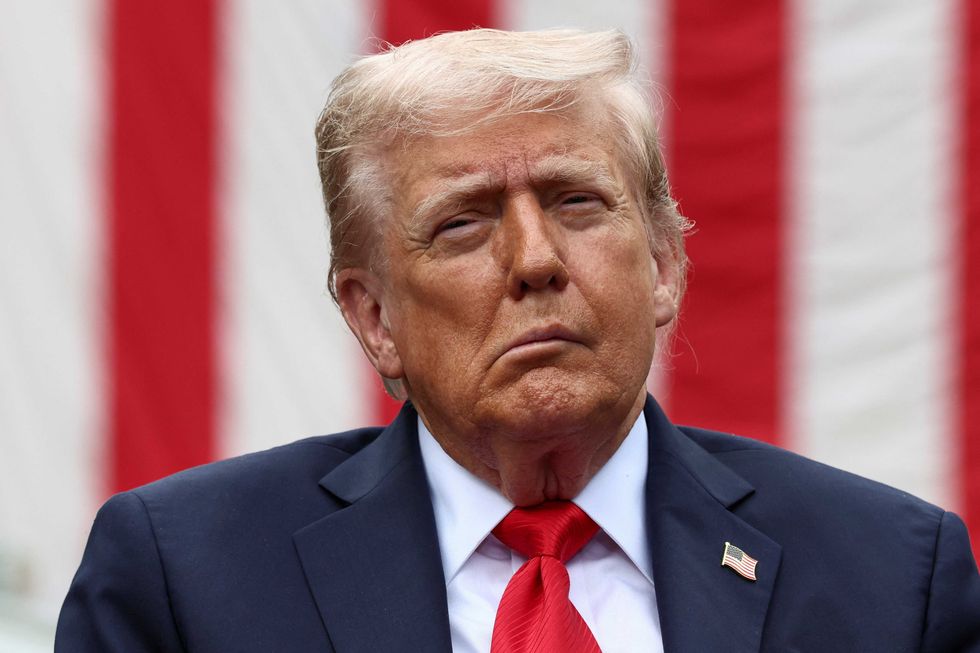
President Donald Trump’s Iran war has divided his MAGA base more than any other issue since he came down the Trump Tower escalator to launch his first presidential campaign, Axios reports. Now, some of his top allies are turning against his Iran deal in a series of denunciations.“The backlash has been particularly scathing from allies Trump spent months amplifying as validators of his Iran campaign,” Axios reports. The Iran deal has “opened an explosive second front in MAGA’s civil war, waged by hawkish allies who view U.S. concessions as an existential betrayal of Israel.” The Hill notes that conservative “pundits and hawkish Iran experts are warning against any agreement that gives up key leverage against the Islamic Republic, or opens access to badly needed funds, without completely giving up its nuclear capacity.” Fox News contributor Marc Thiessen wrote: “$300 billion to Iran under any circumstances is a disaster."Conservative commentator Ben Shapiro told The Wall Street Journal: “If the president signed a bad deal, many of us who cheered and stood by him and thought that his action in Iran was heroic, will be extraordinarily disappointed.” Many, including pro-Israel conservatives who backed Trump’s war, are now demanding to see the text of the “Memorandum of Understanding” (MOU) with Iran. They are frustrated with both the secrecy behind the deal — the MOU has yet to be officially released — and the reported leaked details.Senior White House officials had said the text would be released Tuesday or Wednesday, while Trump said Friday — after it is officially signed in a ceremony in Geneva. Vice President JD Vance suggested that the text might be released before Friday, BBC News reported.Trump’s own remarks have not quelled concern from his top allies, Axios noted. “We’re dealing with people that I think are very rational people,” Trump said on Tuesday at the G7 summit. “They were nice to deal with.” He called them “strong people, smart people,” and added: “They’re not radicalized. They’re looking to help their country.”“For hawks who view Iran’s government as a terrorist regime incapable of reform,” Axios reported, “the president’s language deepened their fear that the deal rewards Tehran for surviving the war.”Vice President Vance may bear more of the ultimate backlash. He will sign the deal in Geneva, while Trump “can always pitch himself as the president who took on Iran when no one else dared.”
As the world awaits the full reopening of the Strait of Hormuz following the signing of an interim peace deal between Iran and the US, the United Arab Emirates is working on a highly ambitious plan to try to end its dependence on the critical chokepoint.