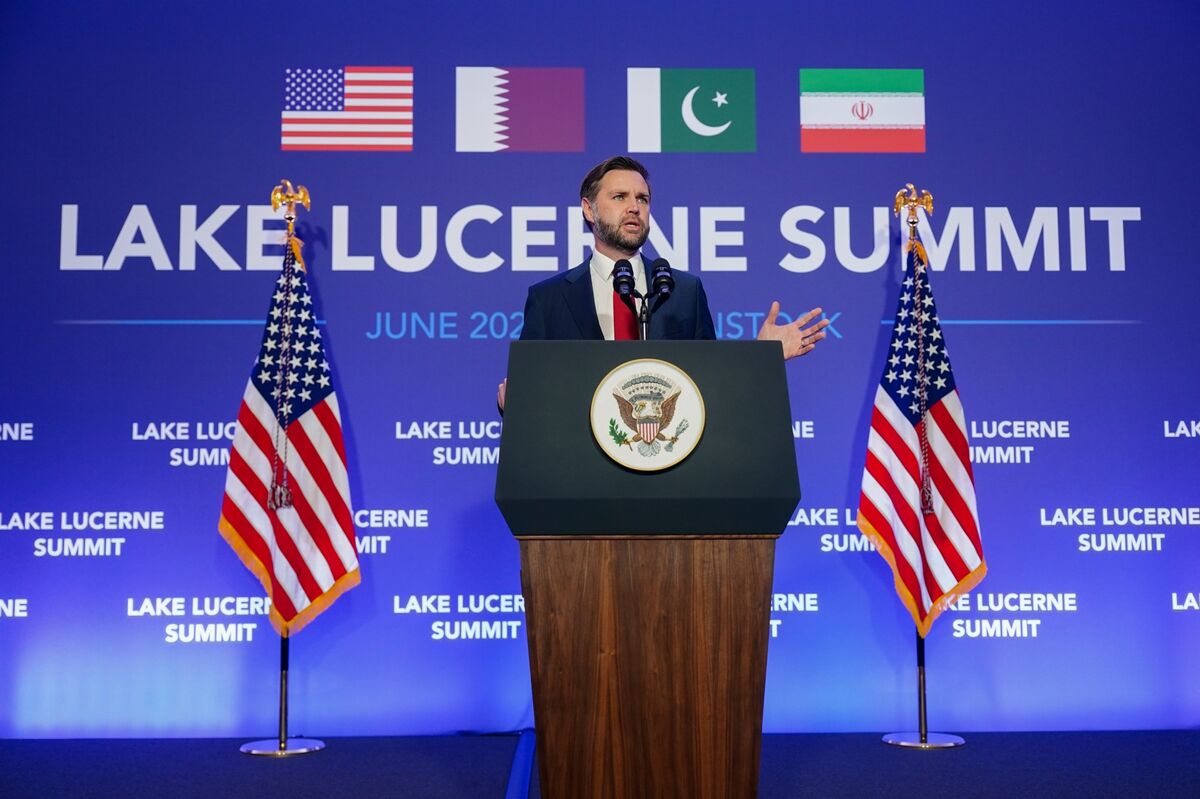
Vance Hails ‘Good Day’ of Iran Talks as US Waives Oil Sanctions
Center
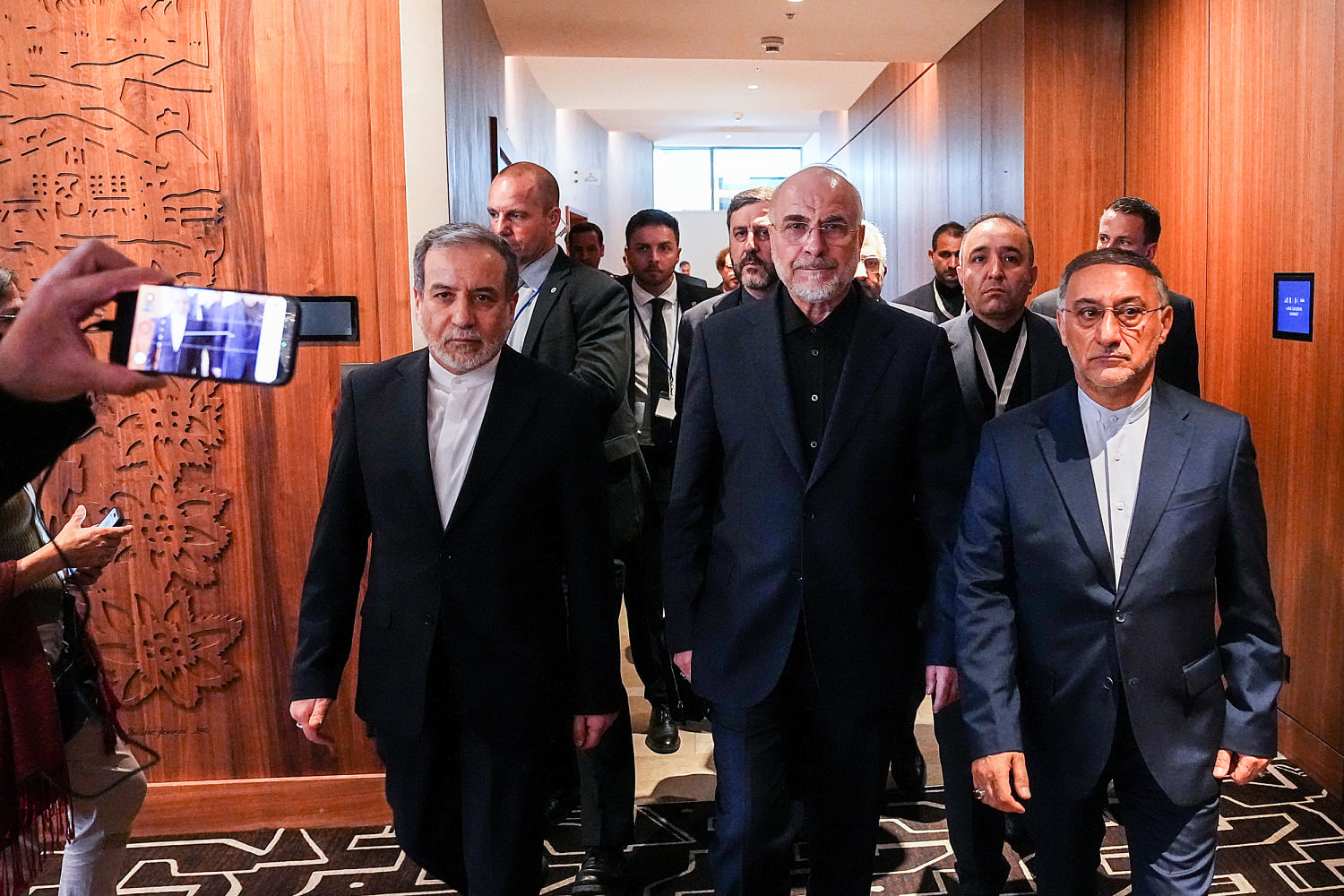
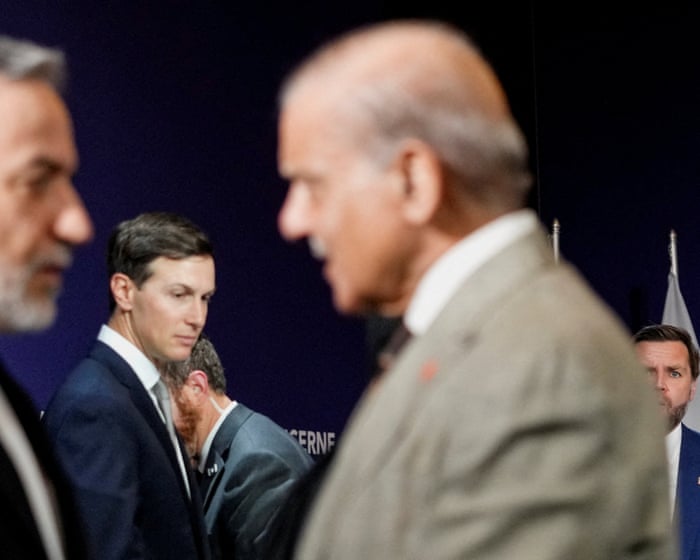
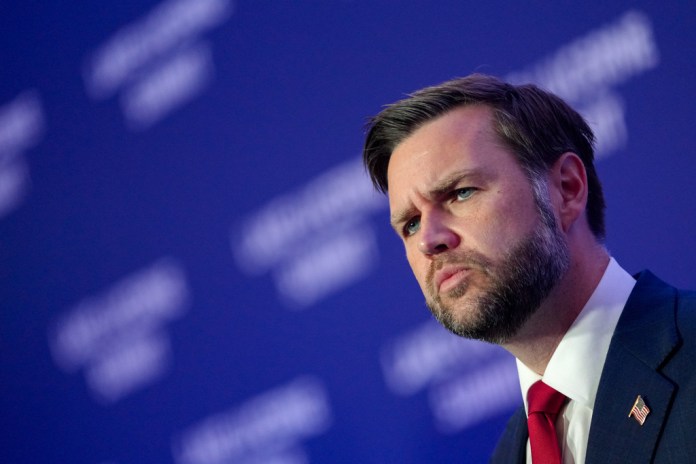
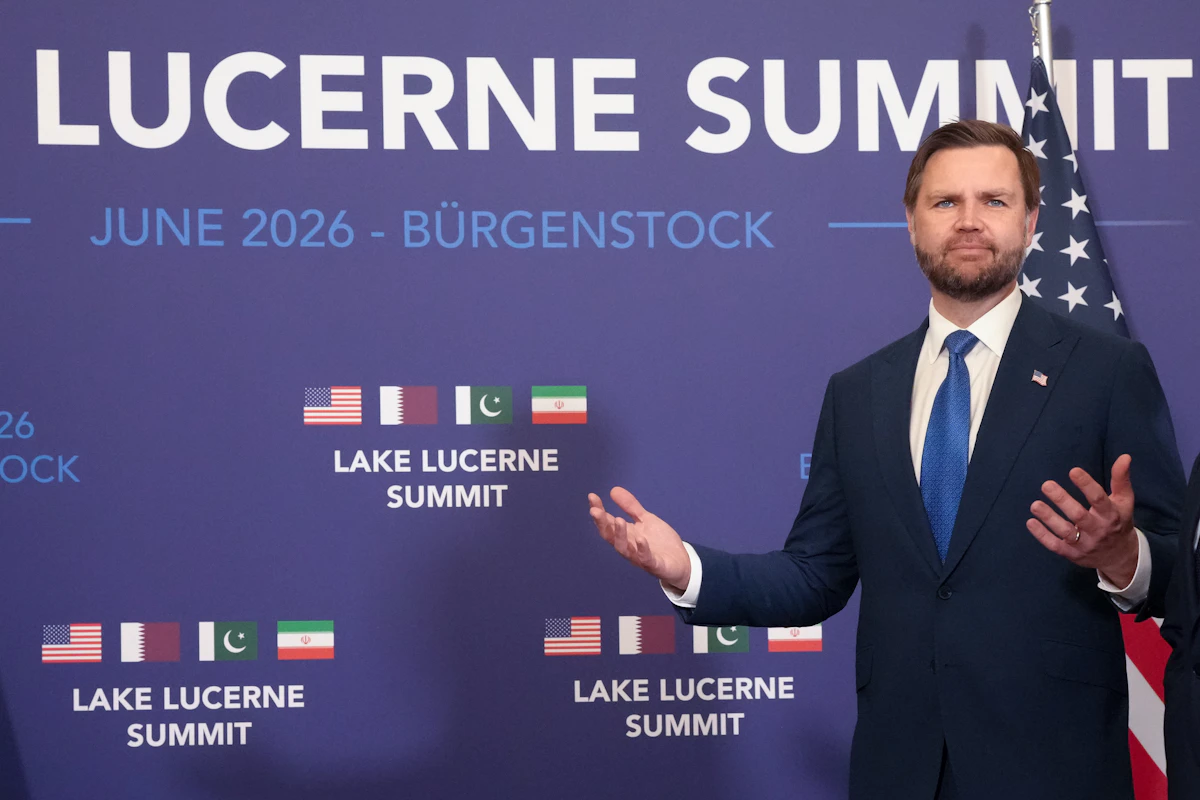
US Vice President JD Vance said talks with Iran over the weekend were “very, very good,” as the sides attempt to reach a peace deal within two months and formally end a war that’s reverberated through the global economy.
Iran appears to have identified and systematically exploited President Donald Trump's rapidly decaying cognitive abilities.That's according to Atlantic staff writer and national security scholar Tom Nichols, who joined MS NOW's Nicolle Wallace on "Deadline: White House" on Monday. Wallace argued that Trump is operating inside an "artificial reality" constructed by aides who feed him selectively curated social media posts to shield him from negative information about the economy and the war. The arrangement, Wallace said, explains moments like Trump's repeated insistence that the country is "hot."I used to think he was lying. Now I think he's deluded," Wallace said, calling it a "threat to global stability."Nichols agreed with the withering verdict. "Delusion is the word I was going to use when you were asking about this, because he is self-deluded," Nichols echoed. "I have said many times on this show that I think his cognitive abilities are decaying rapidly."Aides who once told Trump hard truths have stopped doing so, he said. "He doesn't want to hear it. I mean, now we're just seeing a more extreme version of the problem that Donald Trump has always been uneducable and unbriefable. He doesn't listen. He's a narcissist. You can't tell a narcissist that they're wrong about something when they've decided that they're right," said Nichols.Drawing on the upcoming new book "Regime Change" by Maggie Haberman and Jonathan Swan, Nichols said the portrait that emerges is of a president who has turned previous positions completely upside down. A regime once called an existential evil is now a negotiating partner, he said, and nuclear material that sparked the Iran war may now remain in the country indefinitely.Nichols argued that Iran had "figured something out" that Trump refuses to accept: that two months of high gas prices would damage him politically far more than depleting U.S. weapons stockpiles. That assessment tracks with earlier reports that Iranian negotiators were recruiting senior psychologists to tailor messages for what they described as Trump's "impaired mental state."Analysts have warned that Trump's split-off-from-reality problem has cascaded from domestic politics onto the global stage, leaving adversaries better positioned.
VP JD Vance defends fragile Iran MOU in Switzerland as reports suggest internal administration split over whether Tehran can be trusted on nuclear deal.
Israel's government is concerned that the U.S. is effectively legitimizing Iran's influence in Lebanon and eroding Israel's freedom of operation there through new understandings reached in Switzerland and the memorandum of understanding signed with Iran last week, two Israeli sources told Axios.Why it matters: Iran has managed to wrap the situation in Lebanon into its negotiations with the U.S. in order to support its proxy, Hezbollah. The Trump administration accepts that it must now contain Israel's actions in Lebanon in order to advance its diplomacy with Iran.Israeli officials worry the new understandings will undermine months of efforts by the U.S. and Israel to weaken Hezbollah and decrease Iran's influence in Lebanon.More immediately, they're also worried about pushback from D.C. each time they want to conduct a strike on Lebanese soil, or pressure from Trump to withdraw from southern Lebanon while the Hezbollah threat still exists.Driving the news: The U.S.-Iran MOU stipulates that both countries and their allies will end all hostilities, including in Lebanon, and ensure the country's territorial integrity and sovereignty — which are undermined by Israel's ongoing occupation in southern Lebanon.There were several rounds of fighting in the days after it was signed, though the latest ceasefire renewal has held since Saturday.Iran threatened to close the Strait of Hormuz and to skip the Switzerland talks if Israel continued its attacks.Once the talks actually began on Sunday, Lebanon was one of the key issues discussed. The parties agreed to create a new "deconfliction cell," together with Lebanon and the Pakistani and Qatari mediators, to ensure the ceasefire holds.Between the lines: Israeli sources claim that new U.S.-Iran agreements on Lebanon erode previous understandings reached between the Netanyahu government and the Biden administration in 2024, which were blessed by the incoming Trump administration.Under the Nov. 2024 Lebanon ceasefire agreement, brokered by the Biden administration, Israel retained the right to act against both imminent threats and emerging threats posed by Hezbollah. Under the current conditions, Israel's freedom of action appears to be limited to imminent threats only.And while the previous ceasefire-monitoring mechanism involved Israel, Lebanon, the U.S., and France, this time Israel is not a direct participant, while Iran is.Furthermore, the Biden-era monitoring mechanism was focused on coordination to dismantle Hezbollah's military infrastructure in southern Lebanon, while this one will focus on de-confliction between the Israeli military and Hezbollah.Behind the scenes: An Israeli source said that while the nuclear elements of the U.S.-Iran deal concerned Prime Minister Benjamin Netanyahu, he is currently much more worried about the Lebanon part.One reason is that Israel's actions against Hezbollah have enormous domestic political salience ahead of October's election."Bibi is hysterical about it," the source said, referring to Netanyahu by his nickname.In recent days, Netanyahu asked his close confidant Ron Dermer, who left government several months ago, to urgently use his relationships within Trump's team to try to influence the U.S.-Iran talks on Lebanon, according to the same Israeli source.The source claimed Dermer's involvement helped lead to a Truth Social post in which Trump threatened to strike Iran if it didn't restrain Hezbollah.A U.S. official confirmed Dermer's participation and said U.S. negotiators in Switzerland spoke to him several times on Sunday to brief him on the Iran talks and get his input. "We were transparent with them," the official said.The other side: Lebanese President Joseph Aoun is willing to accept the new mechanism as long as it is led by the U.S., according to a Lebanese official.Vice President Vance and Trump's envoy Jared Kushner briefed Aoun on the deconfliction mechanism in a call on Monday morning.What they're saying: A senior U.S. official contended that Iran has been deeply involved in Lebanon for decades and claimed Israel doesn't have to be concerned about the new mechanism for Lebanon. "Israel is not out of the mechanism, because the U.S. is in the mechanism. We are so close and coordinated that a direct channel between the U.S. and Iran over Lebanon will only benefit Israel," the U.S. official said.Friction point: "The deconfliction mechanism in Lebanon envisioned by the Trump administration doesn't include Israel and in my view is a major misstep," Sen. Lindsey Graham (R-S.C.), one of Netanyahu's closest allies in Congress, told Axios.On Monday, Netanyahu issued an unusual joint statement with his Defense Minister Israel Katz and Israel Defense Forces chief of staff Gen.
Vice President Vance said on Monday that Iran will allow nuclear inspectors back into its country as negotiations between Washington and Iran continue to end the conflict in the Middle East. Iran has not confirmed the arrangement. “Letting in the inspectors is a big deal,” Vance told reporters, referring to the United Nations’ International Atomic…
Trump's "get things done and worry about the fallout later" approach has resulted in a series of failures, such as the Reflecting Pool renovation and the Iran deal, which have left the American public questioning his competence, accountability and judgement.
Vice President JD Vance said Iran has agreed to let nuclear inspectors back into the country, as experts warn Trump’s new Iran framework must avoid Obama-era inspection flaws.
President Trump escalated pressure on Iran with fresh threats as confusion continues over whether the Strait of Hormuz is truly open and whether peace talks are making any real progress. We break down the latest diplomatic twists, Vice President JD Vance’s negotiations, and the ongoing Israel-Lebanon complications hanging over a potential deal. Meanwhile, Trump says...