Interior Department compares Reflecting Pool algae to Iran’s navy
Center
The Interior Department on Thursday touted the renovation of the Lincoln Memorial Reflecting Pool by comparing algae to the Iranian navy. “The advanced nanobubbler technology very effectively killed the algae that has plagued every Lincoln Reflecting Pool reopening—most infamously [former President] Obama’s reopening—since 1922,” the department’s press team wrote on social platform X. “The Reflecting…
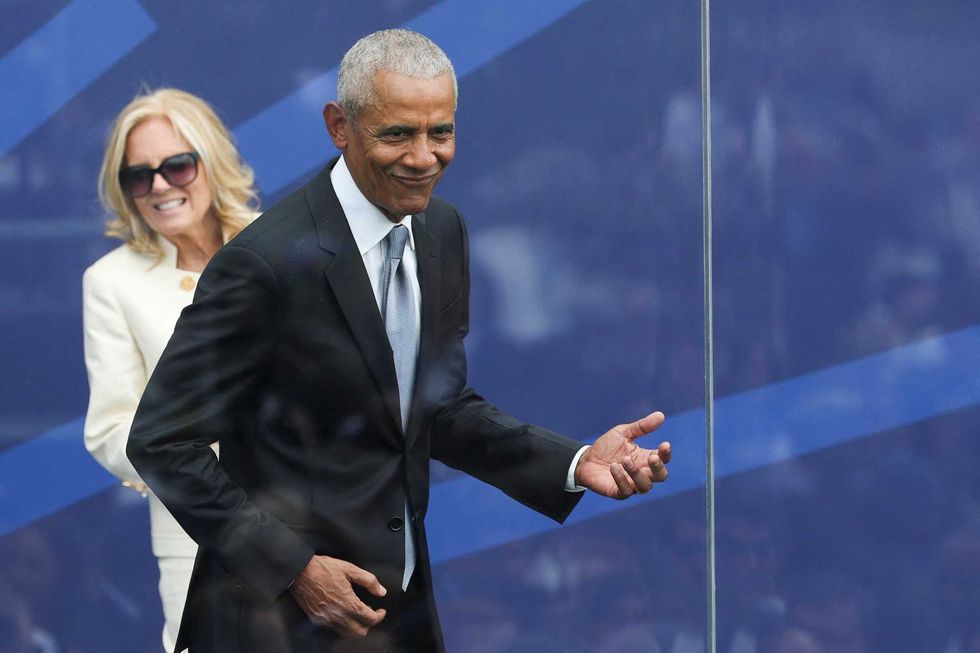
Fox News cut away from former President Barack Obama's historic remarks at the opening of his presidential library on Thursday to go to political analyst Reince Priebus.The abrupt switch came during Obama's dedication speech at the $850 million Obama Presidential Center in Chicago's Jackson Park, where three former presidents and a roster of A-list performers had gathered for an invitation-only ceremony.Obama was mid-sentence when anchor Sandra Smith pulled the plug."Hard things are hard," Obama told the crowd. "And that's especially true in a big, raucous, diverse, argumentative democracy like the United States of America. Everybody's got an opinion. And that means getting stuff done involves reconciling the demands of a couple hundred million people.""Alright," Smith said, cutting him off. "You've been listening live to former President Barack Obama there in Chicago at the grand opening of the Obama Presidential Center."Co-anchor John Roberts offered a brief recap — noting that former Presidents Bill Clinton and George W. Bush were in the audience and remarking that Bono "still looks pretty good" — before pivoting hard to Iran."JD Vance becoming a public face to the Trump administration's deal with Iran and what could be a moment that shapes a potential 2028 White House bid," Roberts said. "Reince Priebus is standing by."Priebus, a Fox News political analyst and former Republican National Committee chairman, then held forth on the Iran memorandum of understanding, calling it "a sixty-day trial run.""Americans care more about $5 gasoline than they do staying in a war with Iran," Priebus said. "That is an unpleasant thing for some people out there to live with, but it's true."President Donald Trump was not invited to the ceremony. Obama Foundation CEO Valerie Jarrett said the event was reserved for those who supported Obama's journey.The center opens to the public on Friday.
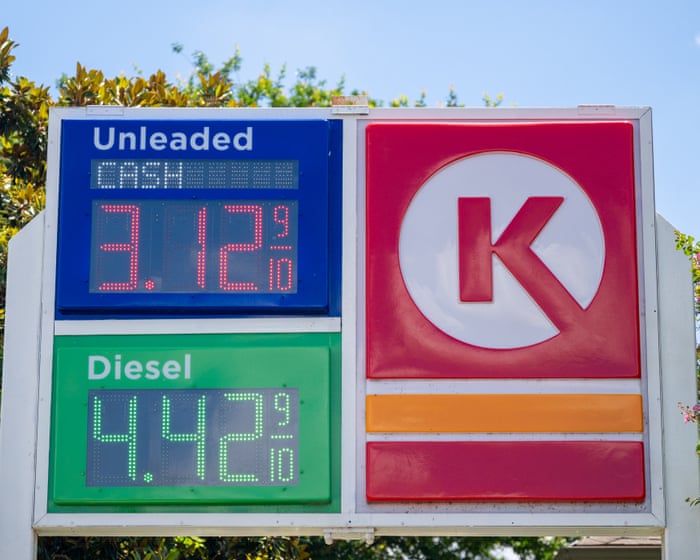
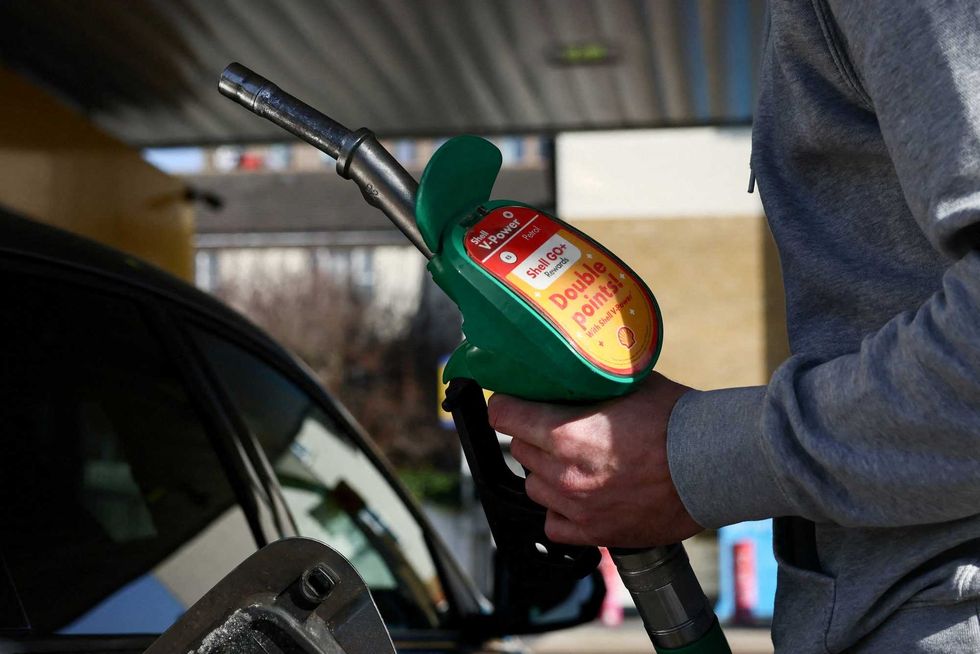
Drivers feel some relief but prices still a dollar more per gallon overall since before US-Israel attack on IranSign up for the Breaking News US newsletter email The average price of US gasoline fell to just under $4 a gallon on Thursday for the first time since March, following the announcement of a preliminary agreement between the US and Iran to end the war and reopen the strait of Hormuz.The development has provided some relief to drivers who have seen soaring costs amid Washington’s war with Iran. But filling up still remains more expensive than it was before the conflict began. Continue reading...
Today, Bloomberg's Mike Mckee discusses newly minted Fed Chair Kevin Warsh's impact on future decisions as the Fed takes on a hawkish bent under his leadership. Then, Sherry Paul, managing director and private wealth advisor at Morgan Stanley Private Wealth Management, on how she is approaching the investment market as tech stocks dominate the majority of growth. Plus, Deep Fission CEO Liz Muller is joined by Bloomberg's Will Wade to discuss strides in nuclear power innovation as her company begins trading. Finally, Randall Williams recounts the New York Knicks championship ticker tape parade and previews this weekend's slate of World Cup games. (Source: Bloomberg)
The U.S. military lifted its naval blockade near the Strait of Hormuz after the U.S., Iran and intermediaries signed the memorandum of understanding (MOU) to end the conflict in the Middle East. U.S. forces ended the blockade, which barred maritime traffic from entering and exiting Iranian ports and coastal areas, the U.S. Central Command (Centcom)…
US President Donald Trump’s war with Iran may finally be reaching a close. But consumers and businesses around the world will continue to pay the price in the months ahead as still-elevated energy costs funnel hundreds of billions of dollars to fossil fuel giants.That’s according to a report from the environmental group 350.org released Thursday, following Trump’s signing of a memorandum of understanding with Iran this week to begin the process of formally ending a war that has sent global oil prices skyrocketing and saddled ordinary people with record fuel prices.The group estimated that just 110 days of war resulted in the transfer of an additional $374 billion from consumers and businesses into the coffers of oil and gas companies beyond what would have been expected had the war never been launched.And while Trump claims his agreement to end the war this week will avert an “economic catastrophe,” there will likely still be tremendous pain even if the Strait of Hormuz reopens promptly.Using oil and gas pricing scenarios from the International Monetary Fund’s April 2026 World Economic Outlook and data on global consumption, 350.org predicted that by the end of the year, consumers and businesses will spend an additional $199.8 billion on oil and $128.1 billion on gas above a non-war scenario, making for a grand total of more than $700 billion as a result of the war.This, the group said, is a conservative estimate, as it does not even take into account knock-on effects. The war will ultimately end up costing much more when factoring in inflation across the rest of the economy, resulting from higher fuel costs or fertilizer shortages caused by the strait’s closure, which has affected food prices.It also does not take into account the resulting effects on economic output or employment as rising costs and lower consumer spending force companies to tighten their belts.“The oil and gas industry is draining billions from people and businesses on the back of a war that has killed thousands and pushed millions toward poverty and hunger,” said Andreas Sieber, head of political Strategy at 350.org.“Even if the Strait of Hormuz reopens tomorrow, we should expect prices to remain above pre-crisis levels,” he said. “We witness not only a massive fossil fuel crisis but a vast upward transfer of wealth built on instability of fossil fuel markets and pain.”While the war has brought it into starker relief, previous reports from 350.org have shown that even if the US had never attacked Iran, the continued global dependence on fossil fuels was resulting in trillions of dollars of avoidable costs each year, including $9.3 trillion to mitigate climate-related damages and air pollution-related deaths each year, costs that disproportionately fall on the world’s poorest.In order to alleviate economic strain from the war, Sieber said, “governments should tax these excess profits now and use the revenues to protect people, cut bills, and rapidly deploy renewables that make households and small businesses less vulnerable to the next fossil fuel shock.”Estimates of inflation also do not account for how the war has heightened global instability and poverty, which will require additional resources for humanitarian relief efforts. In late April, the United Nations Development Program estimated that even if the conflict had ended then, more than 32 million people worldwide would be pushed into economic precarity.This is not to mention the resources that will need to be expended to address the harms caused by the war itself.In exchange for negotiations on Iran’s nuclear program, a portion of the memorandum of understanding requires the US to work with “regional partners,” presumably other Persian Gulf allies, to scrounge up at least $300 billion to help Iran pay for reconstruction and economic development after the country was devastated by American and Israeli attacks on civilian infrastructure and millions were displaced.As a report from the International Rescue Committee detailed last week, the Iran war has also had cascading effects on other conflicts and catastrophes.“Six months ago, the IRC warned that a New World Disorder was emerging,” said David Miliband, the humanitarian group’s president and CEO. “Since then, disorder has not only grown but accelerated. A war with Iran. A million people have been forced to flee their homes in Lebanon. A brewing global food security catastrophe that risks plunging millions more people into acute hunger. An expanding Ebola outbreak. Defanged diplomacy and collapsing aid budgets.”“The Iran war couldn’t have happened at a worse time,” Miliband said in a New Yorker article published Thursday. “It set off a chain of events that’s very damaging.”
President Trump’s reflecting pool woes are growing. Days after the water in the Lincoln Memorial Reflecting Pool turned green from algae, the recently applied blue paint is now peeling off the bottom of the pool. Clips are going viral of the new $14M paint on the Reflecting Pool peeling off just 12 days after the pool reopened. pic.twitter.com/4bX8v1jCfB— Headquarters (@HQNewsNow) June 18, 2026Meanwhile, the current algae bloom in the pool is the biggest amount recorded in the month of June in at least five years, according to The Washington Post. The president personally requested “American flag blue” paint in his $14 million renovation of the pool, which didn’t go through a required bidding process and was instead awarded to a company with no federal contracting experience who is overcharging the government. Any outdoor pool of untreated water is prone to growing algae, and crews were seen Tuesday dumping hydrogen peroxide into the water in a hasty attempt to kill the aquatic plant. There’s one problem with that: Hydrogen peroxide also serves as a paint remover. So in trying to (ineffectively) kill the algae, Trump also ruined his new paint job and created a potential hazard to local birds such as ducks. A close-up photograph of the pool workers’ equipment revealed that they were using a 12 percent hydrogen peroxide concentrate, which can cause problems if inhaled and burns if the chemical touches the skin, according to the Centers for Disease Control and Prevention.The Trump administration blames residual material in supply lines for the growing algae problem. The Interior Department, which is in charge of the pool, said it was using hydrogen peroxide and “high-tech nanobubble ozone technology” to treat the outbreak.But not only has the hydrogen peroxide failed to get rid of the algae, it has caused the blue paint to peel and raised phosphate levels in the pool “far higher than what is recommended to keep algae at bay,” according to CNN, which tested the pool’s water with the help of a swimming pool store. The whole project is now attracting attention for all of the wrong reasons, and it may look even worse than before by the time the America250 celebration takes place on July 4.
Vice President J.D.
The post (VIDEO) JD Vance Highlights The Difference Between Obama’s JCPOA and Trump’s MOU – Responds to Critics Claiming Iran Will Receive $300 Billion appeared first on The Gateway Pundit.