“I have been doing this a while,” Sen. Ron Wyden told The Intercept. “And I’ve never had this kind of bipartisan support.”
The post Momentum Builds to Rein In Domestic Spying Law — Whether or Not Bill Pulte Survives as Intel Chief appeared first on The Intercept.
After Director of National Intelligence Tulsi Gabbard announced her resignation from the Trump administration, she got an unexpected call on Tuesday from her planned successor, Federal Housing Finance Agency director Bill Pulte, telling her she was essentially being fired effective immediately, catching her completely off guard.According to Axios, Gabbard, who had announced she would be leaving at the end of the month, was instead told by Pulte, "Today is your last day."Gabbard then got in touch with President Donald Trump, who made clear this directive had not come from on high and she was free to choose the day she left. "What day works best for you?" Trump asked her. She indicated June 19, which was followed by Trump getting on Truth Social to announce that as the date of her departure.Gabbard, a lieutenant colonel in the U.S. Army Reserve, has privately clashed with the Trump administration in recent months over its handling of the war in Iran. Officially, however, she said she was leaving due to her husband's cancer diagnosis.Trump's move to replace her with Pulte has led to massive controversy, even among conservatives, as Pulte has no experience whatsoever in national security and a track record of abusing his office to go after the president's political enemies.
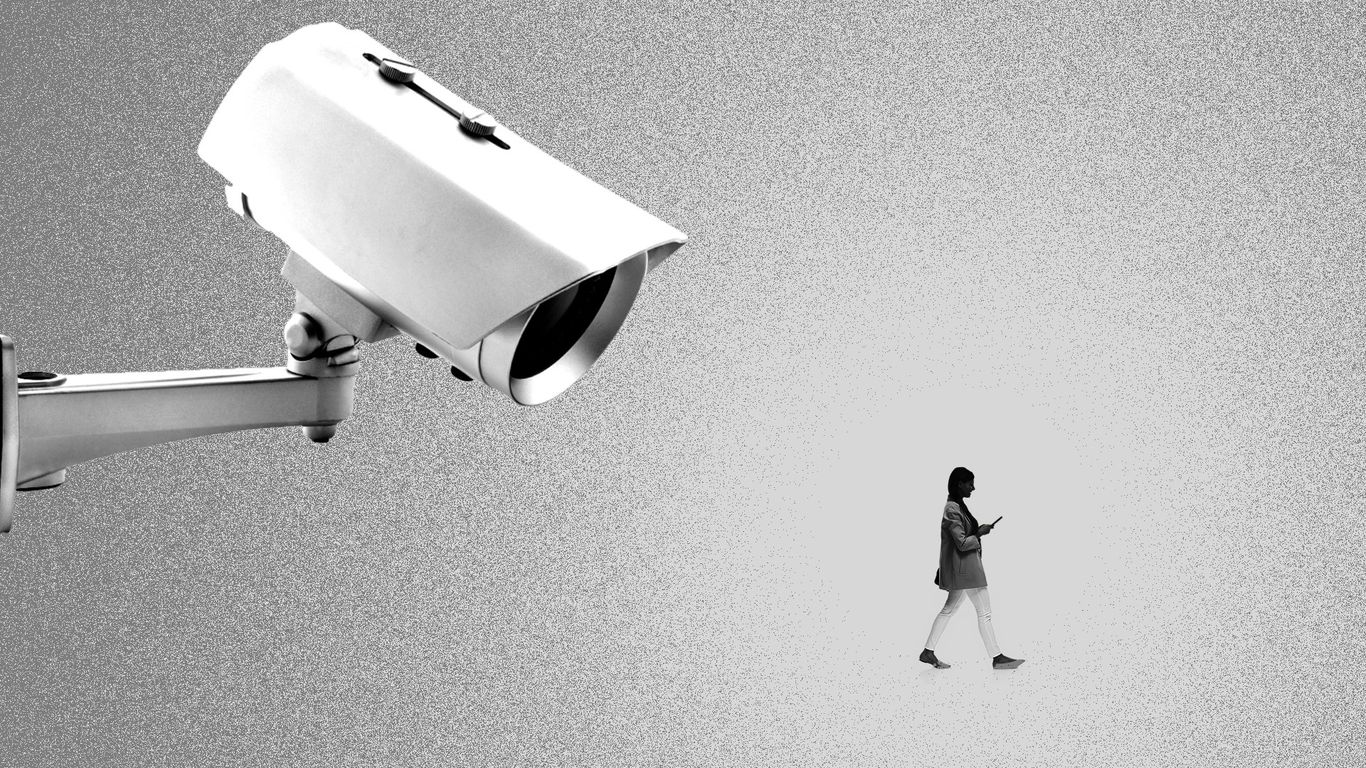
Republicans are struggling to extend a powerful surveillance authority set to lapse this weekend after President Trump alienated lawmakers with his choice of acting spy chief.
One of America's most powerful spy authorities is nearing an unprecedented lapse, threatening to plunge intelligence agencies and telecommunications companies into legal uncertainty if allowed to go dark on Friday. Why it matters: Members in both parties are warning that an expiration of Section 702 of the Foreign Intelligence Surveillance Act could jeopardize U.S. national security. Section 702 feeds more than half of the president's daily briefing and has been credited with helping thwart terror plots and other national-security threats.It allows the attorney general and director of national intelligence to compel electronic service providers to provide communications involving foreign intelligence targets overseas.The intrigue: The Foreign Intelligence Surveillance Court re-certified Section 702 procedures through 2027 earlier this year.But if Congress fails to renew the underlying statutory authority, intelligence agencies and telecommunications companies will face immediate legal uncertainty over what collection activities may continue.The result could be a chaotic and largely untested period for one of the intelligence community's most heavily used authorities.Zoom in: Democrats are refusing to back an extension of Section 702 unless Trump reverses his decision to name Bill Pulte as acting director of national intelligence.Trump wants Pulte — who lacks any national security experience — "to execute the immediate and needed downsizing" of the Office of the Director of National Intelligence, he posted Wednesday on Truth Social."Bill Pulte cannot serve a minute as acting director of national intelligence, and until that elevation is abandoned, there's nothing really to talk about," House Minority Leader Hakeem Jeffries (D-N.Y.) told reporters Wednesday."Pulte is just one of the most vicious, incapable, non-fact-based people I've ever seen in the government," Senate Minority Leader Chuck Schumer (D-N.Y.) told Punchbowl News.Between the lines: Before Trump picked Pulte, GOP lawmakers appeared close to assembling a bipartisan coalition for a longer-term 702 extension.Negotiations had been difficult, with lawmakers struggling for months to bridge disagreements over surveillance reforms.What they're saying: "It'd be a very dangerous time to allow us to not have that important national security tool," House Speaker Mike Johnson (R-La.) said Wednesday. "We have a lot of big events going on around the country right now. We have the FIFA World Cup, we have the American 250 events, Freedom 250 events.""I'm the only one in this institution that's actually used 702 to save lives. It is critical to the president's daily brief. It's the single most important 9/11 commission recommendation that we have, and it's at risk of going dark due to foolishness," Rep. Brian Fitzpatrick (R-Pa.) told Axios."I don't agree with [Pulte's] nomination, and I don't agree with them voting against FISA because of it," Fitzpatrick added.What's next: The House will take up a short-term extension on Thursday morning to keep the program going through July 2.The vote, which will require two-thirds support, is expected to fall short.The bottom line: Not every Democrat is comfortable allowing the authority to expire, but Johnson is nowhere close to the necessary two-thirds majority and some Republicans aren't signaling support for a short-term extension."I'm not going to play politics with our national security, that's...you know, that's for Donald Trump to do," Rep. Jason Crow (D-Colo.), who sits on the House Intelligence Committee, told Axios. "I encourage my colleagues to do the same."Rep. Clay Higgins (R-La.), who has been pushing for reforms to the program, told Axios he's considering voting against a short-term extension. "They ask guys like us, 'Well, could you please give us a little more time to get this done?' You grow tired of that crap after a while."
The next round of criticism from those hating on President Donald Trump’s planned UFC event at the White House focused on the custom outfits to be worn […]
The Trump administration is launching a "massive leak hunt" to find out who spilled details on a panicked conversation inside the White House.A new book by journalists Maggie Haberman and Jonathan Swan has the Trump White House scrambling to find out who leaked details about the Trump administration's "freakout" over the release of the Epstein files, according to reporting by CNN. The New York Times published an excerpt of the book, "Regime Change: Inside the Imperial Presidency of Donald Trump," on Wednesday.The book's excerpt describes a meeting that Trump didn't attend or know about in the Situation Room. Included in the meeting were his senior aides, Vice President JD Vance and White House Chief of Staff Susie Wiles, last year to plan how to contain the fallout. Others present included then-Attorney General Pam Bondi, then-Deputy Attorney General Todd Blanche, and FBI Director Kash Patel, according to reporting by The Daily Beast. According to an excerpt of Haberman and Swan's book, Vance "appeared panicked" about how the Epstein files would divide the president's base.CNN cited a person who "detected" the search for the leaker to confirm that the White House is now hunting them down.