The Department of Justice has launched an investigation into four California public school districts for allegedly teaching students about sexual orientation and gender ideology under the guise of “LGBTQ history and social studies,” while failing to notify parents.
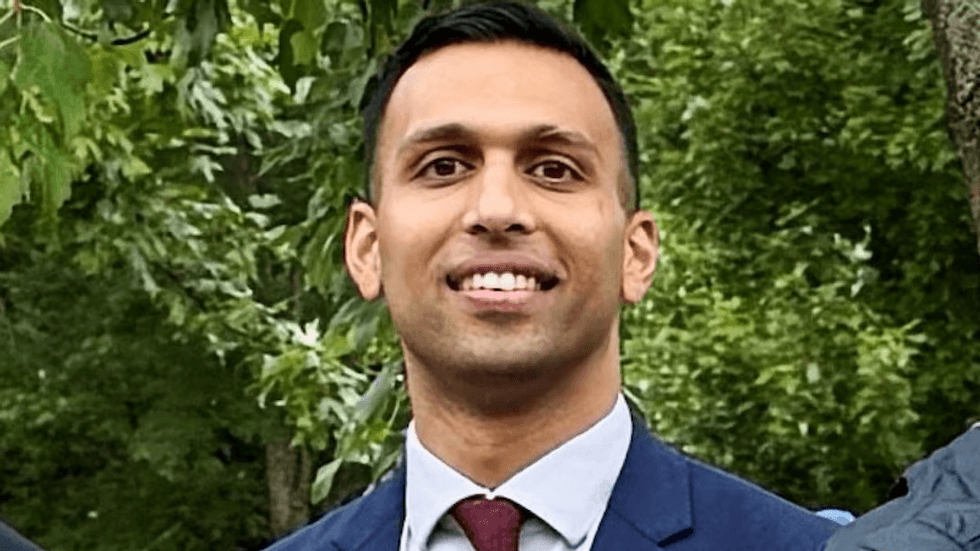
A controversial Justice Department official whose conduct has drawn scrutiny in courts across the country has been implicated in a high-profile prosecution that was tossed out by a judge, according to a new report. Sources told the Chicago Sun-Times that Associate Attorney General Aakash Singh was in contact with the office of Chicago U.S. Attorney Andrew Boutros during Operation Midway Blitz, and defense attorneys for the “Broadview Six” are seeking records that could tie him to the tainted case against protesters arrested during the immigration crackdown.Six protesters — most with connections to local Democratic politics — were charged following a September protest outside a suburban immigration detention facility in Broadview.Prosecutors alleged the group damaged a federal agent's vehicle during the demonstration, but the case collapsed last month after U.S. District Judge April Perry uncovered what she described as apparent prosecutorial misconduct during grand jury proceedings. She found that transcripts submitted to her by federal prosecutors had been altered to conceal what had actually taken place, and the U.S. attorney's office subsequently dropped all charges.Defense attorneys are now seeking records of any communications between Singh and the Chicago office related to their clients' case, including cell phone records. Boutros's office has previously stated that no communications with outside parties influenced investigative or charging decisions in the case.Singh has faced scrutiny in at least one other federal court related to the human smuggling case against Kilmar Abrego Garcia, who was charged criminally after he successfully challenged his removal from the United States to El Salvador.A judge in Tennessee last month dismissed that indictment on selective prosecution grounds, citing Singh's role in pressuring a prosecutor and calling a politically sensitive case a "priority."A Justice Department spokesperson said Singh's role coordinating with U.S. attorney's offices is standard across administrations and that charging decisions are made by career prosecutors consistent with the law.The judge has not ruled on the defense attorneys' records request, but a legal expert flagged the claims against Singh as significant and possible evidence of criminal action. "Aakash Singh, a member of the Maryland bar, was involved pressuring prosecutors in the Kilmar Abrego Garcia case in TN and 'rushing the fraud indictment of the Southern Poverty Law Center' case," said Scott Horton, a contributing editor for Harper's Magazine and a lecturer at Columbia Law School."Now he has been revealed to be the man behind efforts to corrupt the grand jury in the "Broadview Six' case by telling the grand jury falsehoods and kicking jurors who voted 'no true bill' off the grand jury," Horton added. "These may be criminal acts, and certainly would warrant his disbarment from law practice."
The Trump DOJ is dramatically expanding its campaign to revoke US citizenship from naturalized Americans accused of hiding terrorism ties, violent crimes, immigration fraud, and other serious misconduct during the naturalization process.
The post Trump DOJ Announces Largest-Ever Effort to Denaturalize U.S. Citizens Accused of Immigration Fraud or Concealing Serious Crimes appeared first on The Gateway Pundit.
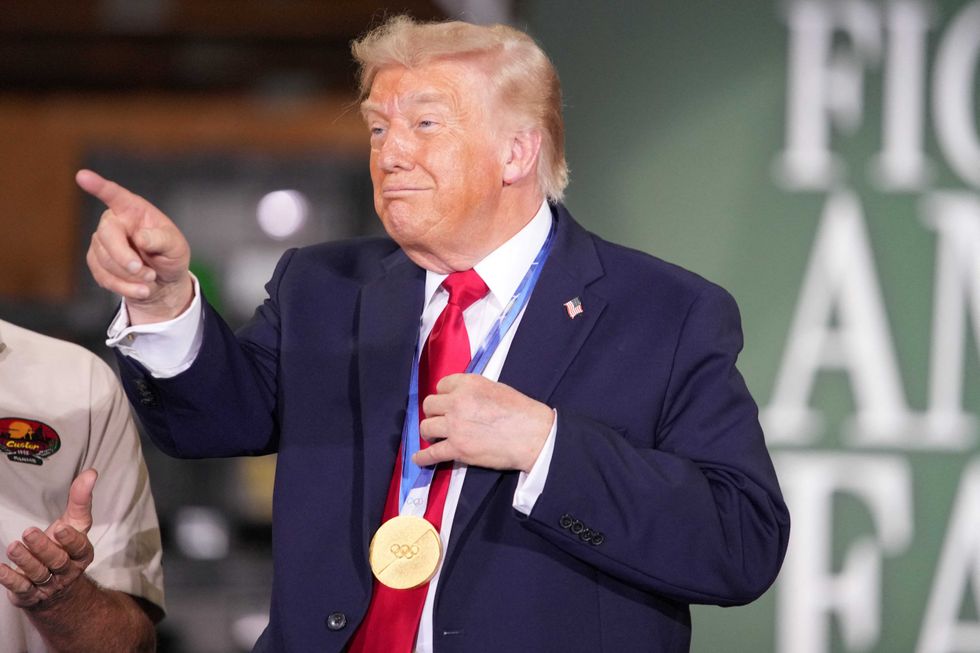
While it has been widely reported that President Donald Trump’s “anti-weaponization” fund is dead, experts are pointing out that the White House may have another tool at its disposal for paying convicted January 6 insurrectionists that essentially amounts to a “bottomless pit of money.”According to NBC News, the Judgement Fund allows the Justice Department to settle legal claims made against the government. Originally created to “eliminate the procedural burdens involved in getting an appropriation from Congress to pay a particular judgment,” the “bottomless pit of money” could allow J6ers to be paid by filing formal claims that only require the approval of a single DOJ official. Critics have long warned of its potential for misuse by the executive branch, arguing that Congress should place guardrails around how payouts are issued. Trump allies at the Justice Department have previously suggested the idea of using the fund, such as Associate Attorney General Stanley Woodward, who recently noted that he already has the authority “to settle any claim that is brought against the United States of America.” He raised the topic while discussing Trump’s controversial “anti-weaponization” fund, which bipartisan critics have decried as a “slush fund” for criminals. Woodward claimed that the “anti-weaponization” fund would actually have more accountability than the Judgement Fund, as the former is overseen by five people rather than one. But as NBC News notes, those five commissioners would be appointed by Trump and could be fired at will. While the new fund has received strong pushback from lawmakers on both sides of the aisle, Senator Lindsey Graham (R-SC) has argued that the “victims” of the Biden administration should be paid. In a recent post, he seemed to raise the idea of using the Judgement Fund to such ends, writing, “We have a legal system already in place for people to make claims against the government. That does not need to be reinvented.”Acting Attorney General Todd Blanche has told Congress that the Justice Department was “not moving forward” with the $1.8 billion fund, though as many have noted, the DOJ has merely agreed to adhere to a judge’s temporary delay order, not to end the effort entirely. The president’s statements on the matter have made it seem likely that the White House will continue to push for it. According to NBC News, “Trump said Wednesday that he didn’t know if the ‘anti-weaponization’ fund was dead or just on hold, but he called it ‘a beautiful thing’ that he loved and thought was ‘so important.’”A number of Trump allies have already received payouts through the Judgement Fund, including Mike Flynn and Carter Page. What’s more, “The Trump administration has already paid settlements to some of those involved in the Jan. 6, 2021, riot. The family of Ashli Babbitt — who was shot and killed after she jumped through a broken window of the House Speaker’s Lobby — received just under $5 million to settle a lawsuit filed by her family.” According to NBC News, "Hundreds of Jan. 6 defendants have already signed up with lawyers to seek compensation from the Justice Department. Nine Jan. 6 participants filed a lawsuit this week seeking more than $1 million each related to their ‘injuries and losses relating to the protest on January 6, 2021.’”
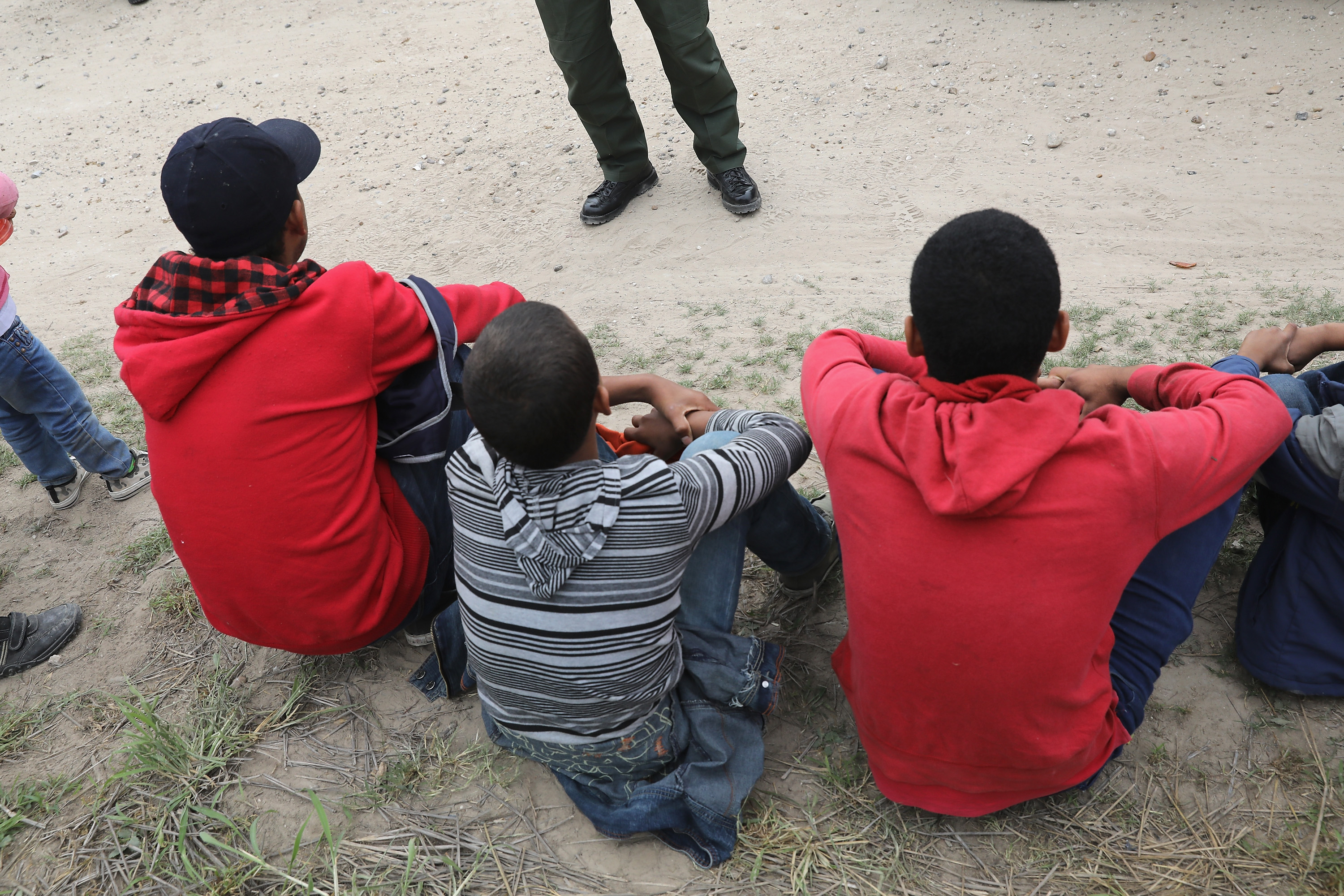
The Department of Justice (DOJ) announced Monday that it is seeking to strip the citizenship from 17 foreign-born Americans across the country accused of serious crimes, marking the latest move in the administration’s denaturalization push. Federal prosecutors filed denaturalization actions in various U.S. District Courts in what officials described as the largest denaturalization effort in…
After returning to the White House on January 20, 2021, President Donald Trump made a point of picking staunch MAGA loyalists for the U.S. Department of Justice (DOJ) and the FBI — including FBI Director Kash Patel, former U.S. Attorney General Pam Bondi, Todd Blanche (now acting AG) and federal prosecutor Jeanine Pirro. And according to New York Times reporter Devlin Barrett, the Trump-era DOJ relentlessly searched for evidence of a "deep state" conspiracy against the president."It was an investigation long sought by Kash Patel, the FBI director, and it was announced not in court papers, but through a haze of cigar smoke on Joe Rogan's podcast in early June of last year," Barrett explains in the Times. "Mr. Patel's prized criminal inquiry, known as 'the grand conspiracy case,' sought to tie together actions by a group of people that President Trump blamed for various investigations into him, going back to the examination of possible ties between his 2016 campaign and Russia, and extending into events surrounding the 2020 election and the criminal prosecutions of Mr. Trump in 2023 and 2024."Barrett continues, "In the view of Mr. Trump and his supporters, there was a 'deep state' cabal that had sought across multiple administrations and agencies to bring him down. Mr. Patel told Mr. Rogan he had found a secret room of evidence inside FBI headquarters confirming his long-held suspicions."Patel, according to Barrett, believed that old DOJ files showed evidence of a conspiracy against Trump — and that obsession "became a defining feature of the Trump administration's politicization of the Justice Department." But DOJ veterans who weren't MAGA loyalists, Barrett reports, pushed back."Some of the documents related to events from 2016 and 2017 that Mr. Patel wanted examined, specifically the actions of James B. Comey, who was the FBI director at the time, and John O. Brennan, who had been the CIA director," Barrett notes. "Mr. Patel wanted both men investigated for lying to Congress and suggested that the documents supported charging them…. The premise of the 'grand conspiracy' was that Mr. Comey and his allies had concocted the FBI's investigation of Russian interference in the 2016 presidential contest to damage Mr. Trump, and that conspiracy extended into the 2020 election and the 2022 appointment of Jack Smith as special counsel to investigate him."Barrett adds, "To Mr. Patel, the case consolidated years of his complaints and accusations about Democrats and national security officials. To many career Justice Department veterans, the case looked more like Frankenstein's monster — a motley assortment of long-dead investigations that were now supposed to be stitched together and brought to life."
During a bitter "60 Minutes" interview with CBS News' Kristen Welker, President Donald Trump repeated his debunked claim that the 2020 presidential election was stolen from him and attacked her as "crooked" for disagreeing. But journalist Jose Pagliery, writing for NOTUS, lays out a variety of way in which the Trump-era U.S. Department of Justice (DOJ) is undermining — not promoting or encouraging — ways to keep American elections safe and secure."President Donald Trump says 'if you don't have honest voting, you can't really have a nation,'" Pagliery explains in his NOTUS article. "But five months out from the midterm elections that will determine control of Congress, his Justice Department has canceled election-integrity training sessions for prosecutors and FBI agents, deleted a 281-page guide to prosecuting election offenses, fired most of the lawyers in its Public Integrity Section and failed to replace the director of its Election Crimes Branch."Pagliery elaborates, "Moreover, the DOJ has not taken the usual steps to establish a 'command center' to monitor and address the typical emergencies that pop up around Election Day, three sources with knowledge of the situation told NOTUS. A command center team would address things like voter intimidation and targeted disinformation meant to hinder a fair process. These actions — and inactions — have alarmed current and former prosecutors, who say the Justice Department is not prepared to deal with threats to election integrity in the November elections."Democrat Ryan Crosswell is among the former prosecutors who is sounding the alarm.Crosswell told NOTUS, "Obviously, the command center and training are something that anybody who wants to protect election integrity would want. And this just feeds into the fear that rather than protect elections, the DOJ may try to interfere with them. That's pretty scary."The command center, according to Crosswell, "spoke to how seriously we took" election security.According to Gary M. Restaino, a former DOJ federal prosecutor, Trump allies never should have decimated an election security unit called PIN.Restaino told NOTUS, "There's a massive knowledge gap now. PIN was a bulwark. It had people looking down the middle of the road and putting on political blinders. And the command center is critical to act uniformly across states."Pagliery notes that in the past, DOJ prosecutors "who encountered suspected election-related crimes would routinely check with the experts at PIN in Washington before making moves."According to another NOTUS source, "For example, as one former DOJ official put it, PIN might reject a request to subpoena the bank records of a frontrunner candidate on the eve of an election, but it might greenlight an FBI search of the home of a clearly long-shot candidate caught stealing money from their own campaign. The goal is always the same: to not put a thumb on the scales."