Democrats unveil drug pricing policy roadmap ahead of midterms
Center
Senate Democrats on Tuesday released a blueprint of proposals to lower prescription drug costs, as Democrats focus on affordability to provide a counter message to the White House and help Democrats win back control of Congress. High prescription drug costs are a persistent concern for voters of both parties. President Trump has been touting his own efforts of voluntary pricing deals…
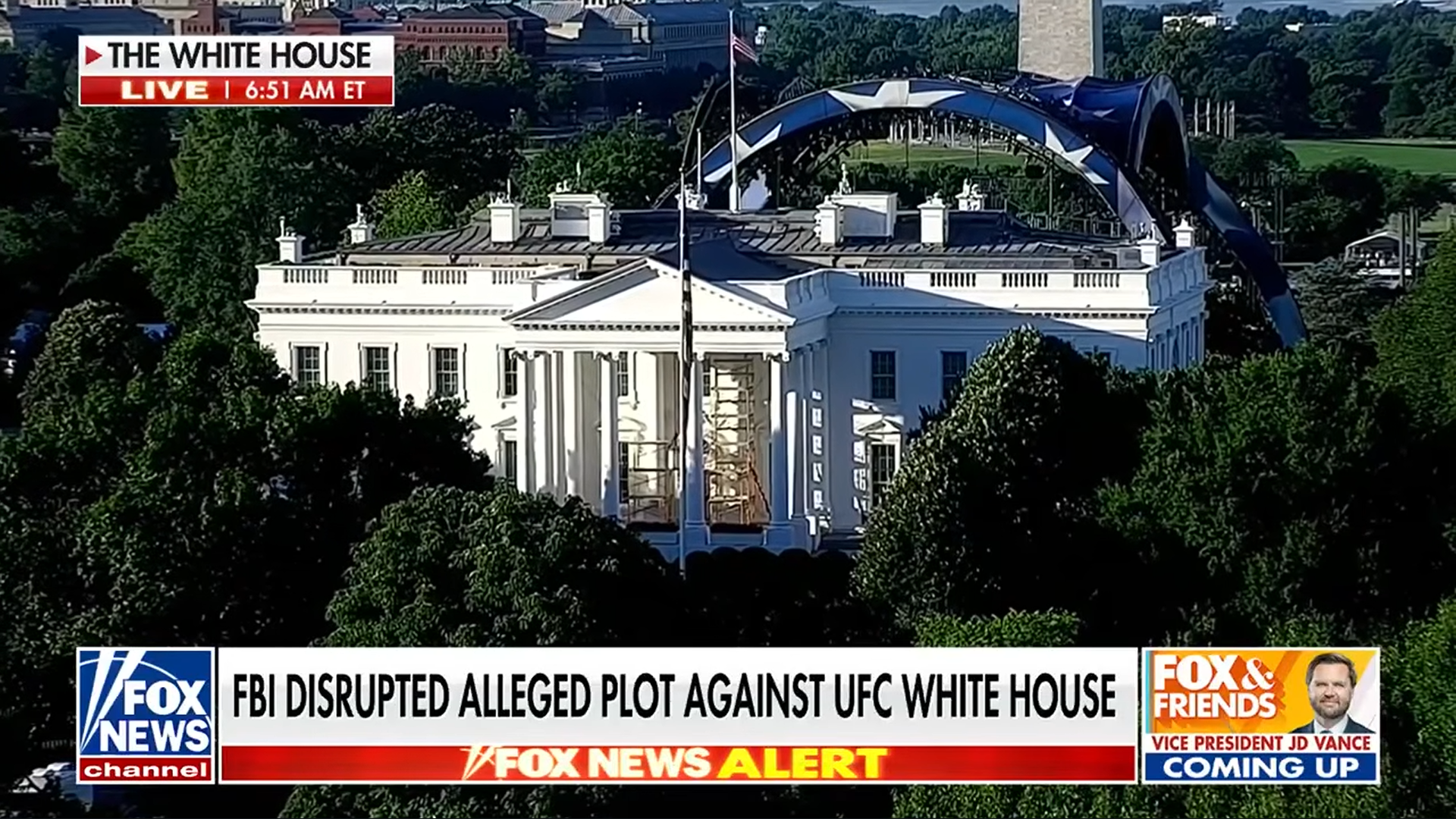
An individual allegedly involved in a thwarted terrorist attack aimed at Sunday’s UFC Freedom 250 event at the White House parroted Democrat conspiracy theories about President Trump protecting child predators connected to sex offender Jeffrey Epstein, according to federal court documents. The revelation came on Tuesday, when Fox News reported on how the FBI and […]
Vice President JD Vance said there is “a lot more work to do” on the economy under President Donald Trump, noting that the Trump administration is making progress ahead of the midterm elections. During the “Hot Topics” segment on The View, co-host Alyssa Farah Griffin questioned Vance about persistent economic concerns and whether voters who supported […]
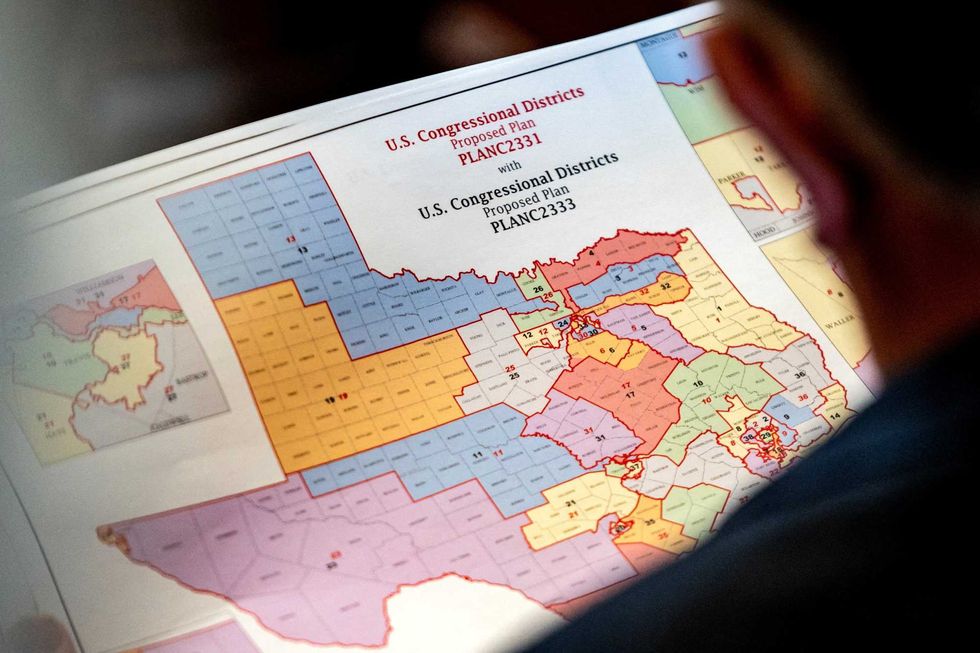
Tennessee Republicans, having redrawn congressional maps to eliminate Democratic representation, are now targeting state legislative districts for similar partisan gerrymandering. The GOP holds veto-proof supermajorities (27-6 in Senate, 75-24 in House) but plans maps that could achieve 33-0 and 99-0 margins, completely eradicating Democrats from state government, according to reporting by Tennessee Lookout's Bruce Barry.Following the Supreme Court's Louisiana v. Callais decision permitting partisan gerrymandering, but not racial, Republicans have carved Memphis's majority-Black 9th District into three GOP-friendly districts. Republican Caucus press secretary Molly Crawford confirmed redistricting legislation is planned for next year. Using mapping software, Democrats could be eliminated from Nashville and Memphis state Senate representation entirely. The author argues that while Republicans justify moves as partisan advantage-maximization, the result threatens democratic representation for one-third of Tennessee's reliably Democratic voters."Do the one-third of Tennesseans who do not choose Republican government have a right to be represented in their elected legislature? In a functional democracy in a supposedly advanced liberal society, do the two-thirds who are calling the shots have a moral obligation to see to it the one-third are included rather than silenced?" the author writes. These are not hard questions, Barry concludes.Watch the video below. Your browser does not support the video tag.
A group of Democratic US senators warned Monday that congressional Republicans and President Donald Trump could be gearing up for a push for raise the retirement age as part of a broader—and deeply unpopular—effort to slash Social Security benefits after the 2026 midterm elections.Sens. Elizabeth Warren (D-Mass.), Tammy Duckworth (D-Ill.), and Richard Blumenthal (D-Conn.) wrote in a letter to Trump that they have “renewed concerns” that his administration is “considering raising the retirement age, cutting the earned benefits of millions of Americans,” despite the president’s repeated vows to shield the program.“Republicans have a history of attempting to increase the retirement age, privatize Social Security, or otherwise cut Social Security benefits, and some congressional Republicans have called to raise the retirement age or means-test benefits,” the lawmakers wrote, emphasizing that GOP lawmakers “are not alone.”“In an interview this past fall, [Social Security Administration] Commissioner Frank Bisignano said—and later attempted to retract after public outcry—that your administration was considering this idea,” the Democratic senators wrote of raising the retirement age, which would cut Social Security benefits across the board.The nonpartisan Congressional Budget Office analysis of a 2024 Republican proposal to raise Social Security’s full retirement age found that doing so would cut benefits by an average of 13% for people born after 1971.The Democratic senators sent their letter to Trump days after Social Security’s trustees said in their annual report that the program will be unable to pay out full benefits by the end of 2032—a quarter earlier than projected last year—unless Congress takes action. The finding was seen as evidence of the damage inflicted by Trump’s policies, including his tariffs and tax cuts for the rich.Ahead of the trustees report’s release, House Speaker Mike Johnson declared that Social Security needs to be “adjusted and fixed” and said Republicans would release their plan “next year,” without specifying what the proposal would entail.In their letter to Trump on Monday, the trio of Democratic senators demanded to know if the president is aware of “Republican plans to cut Medicare, Medicaid, or Social Security benefits” and whether he would veto GOP legislation that slashes those programs.“Raising the retirement age—or otherwise cutting benefits—only worsens the looming retirement income crisis,” the lawmakers wrote. “Doing so hurts older Americans, cutting monthly benefits and forcing millions into poverty.”
As election officials across the country steel themselves for the midterm elections in less than five months, President Donald Trump’s executive order restricting voting by mail threatens to upend their preparations.The executive order instructs the U.S. Postal Service to refuse to deliver ballots in states that don’t provide lists of voters or meet other requirements. It has created a sense of deep uncertainty and concern among election officials as they consider how to comply, according to a review of court documents and interviews with election officials and experts on election administration.The March 31 executive order, and a proposed Postal Service rule published June 2 that would put the order’s requirements into effect, raise serious logistical and procedural challenges for those running elections, they say. Rural areas with limited resources are especially at risk, but jurisdictions of all sizes could be forced to scramble.The executive order is the latest step taken by Trump to assert control over state-run elections, along with the stalled SAVE America Act, which would require voters to provide documents proving their citizenship. The Justice Department, under Trump’s control, is also trying to obtain state voter rolls.“This is just another death by a thousand cuts that clerks have been experiencing since the 2020 elections,” said Barb Byrum, the Democratic clerk of Ingham County, Michigan, which includes Lansing.First-ever national voter listThe order and the rule require states to provide lists of mail-in voters if they want the Postal Service to deliver ballots, marking the first time the federal government has created a national voter list.Mail ballot envelopes must meet certain design standards. And federal agencies have to compile lists of voting-age citizens to share with each state in an effort to root out noncitizen voters.But Democratic states and voting rights groups argue the executive order — and the accompanying proposed rule — represent an illegal overreach by Trump because states administer elections under the U.S. Constitution. Trump and his Republican allies say the restrictions are necessary for election security and to combat noncitizen voting, which occurs extremely rarely.The Postal Service didn’t respond to questions from States Newsroom. The agency has said the rule “will facilitate the faithful execution of federal law.”Multiple lawsuits have been brought against the order, but a federal judge in Washington, D.C., in May declined to halt it, partly because the Trump administration hadn’t taken enough action to implement its requirements. Another federal judge in Massachusetts is weighing a separate request to block the order.With the executive order still in effect, at least for now, election officials and experts who work with them are taking the ramifications of it and the proposed Postal Service rule seriously.“We don’t have a national voter registration list. We don’t have, currently, a list of sanctioned, authorized voters to vote by mail at the federal level,” said Tammy Patrick, chief programs officer at Election Center, operated by the National Association of Election Officials. “That’s a big, big change in the way elections have always been conducted.”Sweeping changes very quicklyIn court papers filed in May, local election officials and local governments representing 26 jurisdictions across the country warned the executive order would “severely disrupt” local election administration and force the implementation of sweeping changes within months. Implementation of the order’s requirements will largely fall on local election officials, they argued.Byrum was among the officials to sign onto the brief, along with others in Boston, and counties in Pennsylvania, Washington, Wisconsin and elsewhere.Under the executive order, states that want to send ballots through the mail must provide the Postal Service with lists of voters they intend to provide a mail ballot. Local election officials will play a large role in helping states develop these lists, according to the court papers, and will have primary responsibility to help voters address any errors.And Trump wants it all in place before November. The executive order’s proposed timelines “present a logistical nightmare for local election officials,” the officials warn.“The general rule is don’t make changes before a big election because there’s always something you didn’t think about,” said Carolina Lopez, executive director of the Partnership for Large Election Jurisdictions, a nonpartisan organization for election officials in jurisdictions of at least 250,000 people.The proposed Postal Service rule says the agency would launch a portal where states would submit voter lists and make updates.
The European Union’s US trade deal is close to being implemented after the bloc’s lawmakers gave their final approval, forging ahead despite ongoing transatlantic trade tensions.
The pieces are all in place for President Donald Trump and his allies to upend the November midterms by falsely claiming that the elections were rigged.When Trump angrily insisted on NBC’s “Meet the Press” that the Los Angeles mayoral primary was “rigged” after his favored candidate Spencer Pratt lost, it unleashed a stampede of echoed claims by administration loyalists and an army of internet influencers. That eruption of unfounded fraud claims earlier this month previews a disruptive playbook likely to be deployed by Trump and his allies on Nov. 3, when congressional races across the country determine which party will control the House and Senate.“Quite frankly, it’s a propaganda machine — a propaganda machine that’s the thing of dreams for an authoritarian regime,” said Carroll Rivas, deputy director for research, reporting and analysis at the Southern Poverty Law Center’s Intelligence Project.The MAGA messaging surrounding the California primary suggests that a synergy between influencers and administration officials committed to Trump’s election denial claims will be a significant factor in the November elections. That dynamic was on full display in an exchange on X only hours after the “Meet the Press” interview aired.Bill Essayli, a federal prosecutor in Los Angeles, accused the state of California of “blocking a federal audit of its voter rolls” while claiming that the state’s voter registration policies don’t provide adequate safeguards to prevent fraud.Nick Shirley, a popular influencer whose discredited investigation into Somali daycare fraud appears to have prompted the January immigration crackdown in Minneapolis that led to the deaths of Renee Good and Alex Pretti, asked Essayli, “Why not arrest those that won’t comply with the federal government?”Essayli quickly obliged Shirley with a response, saying, “Congress has not provided us with that authority. I’m limited to enforcing federal law as currently written. Congress may change any of these rules at its will.”“Keep doing the work! Congress step in,” Shirley told Essayli, closing with a “thank you” emoji.Based on the administration’s active promotion of “conspiracy theories about voting” and mobilization of influencers to gin up outrage, Rivas — whose organization has been targeted for criminal prosecution by the Trump Department of Justice — warned that 2026 could see a repeat of the vigilantism that took place in 2020. Influencers don’t need to shape mass opinion to prove their usefulness to the administration, she said.“It’s reinforcement of a base by a few rather than trying to reach the masses, and trying to bait the base into more extreme actions, including potentially to show up and prevent people from participating in a free and fair election,” Rivas said.Trump’s headline-grabbing NBC interview, which ended with him walking off the set, opened a firehose of social media posts by conservative influencers amplifying his message.Nine influencers who were invited to the White House last year for a “roundtable on antifa” and an ill-fated stunt in which they received “Epstein binders,” posted a total of 60 times on X about the Los Angeles mayoral primary or California elections between June 7, the day Trump’s interview aired, and June 10, according to a review by Raw Story. One, Liz Wheeler, devoted two podcasts on June 8 and June 9 to the subject.“Illegal aliens get health insurance in California,” Chaya Raichik, owner of the Libs of TikTok account, posted on X on May 8, echoing one of Essayli’s talking points. “California lets people register to vote with insurance cards. Do you see what’s happening?”Two Trump loyalists in the U.S. House piled on in interviews with right-wing outlets.“So, people can just dig through garbage cans, find ballots, and send them in, apparently forever after an election is over,” Rep. Randy Fine (R-FL) told Newsmax. “It’s not okay, it’s got to come to an end, and people need to go to jail.”Rep. Byron Donalds (R-FL) told influencer Benny Johnson in a video clip posted on June 10, “Not this mess in California, where Spencer Pratt was in second place on election night, and then like five days later he’s out of the runoff. Like, this is craziness…. These mail-in ballots, you just can’t send them out to everybody…. They got to clean up their voter rolls. You know the Democrats don’t want to do that, because then it gives them an opportunity to figure out how many ballots they need.”None of the claims by influencers, administration officials or Trump-friendly lawmakers included any evidence of fraud or manipulation that would have changed the outcome of the Los Angeles primary.Jay Clayton, the U.S.