
Reason.com
Video of Cato Institute Online Event on the Supreme Court Birthright Citizenship Case
I participated, along with prominent legal scholars Gabriel Chin and Paul Finkelman.
Center Right

A three-judge panel on Tuesday blocked Alabama Republicans’ congressional map that would’ve given the party a potential pickup opportunity in the midterms. The judges ruled the Supreme Court’s recent blockbuster decision narrowing the Voting Rights Act does not impact their finding that the map intentionally discriminates against Black voters in violation of the Constitution. It means Alabama cannot use…
I participated, along with prominent legal scholars Gabriel Chin and Paul Finkelman.
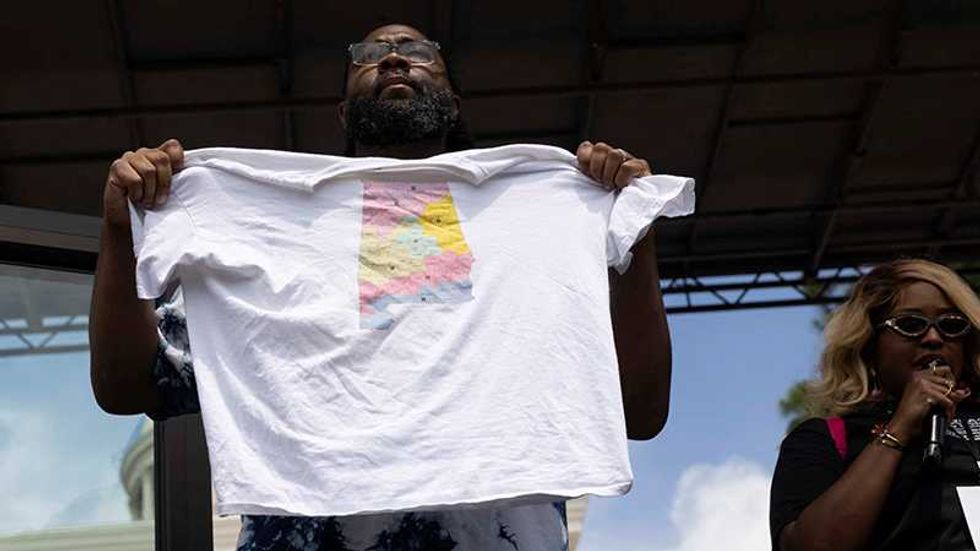
A three-judge panel has blocked Alabama's effort to readjust maps to eliminate congressional districts that contain large populations of people of color, reported Politico on Tuesday. It flies in the face of the recent decision by the U.S. Supreme Court that struck down part of the Voting Rights Act, which makes it more difficult to challenge redistricting based on racially biased redistricting, the American Civil Liberties Union (ACLU) analyzed.That didn't stop another state from stepping in on a different case. Legal analyst Josh Gerstein believes the next and final step will be a trip to the High Court. Journalist Kirk A. Bado agreed. In a thread about the case, former Alabama prosecutor Joyce Vance commented, "Even after Callais, a 3-judge panel (2 Trump appointees) enjoins Alabama from using 'new' maps for the midterm election because of evidence of racial discrimination. Writing in dissent from SCOTUS’ decision to speed Milligan, the Alabama gerrymandering case, into effect after Callais, Justice Sotomayor invited the panel to do exactly this."“Alabama cannot use Callais to legitimize its pre-Callais decision to double down on the discriminatory vote dilution that we and the Supreme Court found,” the court ruled. “And it cannot use Callais to legitimize the series of specific and unusual decisions it made to entrench that dilution. If such retroactive validation strategies were available, States would be encouraged to govern themselves according to what they think federal law ought to be, not what it is.”"This decision finds AL's 2023 map was intentionally racially discriminatory even after Callais, but the injunction expires when AL passes new districts, which is already in the works," explained New Mexico lawyer Owen Barcala. Further, he explained, "Probably won't get decisions like this in the future because the legislators in 2022 didn't know they could just explain everything away as a partisan gerrymander. Here they expressly said they weren't trying to do a partisan gerrymander.""Whoa! Everyone had assumed Alabama would get to go back to its old congressional map after Callais. But the lower court that originally struck down that map says, not so fast," characterized VotebeatUS managing editor Nathaniel Rakich. "I anticipate that Alabama will appeal soon. The Supreme Court oversees the appeal and will oversee the stay motion. Given their recent work on this, I am inclined to think they grant (but never know with them)," said conservative Eric Wess."Darkly funny how the Supreme Court keeps telling Republicans, 'Here is the approved list of ways to disenfranchise black voters, ' and Republicans are so greedy they keep failing to pass through the extremely wide loophole the court carved out for them in the VRA," one person quipped.Another commented, "'I wasn’t trying to knock down that building,' says Guy Who Rented A Bulldozer And Used It To Repeatedly Ram The Building."In 2023, three federal judges in the Allen v. Milligan case struck down the maps, saying that they had blatantly discriminated against Black voters, Democracy Docket recalled.“Try as we might, we cannot understand the 2023 Plan as anything other than an intentional effort to dilute Black Alabamians’ voting strength and evade the unambiguous requirements of court orders standing in the way,” the judges wrote. “After we and the Supreme Court ruled that the 2021 Plan, with only one majority-Black district, likely had the unlawful discriminatory effect of diluting Black Alabamians’ votes, the Legislature deliberately enacted another Plan that it concedes lacks the second Black-opportunity district we said was required. This amounted to intentional racial discrimination in violation of the Fourteenth Amendment’s Equal Protection guarantee.”

The three-judge district court panel ordered Alabama to use a congressional map with two majority-Black districts in the upcoming midterm elections.

Republicans had hoped the new map would help the GOP flip a key congressional seat.

A three-judge panel on Tuesday blocked Alabama Republicans’ congressional map that would’ve given the party a potential pickup opportunity in the midterms. The judges ruled the Supreme Court’s recent blockbuster decision narrowing the Voting Rights Act does not impact their finding that the map intentionally discriminates against Black voters in violation of the Constitution. It means Alabama cannot use [...]
President Donald Trump's approval ratings on the most pressing issues are sinking underwater with Republican voters, according to a new data analysis.The 79-year-old president was re-elected in 2024 largely due to his promise to bring down the cost of living, but affordability remains the top voter concern as gas prices have exploded as a result of Trump's war against Iran, and CNN's Harry Enten found that even Republicans are unhappy."You know, we're talking about houses," Enten said, "and what are we talking about? We're talking about a complete collapse of the floor. Look at this: Republicans' net approval of Trump on inflation. You know, you go back when he was running for re-election back in 2024 for term number one. Look at that net approval rating: It was plus-68 points in terms of how they viewed, Republicans viewed inflation and Trump in term number one. Look at this, look at this collapse, minus-five points. Now this is just the Ipsos polling, I will note, but look at this. Even in Fox he was at minus-two points, so it's not alone.""He is on the wrong side of the ledger, and this is not voters overall, let me remind you, this is Republican voters," Enten added. "That call absolutely coming from inside the house on the key issue inflation. There are now multiple polls showing that Donald Trump is underwater within his own Republican Party."Concerns about gas prices are fueling this drop in support, Enten said."It's Republicans who are calling again, and they are saying that they are underwater again when it comes to this particular issue," Enten said. "Look at gas prices, okay, GOP Trump net approval on fuel and gas prices. You go back to last summer, look at this, it was plus-51. Look at it now, minus-four. Again, what are we talking about here? We're talking about a 55-point shift away from the president of the United States on the key issue of gas prices. So on, again, something that is impacting Americans day to day, inflation, a part of that is gas prices. Of course, the inflation on gas prices has been out of control.""The president of United States is underwater on the key issue of gas prices," he added. "This isn't just something about the center of the electorate, this is with Donald Trump's base as well. This is a huge shift. He's underwater again, the floor completely collapsing underneath."Those shifts have come in the past year alone, he pointed out."We're talking about the collapsing floor, but, you know, if this is an old ruddy house that we don't really care about, then who really cares?" Enten said. "But this is the house that is most important because you take a look here, okay, Republicans' top issue, the economy and the cost of living. You know, you go back to the beginning of this year, it was 43 percent. It was the top issue. Now it's even more of the top issue.""The clear majority of Republicans saying the economy and the cost of living is the number-one issue, an issue on which Donald Trump's numbers are absolutely falling through the floor," Enten added. "Multiple polls showing him underwater on inflation." - YouTube youtu.be
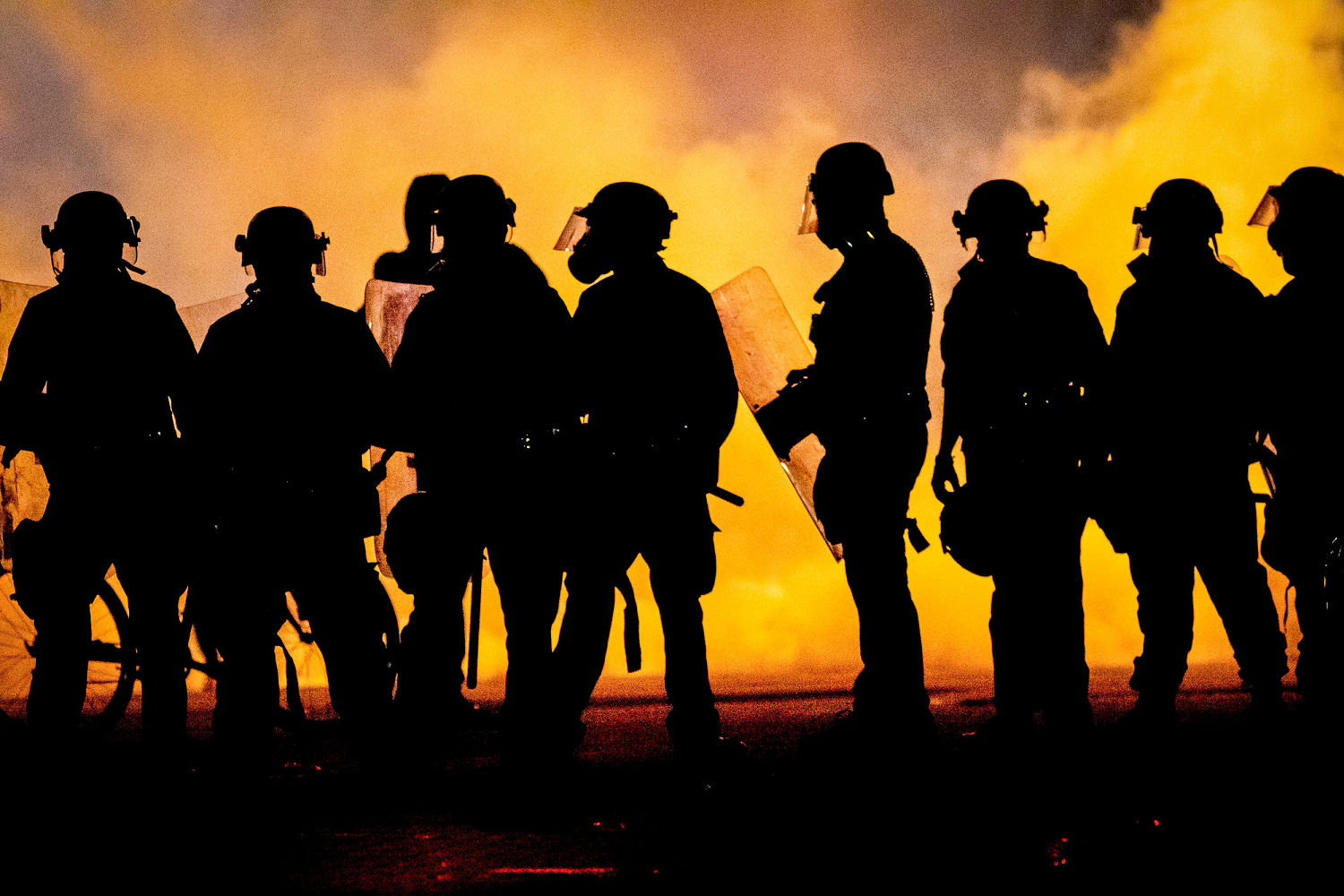
WASHINGTON — The Supreme Court on Tuesday rejected a Michigan police officer’s attempt to evade an excessive force claim arising from an incident that took place during a protest in the aftermath of the George Floyd killing
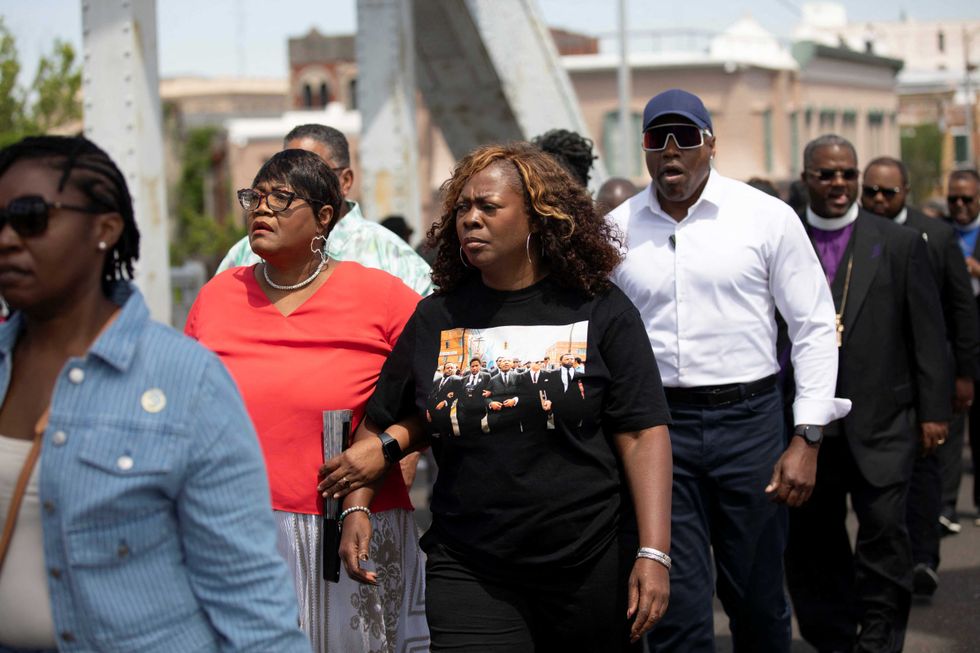
Last week’s primary election didn’t feature any races with both a Democrat and a Republican on the ballot, but Georgia Democrats still feel like they won.If you are one of the more than 2 million Georgians who cast a ballot, you will likely recall the poll worker asking you to choose a Democratic, Republican or nonpartisan ballot.In all, Democrats pulled more than 1 million ballots to Republicans’ nearly 940,000, or about 52.6% to 45.4%.Democratic Party of Georgia Chairman Charlie Bailey said that margin is the biggest for Democrats since 1998 and shows that voters are ready to line up in November behind candidates like U.S. Sen. Jon Ossoff and former Atlanta Mayor Keisha Lance Bottoms, the Democratic nominees for U.S. Senate and Georgia governor.“It’s just another piece of evidence of growing Democratic momentum, the work of the party, the strength of Jon Ossoff, the strength of Keisha Lance Bottoms coming into this governor’s race,” he said. “People are fed up with (Republicans), and what those numbers in the primary tell you is that that momentum is building towards November, when they’re going to vote these Republicans out.”In 2018, a midterm year with President Donald Trump in the White House and an open race for Georgia governor at the top of the ticket, Republicans pulled more ballots than Democrats by about 52% to 48%.Comparing the number of ballots drawn is not a perfect measure. Some people choose the other party’s ballot because they live in an area dominated by that party and they want to have a say in local races, or because they want to promote a weaker opponent for their candidate in the general election.Still, the discrepancy spells good news for Democrats looking ahead to the Nov. 3 election, says Emory University political science professor Andra Gillespie.“What it connotes or implies is that Democratic candidates are capturing the imagination of voters in ways that, if this energy can be sustained, could be helpful for them in terms of flipping seats nationally, and in Republican states like Georgia, narrowing those margins between Democrats and Republicans, even in contests where Republicans are the odds-on favorite,” she said.The difference in ballots is even more notable because Republicans had more high-profile races, said University of Georgia political science professor Trey Hood. No Democrat challenged incumbent U.S. Sen. Jon Ossoff, while Republicans had competitive races for U.S. Senate and Georgia governor at the top of the ticket.Hood said it’s also notable that Republicans who voted on Election Day did not outnumber Democrats by a large margin. Republicans only had about 4,000 more voters on Election Day than Democrats, about 508,000 to 504,000. Hood said that might signal a shift in GOP voter behavior, with more conservatives preferring to cast a ballot during Georgia’s three weeks of early voting.“I don’t know that we can expect to necessarily see a huge surge in Republican turnout on Election Day anymore,” he said.Voter demographics strong for DemocratsResults also show demographics that tend to favor Democratic candidates in Georgia had a strong showing.Statistically, Black voters in Georgia largely favor Democrats, and they made up nearly 32% of the vote.“If Black turnout was 31% in a general election, yeah, that would be probably a good Democratic year,” Hood said. “I mean, before now, the highest it’s ever been is about 29%. And the more Black turnout as a percentage of the total electorate, the less of the white share of the vote you have to draw off as a Democrat. So if that pattern held and Black turnout was 31% in the general, it would be big.”Data from the secretary of state’s office also shows that the electorate was nearly 57% female and 43% male. That number is likely boosted by high turnout among Black women, who are registered to vote at a higher rate than Black men.Reality check?Still, the high Democratic turnout was not enough to land a pair of Democratic-aligned candidates on the state Supreme Court, and not everyone thinks the numbers show the wind is at Democrats’ back.Georgia Republican Party Chairman Josh McKoon said turnout in primary elections does not correlate with general election turnout.McKoon said he chalks up the ballot discrepancy to the typical midterm backlash to the party in the White House and Democrats having a competitive field for governor for what he said was the first time in more than two decades.“It was Mark Taylor and then it was Jason Carter, then it was Stacey Abrams twice,” he said. “Now, this time they actually had a wide open primary, and a lot of people ran. And so, yes, it’s not surprising that they had more than their usual turnout because usually they don’t have anything to turn out for.