

How the U.S.-Iran Deal Came Down to the Wire
The agreement, which punted many of the toughest issues to future negotiations, came after a last-minute scramble.

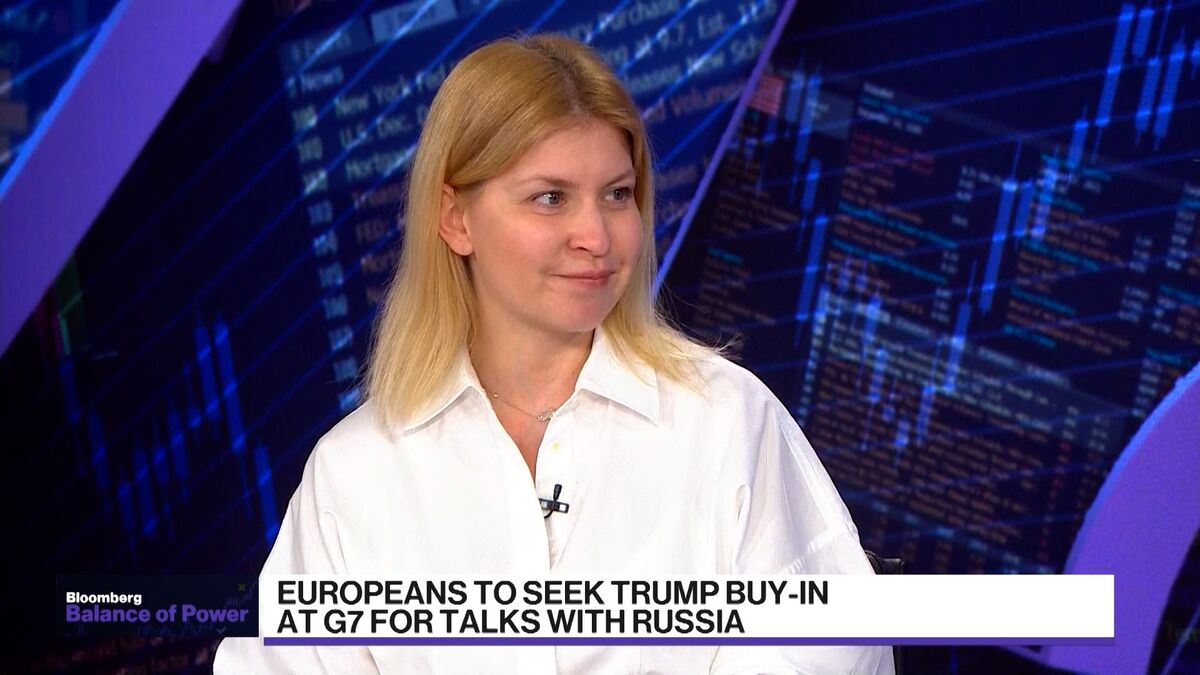
Ukrainian Ambassador to the US Olha Stefanishyna says the US deal with Iran allows leaders to "fully concentrate" on Russia's war in Ukraine at this week's G7 summit, where Ukrainian President Volodymyr Zelenskyy is expected to meet with President Trump. Stefanishyna outlines the importance of US support, calling air defense and missiles for Patriot systems "absolutely vital" for Ukraine, and expresses confidence Ukraine can move quickly toward European Union membership. She speaks with Kailey Leinz on the late edition of Bloomberg's "Balance of Power." (Source: Bloomberg)
The agreement, which punted many of the toughest issues to future negotiations, came after a last-minute scramble.
President signs memorandum at Palace of Versailles where Germans were humiliated after losing first world war. Key US politics stories from Wednesday 17 June at a glanceThe Trump administration declared a “major win” but likewise the Hezbollah chief, Naim Qassem, proclaimed a “great victory” as the text of the 14-point US-Iran memorandum of understanding became public.Iran’s chief negotiator, Mohammad Bagher Ghalibaf, said: “The agreement is a record of US failure. People will see it and judge.” Irna, Iran’s official state news agency, released a photograph of Iran’s president, Masoud Pezeshkian, holding up a Persian-language document apparently showing his signature alongside that of Trump. According to Reuters, Ghalibaf told state TV: “Everything we sought to achieve through military action, we obtained several times over through negotiation; it was not even comparable.” Continue reading...
Some in the president’s party were skeptical about whether the agreement he reached included adequate concessions from Iranian officials.
Israeli Prime Minister Benjamin Netanyahu was silent on Wednesday as President Trump released and signed a deal that Israeli officials see as a strategic and political disaster.Why it matters: Netanyahu promised the Israeli public "total victory" in Iran. He had to settle for Trump's memorandum of understanding — and frequent criticism from the president, all four months before an election.The big picture: Netanyahu stands alone internationally in his belief that the deal is a mistake and the war should have continued.Even the United Arab Emirates, which had been the most hawkish of the Gulf states, decided to join the regional consensus in favor of the deal.In Washington too, Netanyahu's allies in the GOP and in the media are reluctant to fully trash a deal that carries Trump's imprimatur. There will be no repeat of Netanyahu's address to Congress in 2015 to rally opposition to President Obama's Iran deal. Netanyahu can't even go on cable news and bluntly oppose the deal, unless he wants a fight with Trump.Behind the scenes: Instead of public denunciations, Israeli officials have been expressing deep concern about the deal in background briefings with Israeli reporters.Meanwhile, Netanyahu-aligned media outlets — most of which had been emphatically pro-Trump — have started to attack Trump and his team.One prime-time host on Netanyahu-aligned Channel 14 called Vice President Vance a "scumbag" and used an antisemitic slur to accuse Trump's envoys Steve Witkoff and Jared Kushner of selling out Israel for financial gain. The other side: At the G7 summit on Wednesday, Trump thanked Netanyahu for his cooperation during the war with Iran, while also taking swipes at the prime minister."Bibi is a good man. He gets a little excited sometimes. But we have an amazing partnership. We are the big partner and he is the very small partner," Trump said, referring to Netanyahu by his nickname.Days earlier, Trump told Axios that Netanyahu had "no fucking judgement" because he ordered out a strike in Beirut that nearly scuttled the deal.Friction point: Netanyahu was caught by surprise when Trump announced the deal on Sunday, and Israeli officials claimed as recently as Tuesday that Israel still hadn't been allowed to review the MOU.A U.S. official acknowledged in a briefing with reporters on Wednesday that Netanyahu might not have seen the final text, but claimed the Israelis never asked for it and that the White House had given Netanyahu detailed briefings throughout the negotiations.During Wednesday's press conference, Trump said he'd sent over a copy.The U.S. official claimed that despite Netanyahu's skepticism, the PM had told Vance, Kushner and Witkoff that if Iran follows through on the nuclear concessions it told the U.S. it was willing to make, "that would be a home run deal."Zoom in: The issue of greatest immediate concern for Netanyahu is Lebanon. The MOU says the ceasefire includes the fighting between Israel and Hezbollah, and that Israel would have to withdraw from Lebanon under any final deal.A Netanyahu adviser said Israel doesn't consider itself bound by the Lebanon part of the MOU. The adviser noted that Netanyahu told Trump Israeli forces would not withdraw from southern Lebanon unless Hezbollah was disarmed. "We have a little dispute about Lebanon," Trump said on Wednesday. What to watch: The White House says this won't be a "one-sided ceasefire" and Israel will have the ability to retaliate if Hezbollah attacks. U.S. officials also hope Israel will use the next 60 days to make progress in its negotiations with Lebanon on a political settlement, and that an Israeli withdrawal might result from those talks — rather than from a nuclear deal with Iran.Trump also criticized Israel's tactics in Lebanon again on Wednesday, saying it was unacceptable "to knock down an apartment house every time you're looking for somebody." The bottom line: Even the presidents with whom Netanyahu often quarreled weren't so bluntly critical of Israel. It was another blow for Netanyahu to absorb from his indispensable ally.
The spat is over. The post G7 Summit Shows That Trump and Meloni Are Friends Again (VIDEOS) appeared first on The Gateway Pundit.
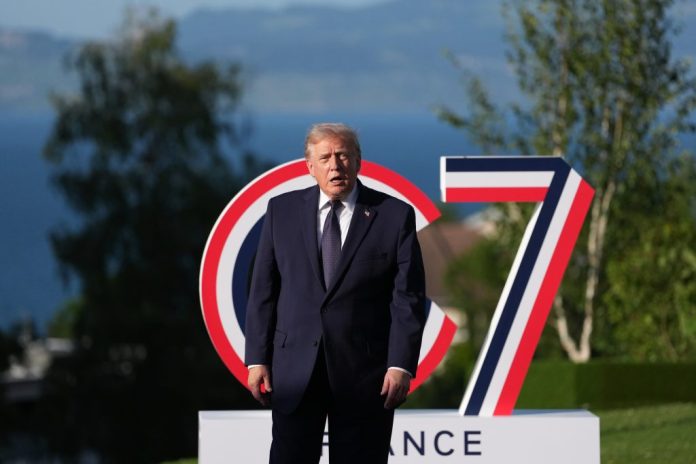
It started with Trump walking in and saying, "I'm the boss." When reporters later asked about the warm reception he received from European leaders, he responded, "I think they know I was right," then added, "Now all of a sudden, they all want to be involved." President Donald Trump arrived at the 52nd G7 Summit in Évian-les-Bains, France, on Monday with an Iran ceasefire deal already announced, stayed for the full three days, signed the leaders' declarations, and left declaring the gathering a "Great Success" on Truth Social. The post The G7 “Bending Itself Around Trump” Shows the U.S. Is Still on Top appeared first on The Gateway Pundit.
CNN host Erin Burnett threw President Donald Trump's previous criticisms of former President Barack Obama's Iran deal back in his face on Wednesday, noting that Trump was now using the same talking points that he rebuked Obama for using. Trump has described Obama's Iran deal, known as the Joint Comprehensive Plan of Action (JCPOA), as giving away too much money to the Iranian regime and not preventing the regime from obtaining or developing a nuclear weapon. Burnett noted that those criticisms sound like an apt description of the deal Trump just signed with the regime over the weekend. "Now, after all of Trump's criticism of Obama and the way that Trump talked about that money, he's now using the exact same talking point, the exact same one as Trump's agreement with Iran could unfreeze more than $100 billion in frozen assets, double the amount that the Iranians got under Obama. Double!" Burnett said during the opening segment of her show, "Erin Burnett OutFront." Over the weekend, Trump announced that his administration had agreed to a deal that would immediately reopen the Strait of Hormuz while the administration continues negotiations to end the war with Iran. However, that deal has been sharply criticized for providing Iran with billions of dollars up front in exchange for a promise to negotiate over thornier issues, like the country's nuclear program, at a later date. The deal reminded Burnett of Trump criticizing Obama for dropping "pallets of cash" in Iran. "Can we just pause for a second and remember him talking about the pallets of cash and all of those things, and mocking that very same argument? And now here we are. It is stunning," she said.