3 supertankers sail through Strait of Hormuz after deal signed: Report
Center
Three Saudi Arabian-flagged supertankers reportedly transited the Strait of Hormuz after the U.S. and Iran signed a deal that will reopen the waterway. Reuters reported the vessels, managed by Saudi Arabian shipping group Bahri, had 6 million barrels onboard. The Hill has reached out to Bahri for comment. Across Tuesday and Wednesday, 19 vessels passed…
Drivers feel some relief but prices still a dollar more per gallon overall since before US-Israel attack on IranSign up for the Breaking News US newsletter email The average price of US gasoline fell to just under $4 a gallon on Thursday for the first time since March, following the announcement of a preliminary agreement between the US and Iran to end the war and reopen the strait of Hormuz.The development has provided some relief to drivers who have seen soaring costs amid Washington’s war with Iran. But filling up still remains more expensive than it was before the conflict began. Continue reading...
President Donald Trump joked Vice President JD Vance would bear blame if the Iran peace deal fails, but Republicans are already privately criticizing the agreement while publicly remaining silent. Oil industry insiders and GOP lawmakers object to economic support for Iran and Trump's defense of Iran's ballistic missile rights, with one Republican calling it total surrender, reported Politico's Playbook. "Plenty of Republican lawmakers are also uncomfortable, in private at least," Playbook wrote. Vance's team welcomes the deal being framed as the "Vance Peace Deal," given the war's broad unpopularity, reports Dasha [Burns] on the Playbook Podcast. White House officials view ending the conflict as politically necessary, and Vance's willingness to front the agreement reflects this. A White House insider noted that GOP attacks inadvertently inoculate Vance from the war's unpopularity while positioning him to defend Trump from criticism. The dynamic paradoxically strengthens Vance's political standing as he defends the president against his own party's complaints.Watch the video below. Your browser does not support the video tag.
The U.S. military lifted its naval blockade near the Strait of Hormuz after the U.S., Iran and intermediaries signed the memorandum of understanding (MOU) to end the conflict in the Middle East. U.S. forces ended the blockade, which barred maritime traffic from entering and exiting Iranian ports and coastal areas, the U.S. Central Command (Centcom)…
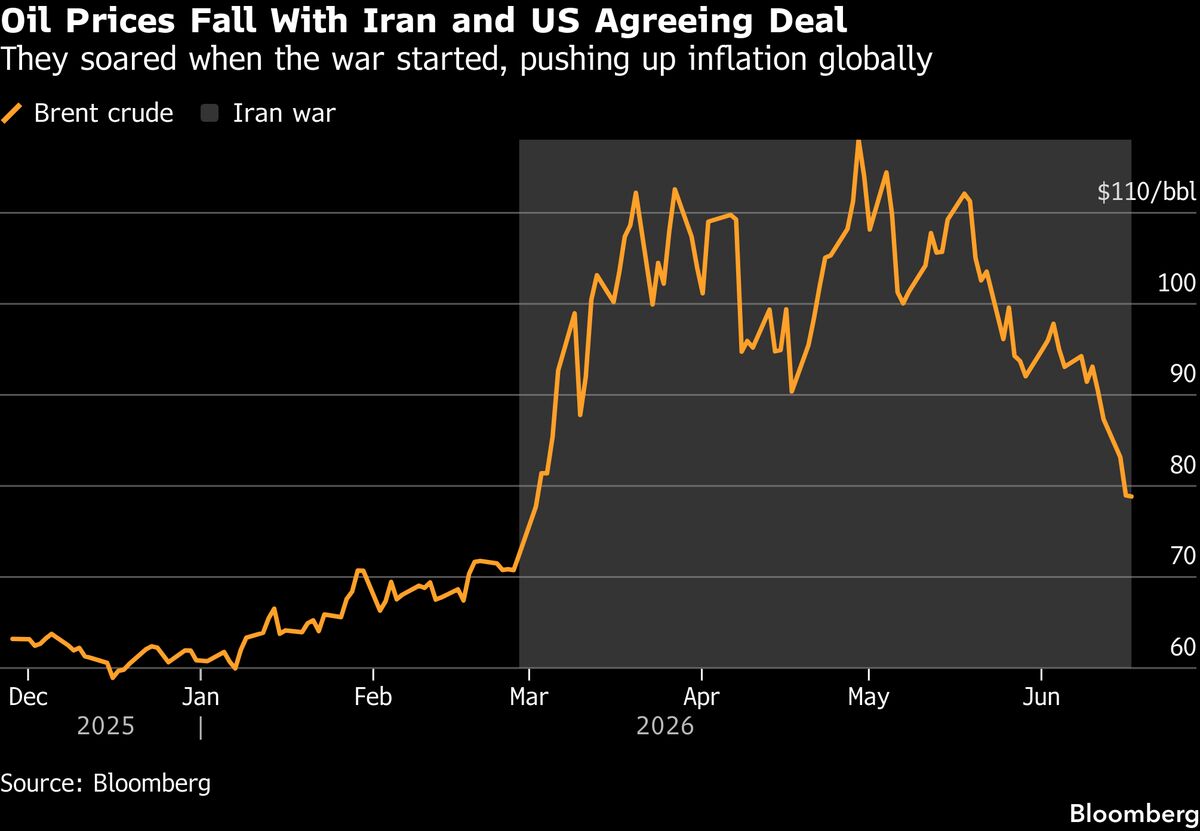
US President Donald Trump’s war with Iran may finally be reaching a close. But consumers and businesses around the world will continue to pay the price in the months ahead as still-elevated energy costs funnel hundreds of billions of dollars to fossil fuel giants.That’s according to a report from the environmental group 350.org released Thursday, following Trump’s signing of a memorandum of understanding with Iran this week to begin the process of formally ending a war that has sent global oil prices skyrocketing and saddled ordinary people with record fuel prices.The group estimated that just 110 days of war resulted in the transfer of an additional $374 billion from consumers and businesses into the coffers of oil and gas companies beyond what would have been expected had the war never been launched.And while Trump claims his agreement to end the war this week will avert an “economic catastrophe,” there will likely still be tremendous pain even if the Strait of Hormuz reopens promptly.Using oil and gas pricing scenarios from the International Monetary Fund’s April 2026 World Economic Outlook and data on global consumption, 350.org predicted that by the end of the year, consumers and businesses will spend an additional $199.8 billion on oil and $128.1 billion on gas above a non-war scenario, making for a grand total of more than $700 billion as a result of the war.This, the group said, is a conservative estimate, as it does not even take into account knock-on effects. The war will ultimately end up costing much more when factoring in inflation across the rest of the economy, resulting from higher fuel costs or fertilizer shortages caused by the strait’s closure, which has affected food prices.It also does not take into account the resulting effects on economic output or employment as rising costs and lower consumer spending force companies to tighten their belts.“The oil and gas industry is draining billions from people and businesses on the back of a war that has killed thousands and pushed millions toward poverty and hunger,” said Andreas Sieber, head of political Strategy at 350.org.“Even if the Strait of Hormuz reopens tomorrow, we should expect prices to remain above pre-crisis levels,” he said. “We witness not only a massive fossil fuel crisis but a vast upward transfer of wealth built on instability of fossil fuel markets and pain.”While the war has brought it into starker relief, previous reports from 350.org have shown that even if the US had never attacked Iran, the continued global dependence on fossil fuels was resulting in trillions of dollars of avoidable costs each year, including $9.3 trillion to mitigate climate-related damages and air pollution-related deaths each year, costs that disproportionately fall on the world’s poorest.In order to alleviate economic strain from the war, Sieber said, “governments should tax these excess profits now and use the revenues to protect people, cut bills, and rapidly deploy renewables that make households and small businesses less vulnerable to the next fossil fuel shock.”Estimates of inflation also do not account for how the war has heightened global instability and poverty, which will require additional resources for humanitarian relief efforts. In late April, the United Nations Development Program estimated that even if the conflict had ended then, more than 32 million people worldwide would be pushed into economic precarity.This is not to mention the resources that will need to be expended to address the harms caused by the war itself.In exchange for negotiations on Iran’s nuclear program, a portion of the memorandum of understanding requires the US to work with “regional partners,” presumably other Persian Gulf allies, to scrounge up at least $300 billion to help Iran pay for reconstruction and economic development after the country was devastated by American and Israeli attacks on civilian infrastructure and millions were displaced.As a report from the International Rescue Committee detailed last week, the Iran war has also had cascading effects on other conflicts and catastrophes.“Six months ago, the IRC warned that a New World Disorder was emerging,” said David Miliband, the humanitarian group’s president and CEO. “Since then, disorder has not only grown but accelerated. A war with Iran. A million people have been forced to flee their homes in Lebanon. A brewing global food security catastrophe that risks plunging millions more people into acute hunger. An expanding Ebola outbreak. Defanged diplomacy and collapsing aid budgets.”“The Iran war couldn’t have happened at a worse time,” Miliband said in a New Yorker article published Thursday. “It set off a chain of events that’s very damaging.”
US Vice President JD Vance speaks at a news conference about President Donald Trump's signed memorandum of understanding with Iran. (Source: Bloomberg)
Vice President Vance was once again thrust to the fore in trying to calm GOP unease over the interim deal between Iran and the U.S. on Thursday. It’s no easy task. Several Republican lawmakers and a larger number of prominent conservative commentators are criticizing the deal. Their complaints vary in the specifics, but the common theme…